Vibe Coding
Vibe coding is the starting point. Agentic engineering is the goal.
Describing what you want in plain English is powerful. But shipping real software takes planning, parallel agents, structured review, and orchestration. Nimbalyst is the workspace where vibe coding becomes agentic engineering.
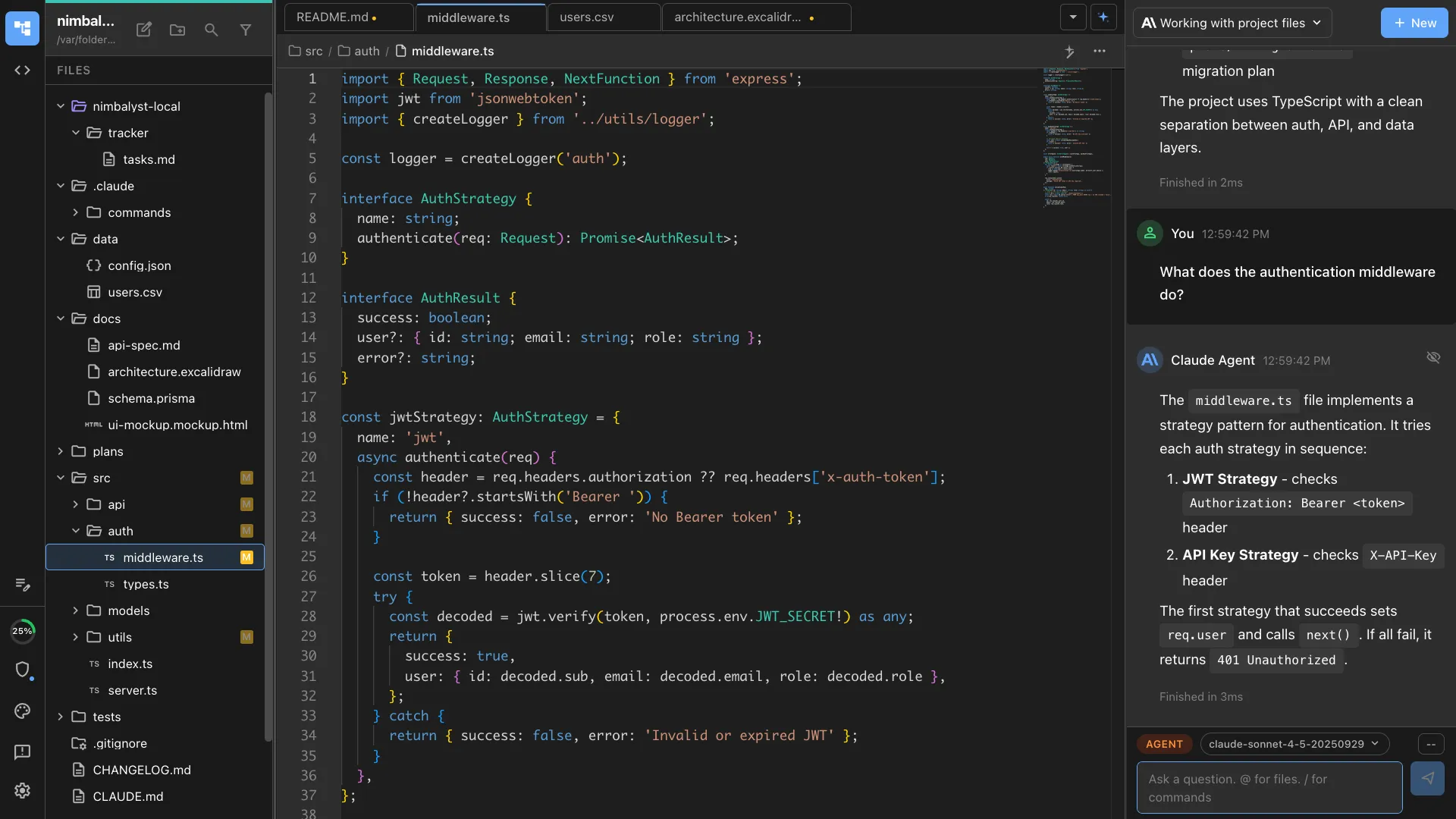
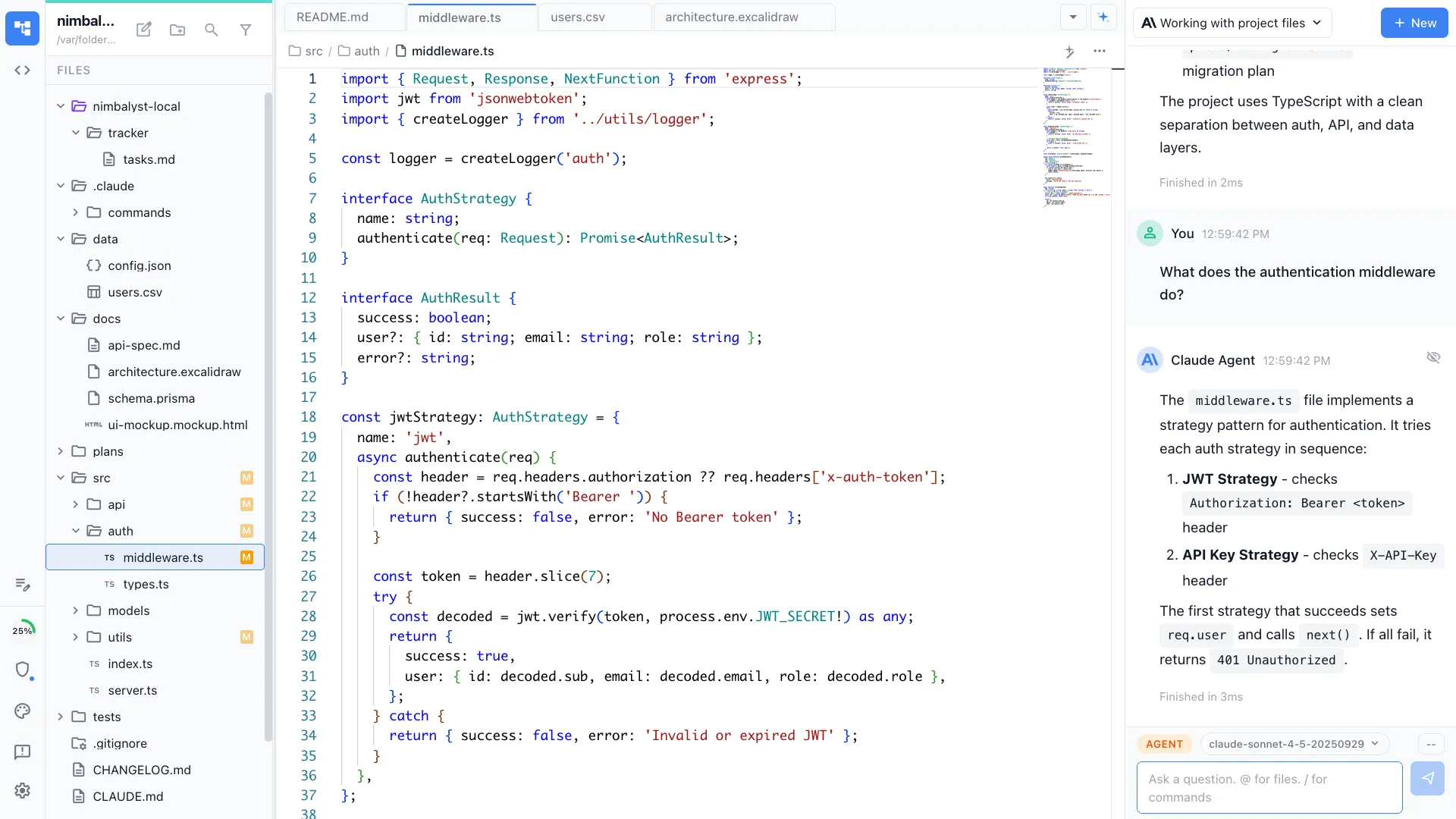
Vibe coding got you here. Agentic engineering takes you further.
Vibe coding — describing what you want and letting AI write the code — went mainstream in 2025. But anyone who's tried to vibe code past a weekend project knows the limits: one chat session, no review process, no way to coordinate multiple agents, no planning layer. The vibes stop scaling.
Agentic engineering is what comes next. It's the same natural-language-first workflow, but with the structure that real software demands: parallel agents working across your codebase, visual mockups and architecture diagrams before code, structured plans that agents execute against, diff review so you stay in control, and orchestration so nothing falls through the cracks. You keep the vibes. You add the engineering.
Why Nimbalyst
From vibes to engineering
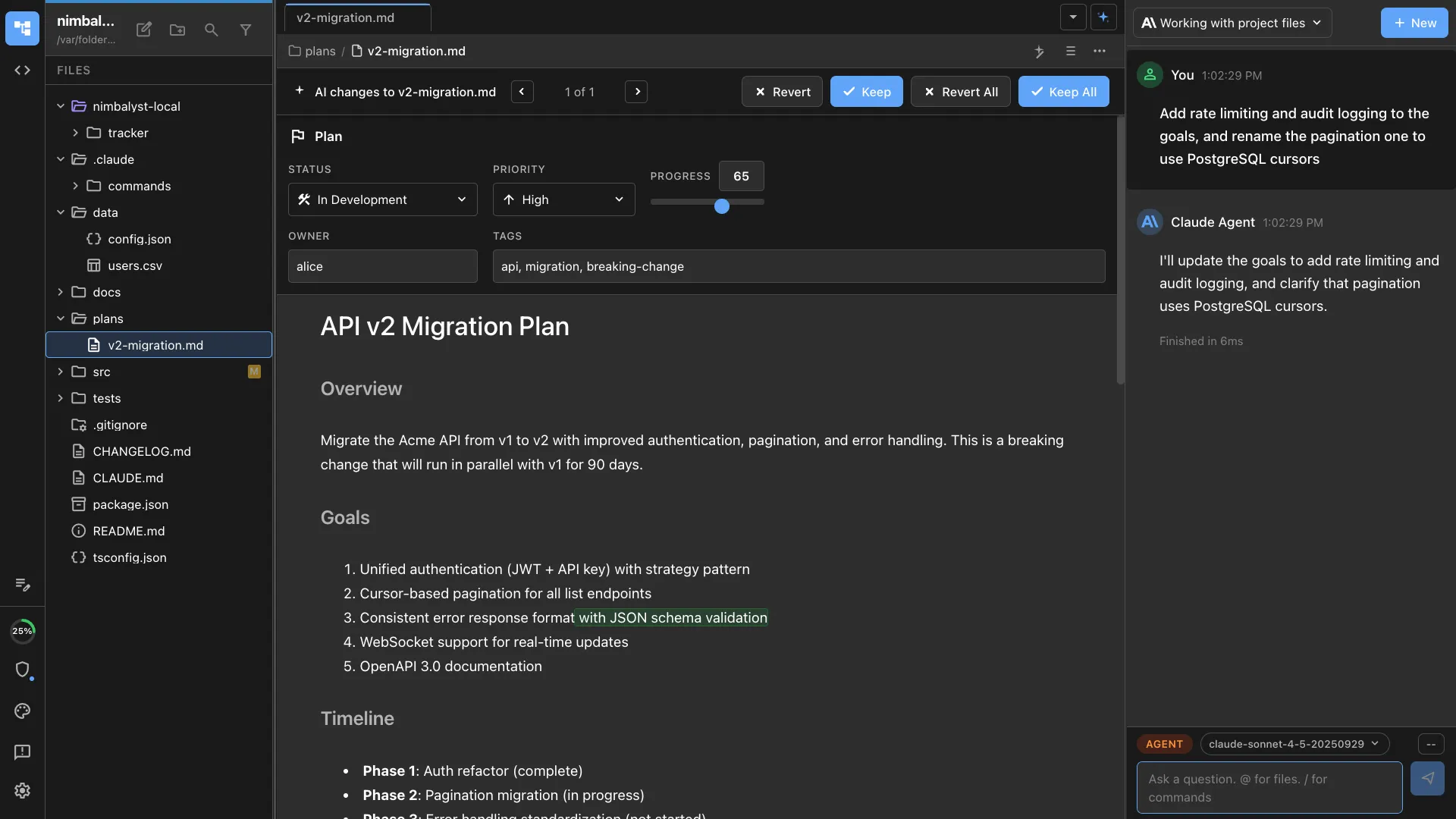
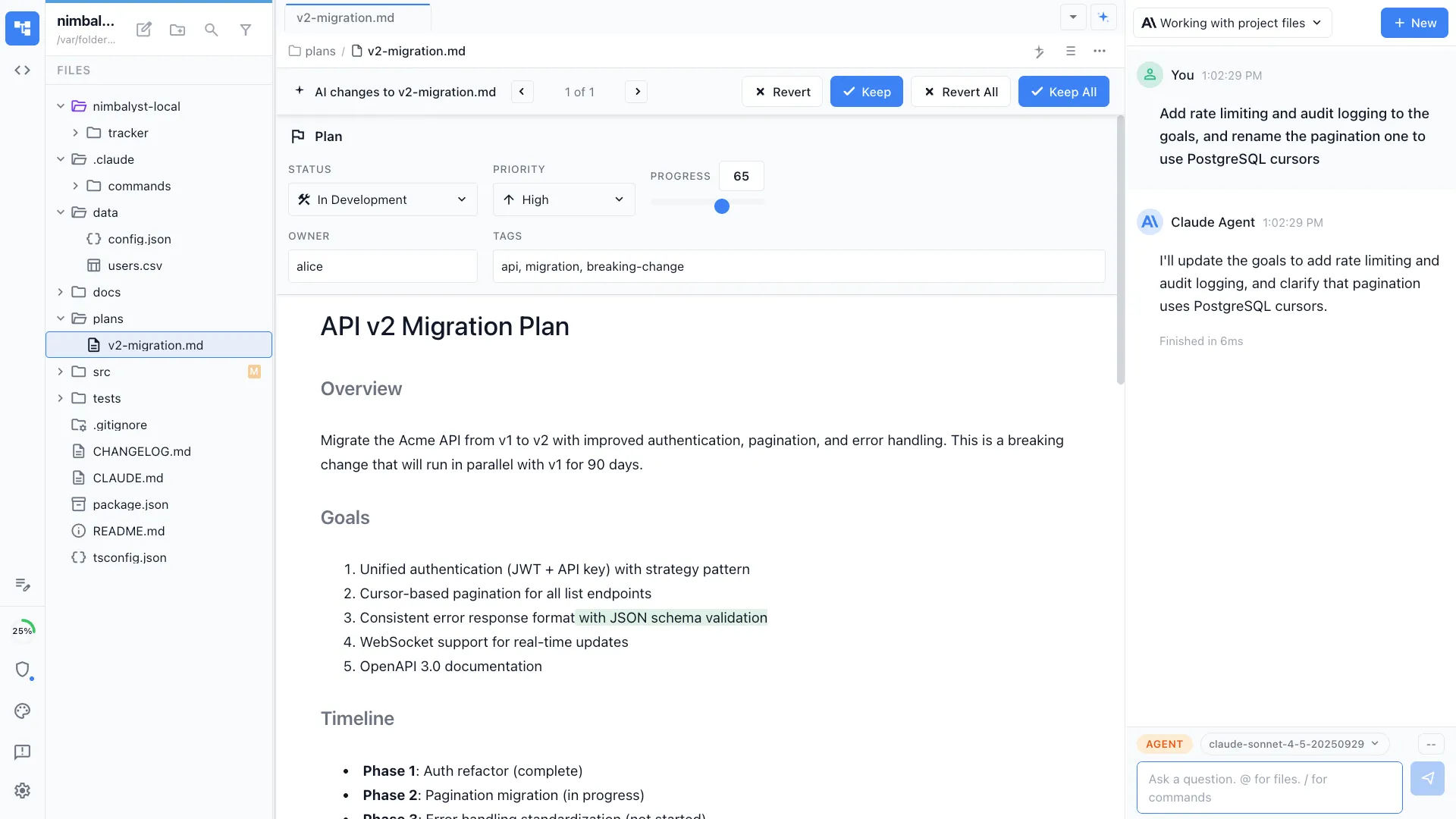
Specs before code
The best vibe coders don't just prompt — they write specs. Nimbalyst's WYSIWYG editor lets you describe features, architecture, and constraints in structured documents that your agents read and execute against.
Review everything agents produce
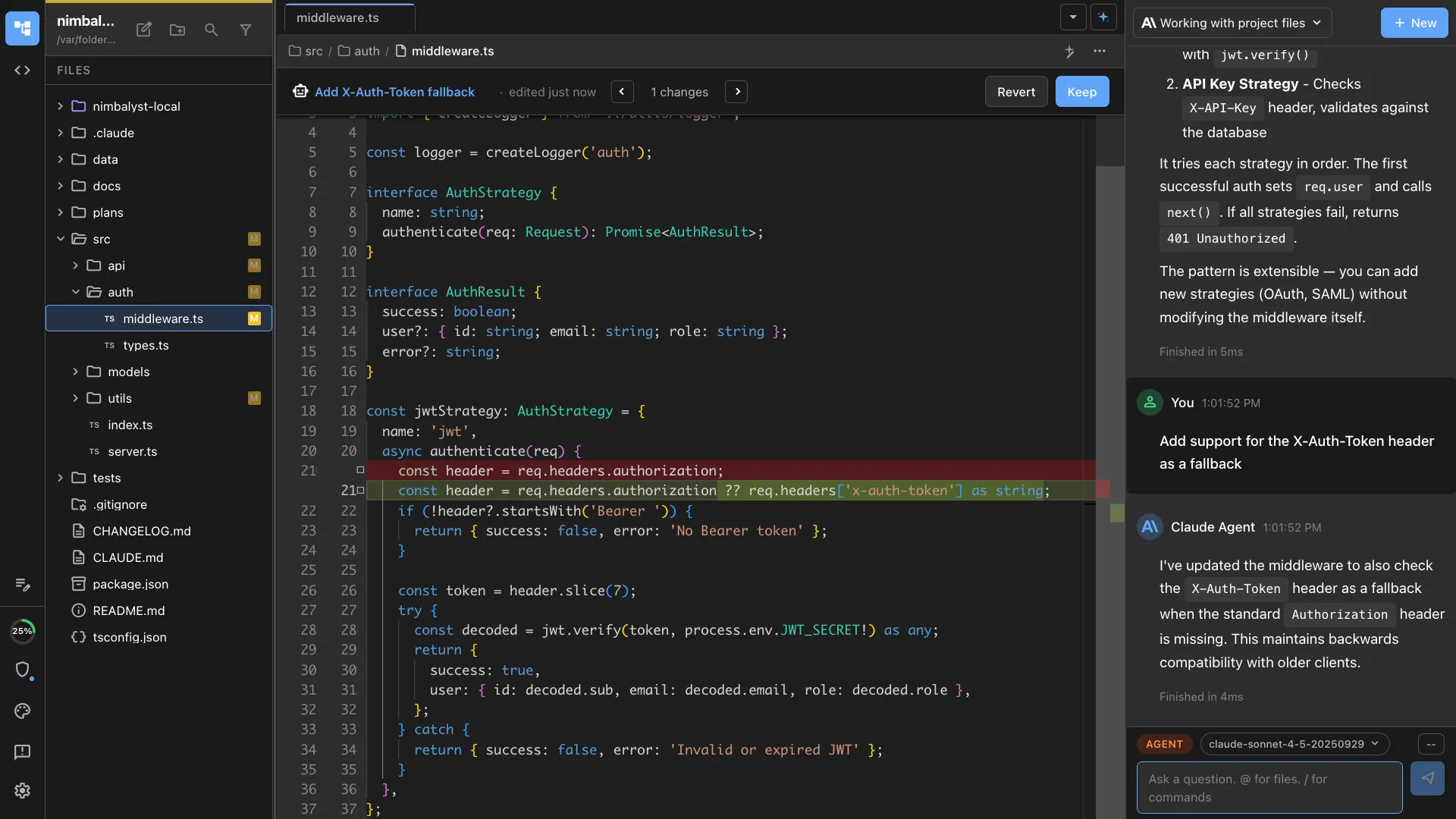
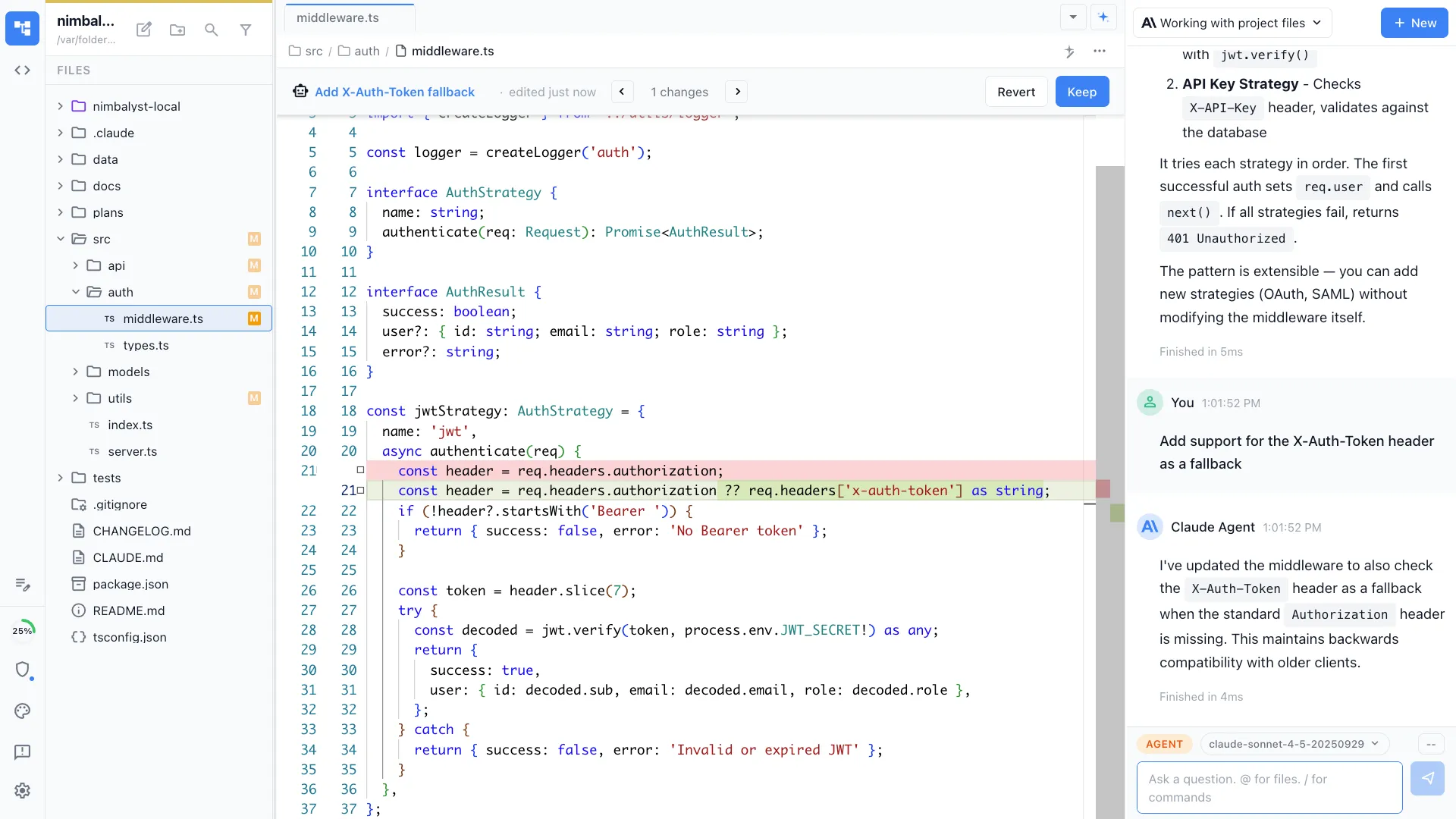
Agentic engineering means trusting agents to write code, but verifying every change. Visual diff review shows you what changed, file by file, so you can accept, reject, or refine before anything lands.
Think visually, build precisely
Sketch a UI mockup, draw an architecture diagram, model your database — then hand it to an agent. Visual editors turn loose ideas into precise instructions without leaving the workspace.
Orchestrate parallel agents
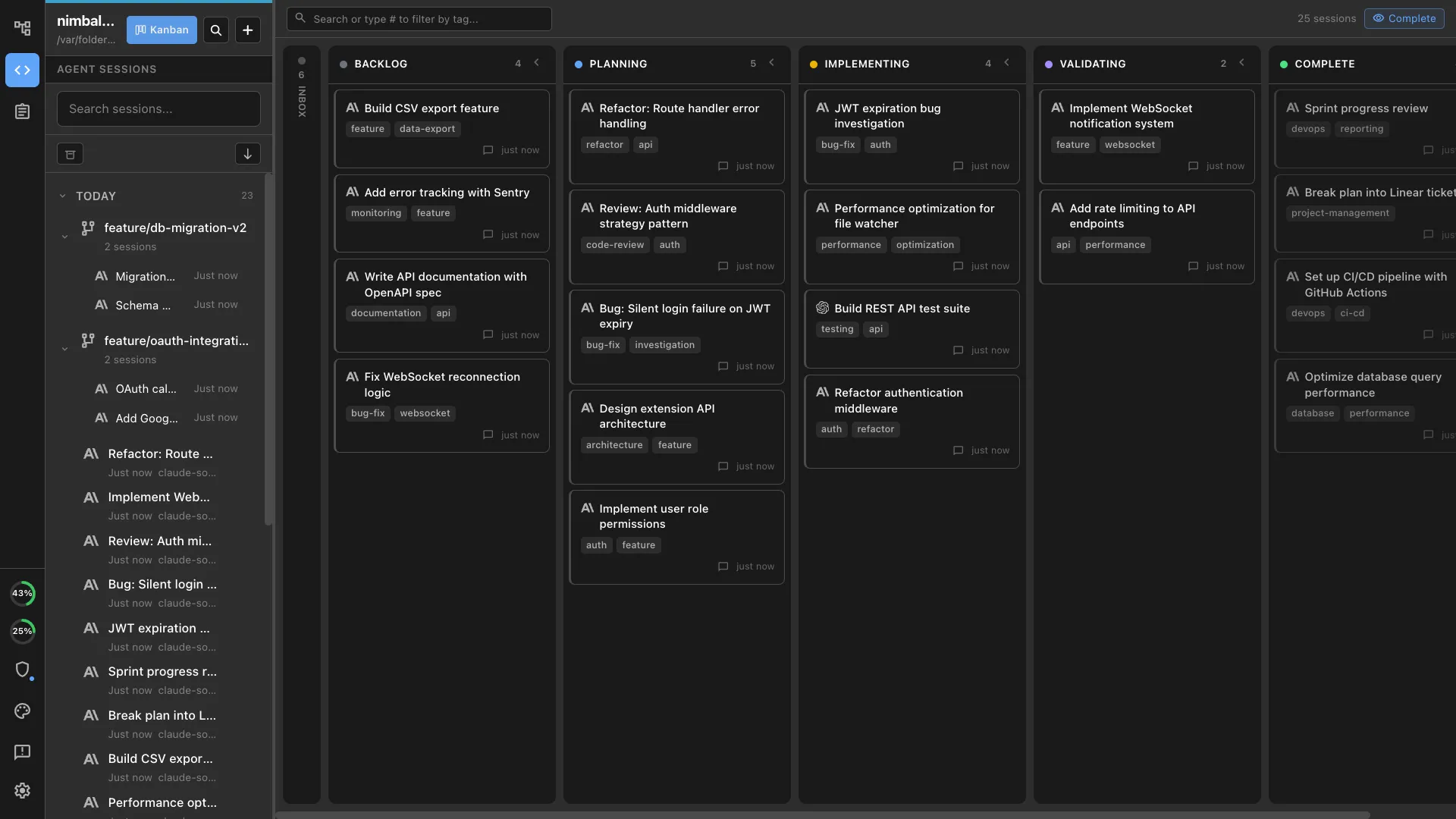
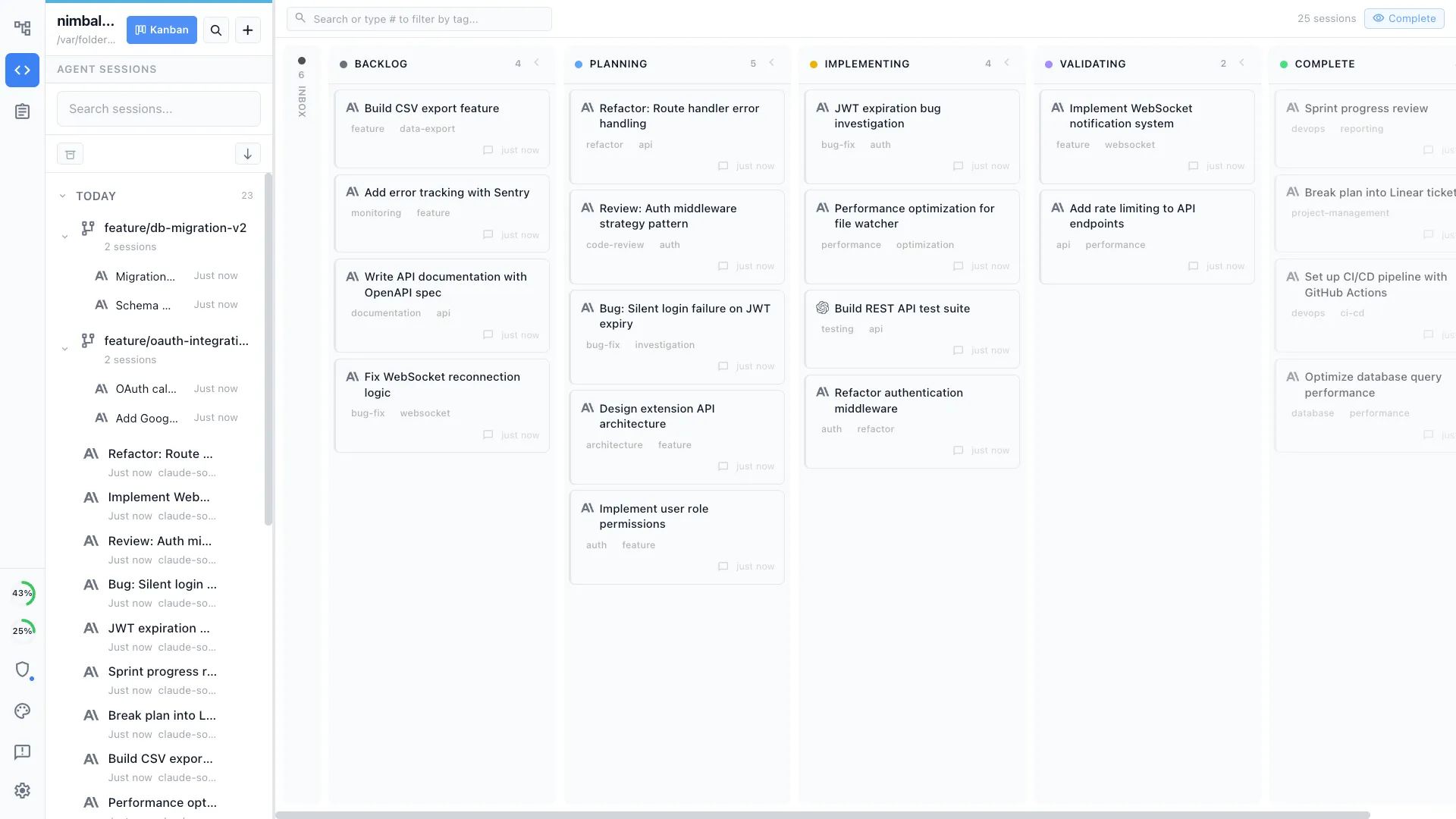
Real engineering work isn't one task at a time. Run 6+ agents in parallel — frontend, API, tests, docs — and manage them all from a kanban board. That's orchestration, not just prompting.
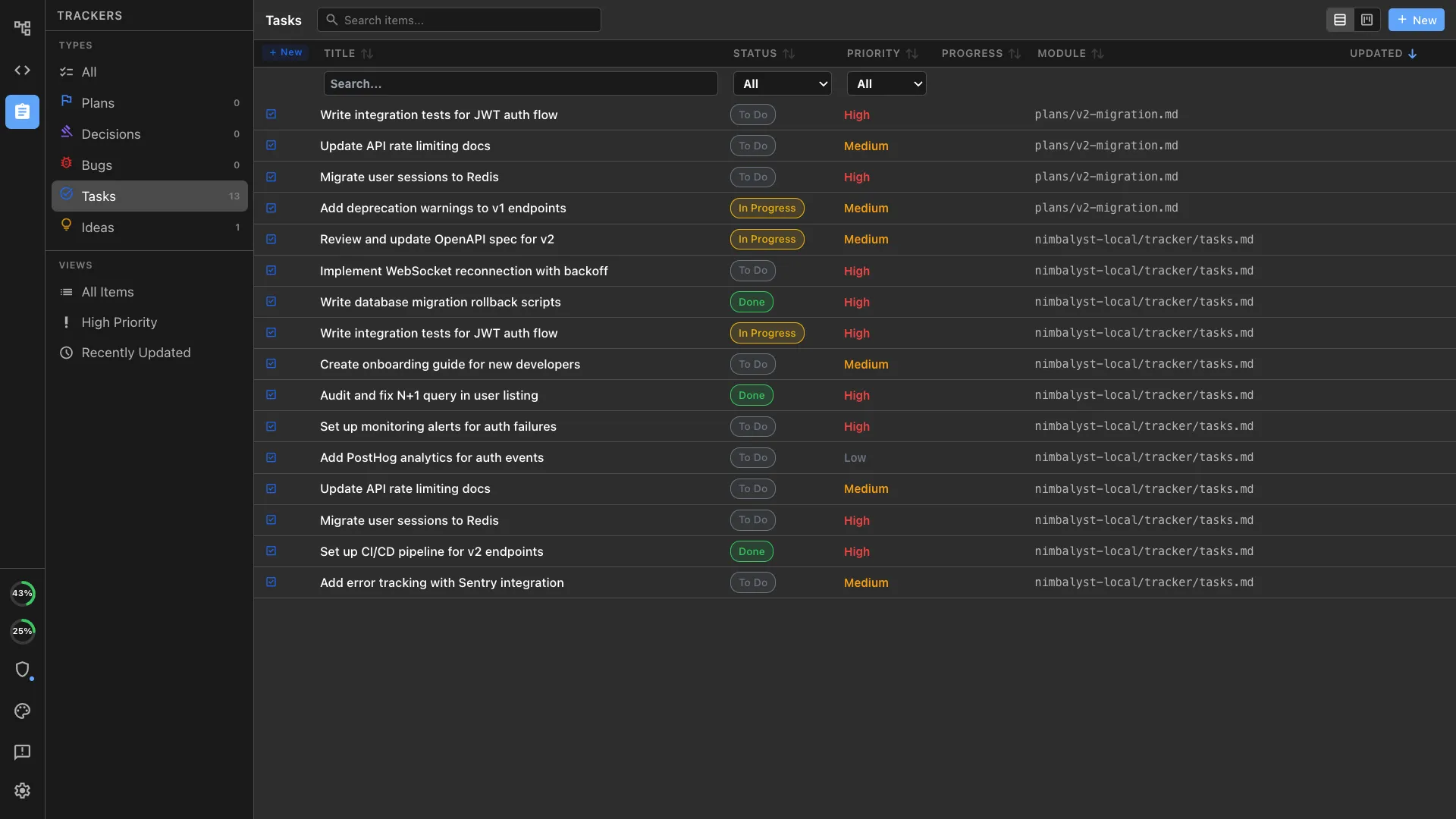
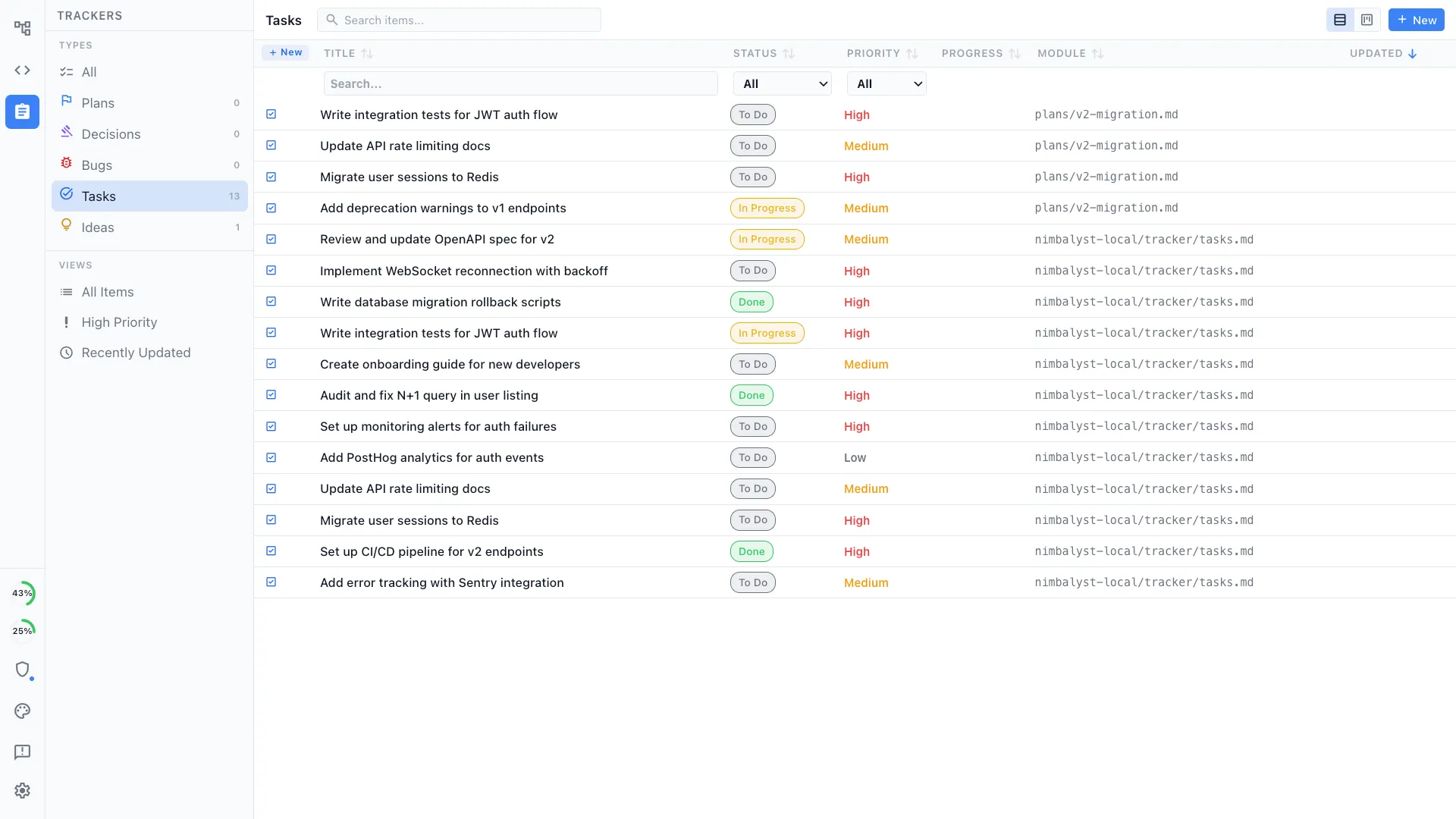
Plan the work, then let agents execute
Break features into tasks, prioritize them, and track progress. Your agents execute against the plan while you stay focused on what matters — architecture, decisions, and review.
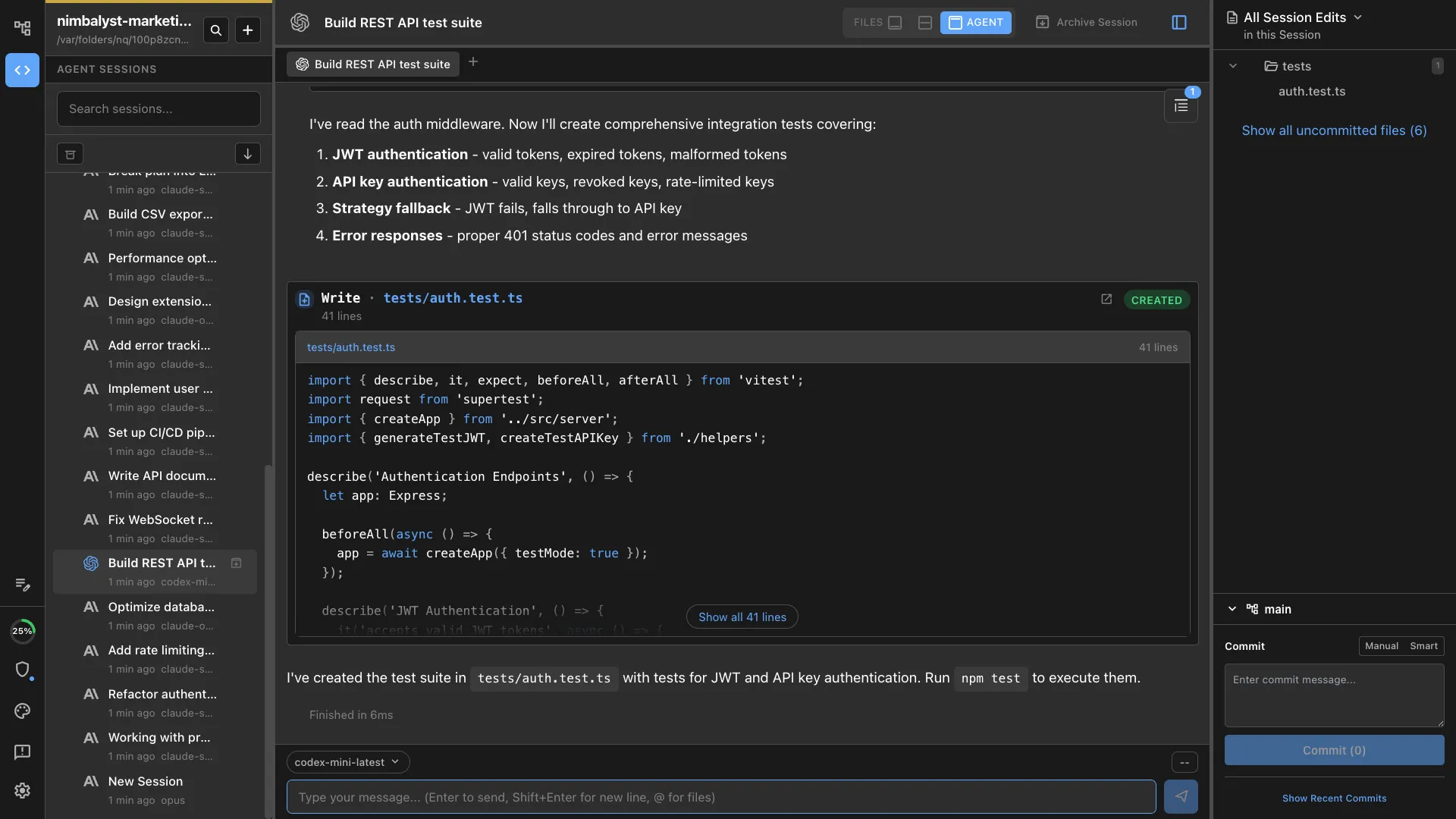
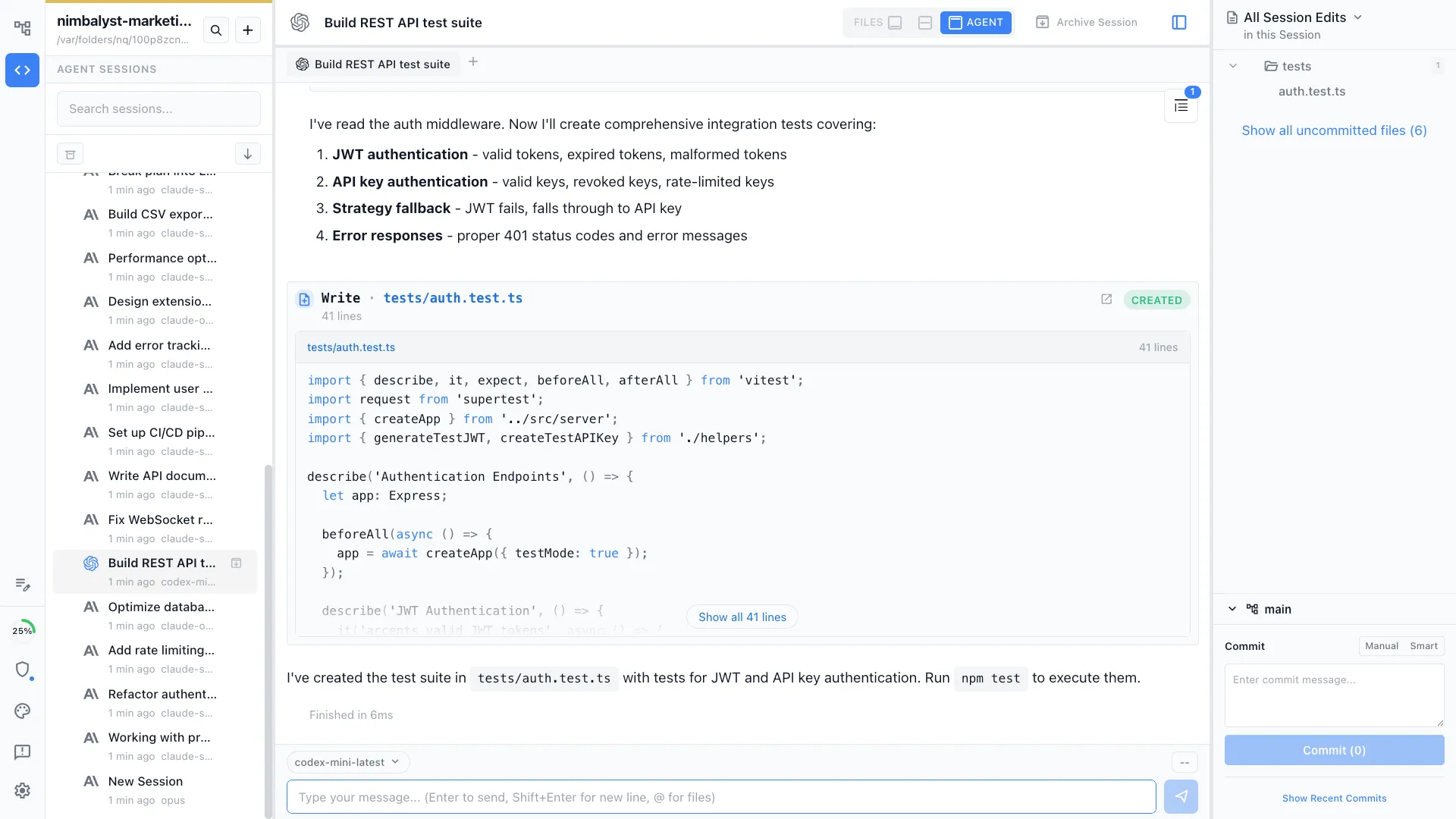
Best agent for each job
Use Claude Code for complex reasoning, Codex for fast iteration — or both in the same project. Agentic engineering means choosing the right tool, not being locked into one.
Comparison
Vibe coding vs agentic engineering
| Feature | Vibe Coding | Nimbalyst |
|---|---|---|
| Workflow | Single chat prompt → code | Plan → mockup → parallel agents → review → ship |
| Agent orchestration | One session at a time | 6+ parallel sessions with kanban management |
| Before you code | Start typing a prompt | Specs, mockups, diagrams, data models — then prompt |
| Review process | Read the chat output | Visual file-by-file diffs with accept/reject per change |
| Planning | Ad hoc | Structured plans and task tracking agents execute against |
| Agent engines | Whatever the tool ships with | Claude Code + Codex — pick the best for each task |
| Mobile | None | iOS app for monitoring, review, and prompting on the go |
| Git isolation | Manual | Automatic worktree per session |
FAQ
Frequently asked questions
What is vibe coding?
What is agentic engineering?
What is the best tool for vibe coding in 2026?
Can I start with vibe coding and grow into agentic engineering?
How is this different from Cursor or other AI coding tools?
Is Nimbalyst free?
Learn More
Related guides and comparisons
Best Vibe Coding Tools (2026)
A roundup of the best tools for vibe coding with AI agents.
Vibe Coding vs AI Coding
What's the difference between vibe coding and AI-assisted coding?
Mockup Editor
Design UI mockups visually, then hand them to agents to implement.
Agent Orchestration
Run parallel agents with kanban management and structured review.