Comparison
Nimbalyst vs Jira
Jira tracks work. Nimbalyst is the visual workspace for building with Codex and Claude Code. Turn plans into implementation with integrated AI session and task management, visual editors, and code review in the same place.
Overview
Two tools, different approaches
Nimbalyst
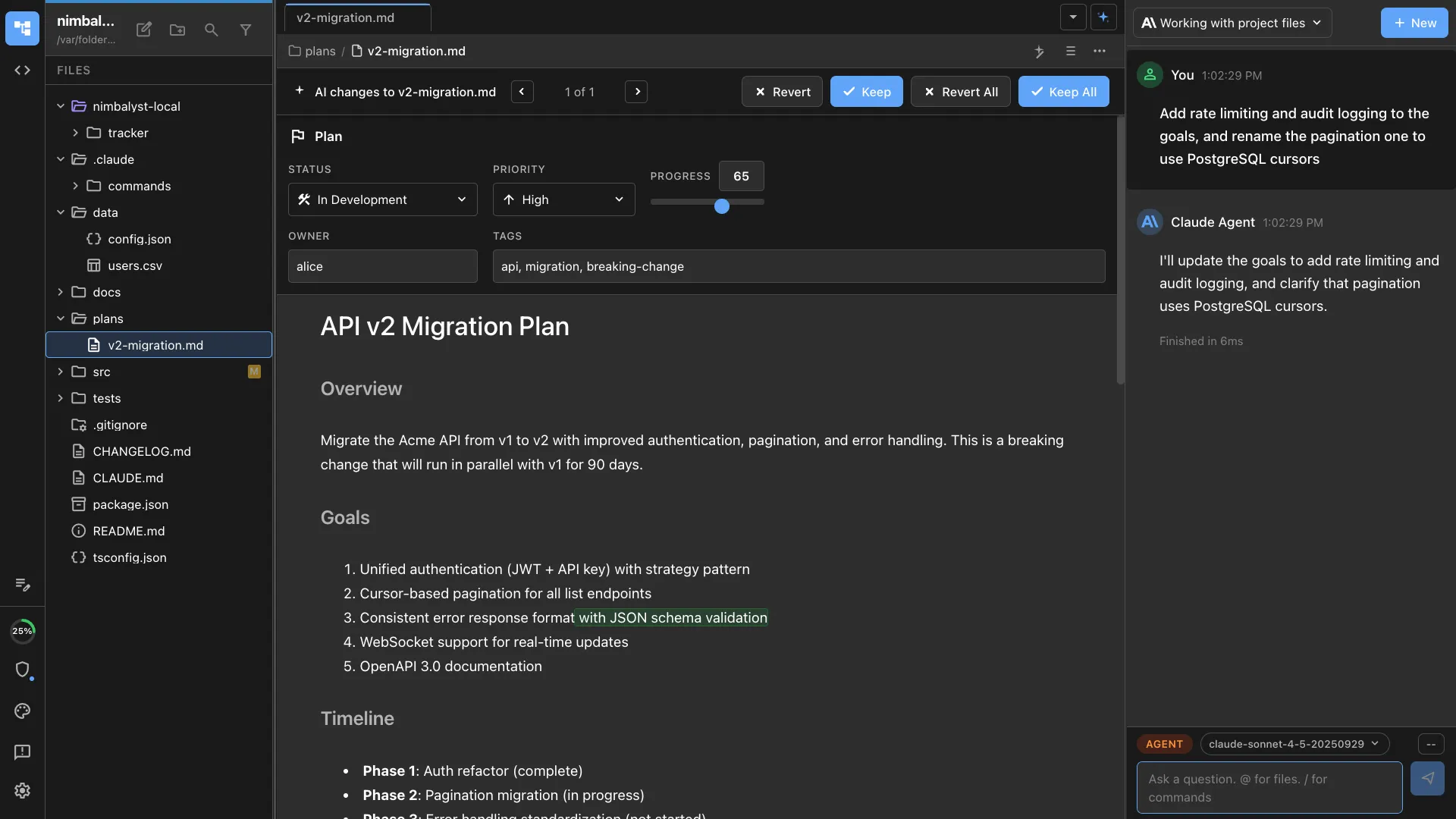
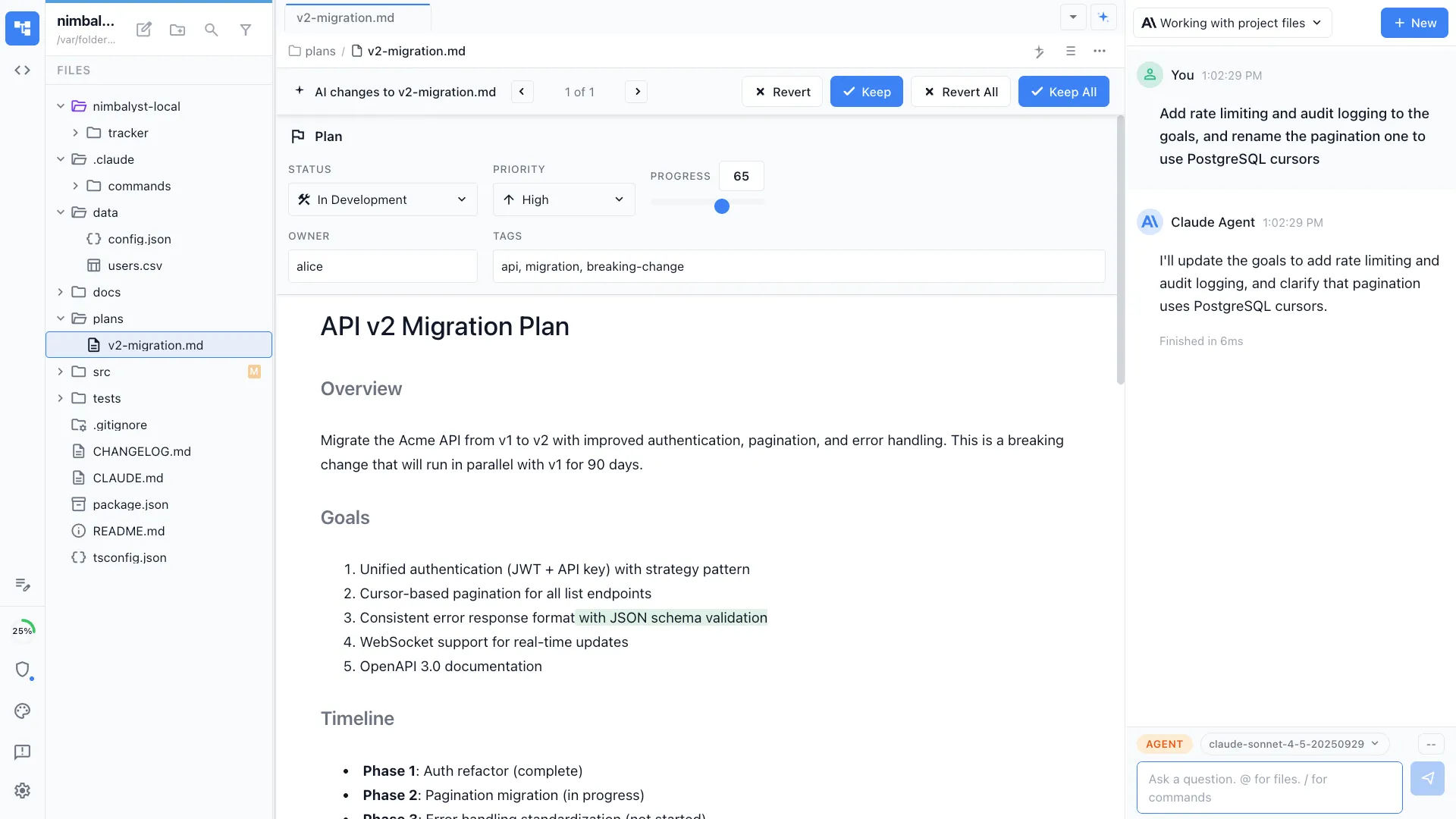
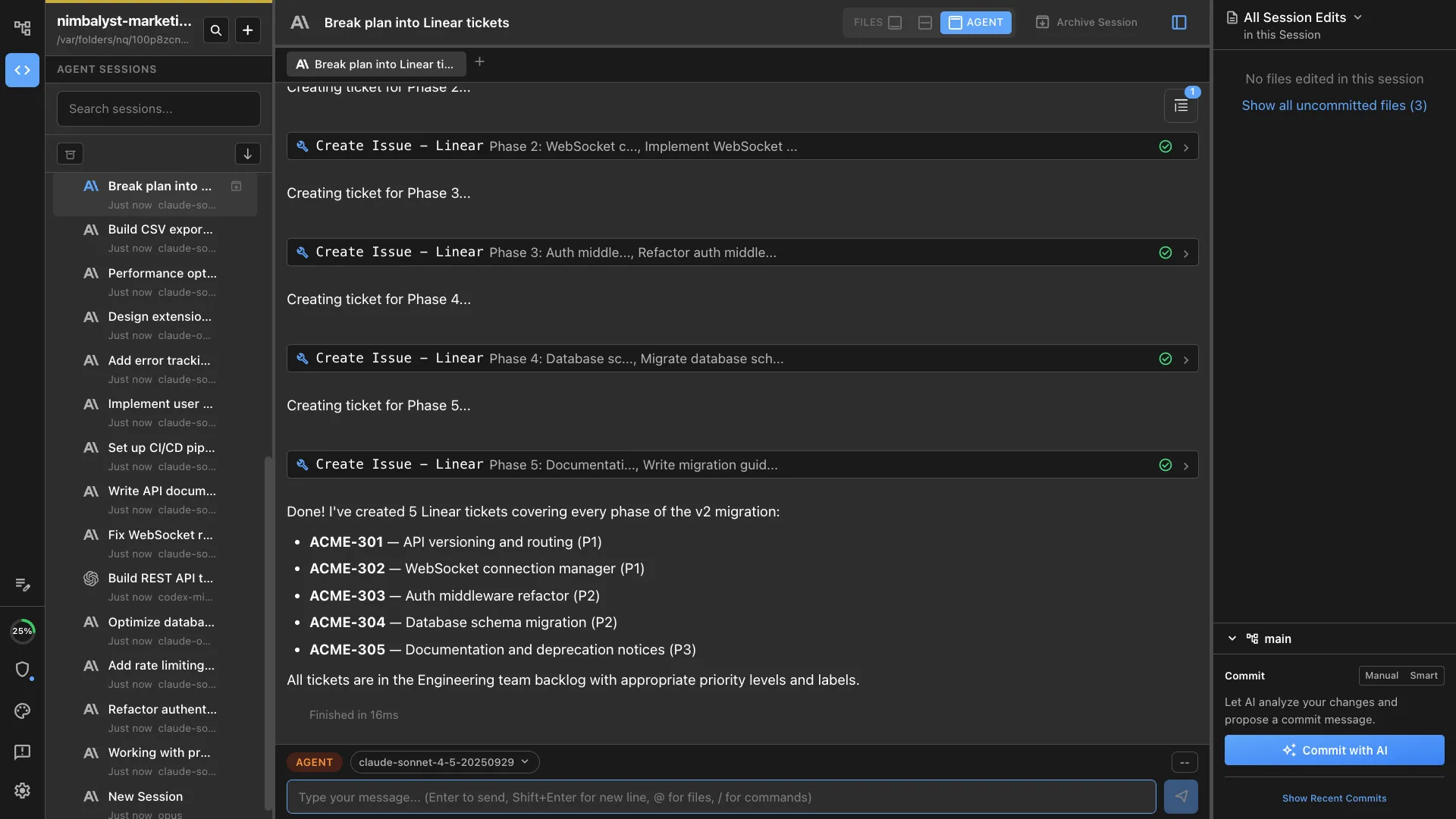
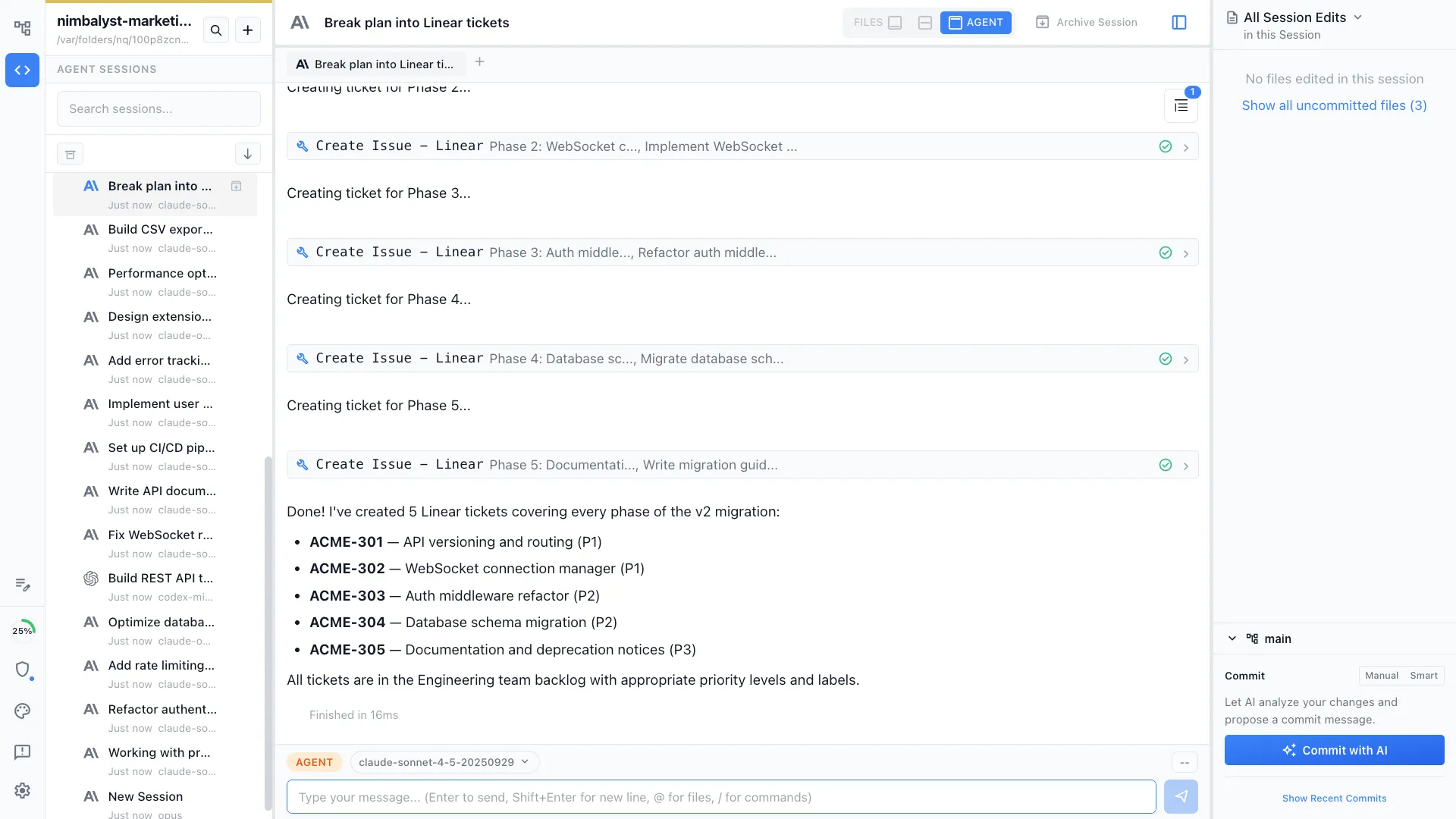
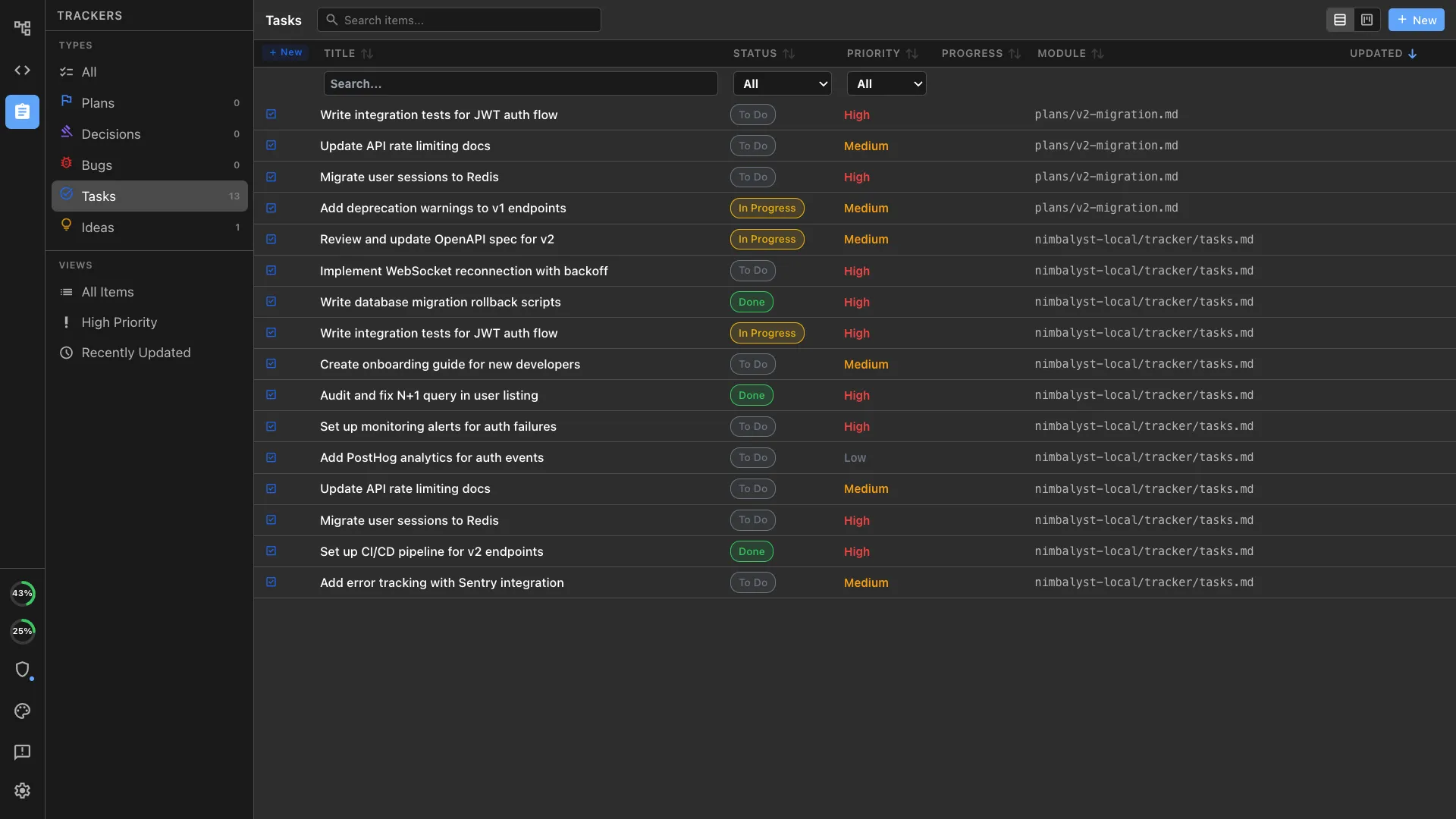
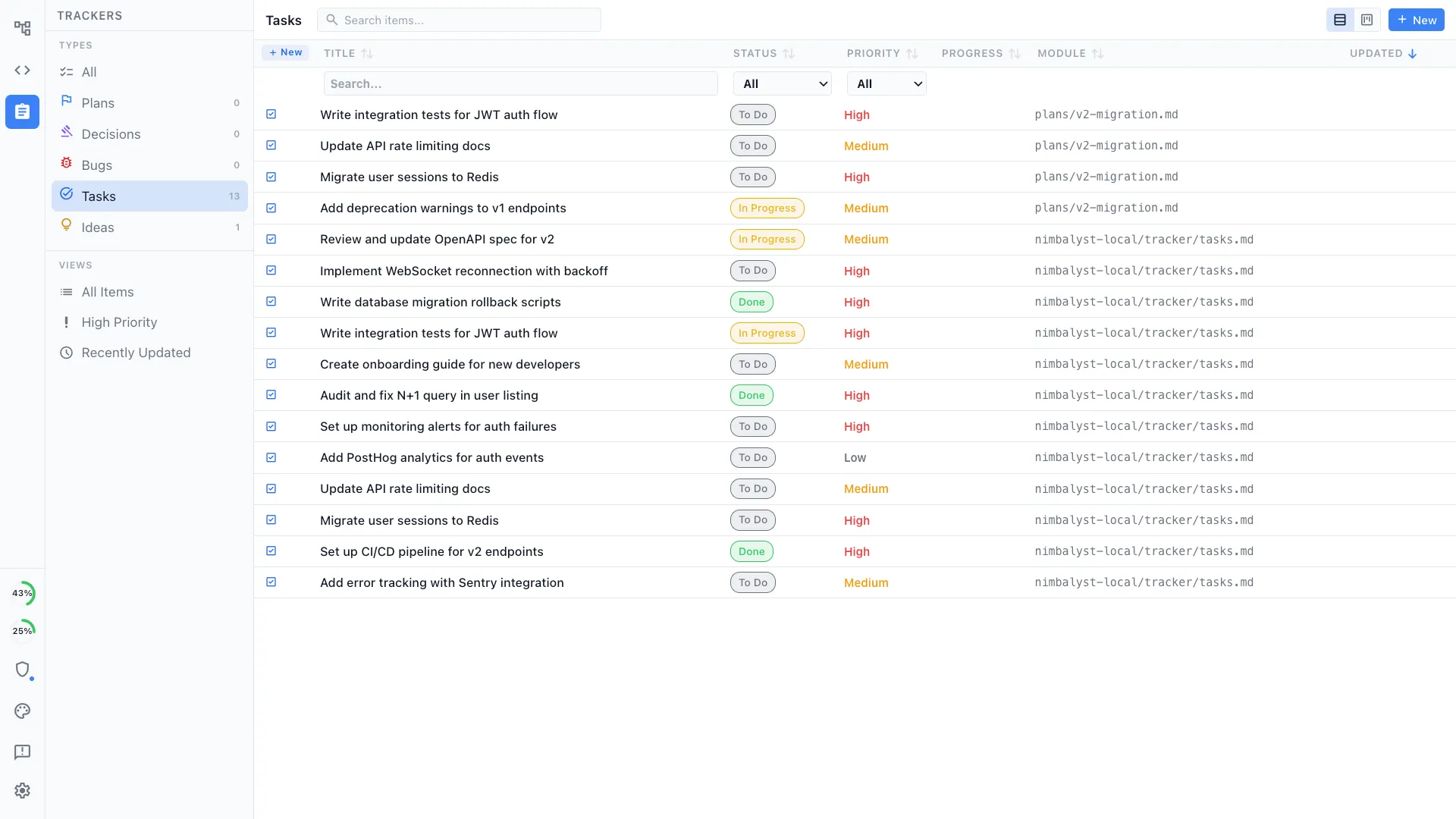
Nimbalyst is an AI-native workspace built on top of Claude Code and Codex. It adds a session kanban board for managing parallel agents, visual editors for markdown, mockups, diagrams, and data models, built-in planning and task tracking, and a mobile companion app. A task does not just sit in a backlog: it connects directly to the AI session doing the work and can be edited, updated, progressed by the AI agent and is reviewed by you.
Jira
Jira is Atlassian's issue tracking and project management platform. It is widely used for software planning, sprint management, custom workflows, reporting, and enterprise-scale coordination across teams.
Feature Comparison
Side-by-side breakdown
Nimbalyst Advantages
Where Nimbalyst shines
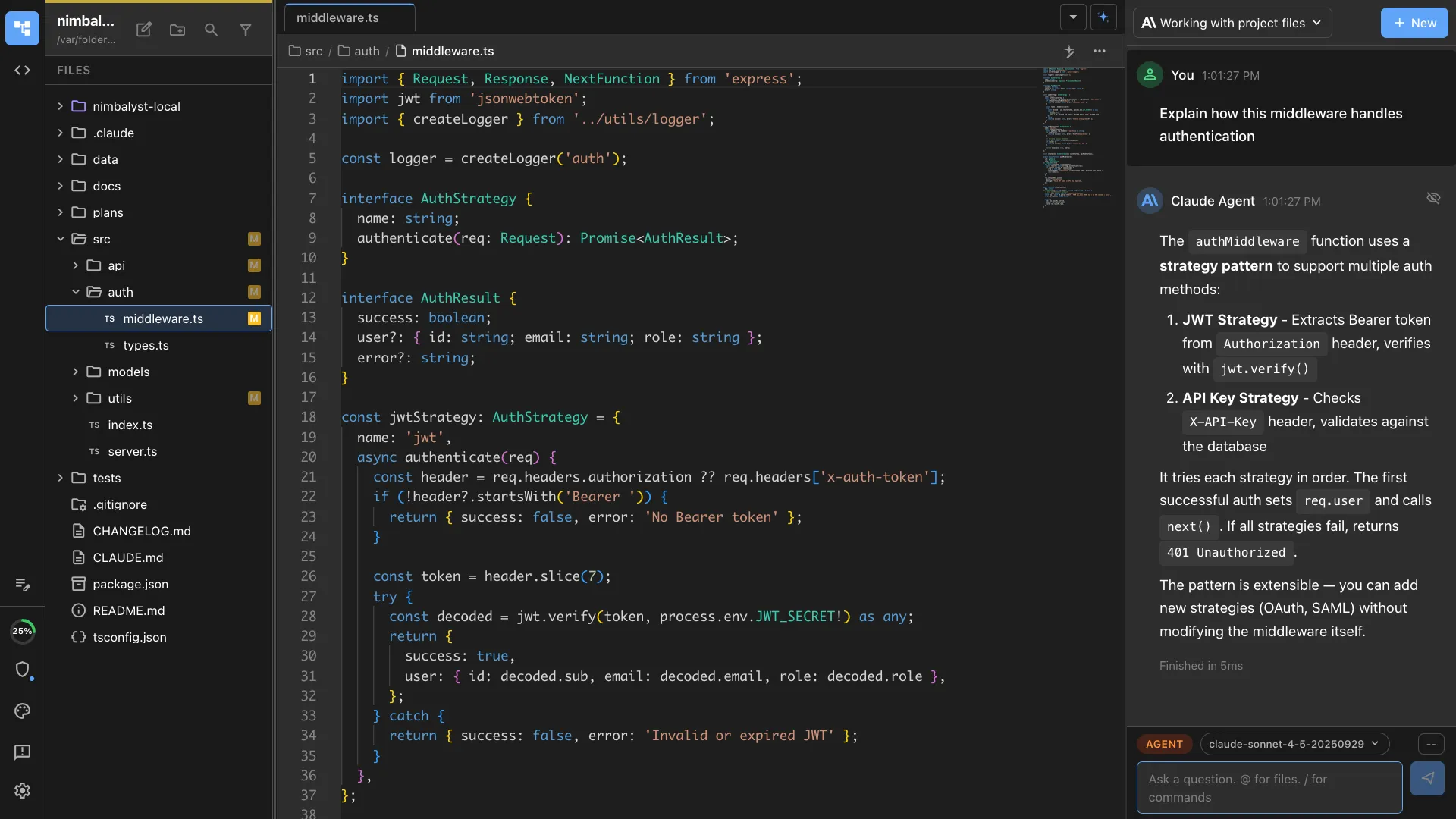
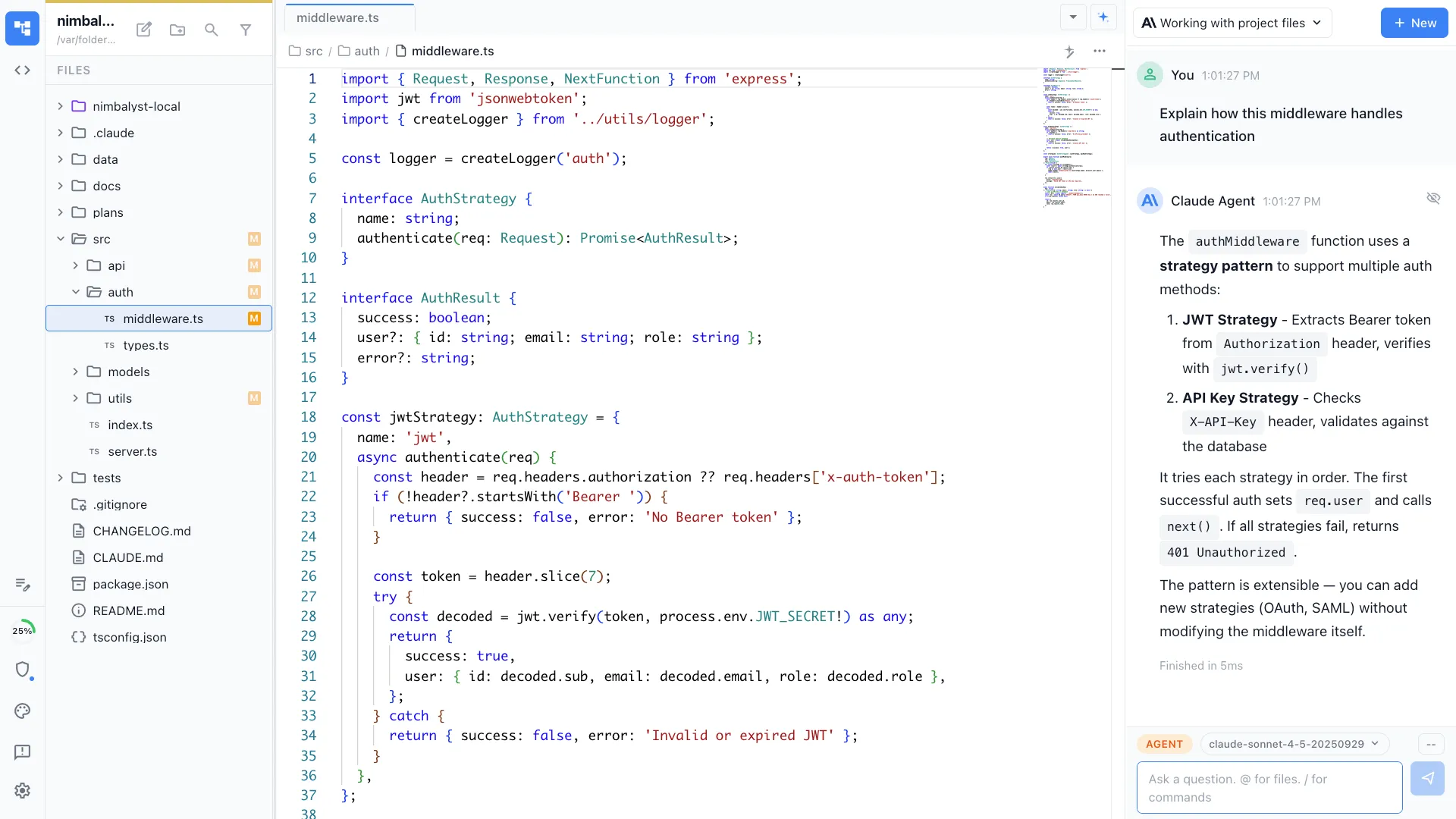
Tasks turn into working sessions
A task in Nimbalyst can immediately become an AI implementation session. The same workspace holds the plan, the code, the review, and the result. Jira manages the queue but not the execution.
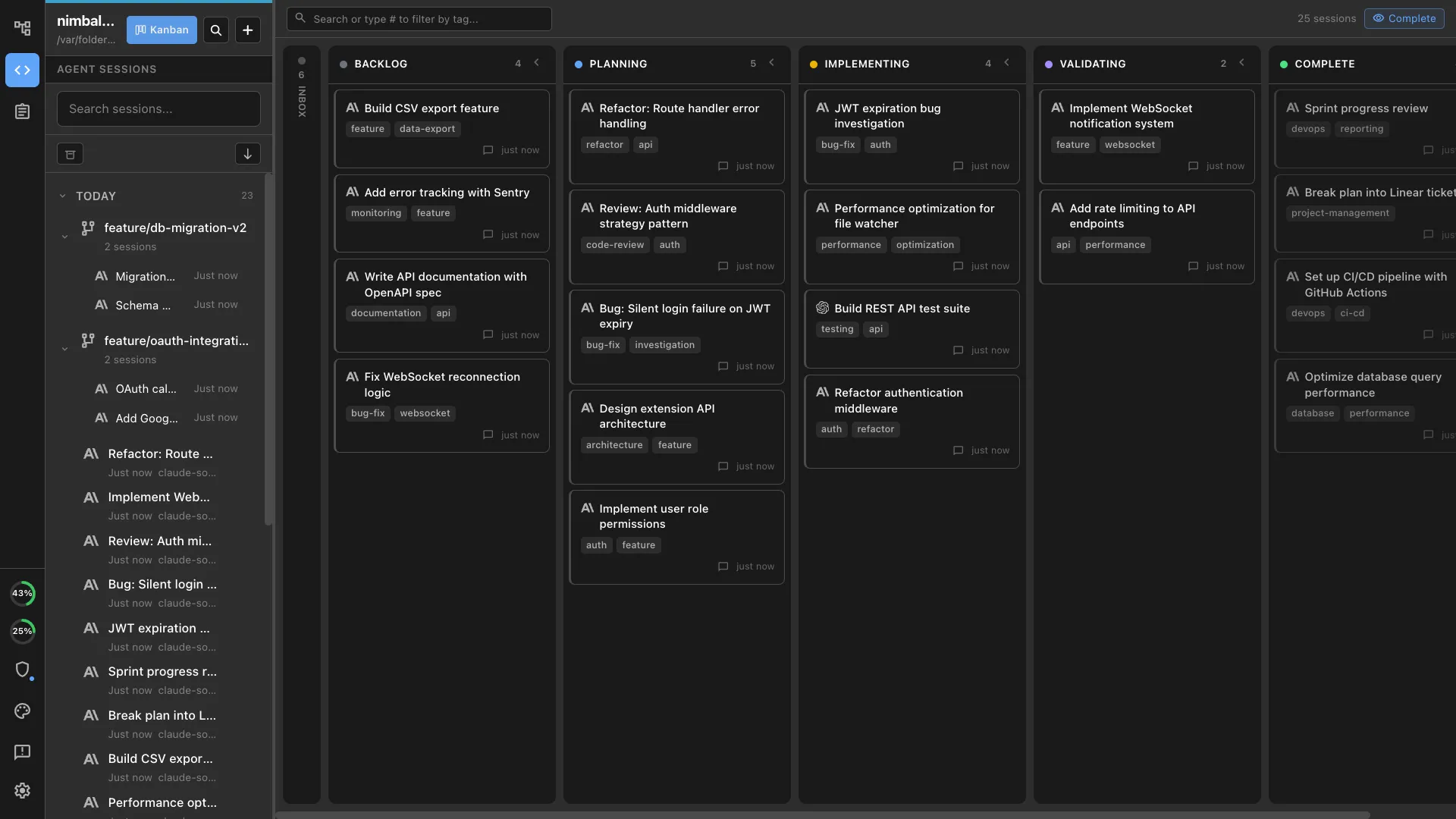
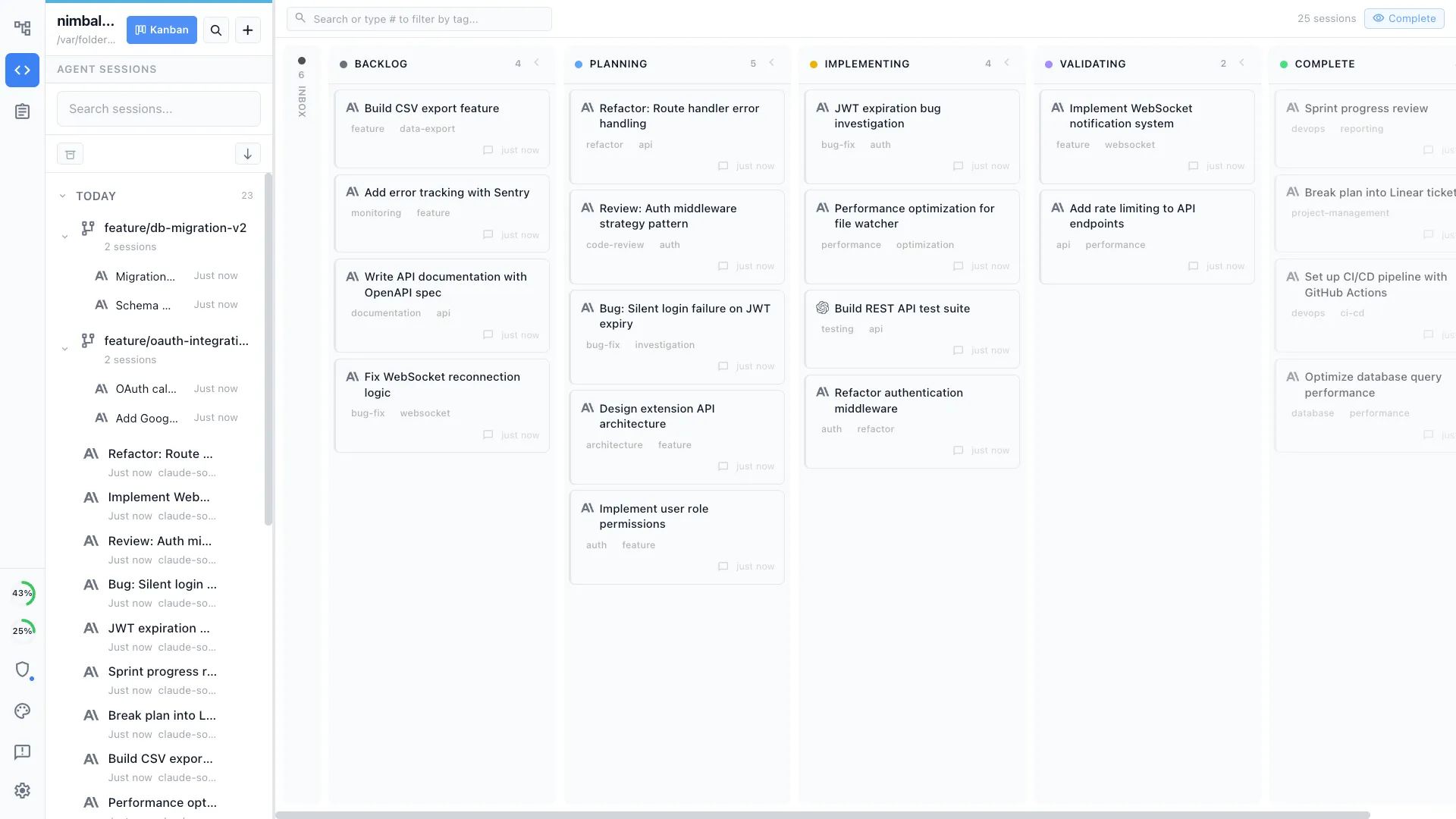
See active agent work, not just ticket status
Track which tasks have live agents, what phase they are in, and what changed. This is a closer fit for AI-assisted development than a traditional ticketing workflow.
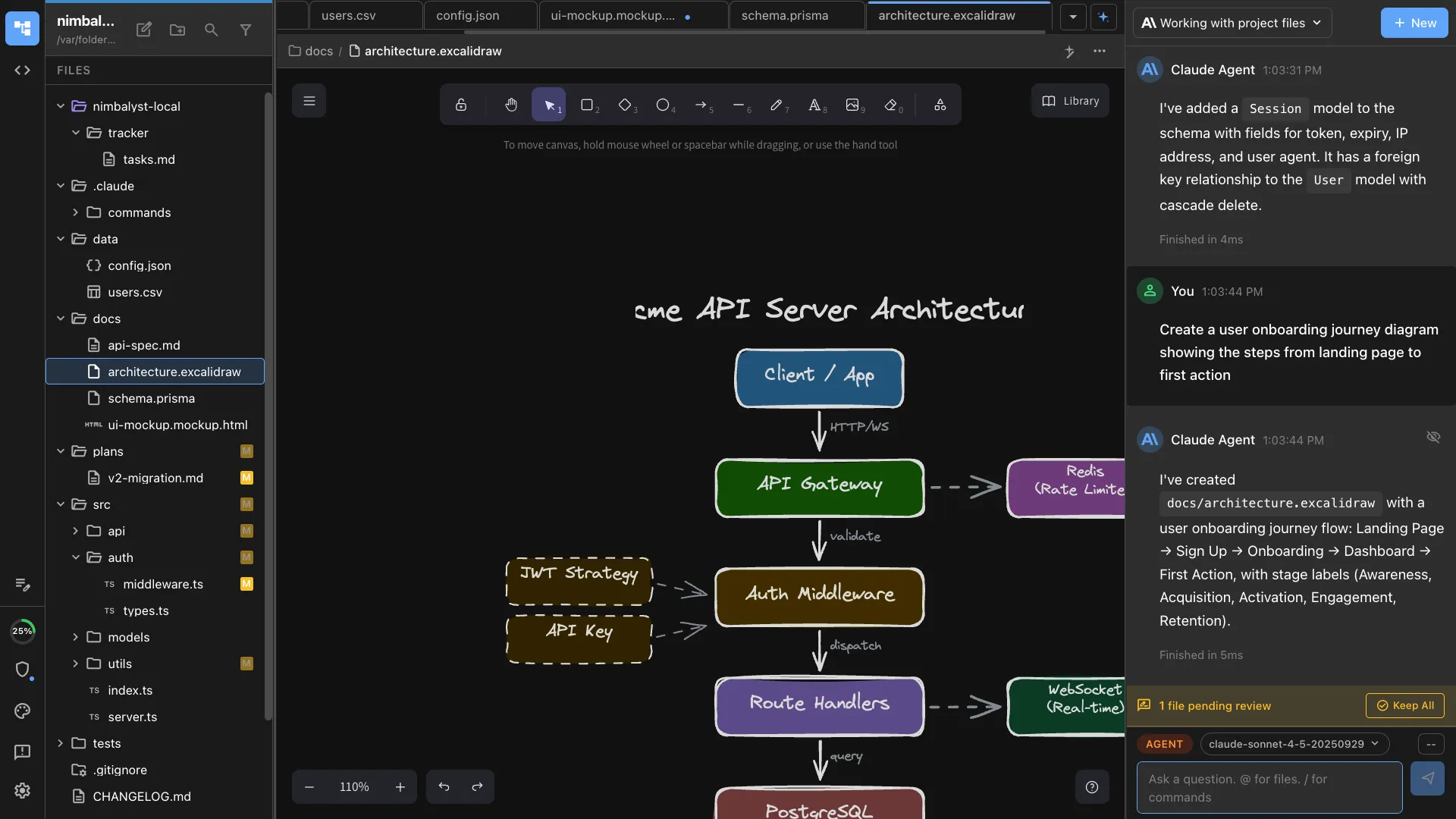
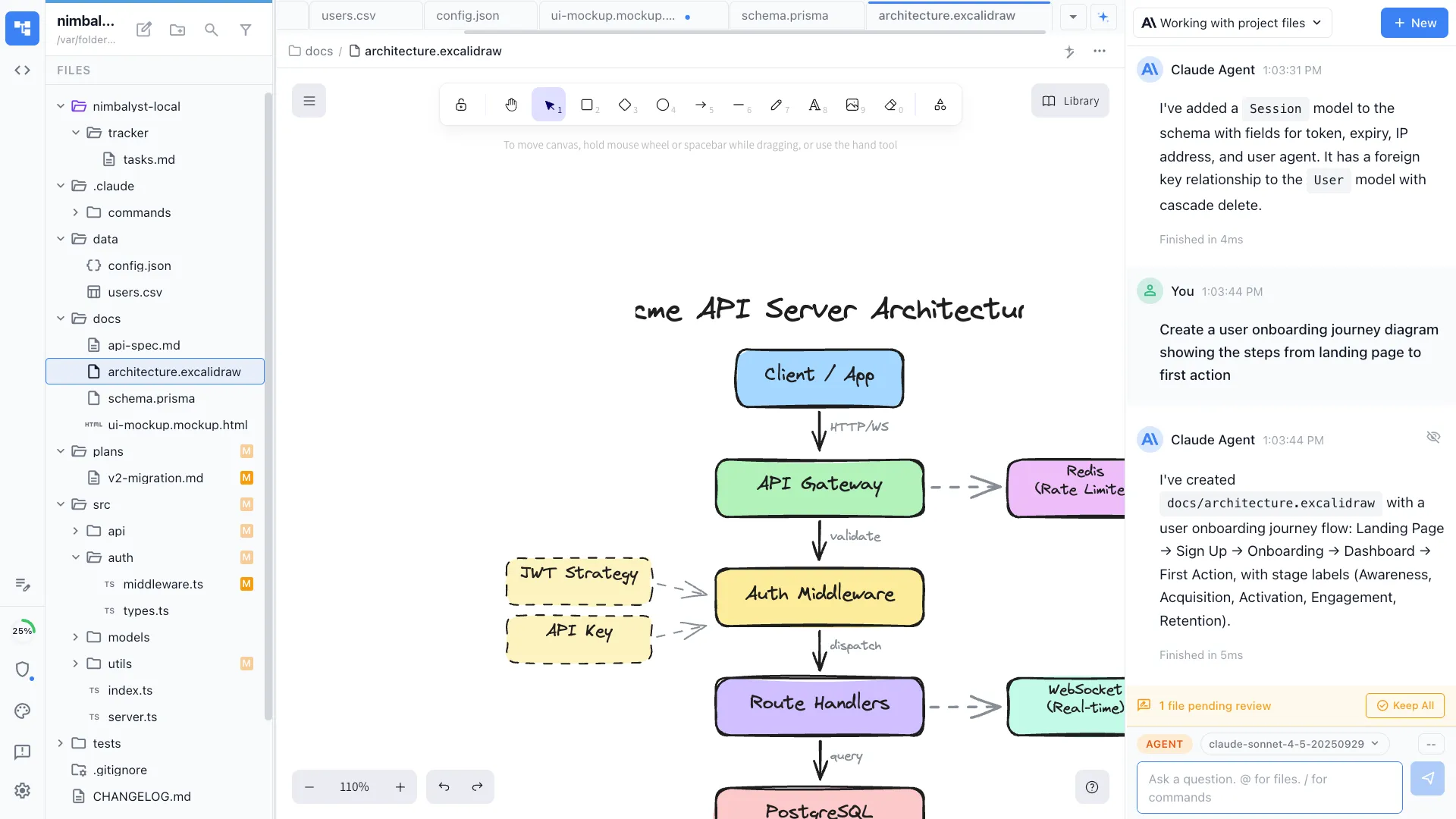
Planning includes visual artifacts
Architecture diagrams, mockups, and data models are part of the same execution context. Jira tickets can link to those artifacts, but they do not contain or edit them.
Honest Assessment
Where Jira is stronger
Enterprise workflow depth
Jira supports complex workflows, custom fields, permissions, auditability, and process controls that large organizations often require.
Agile reporting
Sprints, burndown charts, velocity, dashboards, and capacity planning are core Jira strengths. Nimbalyst is not trying to replace that reporting layer.
Organization-wide standardization
If your company already runs engineering, support, and product operations through Jira, it offers a standardized backbone for large-scale coordination.
Recommendation
Who should use which
Choose Nimbalyst if…
You want planning tightly connected to AI implementation, visual artifacts, and code review. You care more about moving work through agents than managing a highly customized enterprise process.
Choose Jira if…
You need enterprise issue tracking, sprint reporting, advanced workflow controls, and alignment across large teams already using Atlassian products.
Note: You can connect Nimbalyst to Jira via MCP and work with both solutions.