Agentic coding
Agentic coding is what AI-driven software work looks like in 2026.
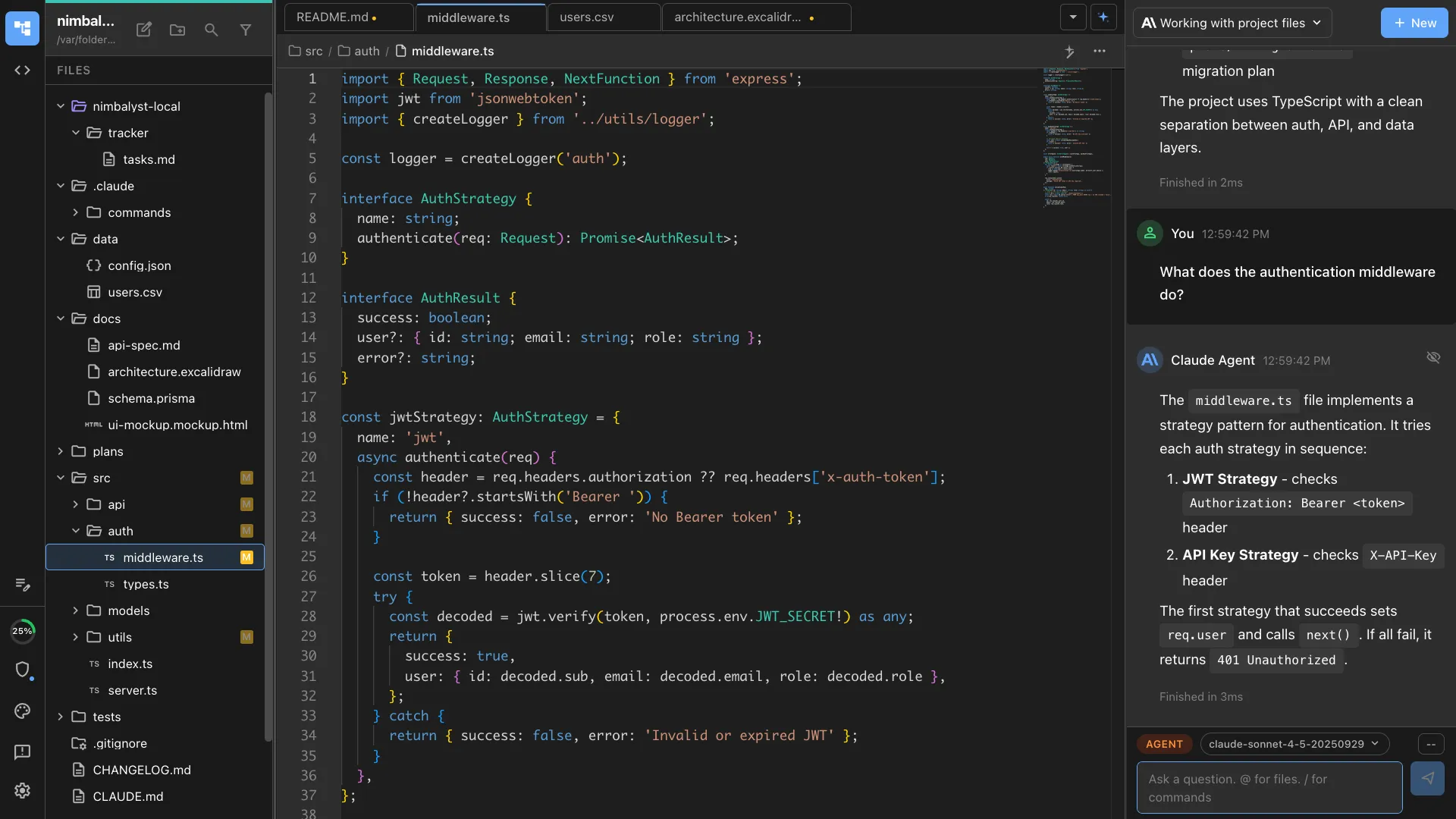
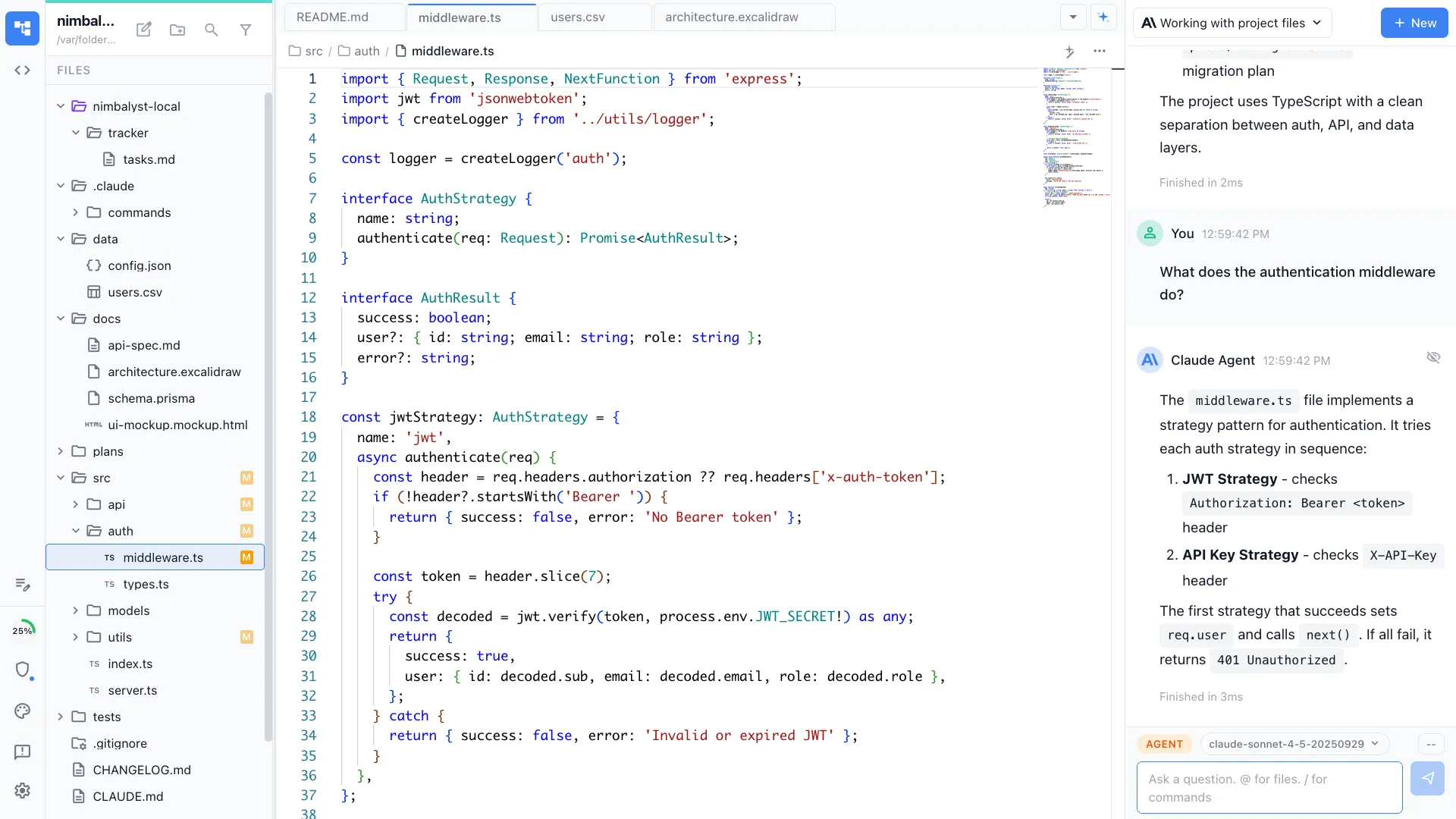
An agent reads your codebase, runs your tools, writes the change, and shows you the diff. You define what to build, review what comes back, and decide what ships. Nimbalyst is the workspace built around that loop.
Free for individuals. Works with your existing Claude Code or Codex subscription or API key.
A clear definition
Agentic coding is software development where an AI agent does the writing and the human directs and reviews. The agent reads files, runs tests, edits code across multiple files, and reports back. The human writes the intent, picks the agent, and reviews the diffs. Coding agents like Claude Code and OpenAI Codex are the engines. The workflow around them is what makes it agentic.
It is different from autocomplete-style AI in an editor. Autocomplete predicts the next token while you type. An agent takes a goal, opens files on its own, makes a sequence of edits, runs commands, and reaches a result. The unit of work is a task, not a keystroke. The unit of review is a diff, not a suggestion.
Why Nimbalyst
What agentic coding needs around the agent
An agent that drives, not a sidebar that suggests
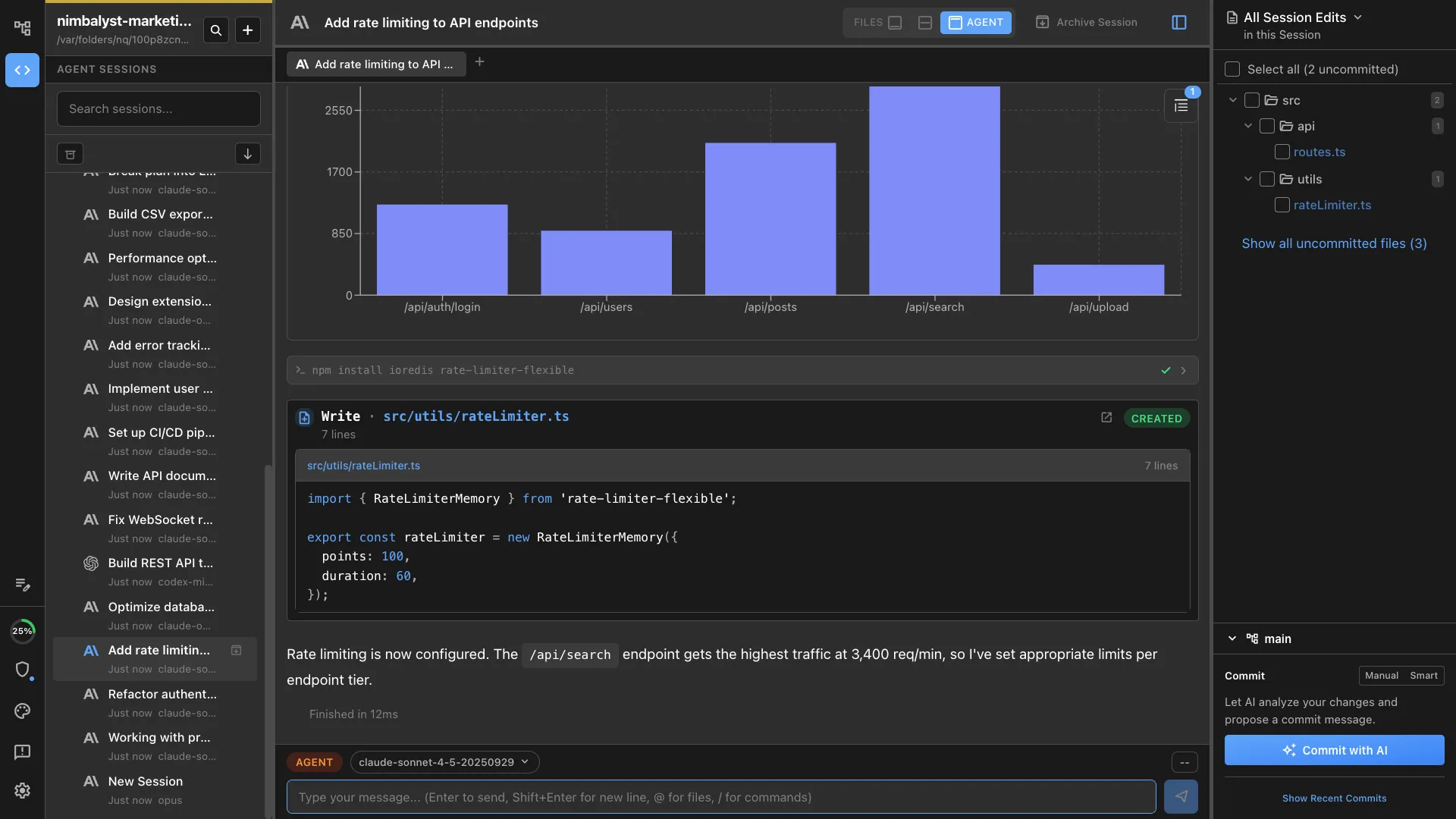
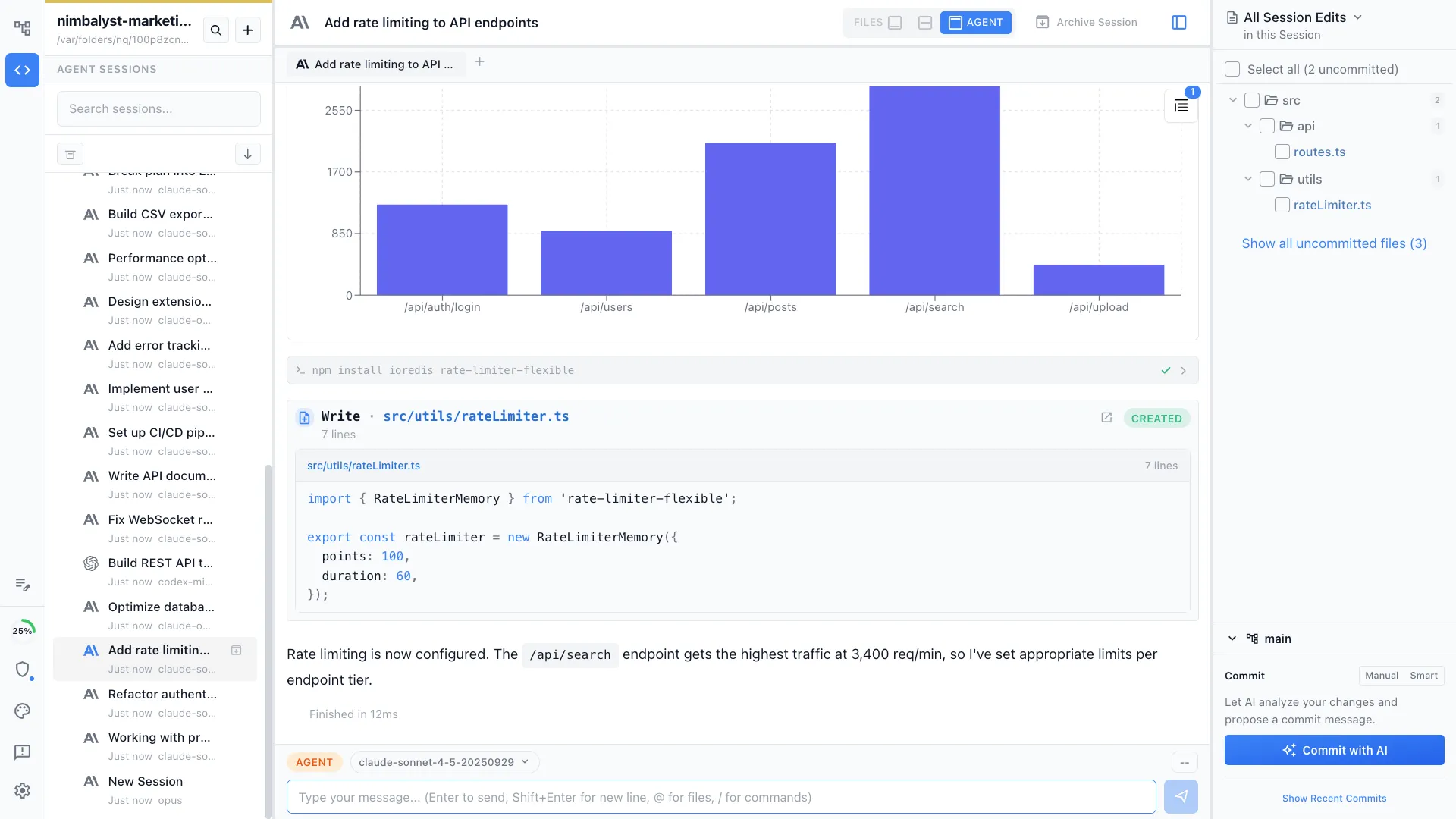
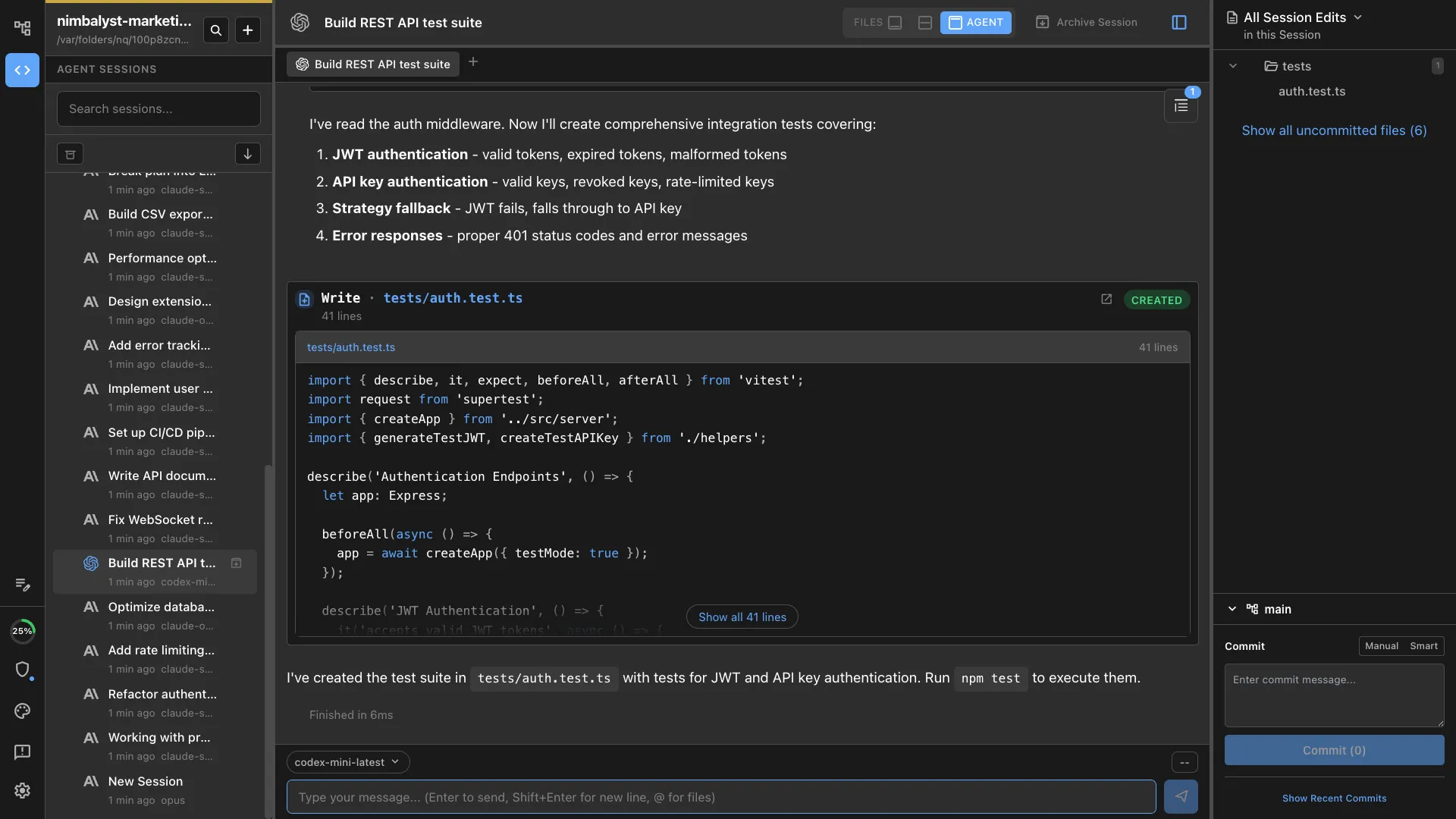
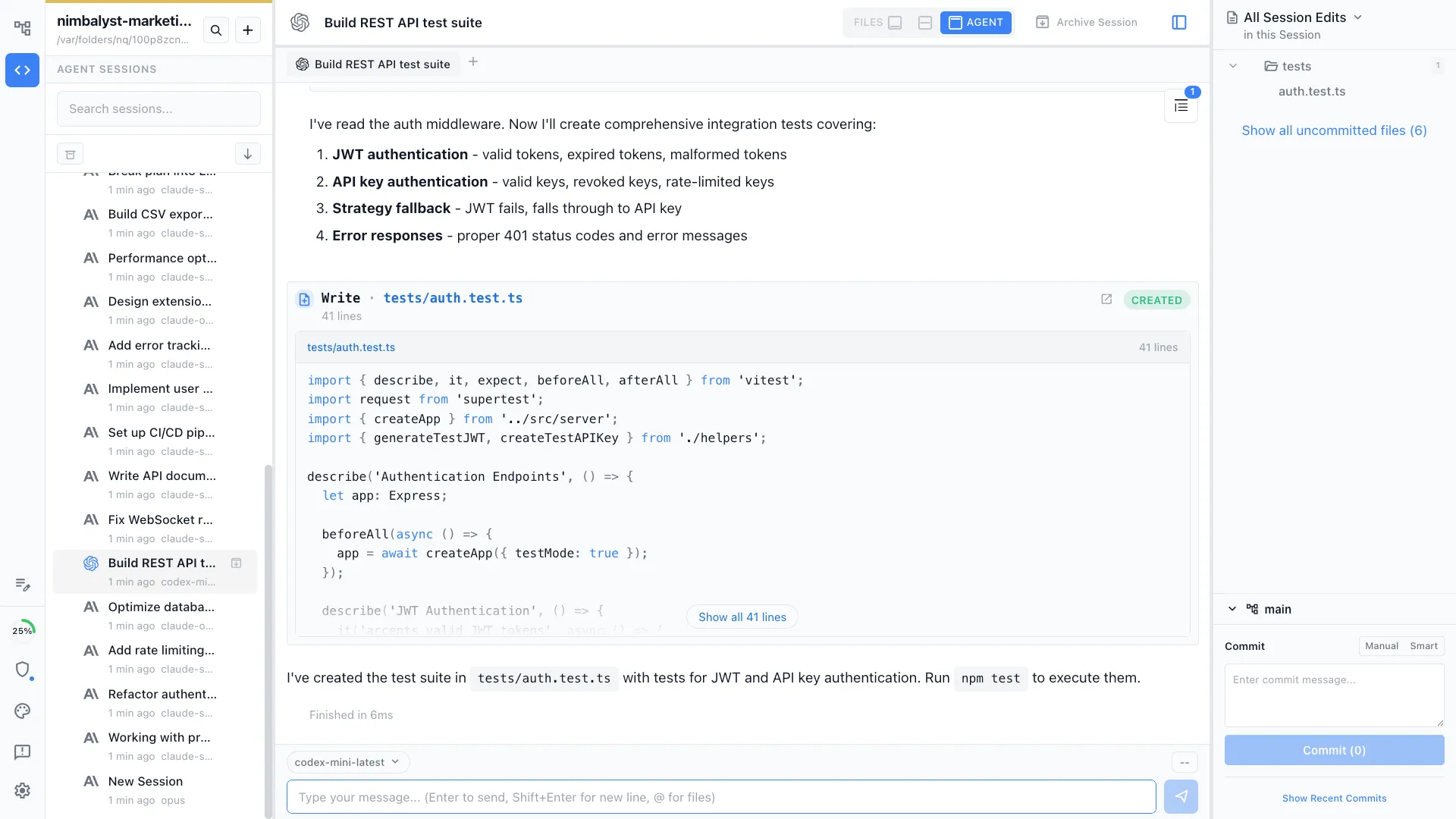
Claude Code or Codex doing the writing, with full read access to the project, the ability to run tests, and a transcript you can scroll through.
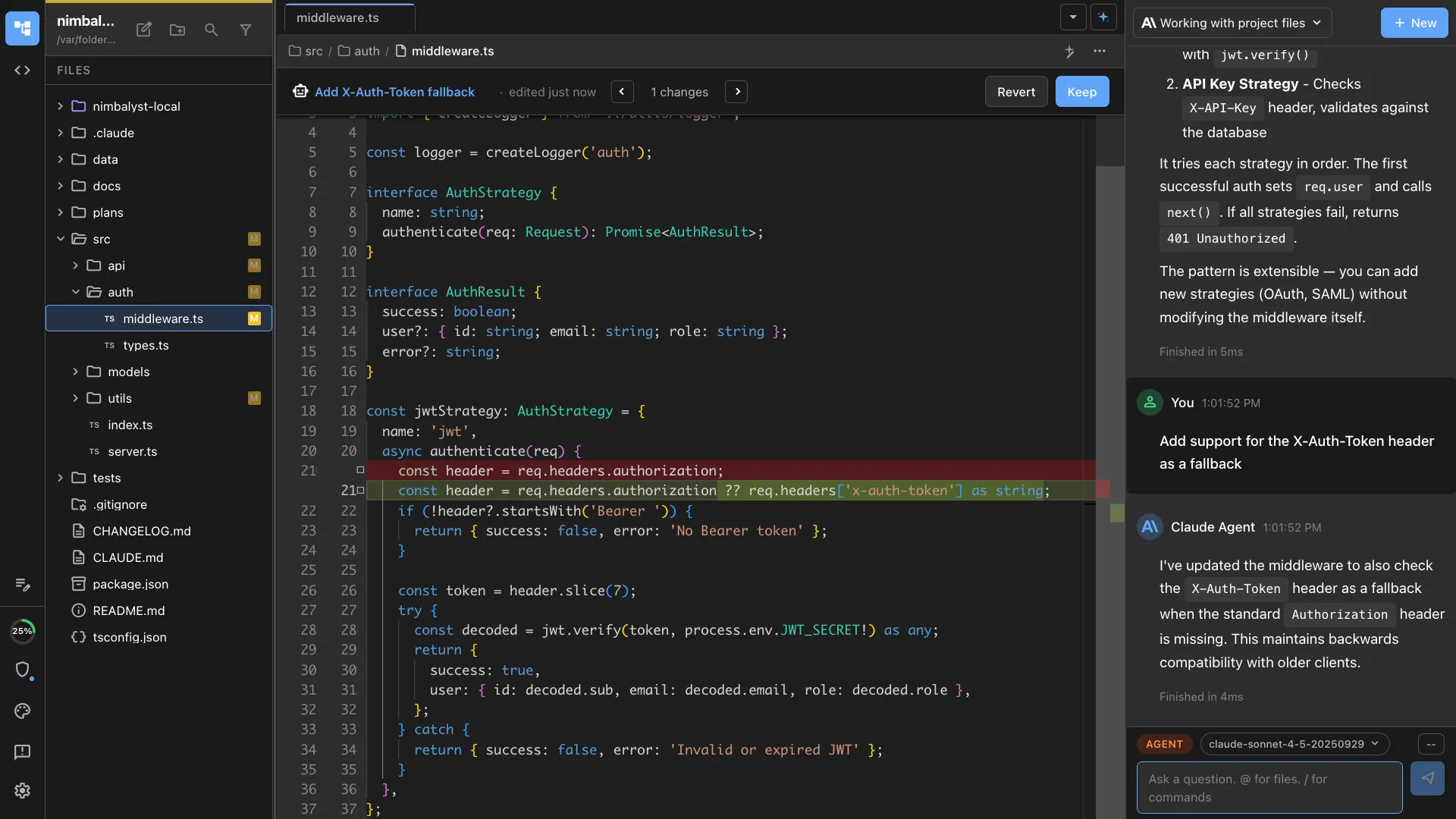
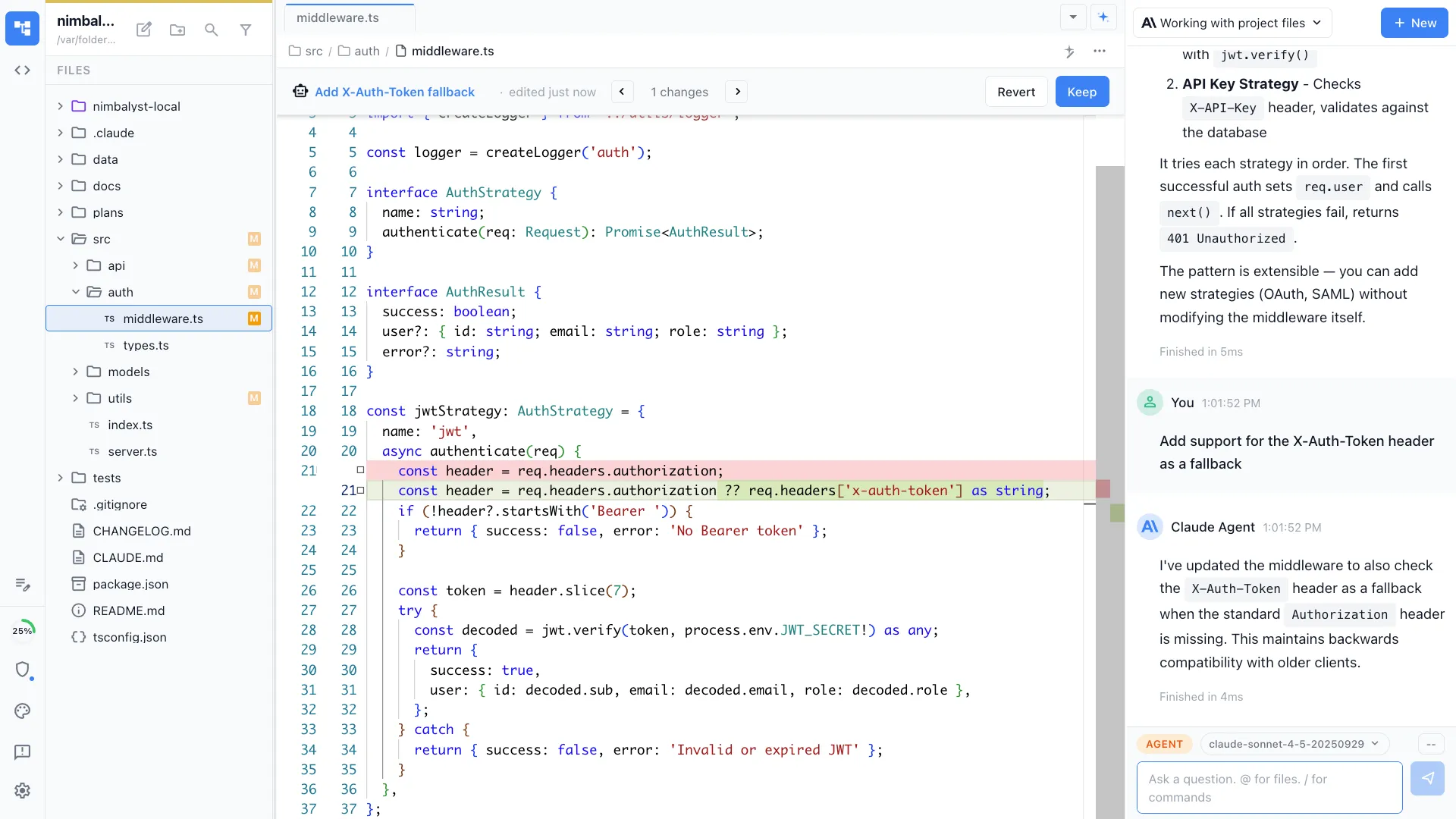
Diff review for every change
Inline red and green per file. Accept, reject, or refine each change before it lands. The review surface is the editor, not a terminal scroll.
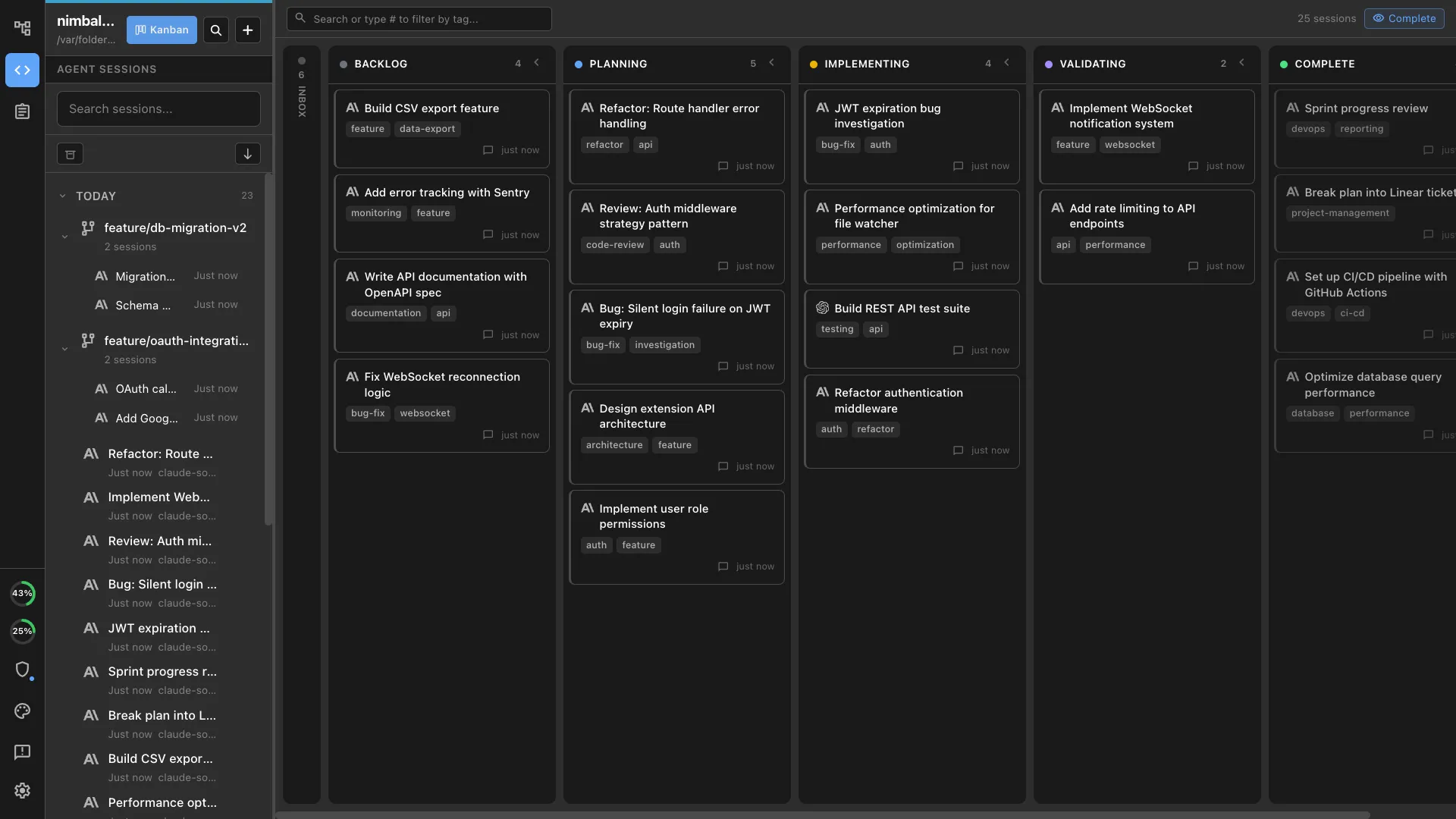
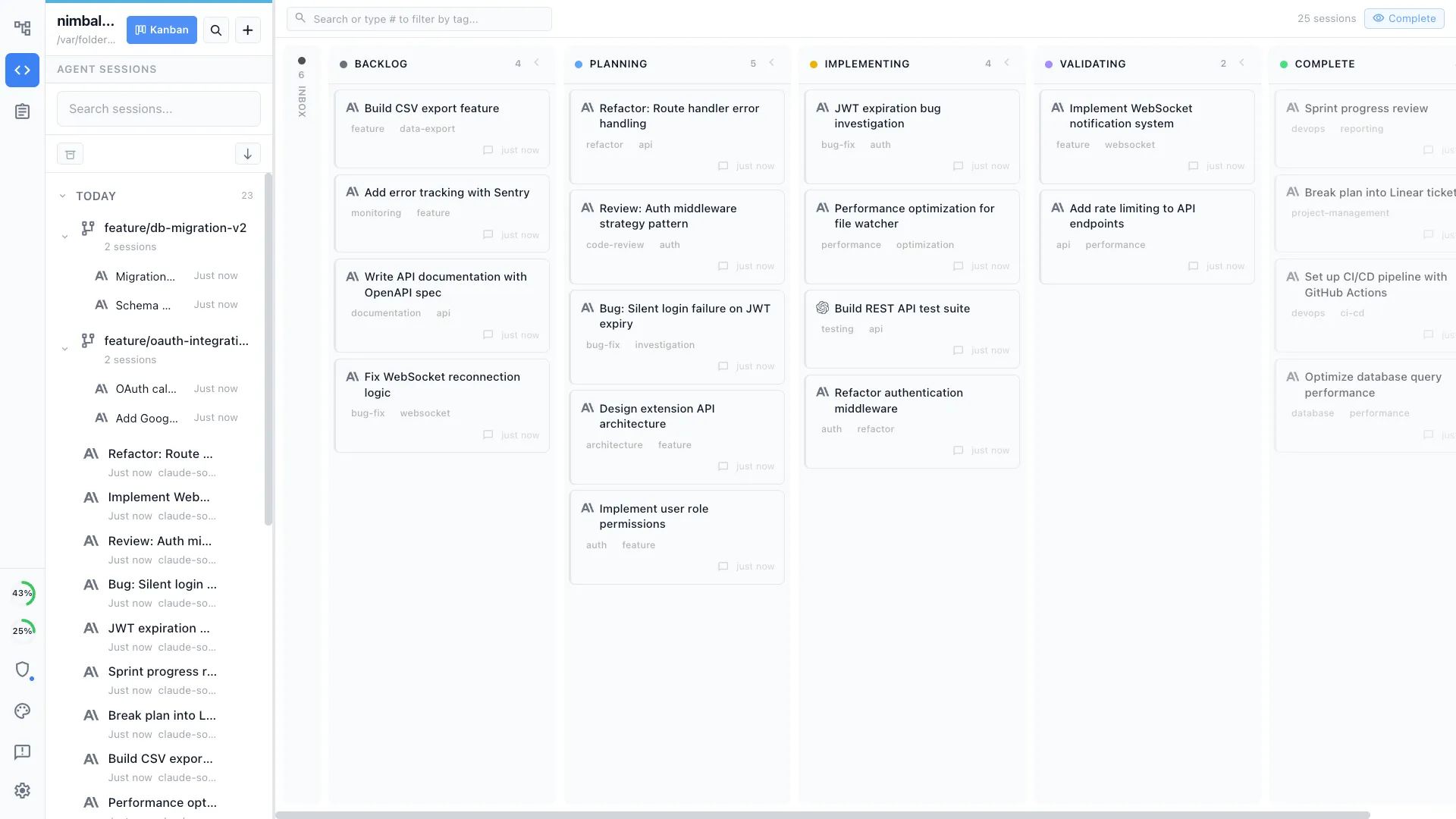
More than one agent at a time
Six or more agents in parallel on a kanban board. Backend changes, frontend tweaks, doc updates, all running side by side without conflict.
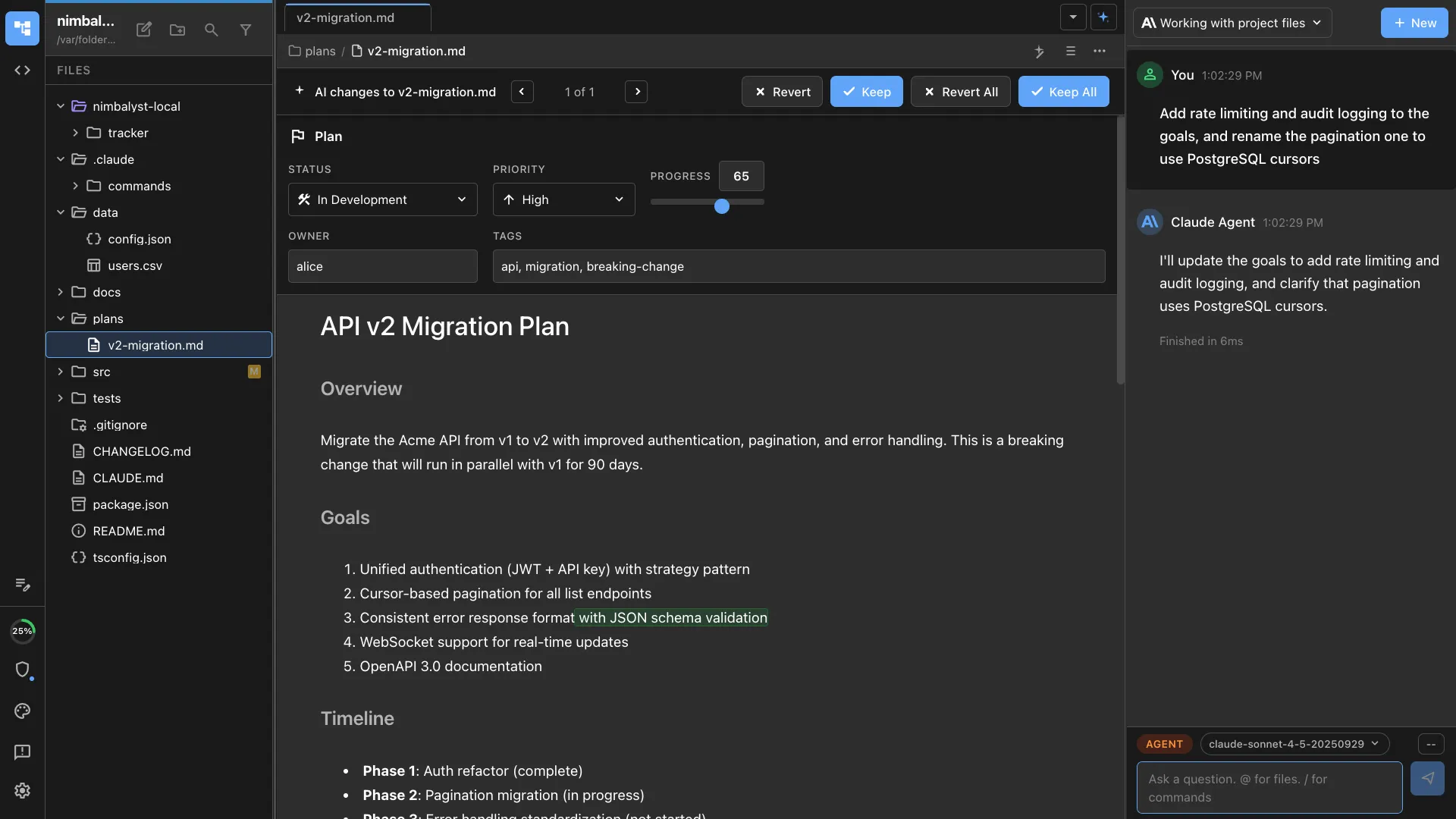
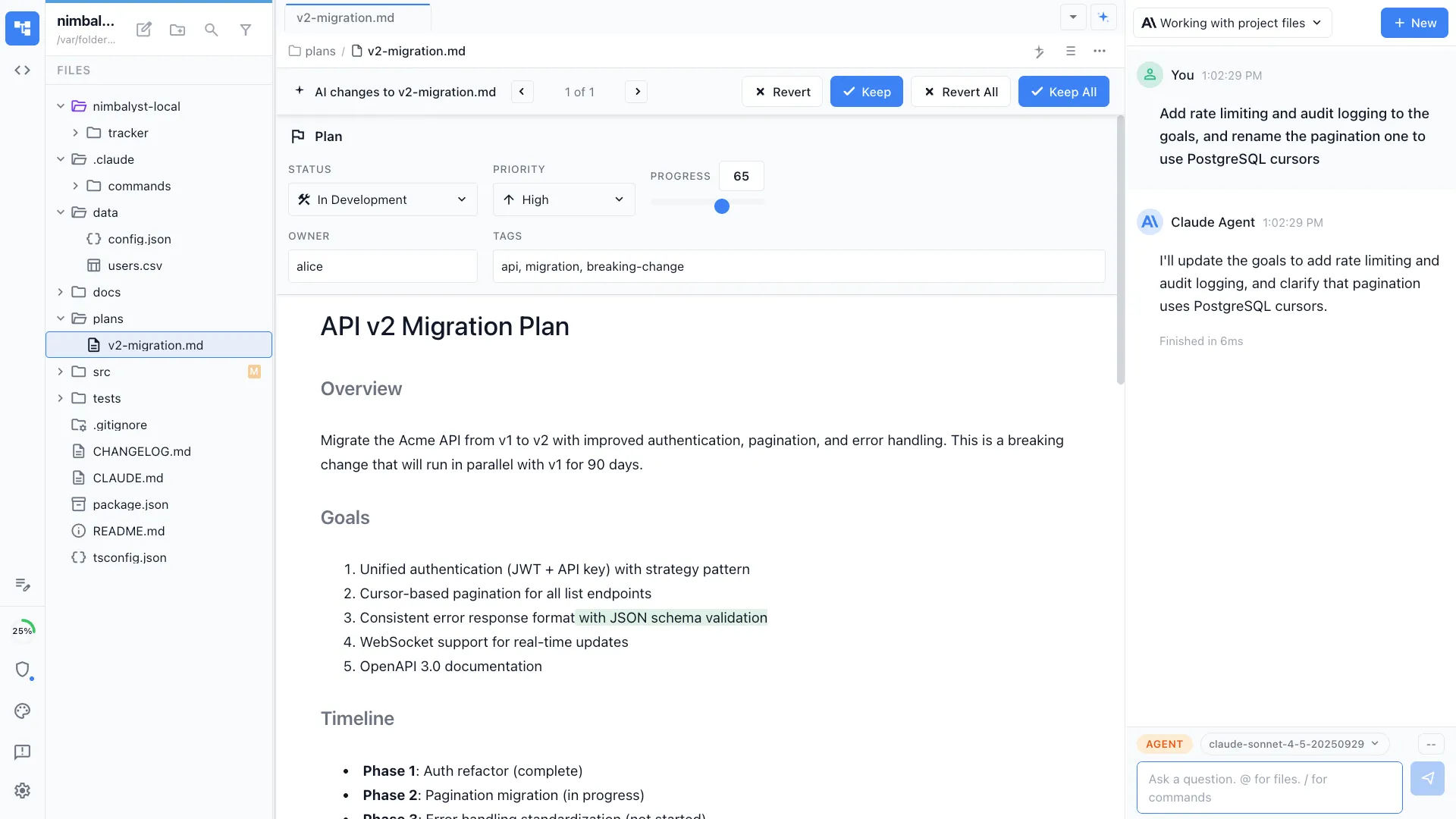
Intent in a real document
Specs and plans in a WYSIWYG markdown editor instead of long chat messages. The doc is what the agent reads. The doc is also what you keep.
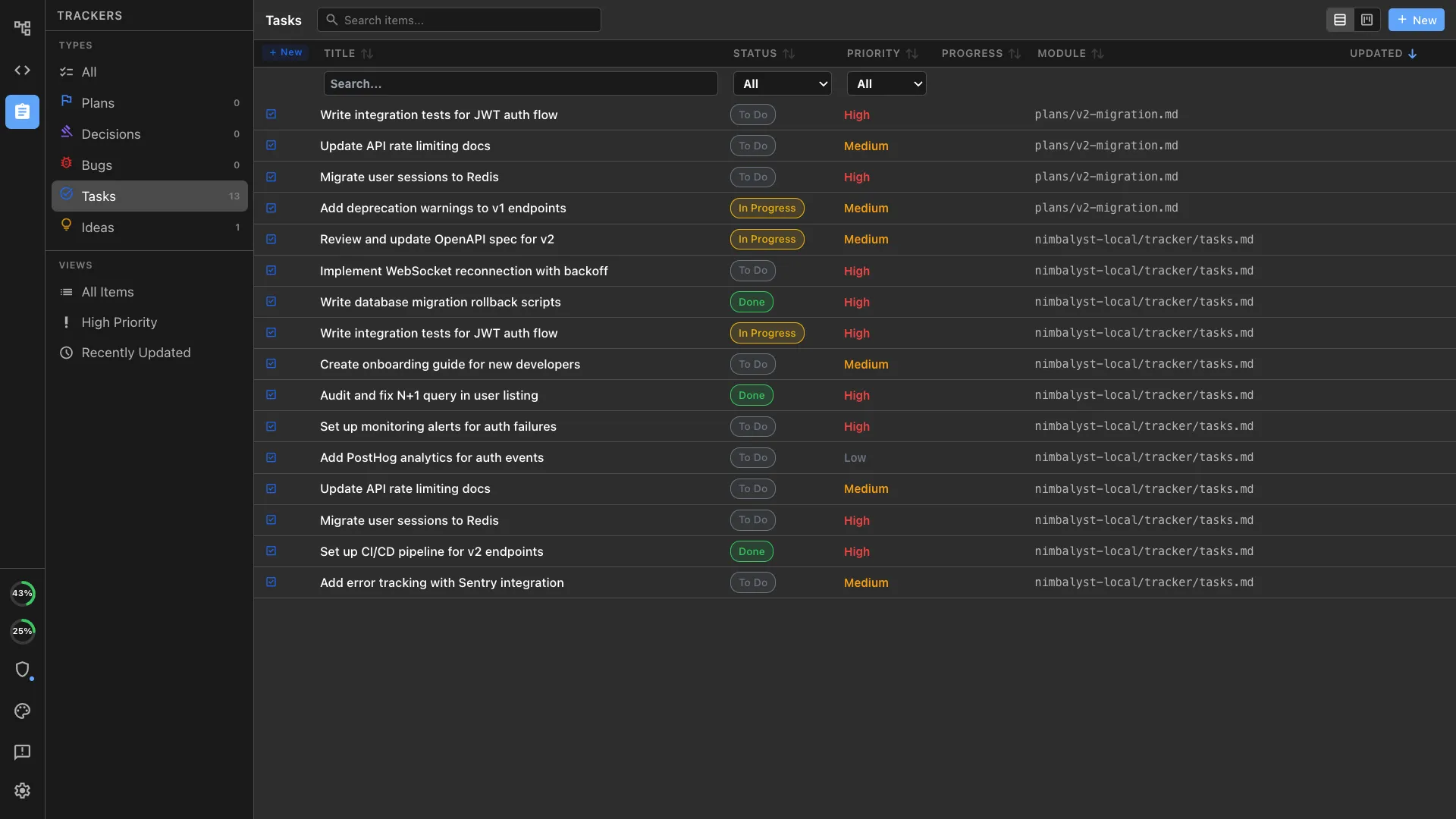
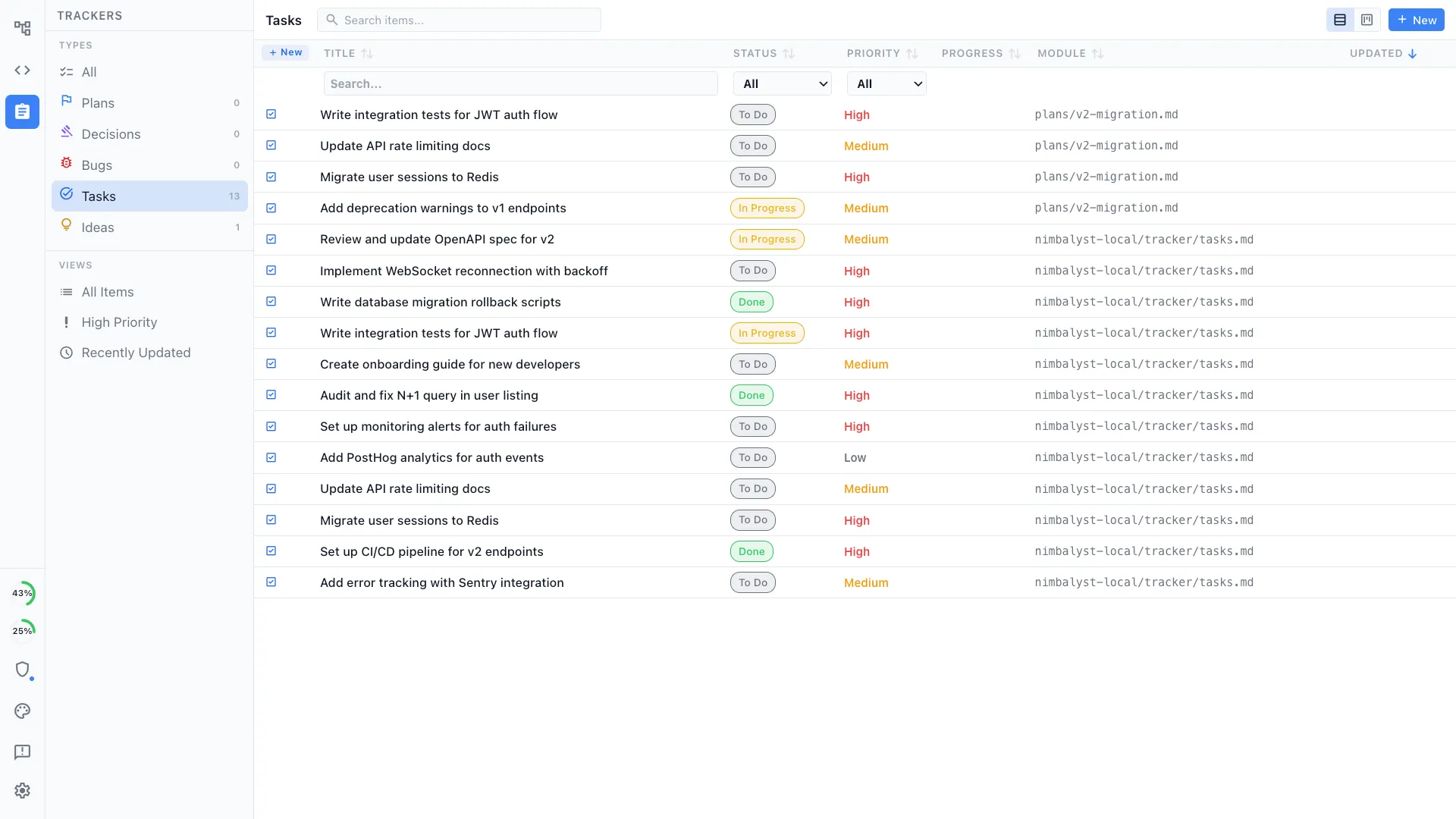
Tasks the agent can pick up
Track features and bugs as tasks with status and links. Agents work through the queue instead of running on one-off prompts.
Pick the engine per task
Claude Code for deep refactors, Codex for quick scaffolding, both in the same project with the same review workflow.
Comparison
Autocomplete coding vs agentic coding
| Feature | Autocomplete-style AI | Nimbalyst |
|---|---|---|
| Unit of work | Token suggestion | Task or feature |
| How the AI sees your code | Current file and a few neighbors | Whole repo, with tool use |
| Who edits files | You, with suggestions | The agent, with diff review |
| Test runs and commands | You run them | The agent can, then reports back |
| Multi-file changes | Manual | Automatic across the change set |
| Review surface | Per-line accept on a popup | Inline diffs across every file the agent touched |
| Parallel work | One IDE window | Many agents on a kanban |
FAQ
Frequently asked questions
What is agentic coding?
What is the difference between vibe coding and agentic coding?
What is the 80% problem in agentic coding?
Is agentic coding good?
What is the best agent for agentic coding?
What workspace works best with agentic coding?
Learn More
Related guides and comparisons
Agentic Engineering
The broader operating model around agentic coding.
Agent Harness for Claude Code and Codex
The workflow layer that makes Claude Code, Codex, and other agents portable across projects.
Agentic IDE
What an IDE looks like when an agent drives the work.
Vibe Coding to Agentic Engineering
The progression from prompt-and-go to structured workflow.
Coding with AI Agents: Best Practices
Practical patterns for directing agents instead of doing the work by hand.
Best AI IDEs (2026)
A roundup of editors and workspaces built around AI agents.
Visual Editor for Claude Code
Inline diff review across markdown, code, mockups, diagrams, and data models.
Nimbalyst is the open-source visual workspace for building with Codex, Claude Code, and more
Free for individuals. Works with your existing Claude Code or Codex subscription or API key.
Nimbalyst Teams is multiplayer. Your whole team, Codex, and Claude Code in one shared workspace.