Agentic engineering
Agentic engineering is a workflow, not a tool.
Agents write code. Humans set intent, plan the work, review the diffs, and coordinate across parallel sessions. Nimbalyst is the visual workspace where that workflow runs end to end.
Free for individuals. Works with your existing Claude Code or Codex subscription or API key.
What agentic engineering actually means
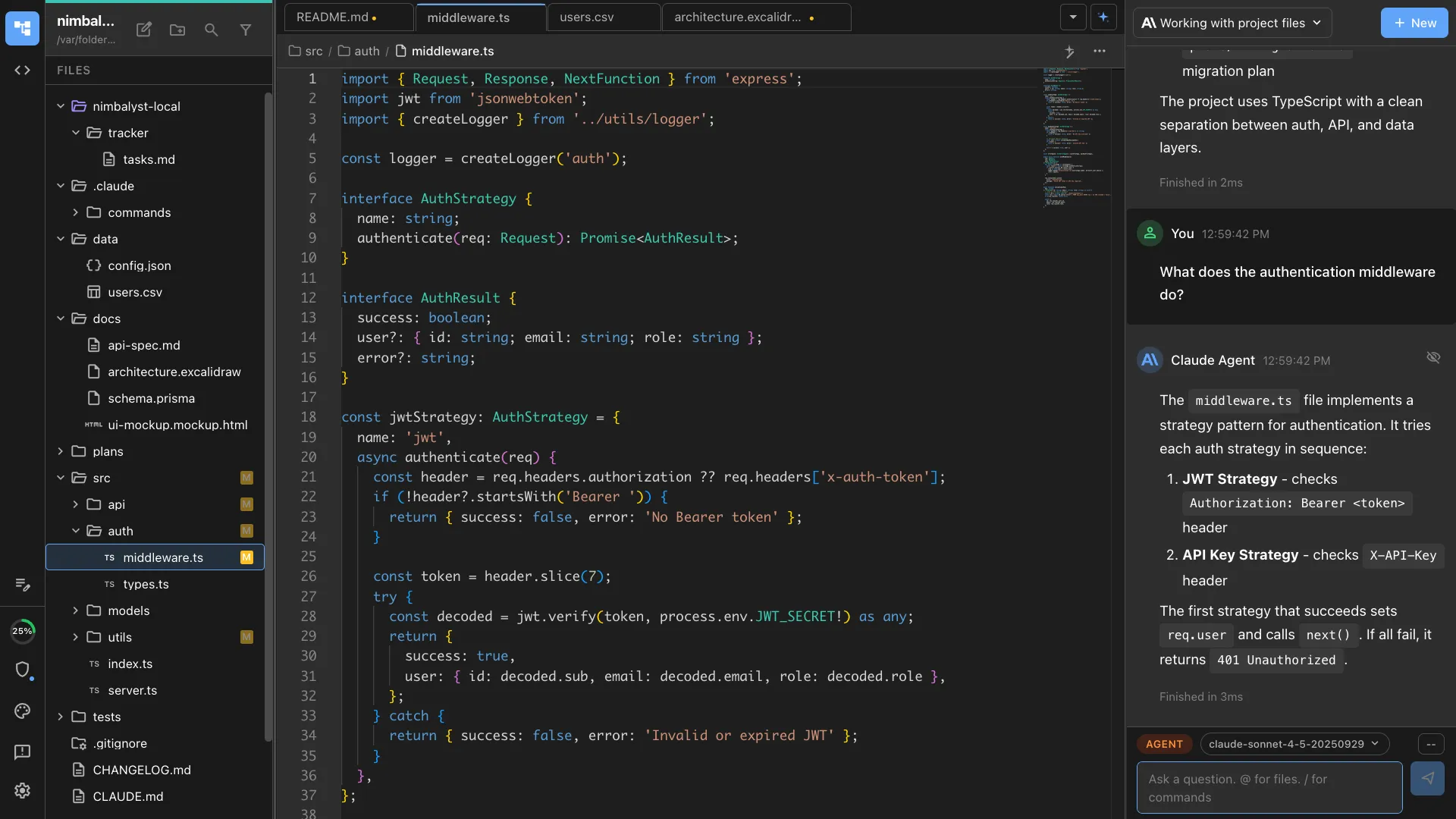
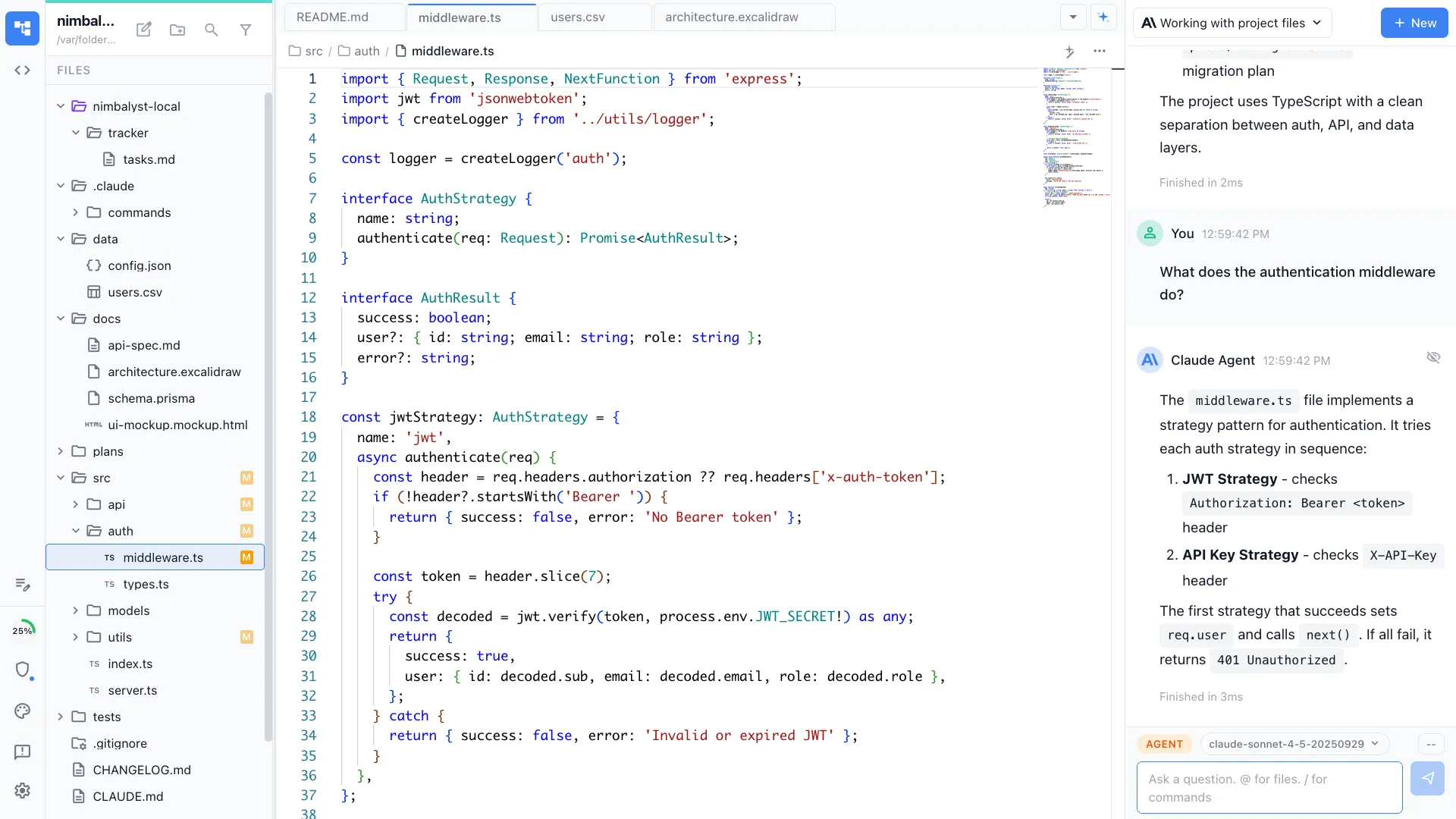
Andrej Karpathy described agentic engineering as the stage after vibe coding. Vibe coding is when you describe a thing and an agent makes it. Agentic engineering is when you direct a team of agents through structured work: specs, plans, parallel sessions, file-level review, and version control. The shift is from one prompt to one workflow.
It is not a new IDE category. It is the operating model for software work in 2026. Engineers spend less time typing characters and more time defining intent, breaking down tasks, choosing the right agent for each job, and reviewing what comes back. The tooling has to match that. A chat window does not.
Why Nimbalyst
What agentic engineering needs from a workspace
Specs as inputs
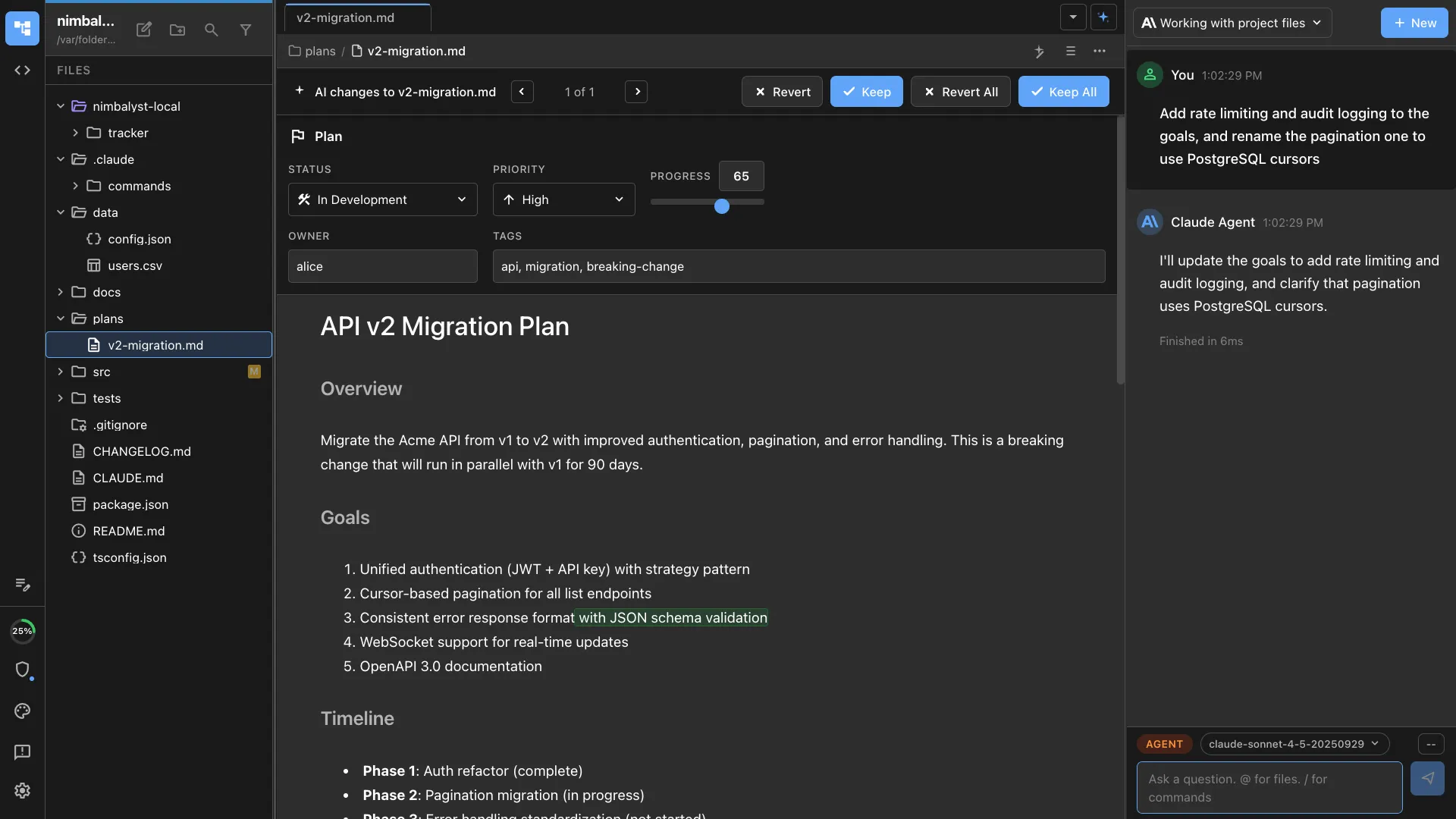
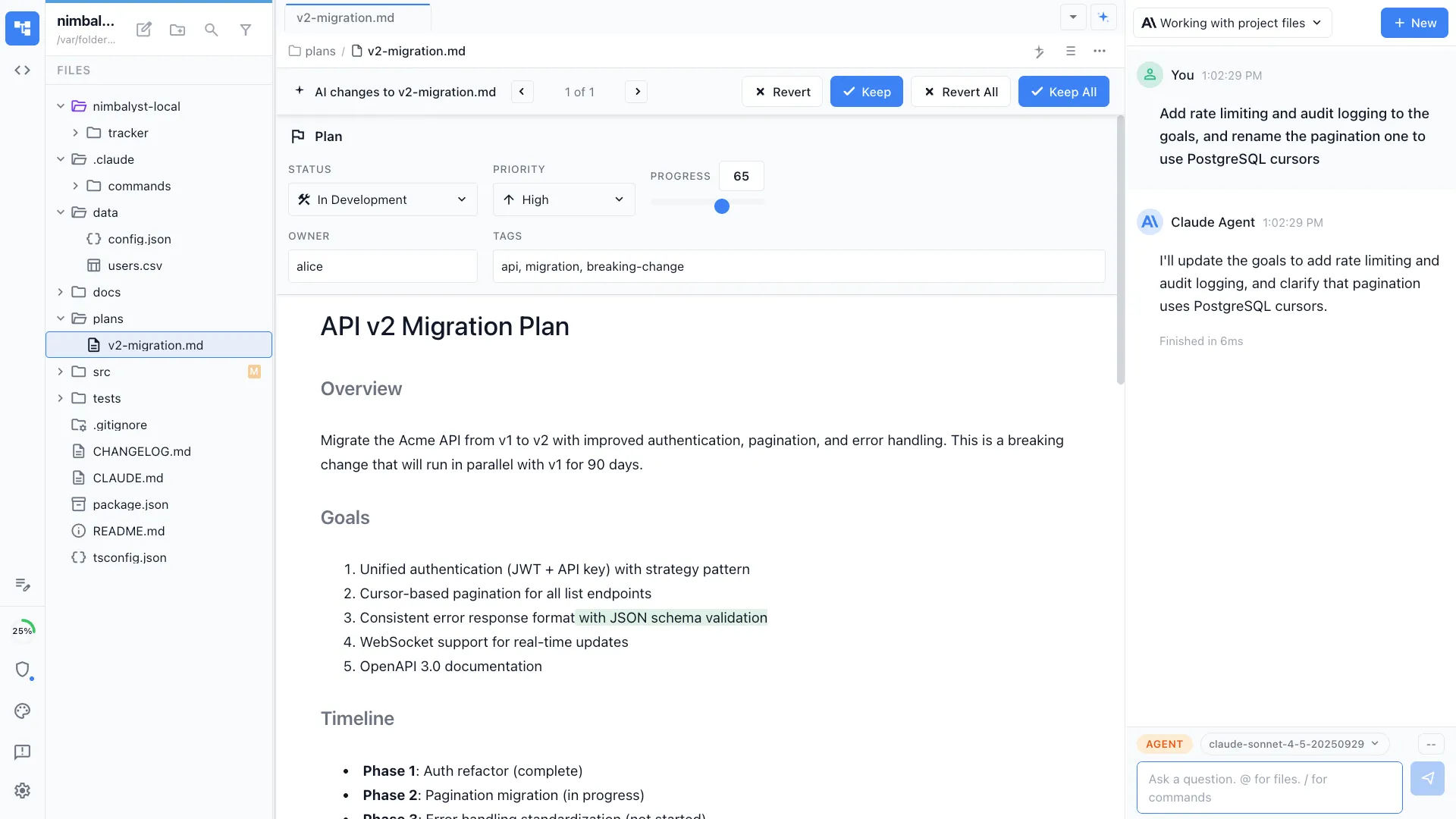
Write structured specs, plans, and architecture notes in a WYSIWYG markdown editor. Agents read them, execute against them, and update them. The doc is the brief.
Plans agents can execute
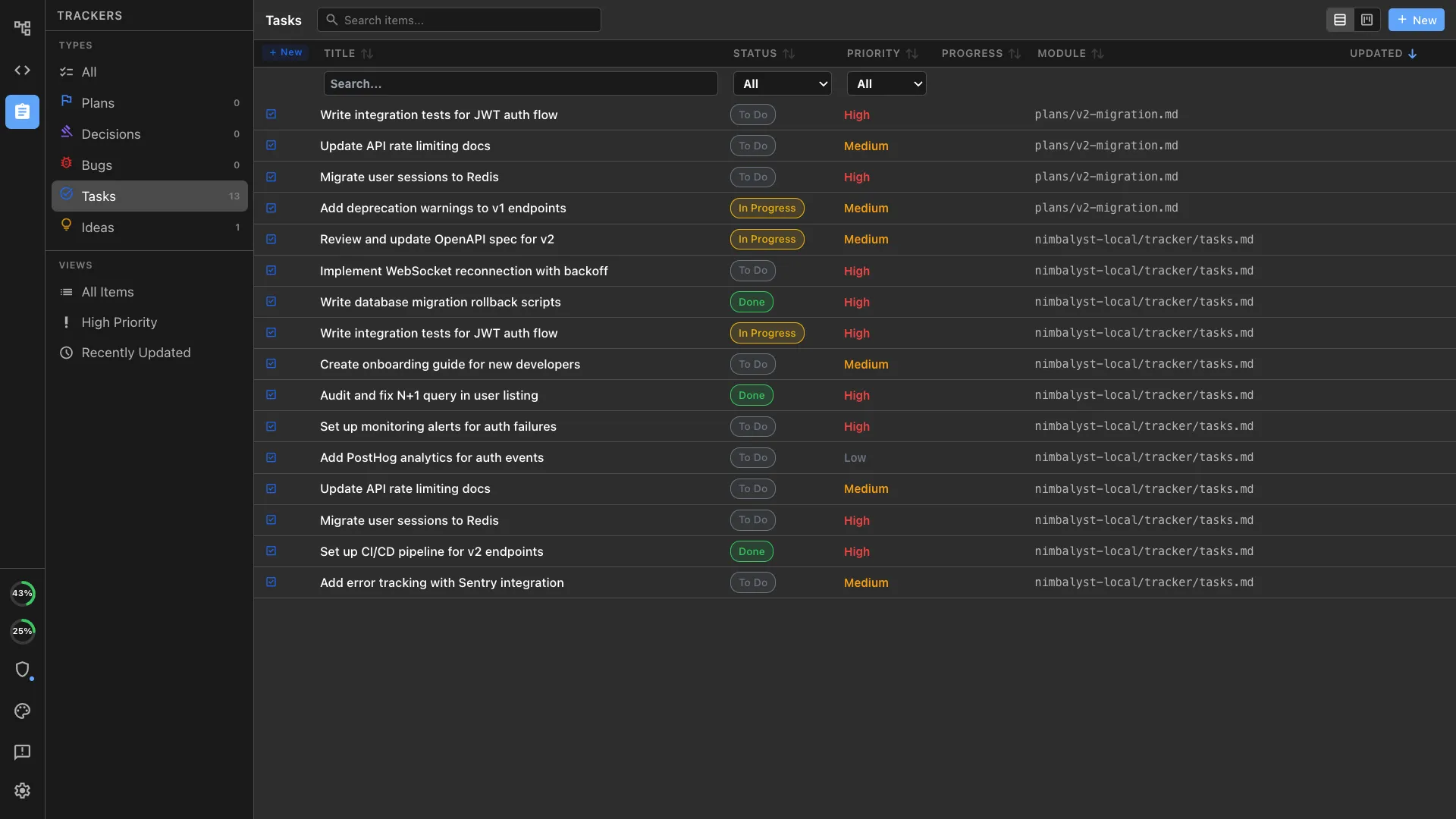
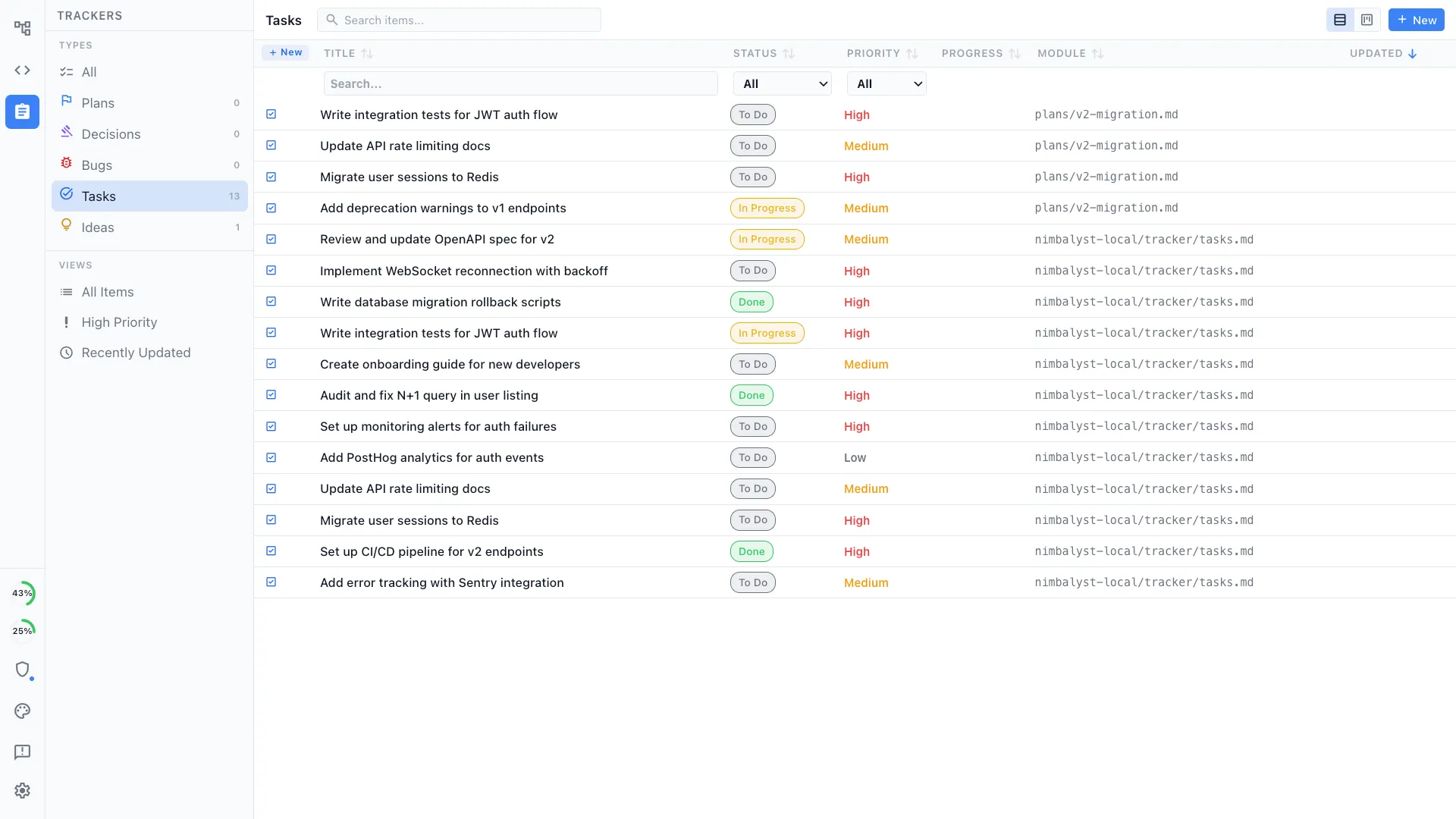
Break work into tracked tasks with status, owners, and links to files. Agents pick up tasks, do the work, and report back into the same plan.
Parallel agent orchestration
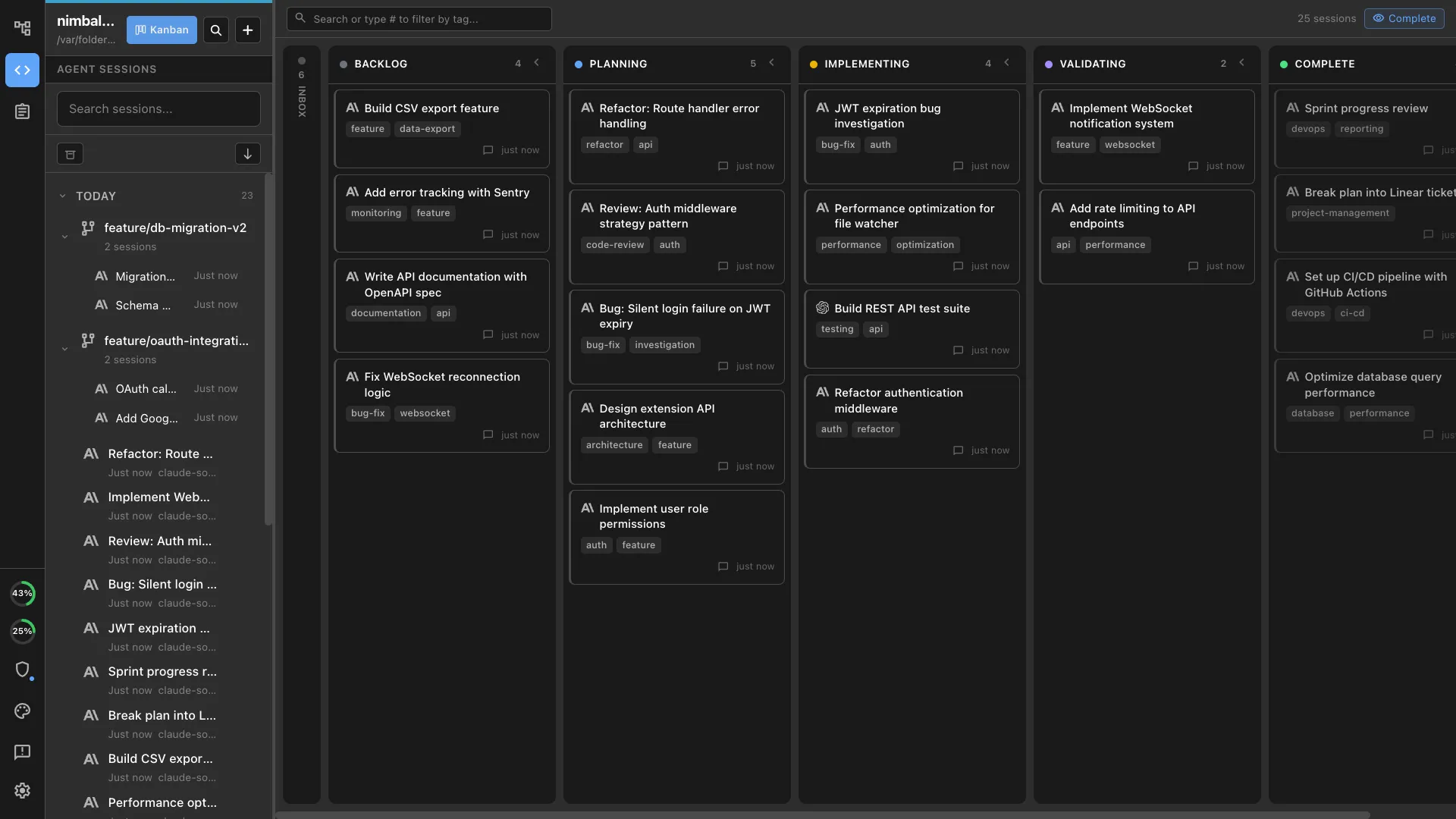
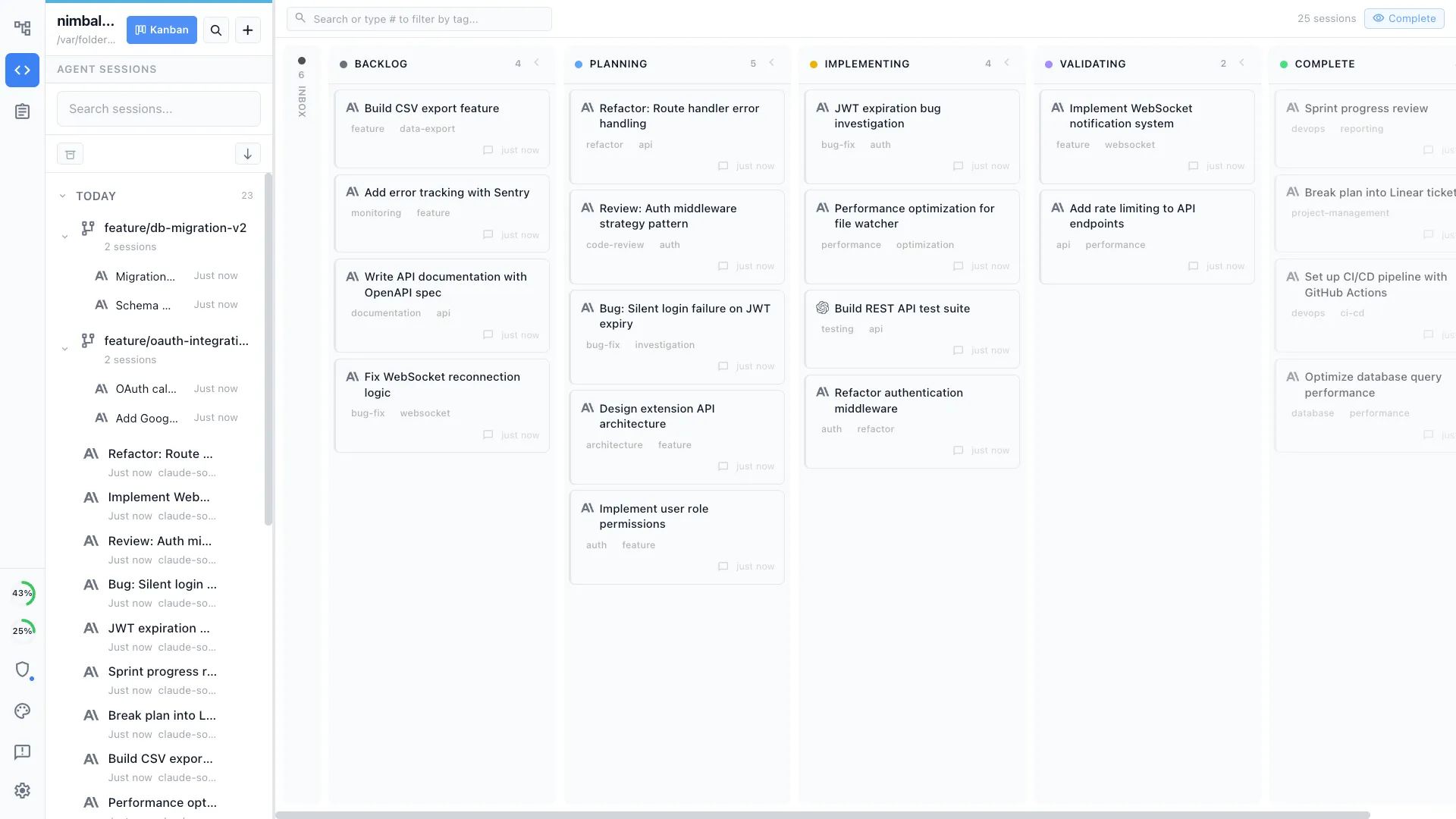
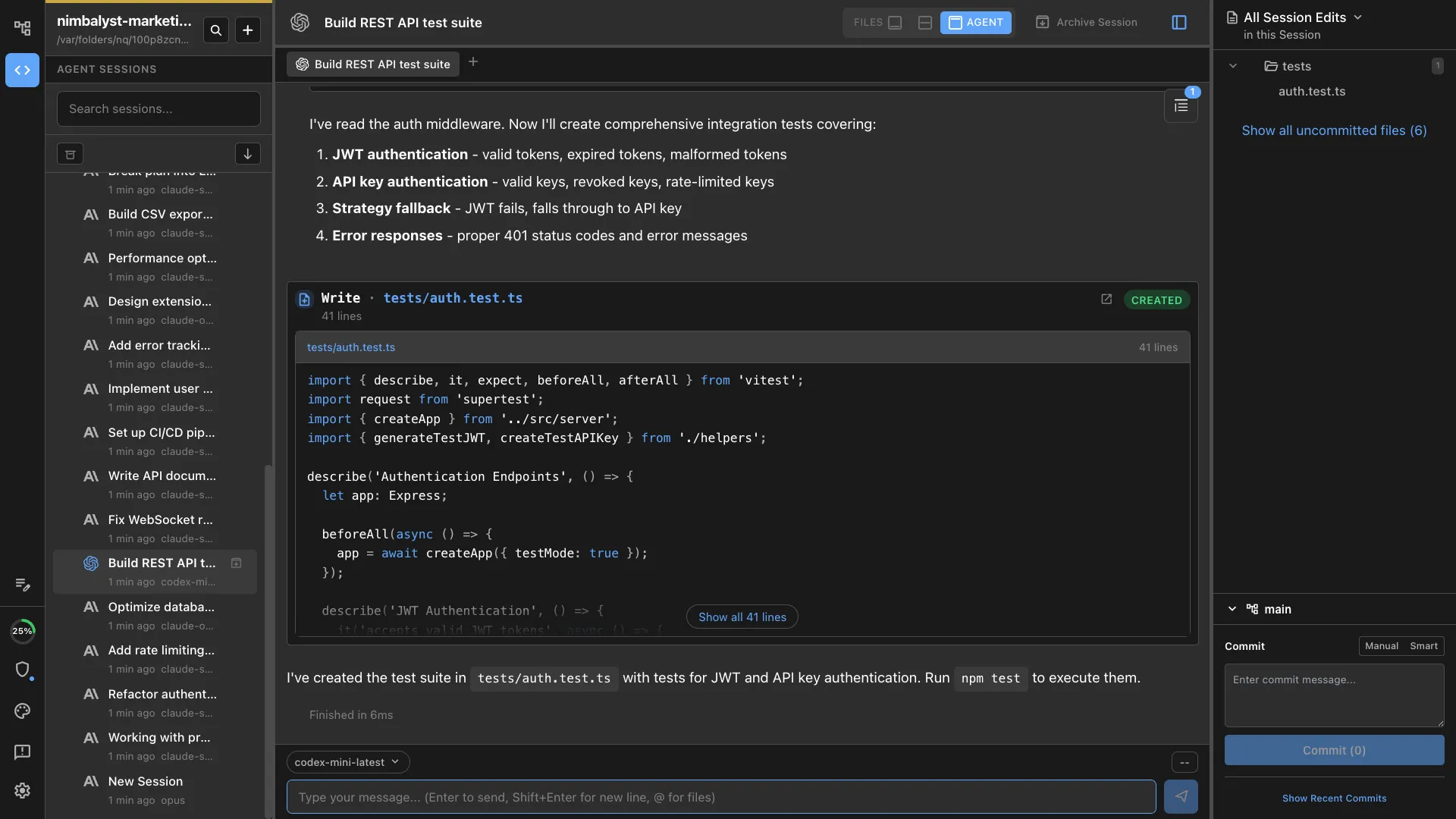
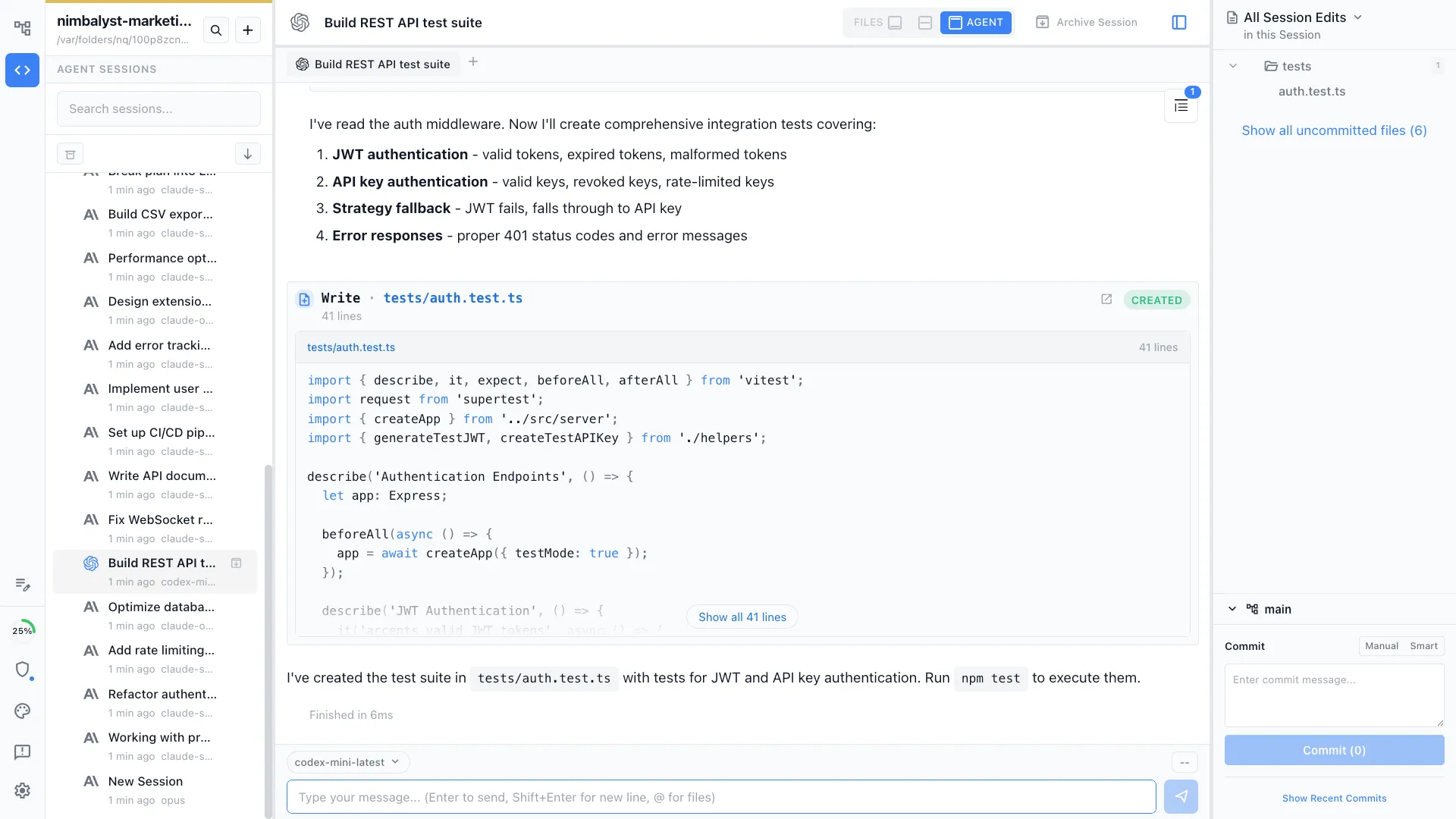
Run six or more agents in parallel on a kanban board. Frontend, API, tests, docs, refactors, all moving at once with visible status.
File-by-file review
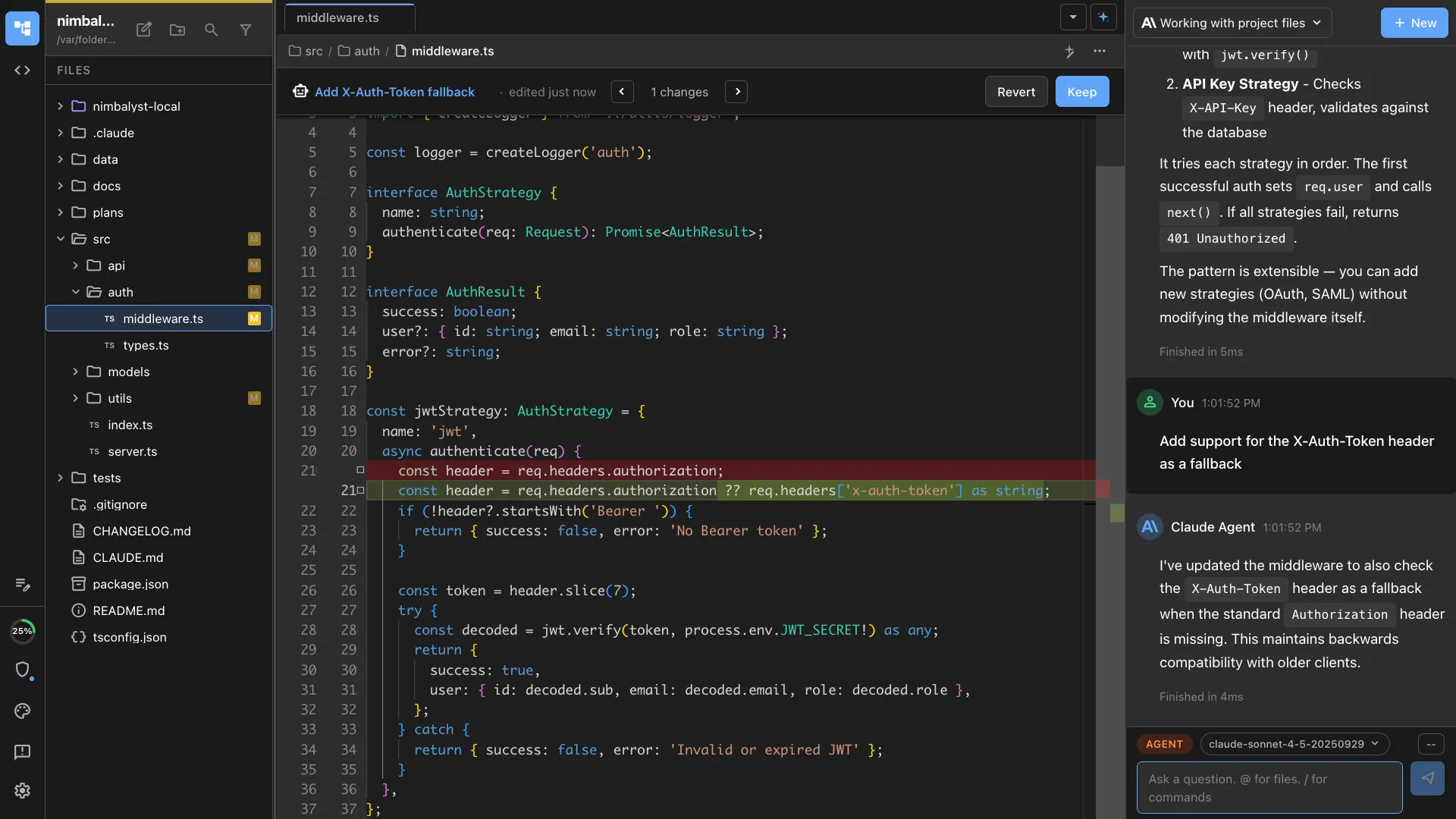
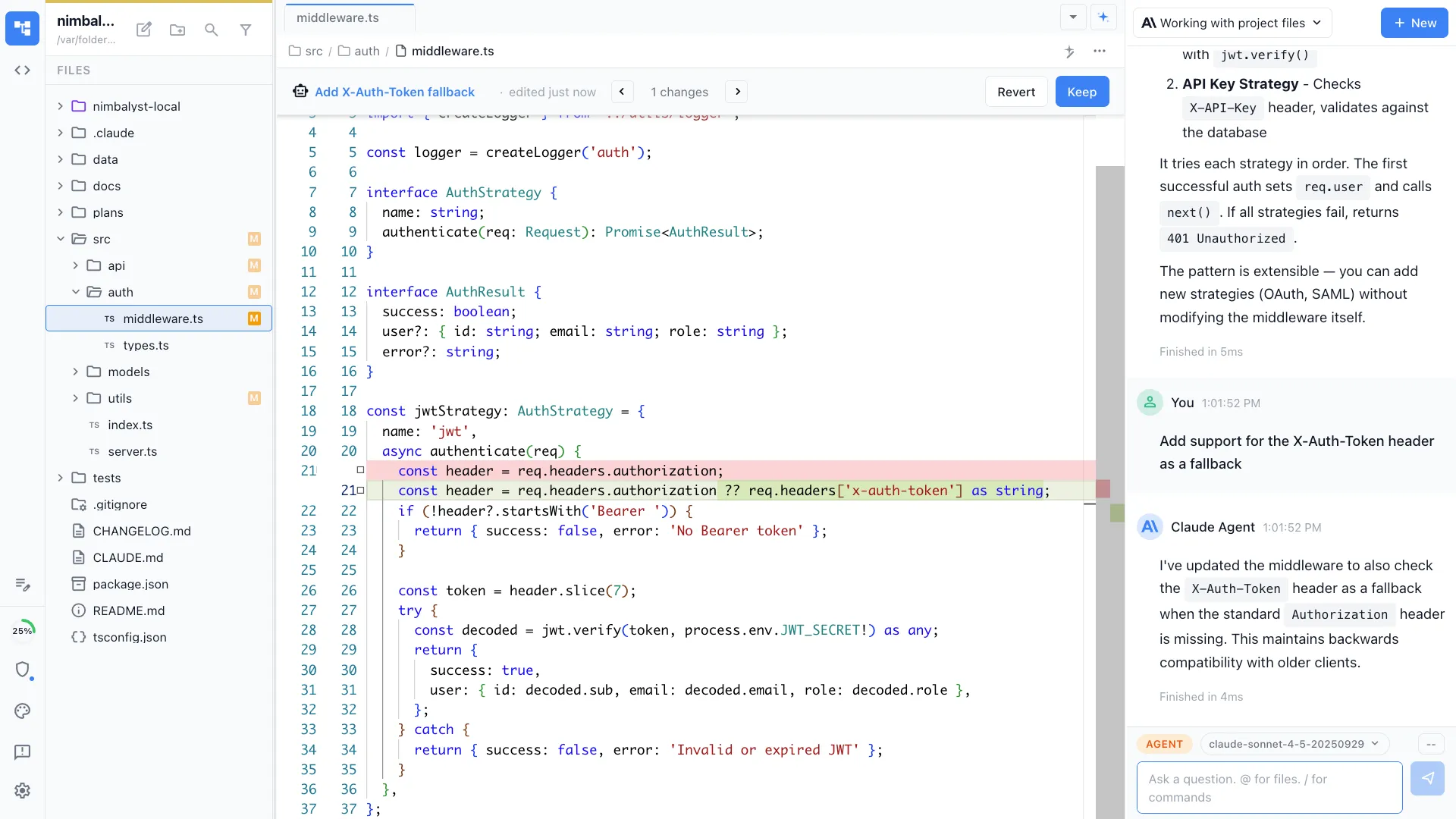
Every agent change shows as red and green inline. Approve, reject, or refine each one before it lands. Review scales with the agents.
Visual context, not just text
Mockups, Excalidraw diagrams, and data models live next to the code. Agents read the visual context so the brief is precise.
Right agent for the job
Claude Code for deep reasoning. Codex for fast iteration. Both running in the same project, on the same kanban, reviewed in the same viewer.
Comparison
Vibe coding vs agentic engineering
| Feature | Vibe coding | Nimbalyst |
|---|---|---|
| Operating model | One prompt, one session | Plan, parallel agents, structured review |
| Inputs to the agent | Chat message | Specs, mockups, diagrams, task plans |
| Number of agents | One | Many in parallel |
| Review | Read the chat | Inline diffs per file with accept and reject |
| Coordination | Manual context switching | Kanban across sessions |
| Agent choice | Whatever the tool ships | Claude Code and Codex, picked per task |
| Where the work lives | Chat history | Files, tasks, sessions, diffs |
FAQ
Frequently asked questions
What is agentic engineering?
What is an agentic engineer?
How is agentic engineering different from vibe coding?
What tools do agentic engineers use?
Is agentic engineering only for experienced developers?
Where does Nimbalyst fit?
Learn More
Related guides and comparisons
Agent Harness for Claude Code and Codex
The durable workflow layer around agents, context, review, provenance, and coordination.
Agentic Engineering Workflow
A deeper walkthrough of how the practice works inside a visual workspace.
Agentic Coding
How agents write code, where the practice fits, and what changes day to day.
Vibe Coding to Agentic Engineering
The transition from prompt-and-go to a structured workflow.
Coding with AI Agents: Best Practices
How to direct agents instead of doing the work character by character.
Session Management
Parallel agent sessions on a kanban board, with status and search.
Visual Editor for Claude Code
Inline AI diff review across markdown, code, mockups, diagrams, and data models.
Nimbalyst is the open-source visual workspace for building with Codex, Claude Code, and more
Free for individuals. Works with your existing Claude Code or Codex subscription or API key.
Nimbalyst Teams is multiplayer. Your whole team, Codex, and Claude Code in one shared workspace.