Comparison
Nimbalyst vs Obsidian
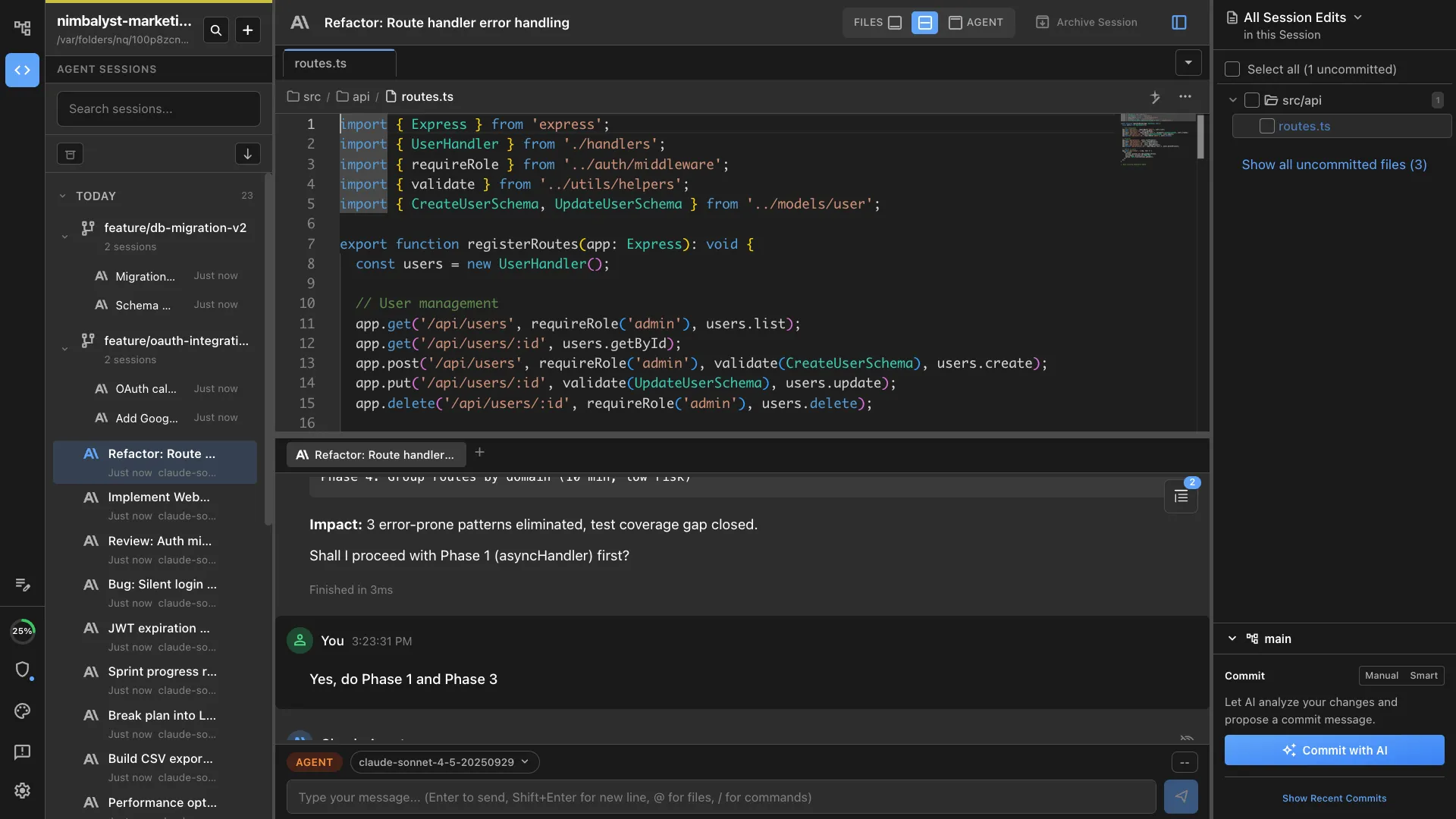
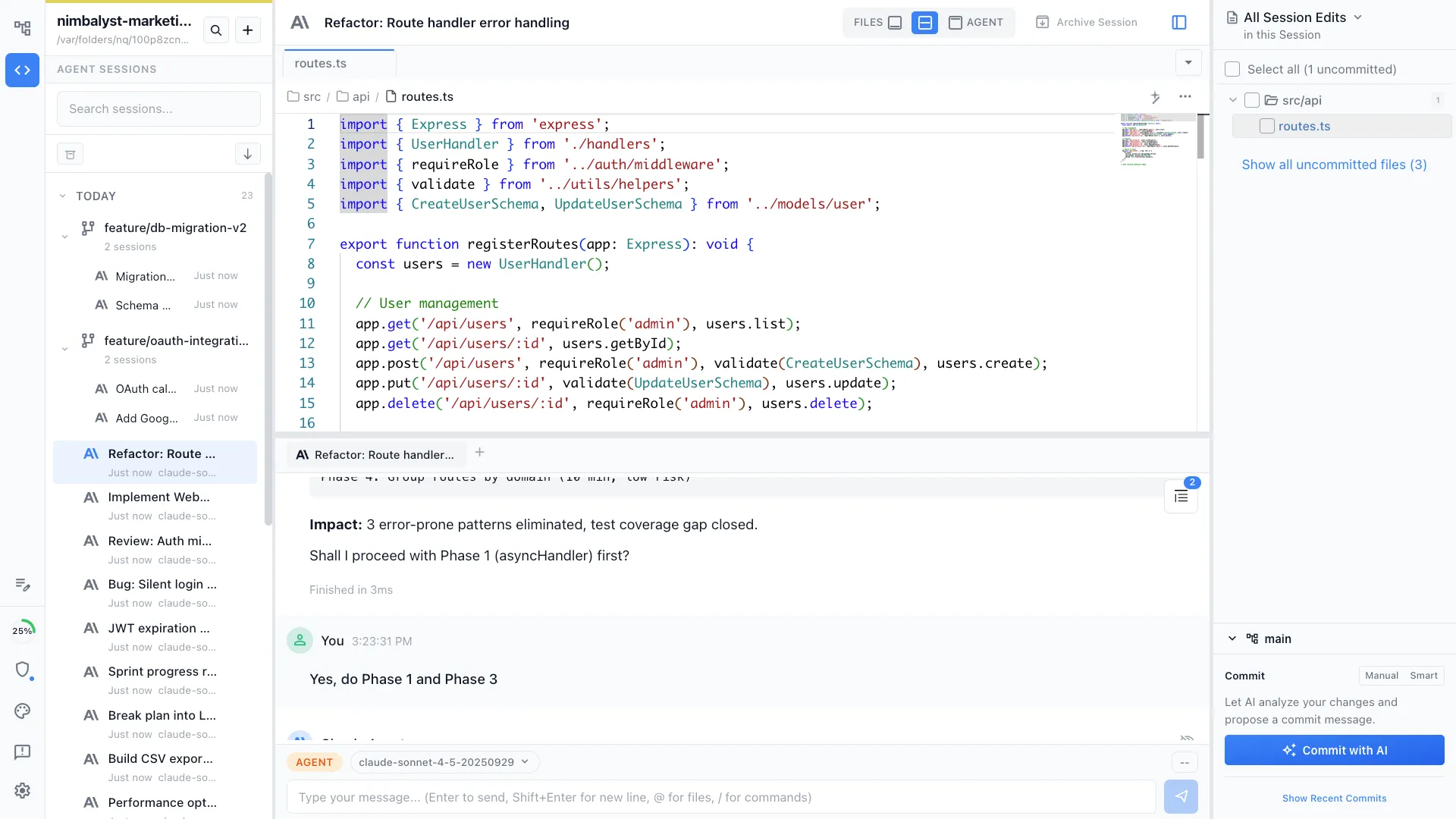
Obsidian is a knowledge base with plugins. Nimbalyst is the visual workspace for building with Codex and Claude Code. Work with your agents in sessions, track tasks, and visually edit markdown, mockups, diagrams, and code together.
Overview
Two tools, different approaches
Nimbalyst
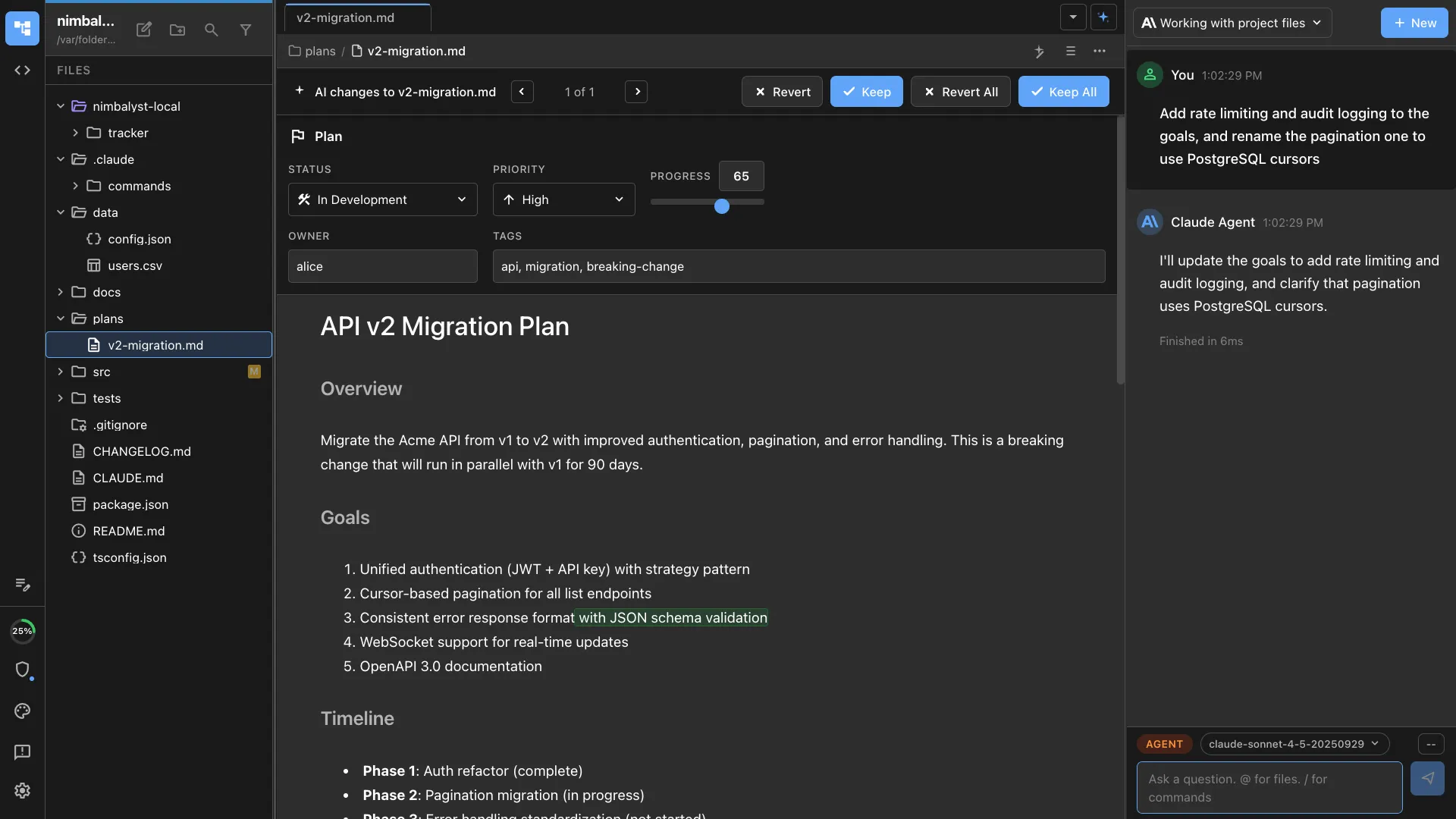
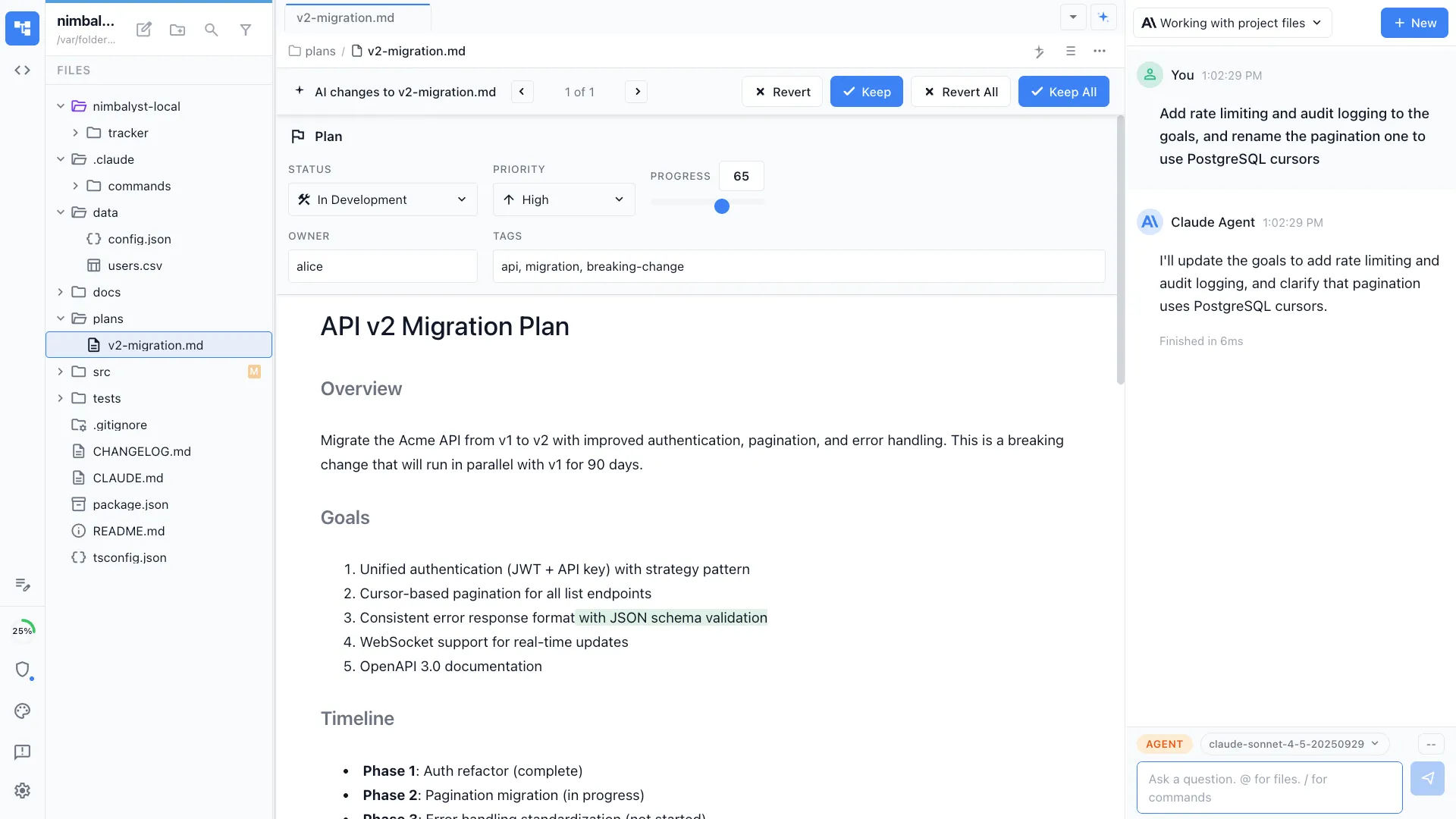
Nimbalyst is an AI-native workspace built on top of Claude Code and Codex. It adds a session kanban board for managing parallel agents, visual editors for markdown, mockups, diagrams, and data models, built-in planning and task tracking, and a mobile companion app. Notes, plans, and code live in the same environment — and your AI agents can read and act on all of them. See what your agent's changed in your markdown in red/green diffs and review/approve it.
Obsidian
Obsidian is a local-first markdown knowledge management tool. It stores notes as plain markdown files, supports bidirectional linking, and has a rich plugin ecosystem. Community plugins add AI features, but AI is not built into the core product.
Feature Comparison
Side-by-side breakdown
Nimbalyst Advantages
Where Nimbalyst shines
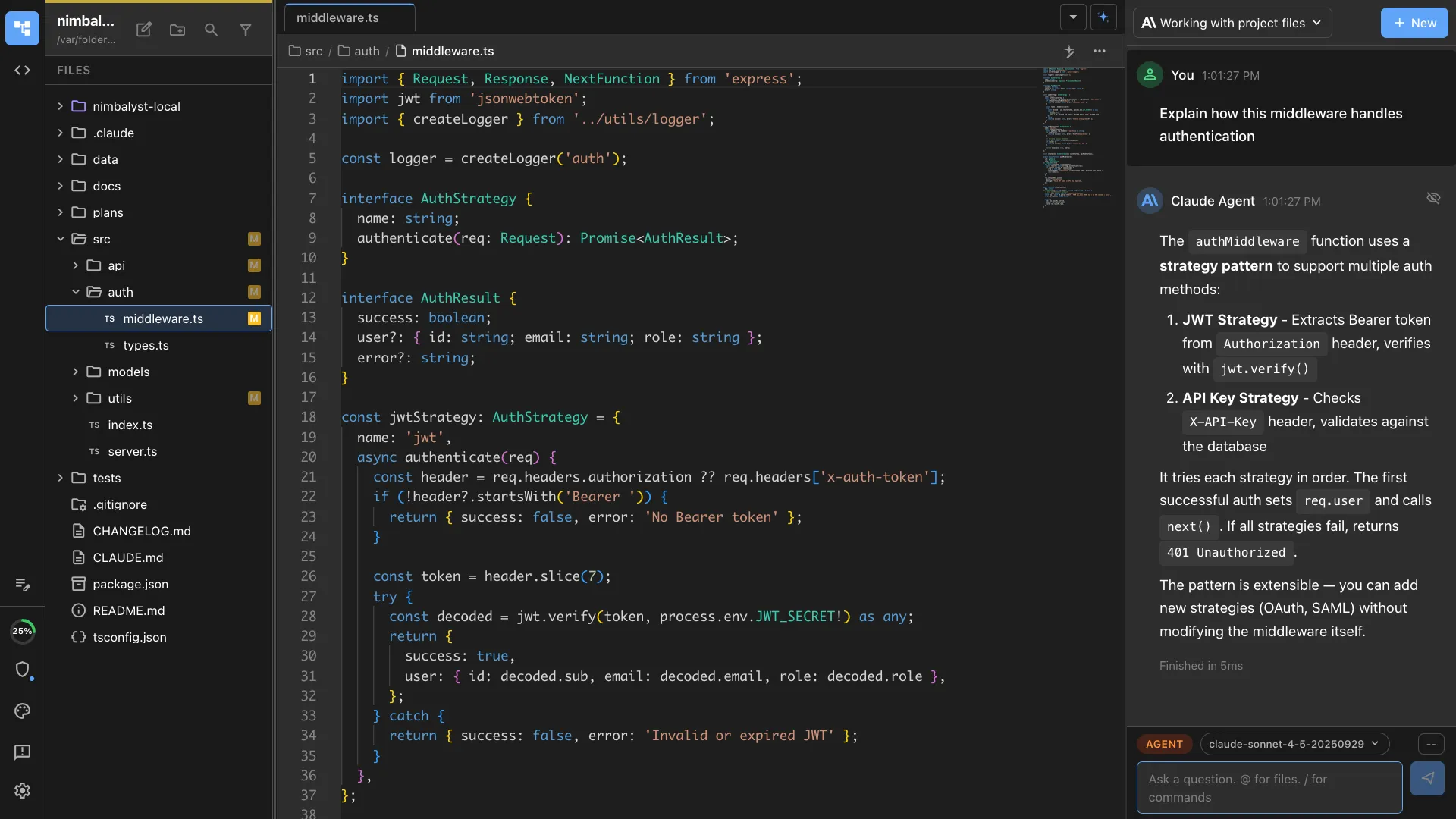
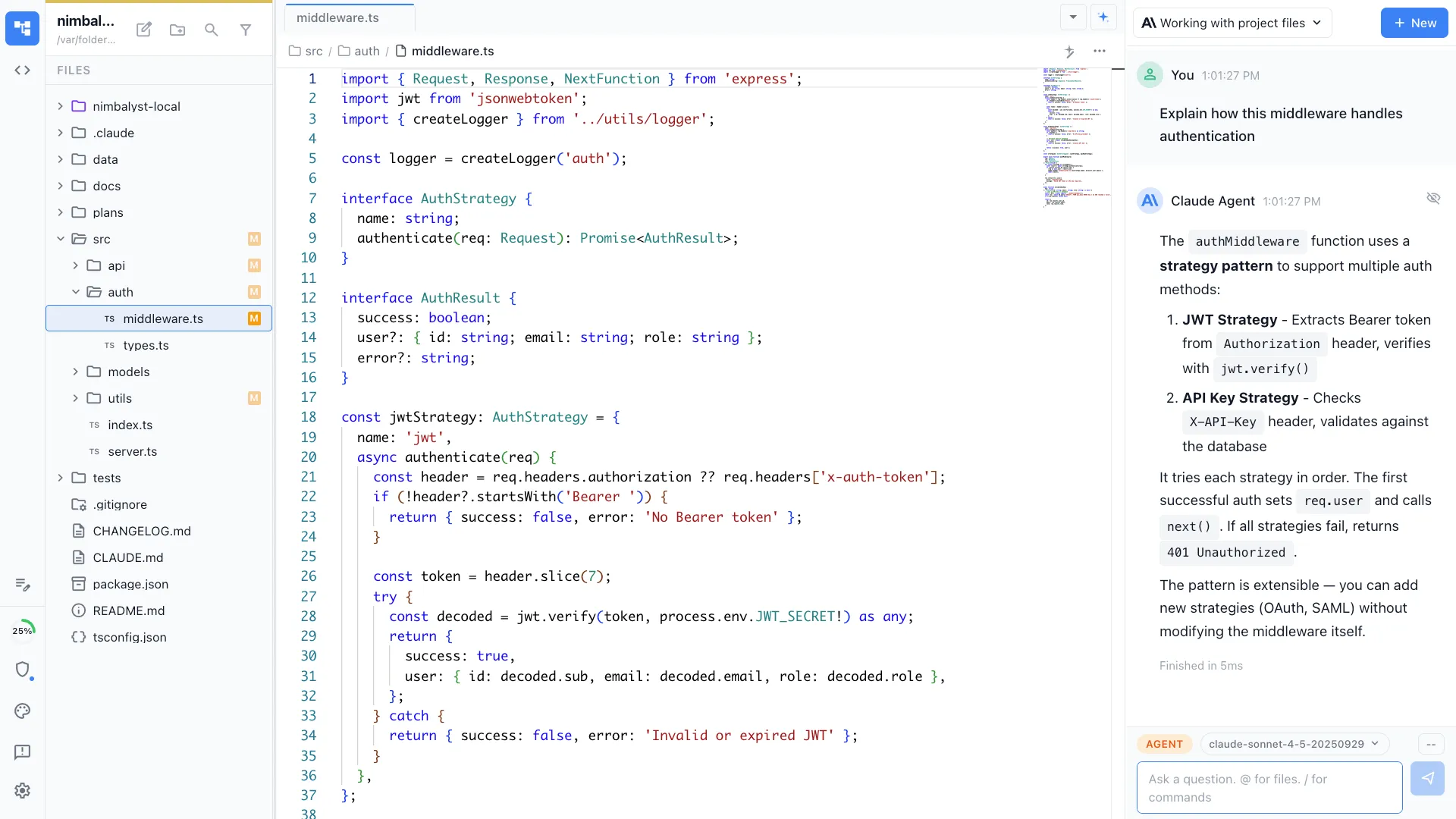
AI agents built in, not bolted on
Claude Code and Codex are first-class citizens in Nimbalyst. They see your full project, not just the current note. Obsidian's AI comes from community plugins with varying quality.
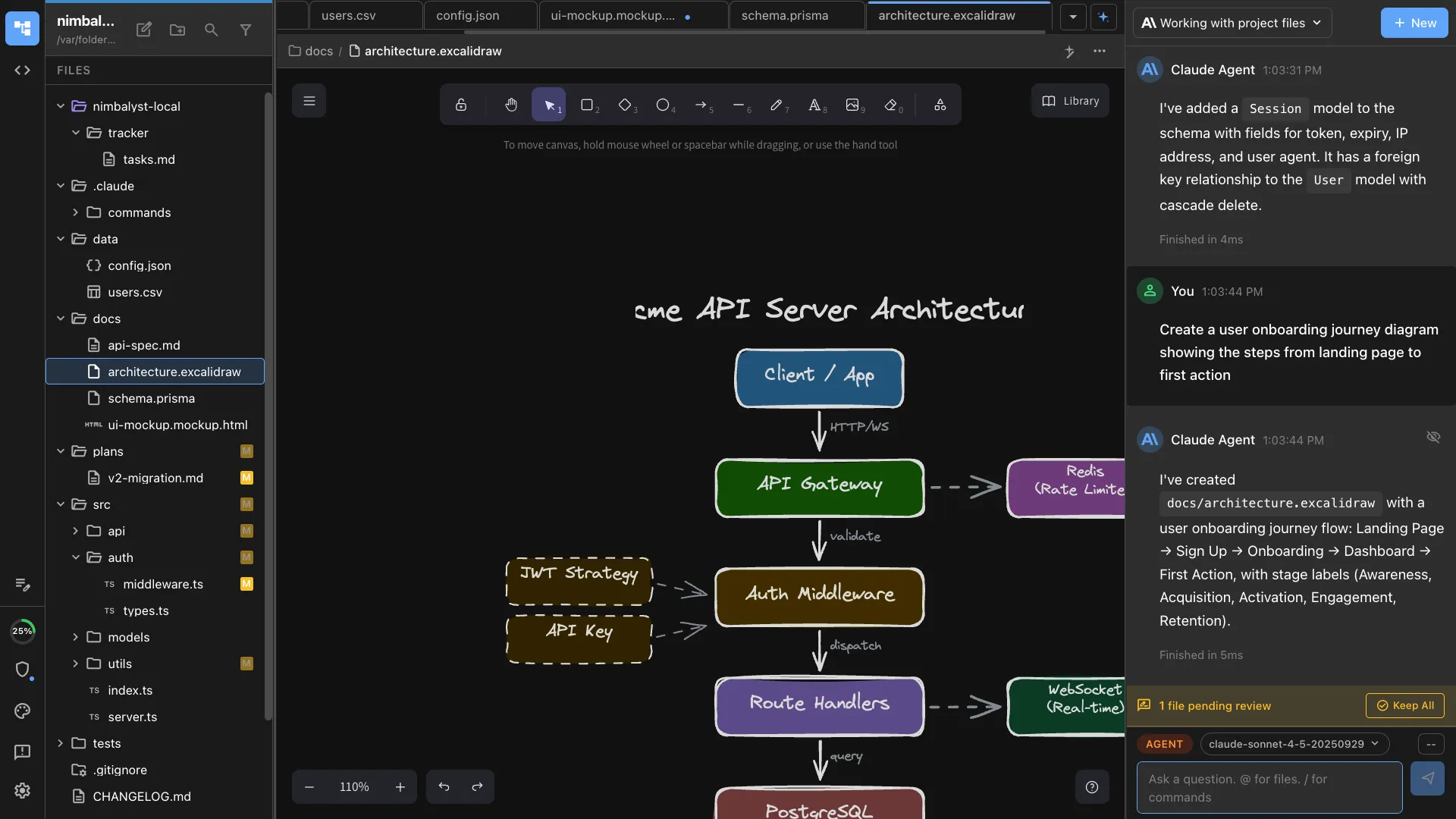
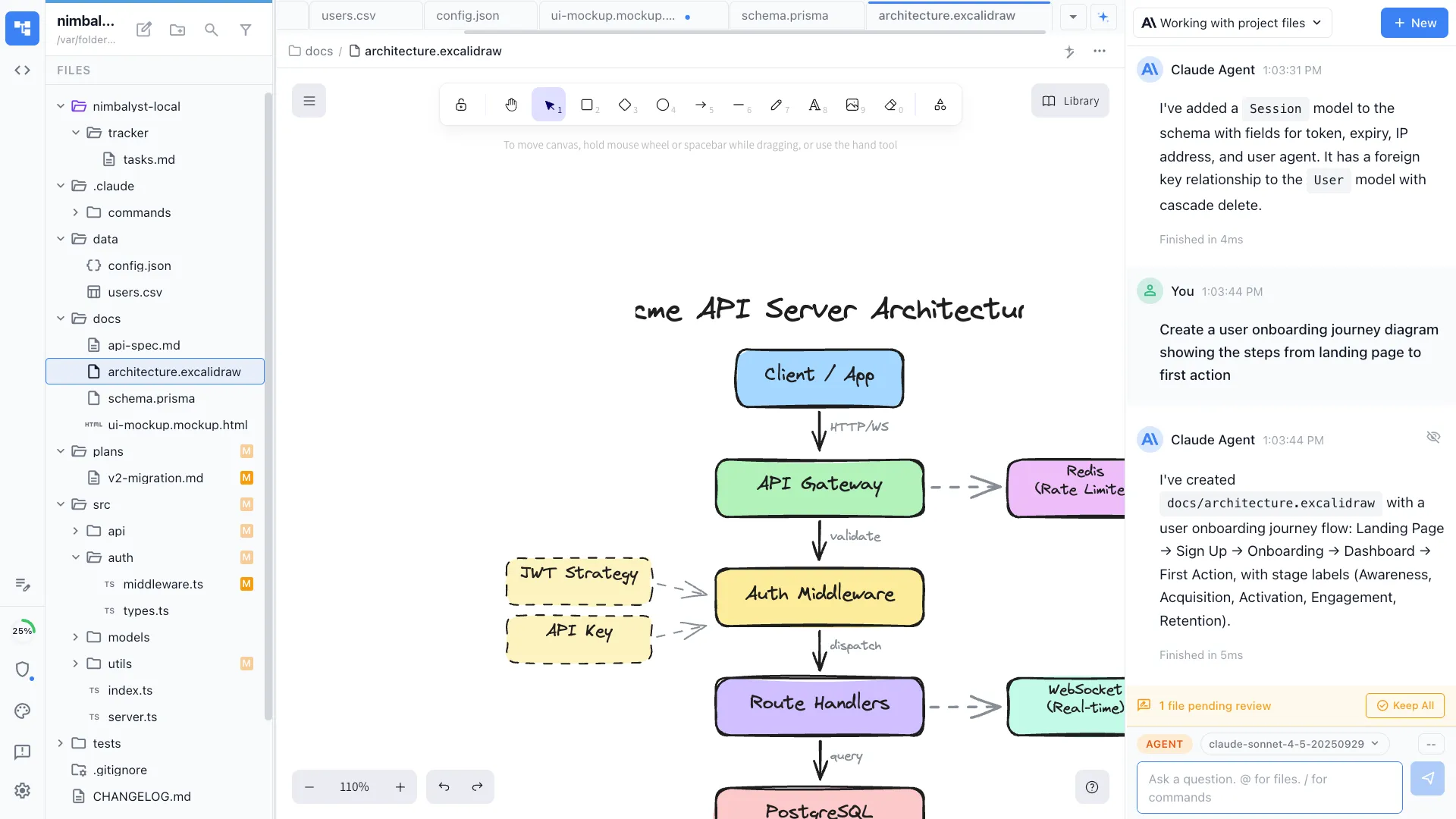
Visual editors beyond canvas
Create wireframes, architecture diagrams, and data models in purpose-built editors. Obsidian's Canvas is freeform but lacks specialized visual tools.
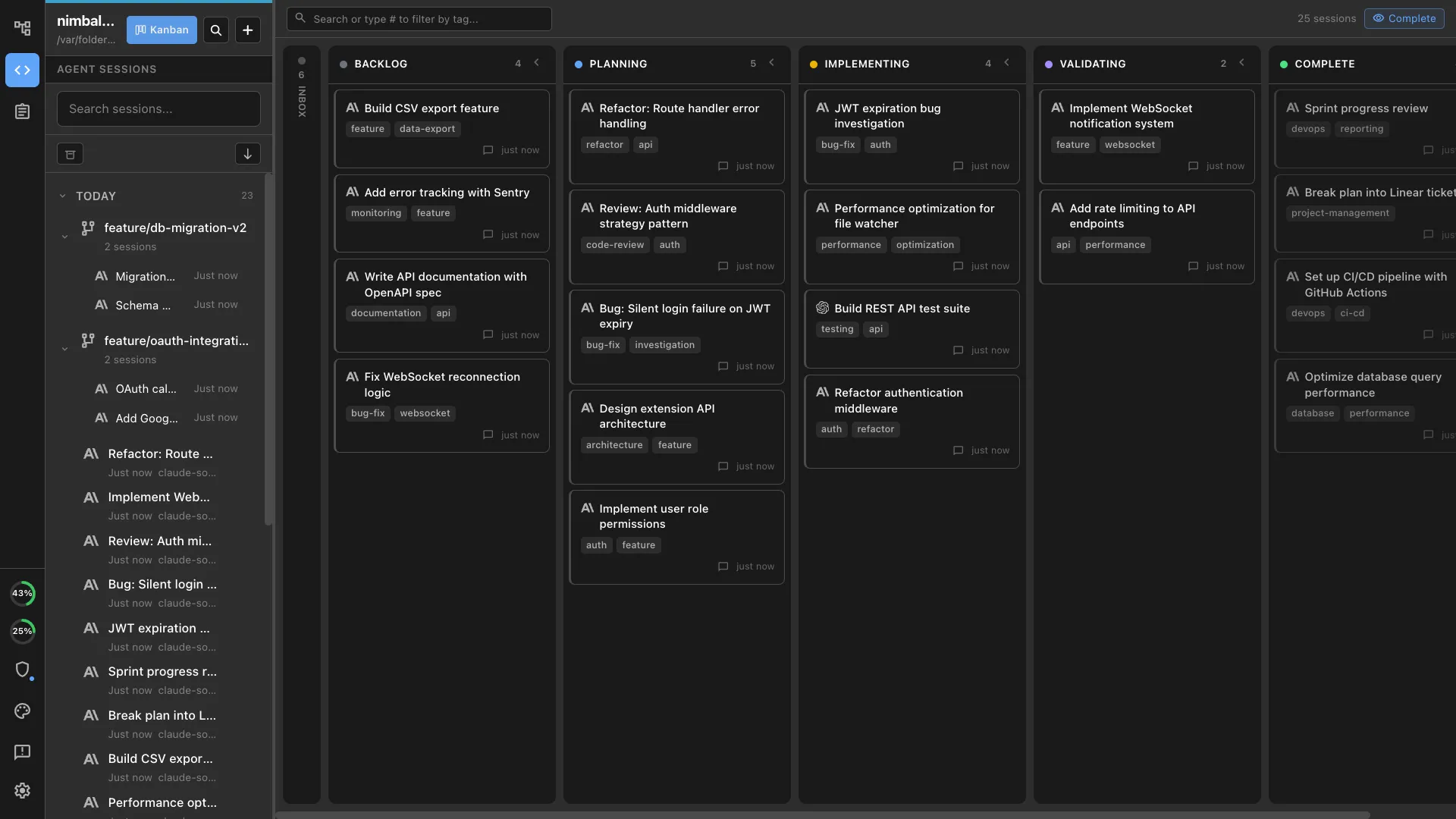

Sessions and tasks keep work organized
Every piece of work lives in a session with its own tasks, files, and history. Track progress on a kanban board, pick up where you left off, or hand a session to another agent. Obsidian has no concept of sessions, tasks, or coding workflows.
Honest Assessment
Where Obsidian is stronger
Knowledge graph
Obsidian's bidirectional linking and graph view create a connected knowledge base that surfaces relationships between notes. Nimbalyst does not have a knowledge graph.
Plugin ecosystem
Obsidian has over 1,000 community plugins covering almost every need. Its plugin ecosystem is far larger and more mature than Nimbalyst's extension platform.
Mature note-taking
Obsidian has years of refinement as a note-taking and knowledge management tool. It handles large vaults, complex linking, and daily notes workflows exceptionally well.
Recommendation
Who should use which
Choose Nimbalyst if…
You are a developer, product manager, or builder who wants AI agents, sessions, tasks, visual editors, and code editing alongside your notes and plans. You want your AI to act on your notes, not just read them. You want to see AI's changes in red/green diffs and approve them.
Choose Obsidian if…
You want a mature, local-first knowledge management tool with a rich plugin ecosystem, knowledge graph, and a large community. Your primary use is note-taking and personal knowledge management.