Content & Marketing
AI-written blog posts
Run /blog with a topic and the agent writes a complete blog post — strong voice, SEO-optimized structure, proper frontmatter, and internal links to your product pages.
Write blog posts with strong voice, SEO structure, and proper formatting. Generates posts with frontmatter, headings, internal links, and calls to action.
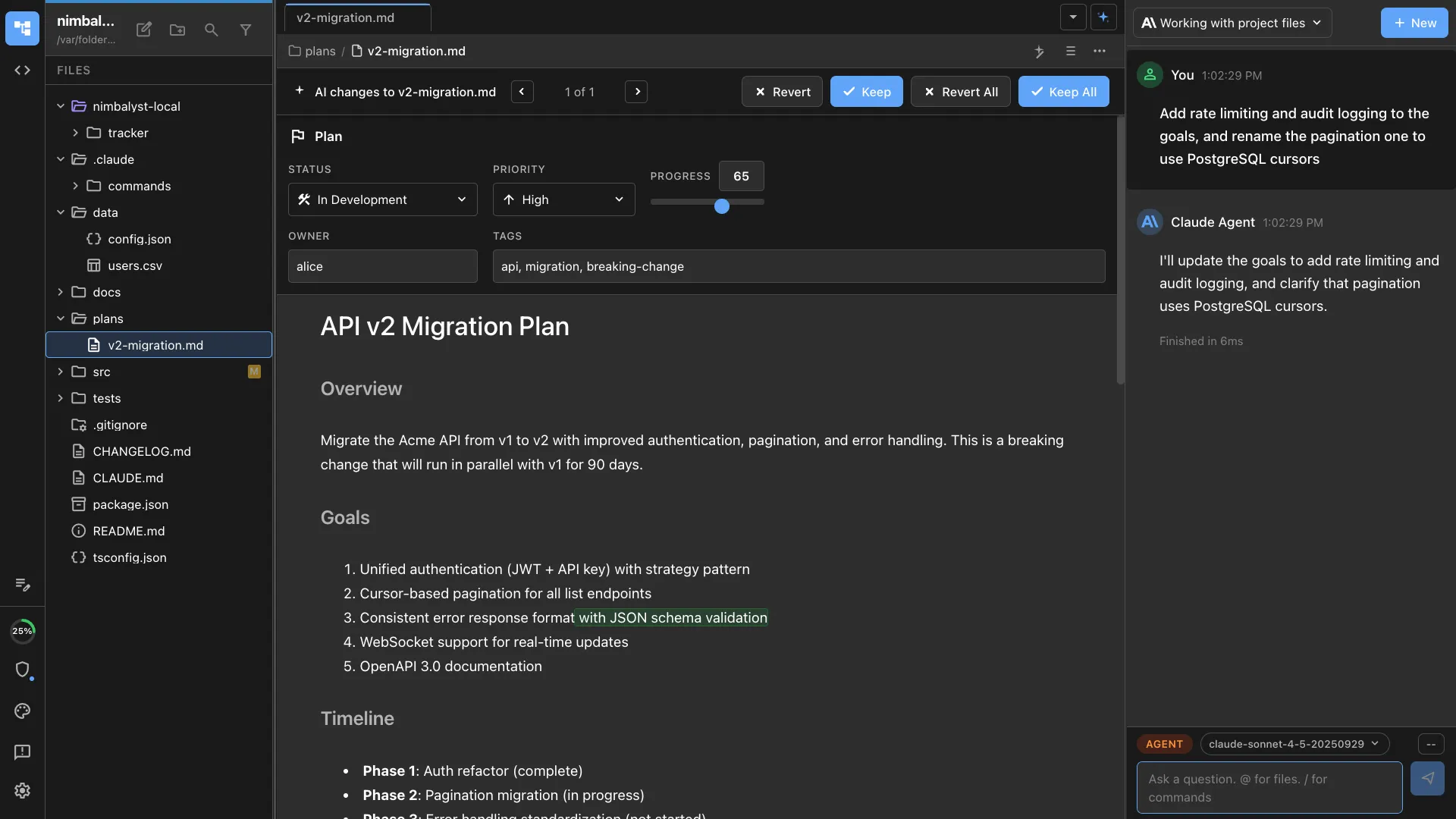
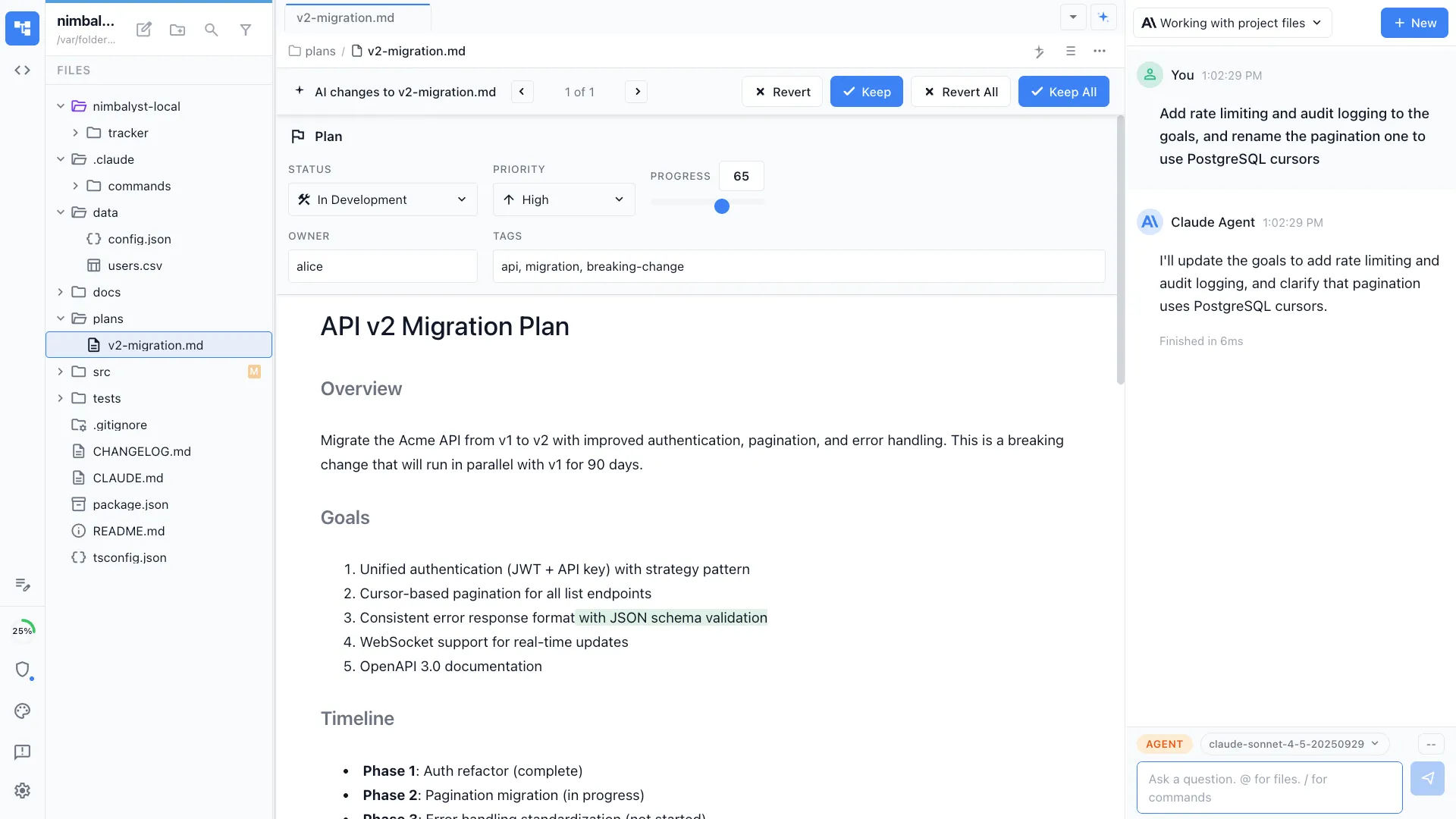
Capabilities
Write and publish
SEO-optimized structure
Posts are structured with H2/H3 headings, meta descriptions, and keyword placement that help with search ranking.
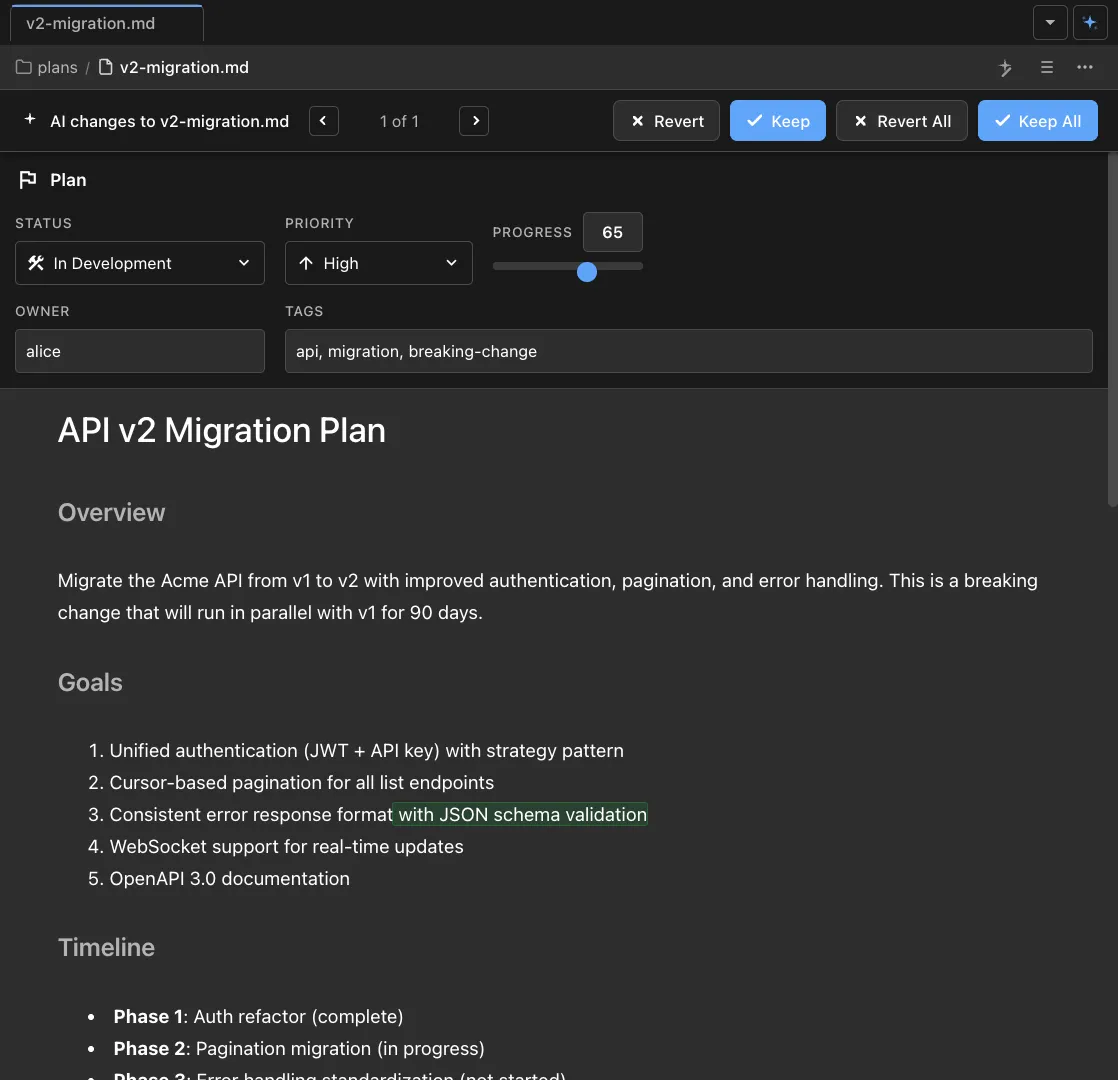
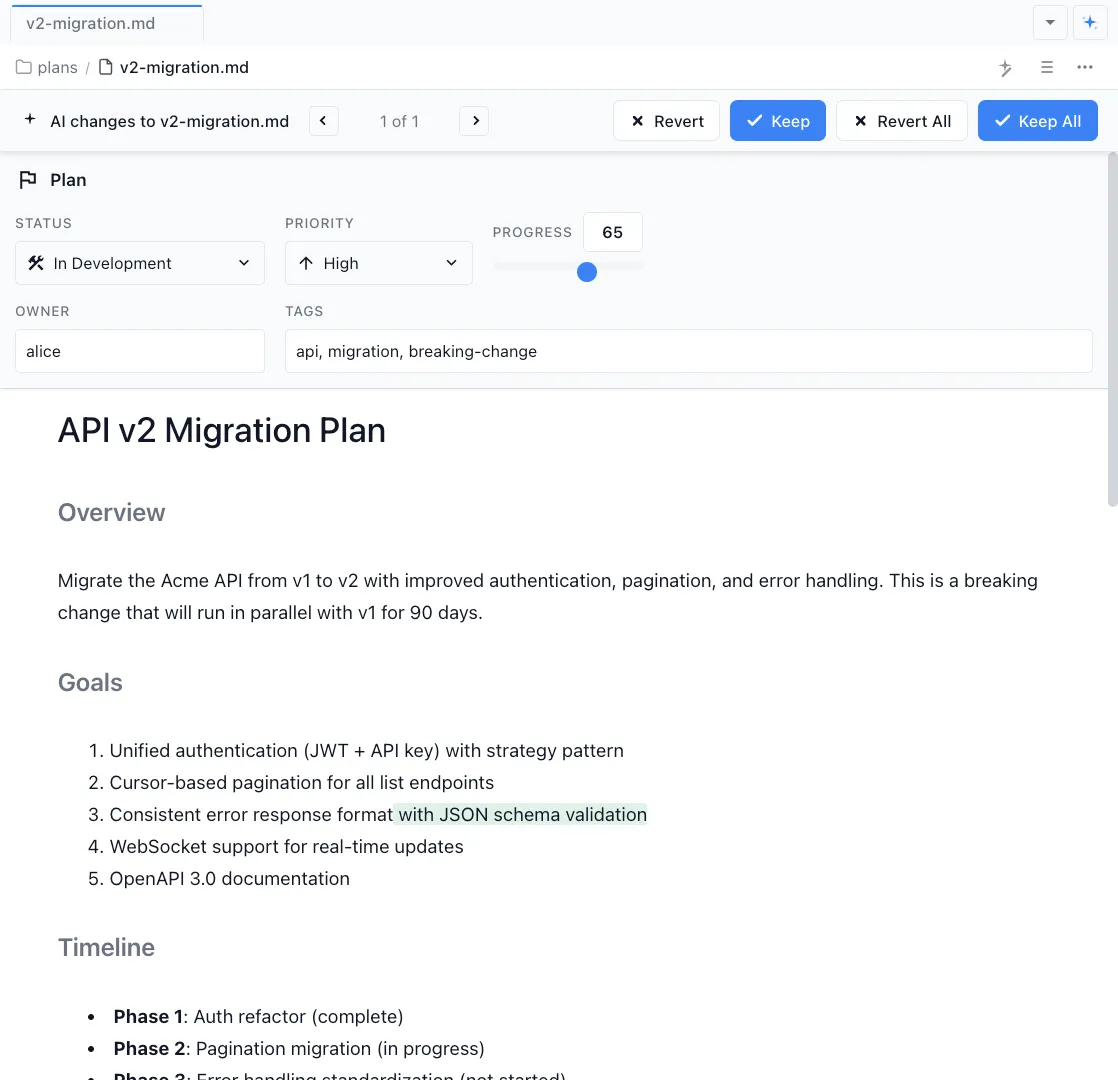
Strong voice and tone
The agent writes with a clear, authoritative voice. Not generic AI-sounding content — distinctive, opinionated, and engaging.
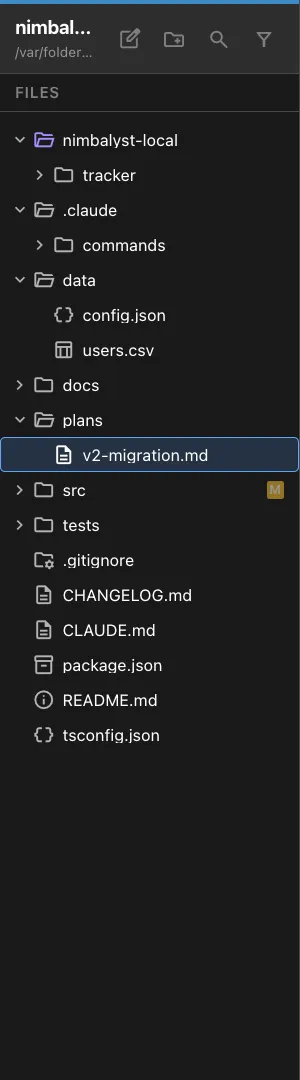
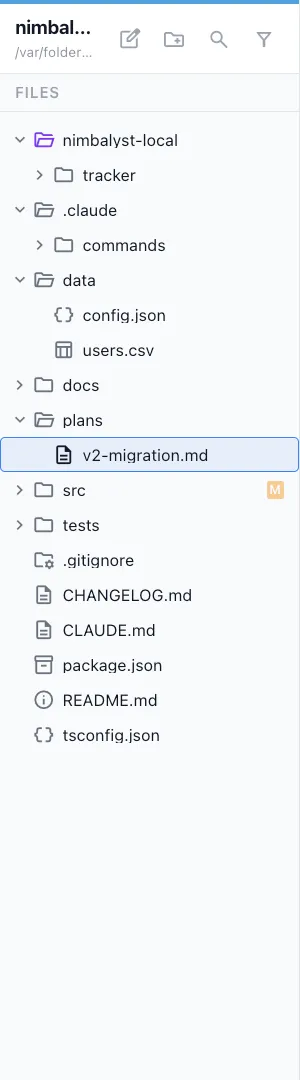
Ready to publish
Posts include frontmatter, proper formatting, internal links, and calls to action. Drop into your blog CMS or static site.
How It Works
How /blog works
Type /blog
Run the command with a topic, target audience, and any key points to cover. Include SEO keywords if you have them.
Agent writes the post
A complete blog post is generated with frontmatter, structured headings, engaging content, and internal links.
Edit and publish
Refine through conversation, adjust tone or focus, and publish. The post lives in your project as a markdown file.
Try It
Example prompts
/blog 'How to manage 10 AI coding sessions at once' /blog comparison post: AI mockup tools for developers in 2026 /blog technical deep-dive on our new extension system Full Skill Source
Use this skill in your project
Copy the full text below or download it as a markdown file. Place it in your project's .claude/commands/ directory to use it as a slash command.
---
name: blog-writer
description: Write blog posts with strong voice and SEO structure. Use when writing blog posts, articles, or thought leadership content.
---

# Blog

Write, edit, or update blog posts for the Nimbalyst marketing site. Create content that is direct, practical, and positions Nimbalyst as a thought leader in AI-assisted development and markdown editing.

## File Location and Naming

**Location**: `nimbalyst-local/Marketing/New Blogs/[name].md`

**Completed blogs**: Move to `nimbalyst-local/Marketing/New Blogs/Done/` when finalized

**Naming conventions**:
- Use kebab-case slug: `complete-guide-markdown-editors-2025.md`
- Be descriptive: The filename should indicate the topic clearly
- Example: `ai-code-generation-best-practices.md`

## Writing Style

Your blogs should follow this distinctive voice:

### Tone
- **Direct and confident**: Make clear statements. Avoid hedging language like "might", "perhaps", "could potentially"
- **Practical over theoretical**: Focus on what readers can do, not abstract concepts
- **Conversational but professional**: Like explaining to a smart colleague
- **No fluff**: Every sentence should add value. Cut unnecessary words

### Structure
- **Strong opening hook**: State the problem or insight immediately. No warm-up paragraphs
- **Short paragraphs**: 1-4 sentences max. White space aids readability
- **Strategic bold text**: Highlight key points, not for emphasis everywhere
- **Bullet lists for scannable content**: Use sparingly for lists of 3+ items
- **Tables for comparisons**: Feature comparisons, tool comparisons, etc.

### What to Avoid
- Emojis (never use them)
- Exclamation points (rarely, if ever)
- Marketing superlatives ("amazing", "revolutionary", "game-changing")
- Vague claims without specifics
- Long introductions before getting to the point
- Overly enthusiastic language

## Blog Template

```markdown
# [Title: Clear, Specific, Often Includes Year for SEO]

## [Opening Section - No "Introduction" Header]

[1-2 paragraphs that hook the reader with the core insight or problem. Get to the point immediately.]

## [Main Sections]

[Break content into logical sections. Each section should stand alone and provide value.]

### Subsections When Needed

[Use H3 for subsections within main topics]

## [Comparison Tables When Relevant]

| Feature | Tool A | Tool B | Nimbalyst |
| --- | --- | --- | --- |
| [Feature 1] | [Value] | [Value] | [Value] |

## [Practical Workflows or How-To Sections]

Step-by-step content with code blocks when relevant:

```bash
example command
```

## Frequently Asked Questions

### [Question that readers actually search for?]

[Direct answer, 2-4 sentences. Reference Nimbalyst naturally where relevant.]

### [Another common question?]

[Answer]

## Conclusion

[2-3 sentences wrapping up. No "In conclusion" opener. End with a clear takeaway or call to action.]
```
## Content Guidelines

### SEO Considerations
- Include the primary keyword in H1 and first paragraph
- Use related keywords naturally in H2s
- FAQ section should target actual search queries
- Keep titles under 60 characters when possible

### Nimbalyst Mentions
- Position Nimbalyst naturally within comparisons or when discussing solutions
- Be honest about what Nimbalyst does and doesn't do
- Don't force mentions - if Nimbalyst isn't relevant to a section, leave it out
- Focus on the value proposition: unified context, WYSIWYG markdown, Claude Code integration, inline AI diffs

### Content Categories We Cover
1. **Markdown editors and tools**: Comparisons, guides, best practices
2. **AI-assisted development**: Claude Code, prompting, context management
3. **Product management with AI**: PRDs, specs, documentation workflows
4. **Developer productivity**: Workflows, tools, methodologies (BMAD, spec-driven)
5. **Prototyping and design**: AI-powered UI generation, wireframing

## Before Writing

Ask yourself:
- **Who is the audience?** Developers, PMs, or both?
- **What problem does this solve?** What will readers learn or be able to do?
- **What's the unique angle?** Why would someone read this over other content on the topic?
- **Where does Nimbalyst fit?** Naturally, or is this pure thought leadership?

## Quality Checklist

Before finishing:
- [ ] Opening hook grabs attention immediately
- [ ] Every section provides standalone value
- [ ] No unnecessary words or filler content
- [ ] Bold text highlights genuinely important points only
- [ ] Tables/lists used appropriately (not overused)
- [ ] FAQ answers actual search queries
- [ ] Nimbalyst mentioned naturally (not forced)
- [ ] No emojis, exclamation points, or marketing fluff
- [ ] Title is clear and SEO-friendly

Now help the user write, edit, or improve their blog post based on their input.
``` Explore More