Research
Deep AI research on any topic
Run /deep-research and multiple agents investigate your topic in parallel — web research, technical analysis, and source verification — returning a synthesized report with citations.
Launch parallel research agents that investigate a topic from multiple angles. Returns a synthesized report with citations and confidence levels.
Capabilities
Research at scale
Parallel agents
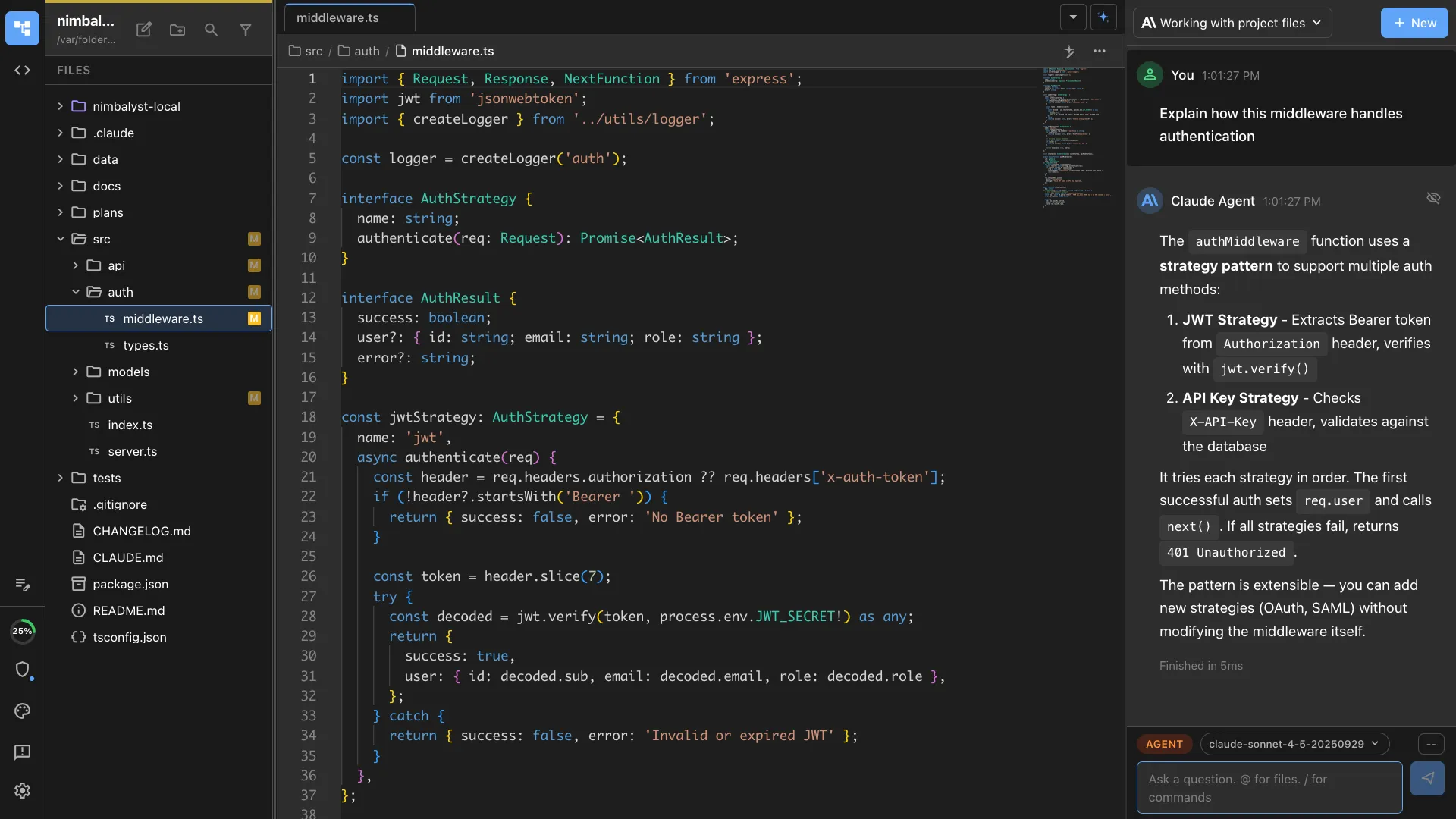
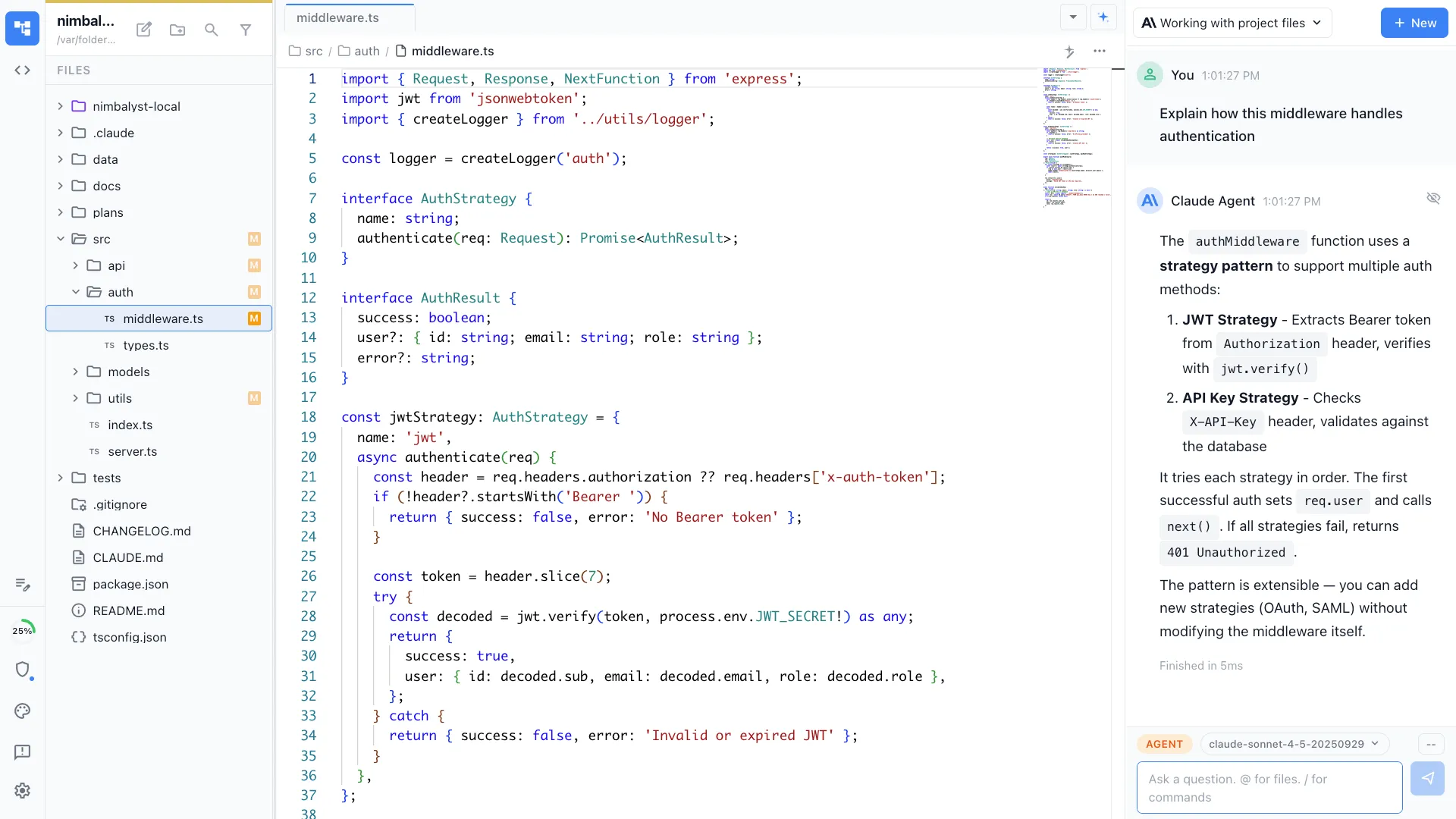
Multiple sub-agents investigate different angles simultaneously. One researches market data, another technical details, another user sentiment.
Cited findings
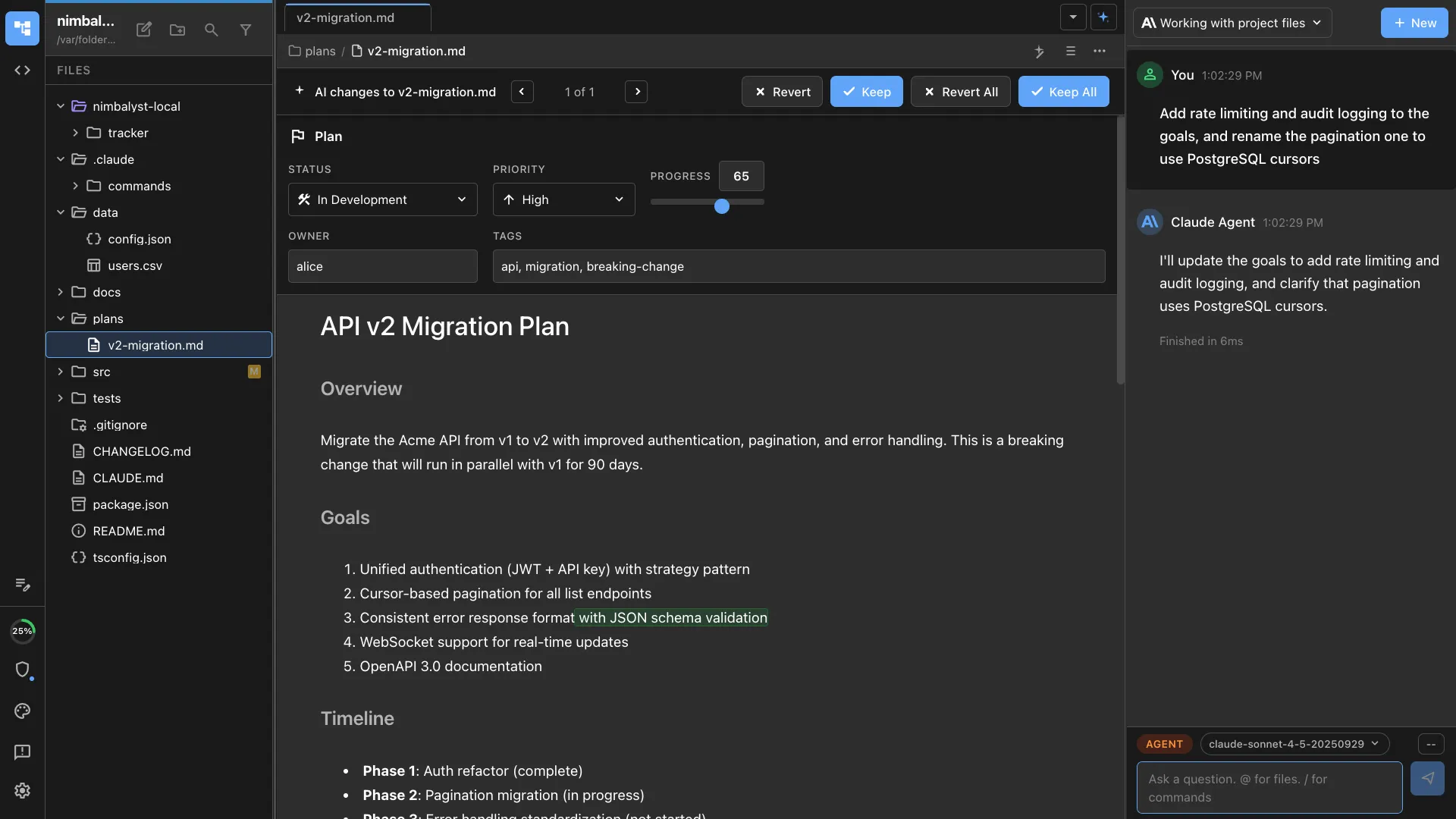
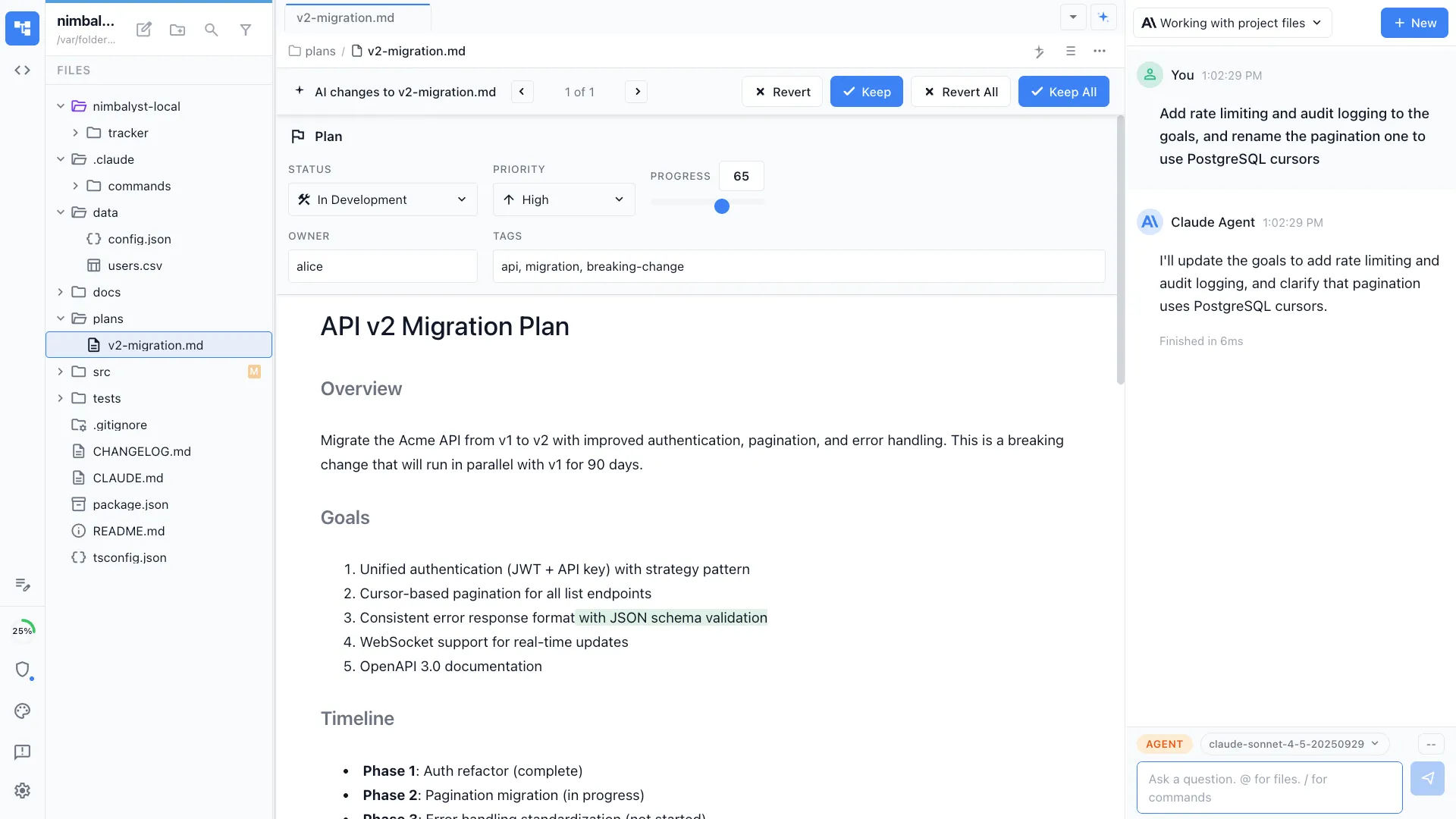
Every claim is linked to its source. Verify information and trace conclusions back to original material.
Synthesized report
Findings from all agents are synthesized into a single coherent report with key takeaways and confidence levels.
How It Works
How /deep-research works
Type /deep-research
Run the command and describe your research question. The more specific, the more targeted the results.
Agents investigate in parallel
Multiple sub-agents are launched, each researching a different angle of your question from different sources.
Get the synthesis
A unified report combines all findings with citations, confidence levels, and key takeaways organized by theme.
Try It
Example prompts
/deep-research what are the emerging trends in AI-native IDEs for 2026? /deep-research how do teams currently manage parallel AI coding sessions? /deep-research what does the research say about AI mockup tools vs. traditional design tools? Full Skill Source
Use this skill in your project
Copy the full text below or download it as a markdown file. Place it in your project's .claude/commands/ directory to use it as a slash command.
---
name: deep-researcher
description: Parallel multi-agent research with citations. Use when conducting deep research, competitive analysis, or investigating complex topics.
---

# Research Command

Conduct deep, parallel research on any topic using multiple specialized subagents.

## Research Query
$ARGUMENTS

## Research Process

### Phase 1: Query Classification (CRITICAL FIRST STEP)

**PRIMARY DECISION: Classify the query type to determine research strategy**

#### Query Types:

1. **BREADTH-FIRST QUERIES** (Wide exploration)
  - Characteristics: Multiple independent aspects, survey questions, comparisons
  - Examples: "Compare all major cloud providers", "List board members of S&P 500 tech companies"
  - Strategy: 5-10 parallel subagents, each exploring different aspects
  - Each subagent gets narrow, specific tasks

2. **DEPTH-FIRST QUERIES** (Deep investigation)
  - Characteristics: Single topic requiring thorough understanding, technical deep-dives
  - Examples: "How does transformer architecture work?", "Explain quantum entanglement"
  - Strategy: 2-4 subagents with overlapping but complementary angles
  - Each subagent explores the same topic from different perspectives

3. **SIMPLE FACTUAL QUERIES** (Quick lookup)
  - Characteristics: Single fact, recent event, specific data point
  - Examples: "When was GPT-4 released?", "Current CEO of Microsoft"
  - Strategy: 1-2 subagents for verification
  - Focus on authoritative sources

#### After Classification, Determine:
- **Resource Allocation**: Based on query type (1-10 subagents)
- **Search Domains**: Academic, technical, news, or general web
- **Depth vs Coverage**: How deep vs how wide to search

### Phase 2: Parallel Research Execution

Based on the query classification, spawn appropriate research subagents IN A SINGLE MESSAGE for true parallelization.

**CRITICAL: Parallel Execution Pattern**
Use multiple Task tool invocations in ONE message, ALL with subagent_type="research-expert".

**MANDATORY: Start Each Task Prompt with Mode Indicator**
You MUST begin each task prompt with one of these trigger phrases to control subagent behavior:

- **Quick Verification (3-5 searches)**: Start with "Quick check:", "Verify:", or "Confirm:"
- **Focused Investigation (5-10 searches)**: Start with "Investigate:", "Explore:", or "Find details about:"
- **Deep Research (10-15 searches)**: Start with "Deep dive:", "Comprehensive:", "Thorough research:", or "Exhaustive:"

Example Task invocations:
```
Task(description="Academic research", prompt="Deep dive: Find all academic papers on transformer architectures from 2017-2024", subagent_type="research-expert")
Task(description="Quick fact check", prompt="Quick check: Verify the release date of GPT-4", subagent_type="research-expert")
Task(description="Company research", prompt="Investigate: OpenAI's current product offerings and pricing", subagent_type="research-expert")
```

This ensures all subagents work simultaneously AND understand the expected search depth through these trigger words.

**Filesystem Artifact Pattern**:
Each subagent saves full report to `/tmp/research_[timestamp]_[topic].md` and returns only:
- File path to the full report
- Brief 2-3 sentence summary
- Key topics covered
- Number of sources found

### Phase 3: Synthesis from Filesystem Artifacts

**CRITICAL: Subagents Return File References, Not Full Reports**

Each subagent will:
1. Write their full report to `/tmp/research_*.md`
2. Return only a summary with the file path

Synthesis Process:
1. **Collect File References**: Gather all `/tmp/research_*.md` paths from subagent responses
2. **Read Reports**: Use Read tool to access each research artifact
3. **Merge Findings**:
  - Identify common themes across reports
  - Deduplicate overlapping information
  - Preserve unique insights from each report
4. **Consolidate Sources**:
  - Merge all cited sources
  - Remove duplicate URLs
  - Organize by relevance and credibility
5. **Write Final Report**: Save synthesized report to `/tmp/research_final_[timestamp].md`

### Phase 4: Final Report Structure

The synthesized report (written to file) must include:

# Research Report: [Query Topic]

## Executive Summary
[3-5 paragraph overview synthesizing all findings]

## Key Findings
1. **[Major Finding 1]** - Synthesized from multiple subagent reports
2. **[Major Finding 2]** - Cross-referenced and verified
3. **[Major Finding 3]** - With supporting evidence from multiple sources

## Detailed Analysis

### [Theme 1 - Merged from Multiple Reports]
[Comprehensive synthesis integrating all relevant subagent findings]

### [Theme 2 - Merged from Multiple Reports]
[Comprehensive synthesis integrating all relevant subagent findings]

## Sources & References
[Consolidated list of all sources from all subagents, organized by type]

## Research Methodology
- Query Classification: [Breadth/Depth/Simple]
- Subagents Deployed: [Number and focus areas]
- Total Sources Analyzed: [Combined count]
- Research Artifacts: [List of all /tmp/research_*.md files]

## Research Principles

### Quality Heuristics
- Start with broad searches, then narrow based on findings
- Prefer authoritative sources (academic papers, official docs, primary sources)
- Cross-reference claims across multiple sources
- Identify gaps and contradictions in available information

### Effort Scaling by Query Type
- **Simple Factual**: 1-2 subagents, 3-5 searches each (verification focus)
- **Depth-First**: 2-4 subagents, 10-15 searches each (deep understanding)
- **Breadth-First**: 5-10 subagents, 5-10 searches each (wide coverage)
- **Maximum Complexity**: 10 subagents (Claude Code limit)

### Parallelization Strategy
- Spawn all initial subagents simultaneously for speed
- Each subagent performs multiple parallel searches
- 90% time reduction compared to sequential searching
- Independent exploration prevents bias and groupthink

## Execution

**Step 1: CLASSIFY THE QUERY** (Breadth-first, Depth-first, or Simple factual)

**Step 2: LAUNCH APPROPRIATE SUBAGENT CONFIGURATION**

### Example Execution Patterns:

**BREADTH-FIRST Example:** "Compare AI capabilities of Google, OpenAI, and Anthropic"
- Classification: Breadth-first (multiple independent comparisons)
- Launch 6 subagents in ONE message with focused investigation mode:
  - Task 1: "Investigate: Google's current AI products, models, and capabilities"
  - Task 2: "Investigate: OpenAI's current AI products, models, and capabilities"
  - Task 3: "Investigate: Anthropic's current AI products, models, and capabilities"
  - Task 4: "Explore: Performance benchmarks comparing models from all three companies"
  - Task 5: "Investigate: Business models, pricing, and market positioning for each"
  - Task 6: "Quick check: Latest announcements and news from each company (2024)"

**DEPTH-FIRST Example:** "How do transformer models achieve attention?"
- Classification: Depth-first (single topic, deep understanding)
- Launch 3 subagents in ONE message with deep research mode:
  - Task 1: "Deep dive: Mathematical foundations and formulas behind attention mechanisms"
  - Task 2: "Comprehensive: Visual diagrams and step-by-step walkthrough of self-attention"
  - Task 3: "Thorough research: Seminal papers including 'Attention is All You Need' and subsequent improvements"

**SIMPLE FACTUAL Example:** "When was Claude 3 released?"
- Classification: Simple factual query
- Launch 1 subagent with verification mode:
  - Task 1: "Quick check: Verify the official release date of Claude 3 from Anthropic"

Each subagent works independently, writes findings to `/tmp/research_*.md`, and returns a lightweight summary.

### Step 3: SYNTHESIZE AND DELIVER

After all subagents complete:
1. Read all research artifact files from `/tmp/research_*.md`
2. Synthesize findings into comprehensive report
3. Write final report to `/tmp/research_final_[timestamp].md`
4. Provide user with:
  - Executive summary (displayed directly)
  - Path to full report file
  - Key insights and recommendations

**Benefits of Filesystem Artifacts**:
- 90% reduction in token usage (passing paths vs full reports)
- No information loss during synthesis
- Preserves formatting and structure
- Enables selective reading of sections
- Allows user to access individual subagent reports if needed

Now executing query classification and multi-agent research...
Related Skills
Skills that work well together
Explore More