Content & Marketing
AI landing pages
Run /landing-page and describe your product or campaign. The agent generates complete landing page copy — hero, benefits, social proof, CTAs — optimized for conversion.
Generate landing page copy and structure. Creates hero sections, benefit blocks, social proof, CTAs, and SEO-optimized content for any product or campaign.
Capabilities
Convert visitors to users
Conversion-optimized copy
Headlines, subheadings, and CTAs are crafted for conversion. The agent understands messaging hierarchy and buyer psychology.
Complete page structure
Hero section, benefits grid, social proof, feature highlights, FAQ, and CTA — a full landing page from a single command.
SEO-integrated
Meta tags, heading structure, and content are optimized for your target keywords alongside conversion goals.
How It Works
How /landing-page works
Type /landing-page
Run the command and describe the product, campaign, or feature you're creating a landing page for.
Agent generates the page
Complete landing page content is created with optimized copy, structured sections, and SEO elements.
Implement and test
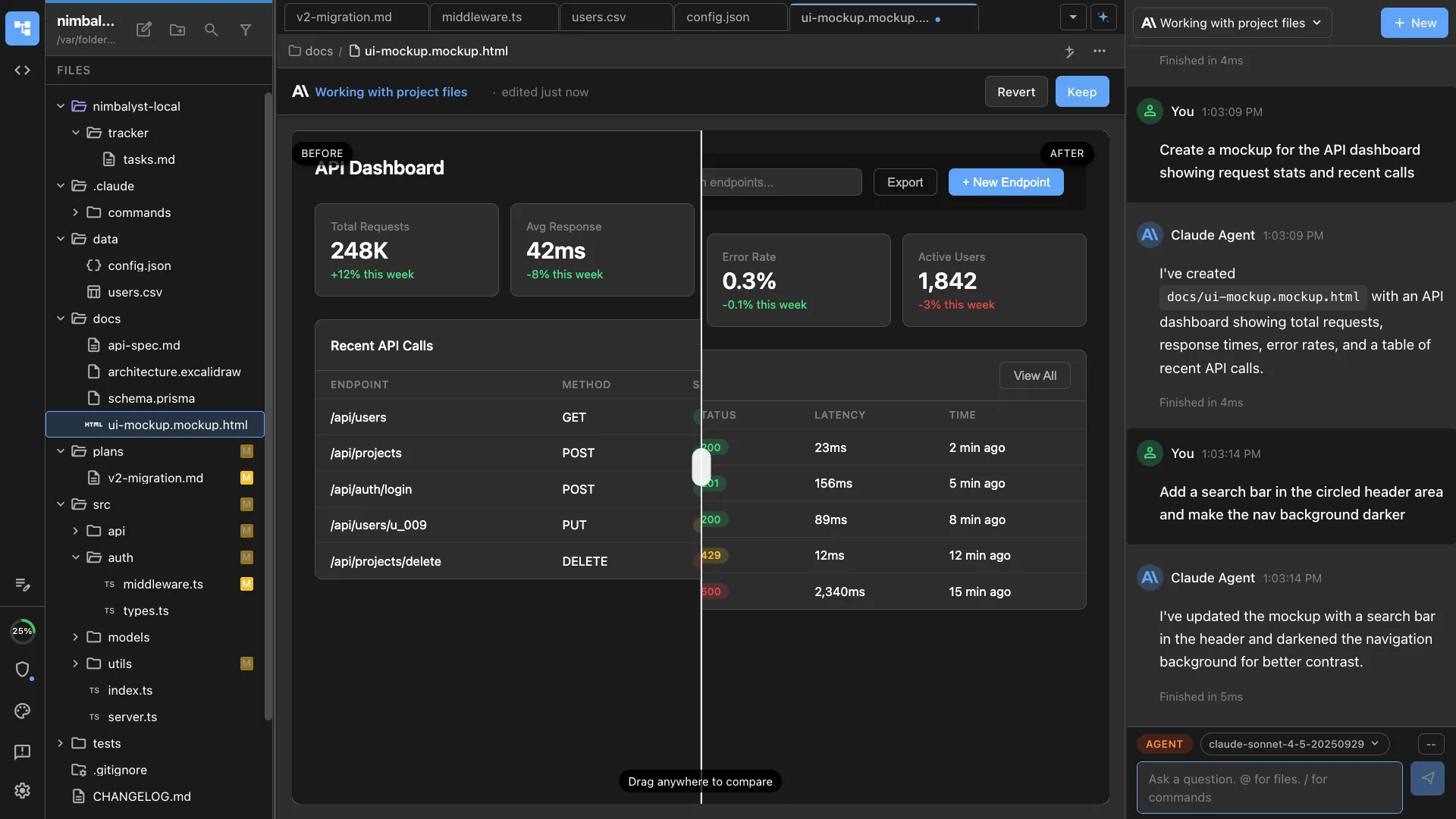
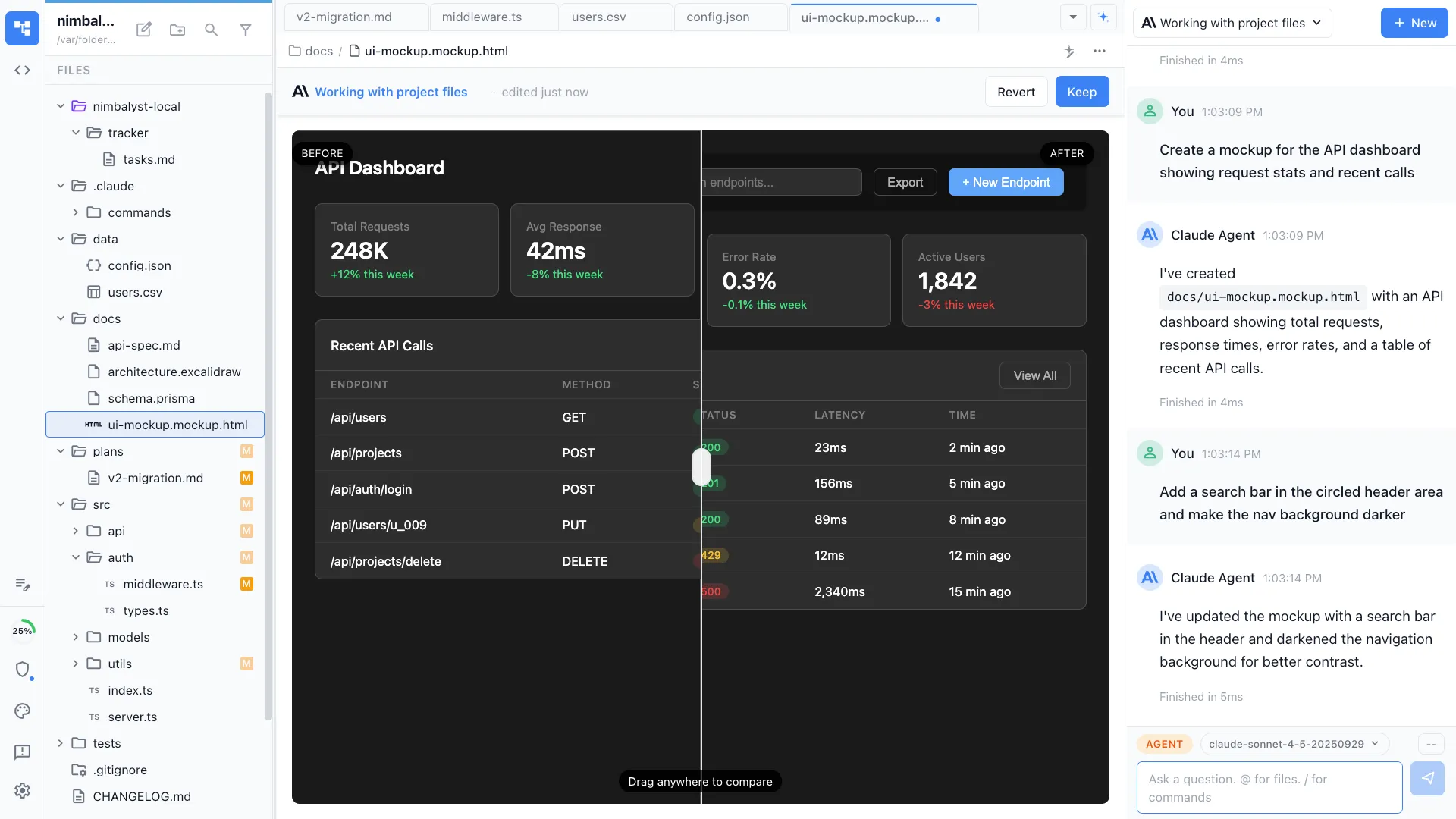
Use the copy to build the page in your framework. The mockup skill can generate a visual preview to iterate on.
Try It
Example prompts
/landing-page for the AI diagram editor — targeting developers /landing-page enterprise pricing page with ROI calculator messaging /landing-page campaign page for the v3.0 product launch Full Skill Source
Use this skill in your project
Copy the full text below or download it as a markdown file. Place it in your project's .claude/commands/ directory to use it as a slash command.
---
name: landing-page-generator
description: Generate landing page copy, section structure, and SEO metadata for marketing pages. Use when creating new product pages, campaign landing pages, or feature announcement pages.
---

# /landing-page

Generate complete landing page copy and structure with hero, benefits, social proof, and CTA sections, optimized for conversion and search.

## What This Command Does

1. Gathers the page's purpose, audience, and desired action
2. Researches the topic and competitive positioning
3. Structures the page into proven conversion sections
4. Writes compelling copy for each section
5. Generates SEO metadata (title, description, OG tags)
6. Outputs a complete page file ready for implementation

## Usage

```
/landing-page [topic or page title] [--audience target] [--goal conversion-goal]
```

**Examples:**
- `/landing-page "AI Code Review" --audience developers --goal signup`
- `/landing-page "Enterprise Security" --audience CISOs --goal demo-request`
- `/landing-page "Mobile App" --goal app-download`

## File Location

Depends on the site structure. For Astro sites:
**Location**: `src/pages/[slug].astro`

For copy-first output:
**Location**: `nimbalyst-local/marketing/landing-pages/[slug]-copy.md`

## Execution Steps

1. **Define the page brief**

   Gather or infer:
   - **Page topic**: What product, feature, or campaign is this for?
   - **Primary audience**: Who is this page for? (role, seniority, industry)
   - **Primary CTA**: What is the single action you want visitors to take?
   - **Secondary CTA**: Fallback action for visitors not ready for the primary
   - **Key differentiators**: What makes this offering unique? (3-5 points)
   - **Objections**: What concerns might prevent conversion? (2-3 common ones)
   - **Tone**: Professional, casual, technical, aspirational?
   - **Primary keyword**: What search term should this page rank for?

2. **Structure the page sections**

   Use this proven landing page structure:

   ### Section 1: Hero
   - **Headline**: 6-12 words, benefit-focused, includes primary keyword
   - **Subheadline**: 15-25 words expanding on the headline with specifics
   - **Primary CTA button**: Action-oriented text (not "Submit" or "Click Here")
   - **Social proof snippet**: One-line credibility signal (user count, notable customer, rating)
   - **Hero visual**: Description of what the hero image/screenshot should show

   ### Section 2: Problem Statement
   - **Section label**: Short category label (e.g., "The Challenge")
   - **Heading**: Name the pain point the audience faces
   - **Body**: 2-3 sentences describing the problem in the audience's language
   - **Evidence**: Stat or quote that validates the problem is real

   ### Section 3: Solution Overview
   - **Section label**: (e.g., "How It Works")
   - **Heading**: Position your solution as the answer
   - **3 feature cards**: Each with icon placeholder, title (4-6 words), description (1-2 sentences)
   - Focus on outcomes, not features

   ### Section 4: Benefits Deep Dive
   - **3-4 benefit blocks**: Each with heading, description, and visual placeholder
   - Alternate layout: text-left/image-right, then image-left/text-right
   - Each benefit should answer "so what?" -- why does this matter to the user?

   ### Section 5: Social Proof
   - **Testimonials**: 2-3 customer quotes with name, title, company
   - **Logo bar**: Placeholder for customer/partner logos
   - **Stats**: 2-3 compelling numbers (users, uptime, satisfaction rate)

   ### Section 6: Objection Handling
   - **FAQ accordion**: 4-6 questions addressing common concerns
   - Frame questions as the audience would ask them, not as you would

   ### Section 7: Final CTA
   - **Heading**: Reinforce the key benefit
   - **Body**: Create urgency or summarize the value proposition
   - **Primary CTA button**: Same action as hero, different copy angle
   - **Secondary CTA**: Lower-commitment alternative (e.g., "See a demo first")

3. **Write the copy**

   Apply these copywriting principles:

   - **Benefit over feature**: "Save 4 hours per week" not "Automated scheduling"
   - **Specific over vague**: "Used by 2,400 teams" not "Used by many teams"
   - **Active voice**: "Build faster" not "Faster building is enabled"
   - **Second person**: "You" and "your" -- make it about the reader
   - **Short paragraphs**: 2-3 sentences max per paragraph
   - **Scannable**: Bold key phrases, use bullets for lists
   - **One idea per section**: Don't mix messages

4. **Generate SEO metadata**

   ```yaml
   title: "[Primary Keyword] - [Benefit] | [Brand]" # 30-60 chars
   description: "[Action-oriented summary with keyword and value prop]" # 120-160 chars
   og_title: "[Slightly different angle for social]"
   og_description: "[Compelling social share text]"
   og_image: "[Description of ideal social preview image]"
   canonical: "/[slug]"
   ```

5. **Generate the page file**

   If the project uses Astro, generate a `.astro` file with:
   - BaseLayout wrapper
   - Proper section structure with Tailwind classes matching the project's style guide
   - Screenshot placeholders using the project's ScreenshotPlaceholder component
   - Import statements for shared components (CTABanner, FAQ, LogoBar, etc.)

   If copy-only mode, generate a markdown document with all copy organized by section.

6. **Create a companion YAML data file (if applicable)**

   If the project uses YAML-driven copy (like this Astro site), generate a corresponding `.yaml` file in `src/data/` with all copy values.

## Output Format

### Copy-Only Mode (Markdown)

```markdown
# Landing Page: [Topic]

**Target Audience**: [Who]
**Primary CTA**: [Action]
**Primary Keyword**: [Keyword]

---

## SEO Metadata

- **Title**: [title tag]
- **Description**: [meta description]
- **OG Image**: [description]

---

## Hero

**Headline**: [text]
**Subheadline**: [text]
**CTA**: [button text]
**Social proof**: [one-liner]
**Visual**: [description]

---

## Problem

**Label**: [text]
**Heading**: [text]
**Body**: [text]
**Evidence**: [stat or quote]

---

[...remaining sections...]
```

### Full Page Mode (Astro)

Generates a complete `.astro` file following the project's conventions.

## Copy Length Guidelines

| Element | Target Length |
|---------|-------------|
| Hero headline | 6-12 words |
| Hero subheadline | 15-25 words |
| CTA button | 2-5 words |
| Section heading | 5-10 words |
| Feature card title | 4-6 words |
| Feature card description | 15-30 words |
| Benefit description | 30-60 words |
| FAQ answer | 40-80 words |
| Meta title | 30-60 characters |
| Meta description | 120-160 characters |

## Error Handling

- **No audience specified**: Default to the product's primary persona; confirm with user
- **No differentiators provided**: Research competitors and suggest positioning
- **Conflicting CTAs**: A landing page should have ONE primary action; help the user choose

## Best Practices

- Every landing page gets ONE primary CTA; repetition is fine, variety is not
- Write the headline and CTA first; everything else supports those two elements
- Test headlines by asking: "Would I click on this in a search result?"
- Social proof should be specific and verifiable (real names, real numbers)
- The page should make sense if you only read the headings
- Mobile-first: assume most visitors see 4-5 words per line
Related Skills
Skills that work well together
Explore More