Content & Marketing
AI sales enablement
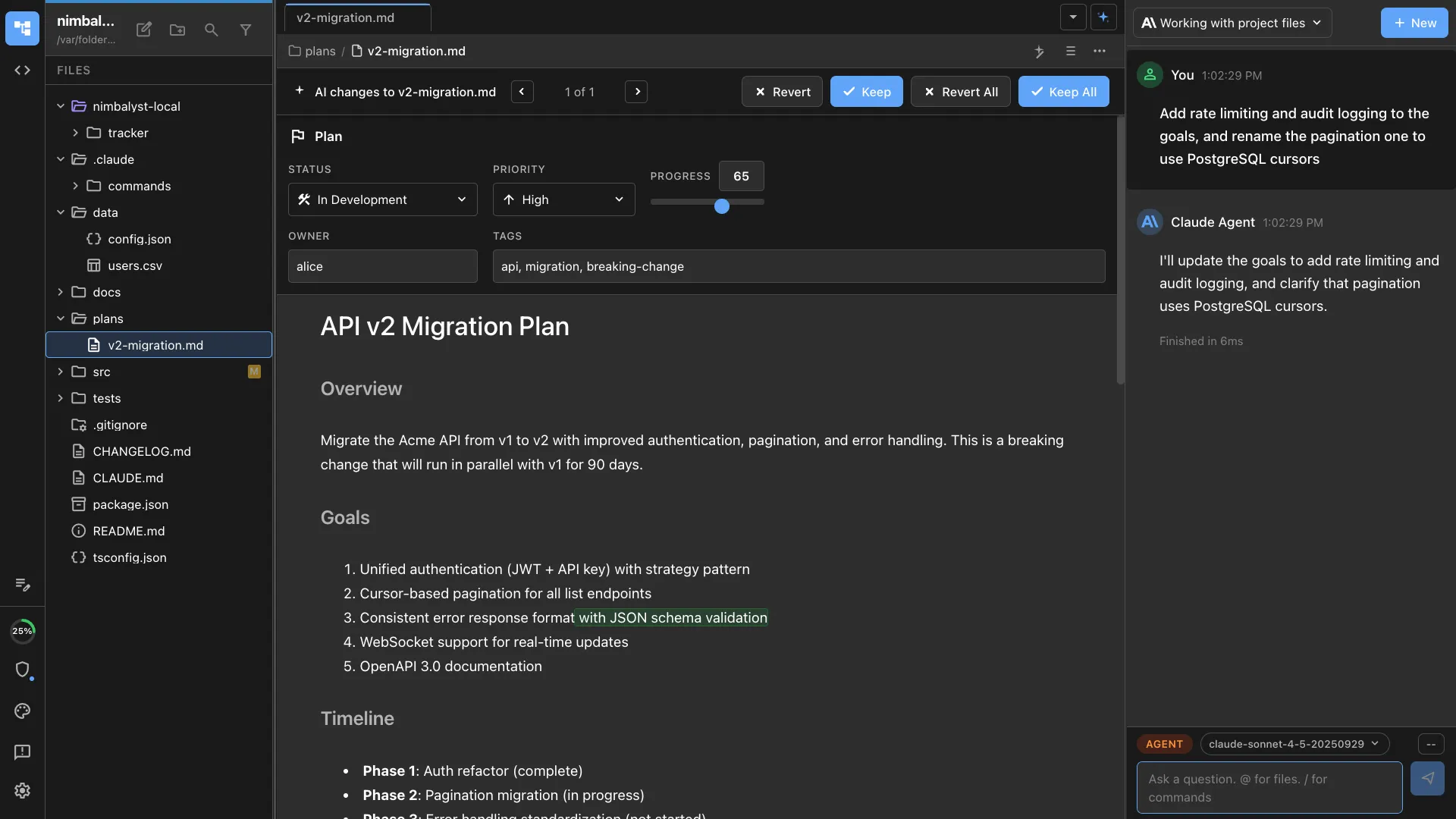
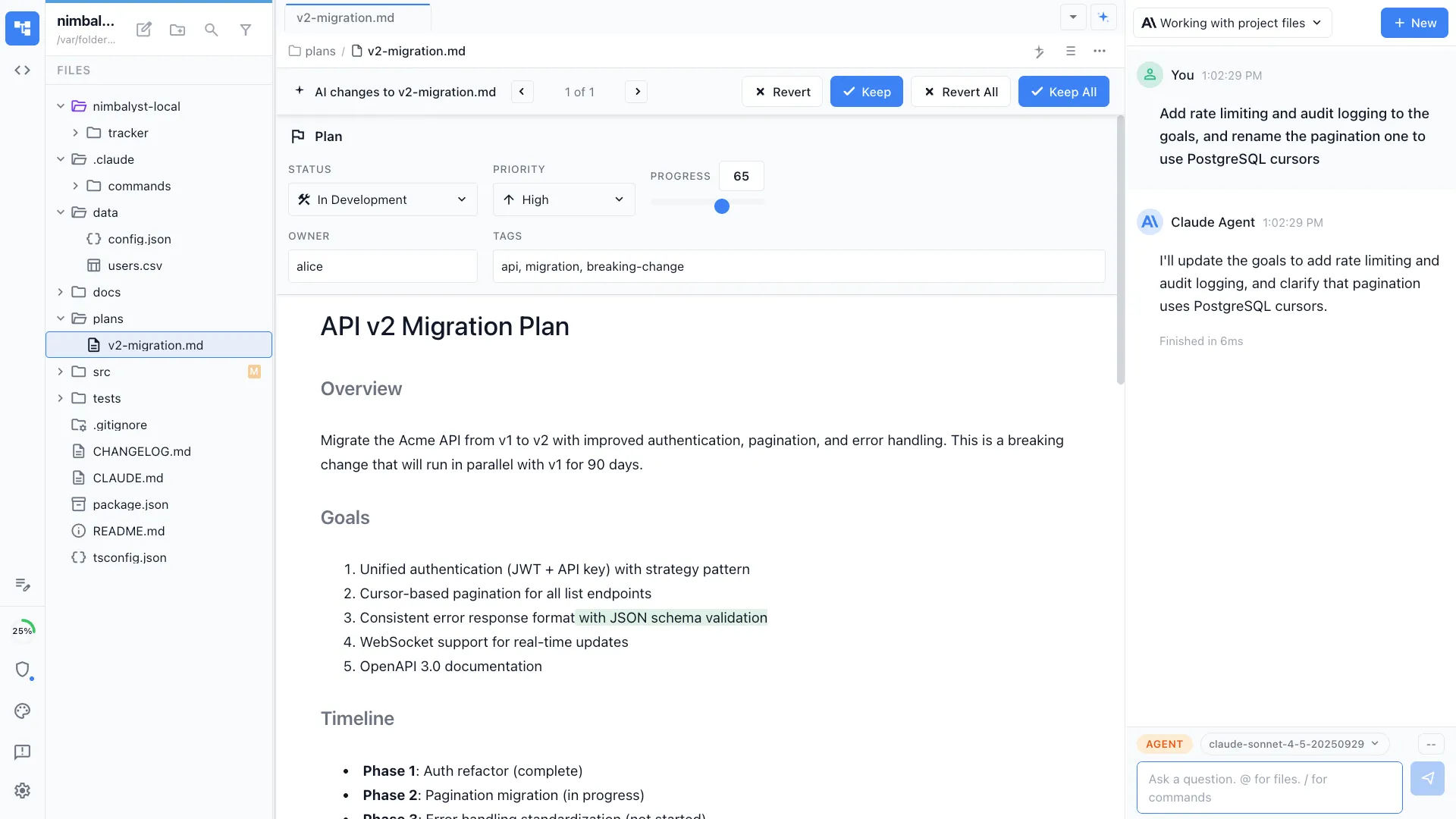
Run /sales-enablement and the agent creates battlecards, demo scripts, competitive positioning guides, and objection handling docs for your sales team.
Generate sales battlecards, demo scripts, competitive positioning, and GTM materials. Creates collateral that helps sales teams close deals.
Capabilities
Arm your sales team
Battlecards
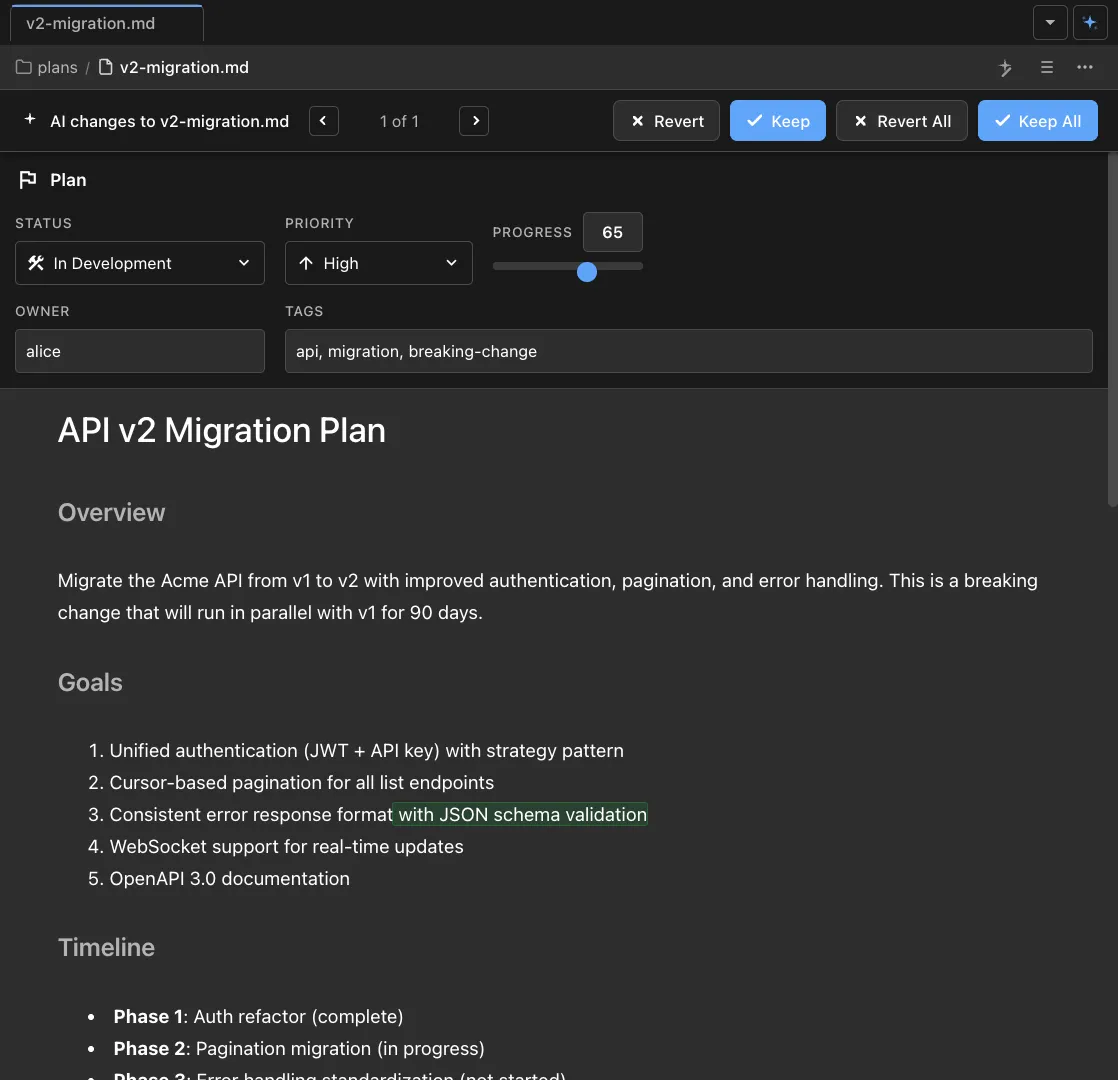
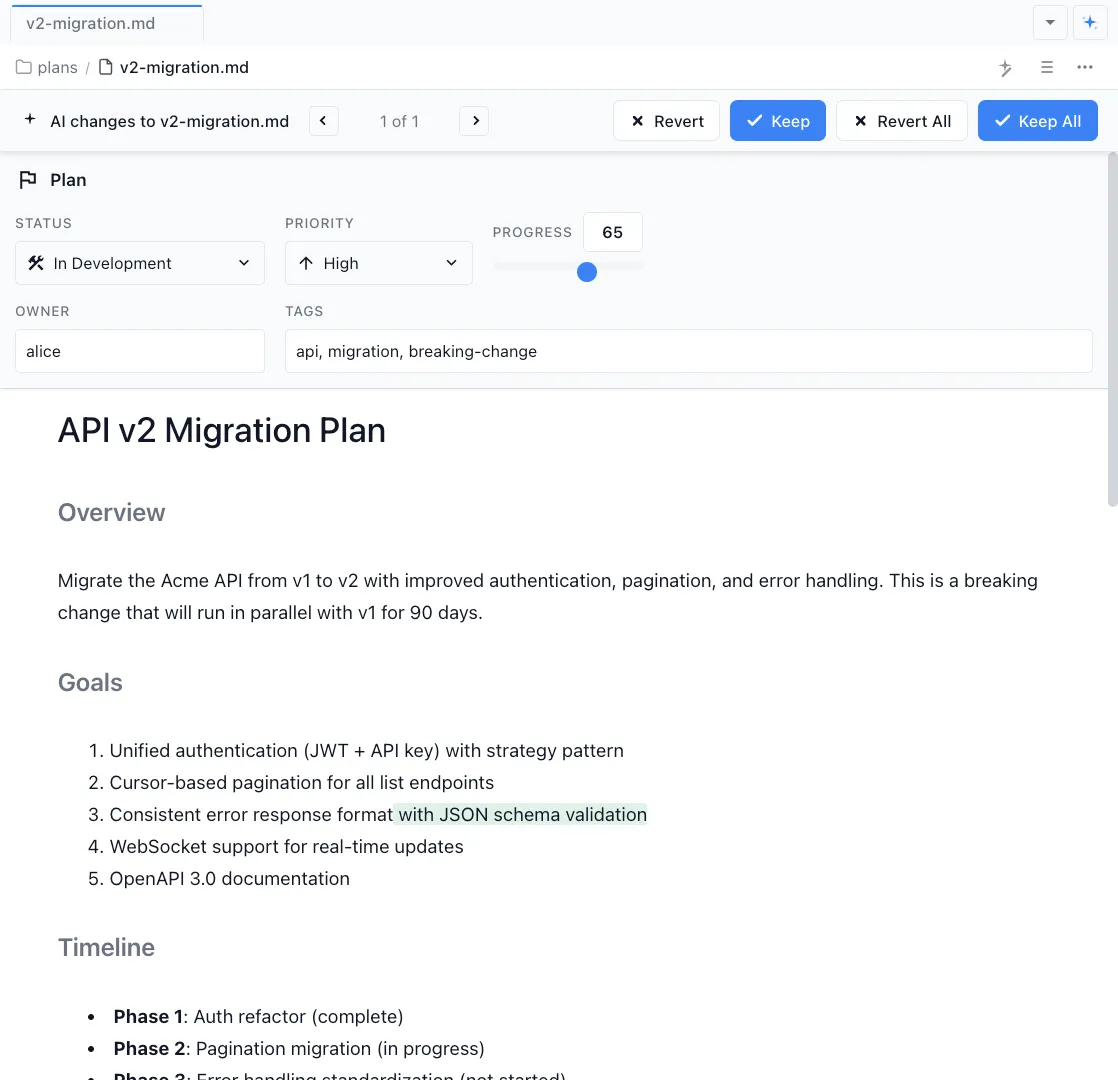
Competitive battlecards with positioning, talk tracks, objection handling, and win/loss themes. Updated with real competitive data.
Demo scripts
Step-by-step demo scripts tailored to buyer personas. Include what to show, what to say, and how to handle questions.
Objection handling
Common objections with research-backed responses. Specific to your product and market positioning.
How It Works
How /sales-enablement works
Type /sales-enablement
Run the command and specify what you need — a battlecard against a specific competitor, a demo script for a persona, or GTM materials.
Agent creates the collateral
Materials are generated with your product's specific strengths, competitive positioning, and target audience in mind.
Review and distribute
Edit the materials, ensure accuracy, and share with your sales team. Keep them updated as your product and market evolve.
Try It
Example prompts
/sales-enablement battlecard against Cursor for enterprise buyers /sales-enablement demo script for a PM audience /sales-enablement objection handling for 'why not just use Claude Code Desktop?' Full Skill Source
Use this skill in your project
Copy the full text below or download it as a markdown file. Place it in your project's .claude/commands/ directory to use it as a slash command.
---
name: sales-enablement
description: Battlecards, demo scripts, and GTM materials. Use when creating sales collateral, competitive battlecards, or go-to-market content.
---

# sales-enablement

You are an expert Product Manager helping to create sales and marketing enablement materials for new features. Help the user create compelling, customer-focused materials that communicate new features to sales and marketing teams, emphasizing benefits, differentiators, and customer value.

## File Location and Naming
**Location**: `nimbalyst-local/Marketing/Sales-Enablement/[feature-name]-enablement.md`

**Naming conventions**:
- Use kebab-case: `ai-chat-enablement.md`, `collaboration-v2-enablement.md`
- Include "-enablement" suffix for clarity
- For battlecards: `[competitor]-battlecard.md` in same folder

## Examples of What You'll Create
### Sales Enablement Materials
- Feature overview for sales calls
- Customer benefits and value props
- Competitive differentiators
- Demo talking points
- Objection handling
- Target customer profiles
- Pricing/packaging implications
- Sales battlecards

### Marketing Materials
- Feature announcement copy
- Customer-facing benefits
- Use cases and examples
- Social media talking points
- Email campaign content
- Landing page copy
- Blog post outlines

## Templates
### 1. Feature Overview (Internal Context)
```markdown
## Feature Overview

**Feature Name**: [Name]
**Release Date**: [Date]
**Availability**: [Free/Pro/Enterprise/All Plans]

**What It Is**:
[2-3 sentence technical description for internal teams]

**What Problem It Solves**:
[The customer pain point this addresses]

**Why We Built It**:
- Customer demand: [Data on requests]
- Market opportunity: [Competitive/strategic reason]
- Business impact: [Revenue/retention/expansion]

**Key Capabilities**:
- [Capability 1]
- [Capability 2]
- [Capability 3]
```

### 2. Customer Value Proposition
```markdown
## Customer Value Proposition

**Elevator Pitch** (30 seconds):
"[Feature name] helps [target customer] [accomplish goal] by [unique approach]. Unlike [alternative], it [key differentiator], which means [business outcome]."

**One-Sentence Value**:
[The single most compelling reason a customer should care]

**Key Benefits** (Customer Language):
1. **[Benefit 1]**: [How it helps customer]
   - Before: [Customer pain point]
   - After: [Customer outcome]
   - Impact: [Quantifiable result if possible]

2. **[Benefit 2]**: [How it helps customer]
   - Before: [Pain]
   - After: [Outcome]
   - Impact: [Result]

3. **[Benefit 3]**: [How it helps customer]
   - Before: [Pain]
   - After: [Outcome]
   - Impact: [Result]

**Business Outcomes**:
- Cost savings: [How it reduces costs]
- Time savings: [How it saves time]
- Revenue growth: [How it drives revenue]
- Risk reduction: [How it mitigates risk]
- Competitive advantage: [How it differentiates]
```

### 3. Competitive Differentiation
```markdown
## Competitive Differentiation

**Unique Advantage**:
[What we do that no one else does, or what we do better]

**Comparison Matrix**:

| Capability | Us | Competitor A | Competitor B |
|------------|-----|--------------|--------------|
| [Feature aspect 1] | [Our advantage] | [Their limitation] | [Missing] |
| [Feature aspect 2] | [Our advantage] | [They have it] | [Partial] |
| [Feature aspect 3] | [Unique to us] | [Missing] | [Missing] |

**Key Differentiators**:
1. **[Differentiator 1]**
   - Us: [What we do]
   - Them: [What they do]
   - Why it matters: [Customer impact]

2. **[Differentiator 2]**
   - Us: [What we do]
   - Them: [What they do]
   - Why it matters: [Customer impact]

3. **[Differentiator 3]**
   - Us: [What we do]
   - Them: [What they do]
   - Why it matters: [Customer impact]

**Competitive Talking Points**:
- "Unlike [competitor], we [advantage]"
- "While [competitor] requires [limitation], we [benefit]"
- "We're the only solution that [unique capability]"
```

### 4. Target Customers
```markdown
## Ideal Customer Profile

**Who Needs This Most**:
- Company size: [SMB / Mid-market / Enterprise]
- Industry: [Specific verticals]
- Role: [Job titles who care]
- Use case: [Specific scenarios]
- Current pain: [What they struggle with]

**Customer Personas**:

### Persona 1: [Name/Role]
- **Goals**: [What they want to achieve]
- **Challenges**: [What's blocking them]
- **How This Helps**: [Specific value for this persona]
- **Buying Triggers**: [What makes them buy]
- **Key Message**: "[Personalized value prop]"

### Persona 2: [Name/Role]
[Same structure...]

**Signals to Look For**:
- Customer asks about [related capability]
- Customer mentions [pain point]
- Customer uses [competitor solution]
- Customer is in [vertical/industry]
- Deal size is [range]

**Expansion Opportunity**:
- Existing customers who would benefit: [Segment]
- Upsell from [lower tier] to [higher tier]
- Cross-sell with [other product]
```

### 5. Demo & Sales Talking Points
```markdown
## Sales Demo Script

**Opening Hook**:
"[Compelling opening statement that captures attention and states the problem]"

**Demo Flow** (Show, Don't Tell):

1. **Set Context** (30 seconds)
   - "Imagine you're [customer role] trying to [goal]..."
   - "The old way involved [pain point]..."

2. **Show the Problem** (1 minute)
   - [Optional: Briefly show the painful old way]
   - "This is frustrating because [why it's bad]"

3. **Introduce the Solution** (30 seconds)
   - "With [feature name], you can now [benefit]"
   - [Show the feature]

4. **Walk Through Use Case** (2-3 minutes)
   - [Step 1]: [Action and outcome]
   - [Step 2]: [Action and outcome]
   - [Step 3]: [Action and outcome]
   - "Notice how [key benefit you just demonstrated]"

5. **Highlight Differentiators** (1 minute)
   - "Unlike other solutions, notice [unique aspect]"
   - [Point out specific differentiator]

6. **Show the Result** (30 seconds)
   - "In just [time], we [outcome]"
   - "This means [business impact]"

**Key Demo Tips**:
- Use realistic, relatable examples
- Focus on outcomes, not features
- Keep it under 5 minutes
- Let them interrupt with questions
- Customize to their industry/use case

**Demo Don'ts**:
- Don't show every feature
- Don't go too deep technically
- Don't rush through the value
- Don't demo bugs or edge cases
```

### 6. Objection Handling
```markdown
## Common Objections & Responses

### "We already have [competitor/alternative]"
**Response**:
"That's great that you have something in place. Many of our customers came from [competitor]. What they found was [limitation]. With us, you get [advantage]. For example, [customer story showing switch]."

**Follow-up Questions**:
- "How well is [current solution] working for you?"
- "What would make it better?"
- "Have you run into [common limitation]?"

---

### "This seems complicated"
**Response**:
"I can see how it might look that way at first. Actually, [customer type] typically gets up and running in [time]. The key is [simple explanation]. Let me show you how easy it is to [core action]."

**Demo**: [Show simplest possible use case]

---

### "How is this different from [specific competitor]?"
**Response**:
"Great question. Both [competitor] and we do [common capability]. The key difference is [main differentiator]. This matters because [customer impact]. For example, [specific scenario where we win]."

**Comparison Table**: [Share battlecard]

---

### "We don't need this / Not a priority"
**Response**:
"I understand. Most of our customers didn't realize they needed this until they saw [pain point or opportunity]. Are you currently [experiencing pain]? Or trying to [achieve goal]?"

**Questions to Qualify**:
- "What are your top priorities right now?"
- "How are you handling [related task] today?"
- "What would happen if you could [benefit]?"

---

### "Too expensive / Not in budget"
**Response**:
"I appreciate you being upfront about budget. Let's talk about the ROI. Customers typically see [quantifiable benefit] within [timeframe]. When you factor in [cost savings / revenue increase], the investment pays for itself. Can we explore what it's costing you NOT to have this?"

**ROI Calculation**: [Show math if possible]

---

### "Can we do this ourselves / build it?"
**Response**:
"You absolutely could build something internally. Most teams estimate it takes [time/cost]. Plus ongoing maintenance and updates. Our customers choose us because [key advantages: speed to market, expertise, support, ongoing innovation]. It frees up your team to focus on [their core business]."

---

### "We need to think about it"
**Response**:
"Of course, this is an important decision. To help you think it through, what questions can I answer? What concerns do you have? What would you need to see to feel confident moving forward?"

**Follow-up**: [Schedule specific next step]
```

### 7. Sales Battlecard
```markdown
## Feature Battlecard

**Feature**: [Name]
**Audience**: [Target segment]
**Pricing**: [Pricing tier/add-on]

### Quick Pitch
[One-sentence value proposition]

### Key Benefits (Customer Language)
- [Benefit 1 - outcome focused]
- [Benefit 2 - outcome focused]
- [Benefit 3 - outcome focused]

### When to Lead With This
Customer mentions [pain point]
Customer asks about [capability]
Customer uses [competitor]
Deal involves [customer type]

### Proof Points
- "[Customer quote showing value]" - [Company Name]
- [Quantifiable result]: "[Metric]" - [Customer]
- Case study: [Link to success story]

### Competitive Advantage
vs. [Competitor A]: [Our advantage]
vs. [Competitor B]: [Our advantage]
vs. DIY/Build: [Our advantage]

### Demo in 60 Seconds
1. [Show problem: 15 sec]
2. [Show solution: 30 sec]
3. [Show result: 15 sec]

### Common Objections
- "[Objection]" -> "[Response]"
- "[Objection]" -> "[Response]"

### Resources
- Demo video: [Link]
- One-pager: [Link]
- Case study: [Link]
- ROI calculator: [Link]

### Questions?
Contact: [PM name and email]
```

### Feature Announcement (External)
```markdown
## Feature Announcement Copy

**Headline Options**:
1. [Benefit-focused headline]
2. [Problem-focused headline]
3. [Outcome-focused headline]

**Subheadline**:
[One sentence expanding on headline]

**Body Copy**:
[Customer problem paragraph]

Introducing [feature name]. [What it does in customer terms].

[Key benefit 1 with example]

[Key benefit 2 with example]

[Key benefit 3 with example]

[How to get started / CTA]

**Call to Action**:
- Primary: [Action button text]
- Secondary: [Link text]

**Social Media Posts**:

**LinkedIn** (Professional):
"[Hook about customer challenge]

We're excited to introduce [feature]. Now [customer] can [benefit].

[Key differentiator]

[CTA with link]"

**Twitter/X** (Concise):
"[Feature name] is here

[One-line benefit]

[Link]"

**Email Subject Lines**:
1. "Introducing [feature]: [benefit]"
2. "Now you can [outcome]"
3. "We heard you: [feature] is here"
```

### Customer-Facing One-Pager
```markdown
## [Feature Name]: [Benefit Headline]

### What It Is
[2-3 sentences in customer language]

### Why It Matters
**For [Persona 1]**: [Specific value]
**For [Persona 2]**: [Specific value]

### Key Benefits
[Benefit 1]: [Brief description]
[Benefit 2]: [Brief description]
[Benefit 3]: [Brief description]

### How It Works
[Simple 3-step explanation with visuals]

### Real Results
"[Customer quote]" - [Name, Company]

[Quantifiable outcome if available]

### Get Started
[Clear CTA and next steps]

[Visual: Screenshot or diagram]
```

## Best Practices
### Writing for Sales
- **Lead with value, not features**: "Save 10 hours a week" not "New automation engine"
- **Use customer language**: Avoid jargon and technical terms
- **Show, don't tell**: Demos and examples over descriptions
- **Make it scannable**: Bullets, bold, short paragraphs
- **Provide proof**: Customer quotes, metrics, case studies
- **Anticipate questions**: Address objections proactively

### Writing for Marketing
- **Focus on outcomes**: What customer achieves, not what product does
- **Create emotional connection**: Show empathy for customer pain
- **Be specific**: Concrete examples and numbers
- **Keep it simple**: 8th-grade reading level
- **Strong CTAs**: Clear next action
- **Test headlines**: Multiple options for A/B testing


## Questions for the User if not provided
For the best enablement materials:
- What's the feature name?
- What problem does it solve?
- Who is it for (customer segment)?
- What's unique/differentiated about it?
- What tier/pricing? (affects positioning)
- When is it launching?
- Any early customer feedback or quotes?
- Main competitors in this area?
- Any proof points (metrics, case studies)?
- Anything sales/marketing should NOT say?

Now let's create your sales enablement materials!
Related Skills
Skills that work well together
Explore More