Product Management
AI-powered request triage
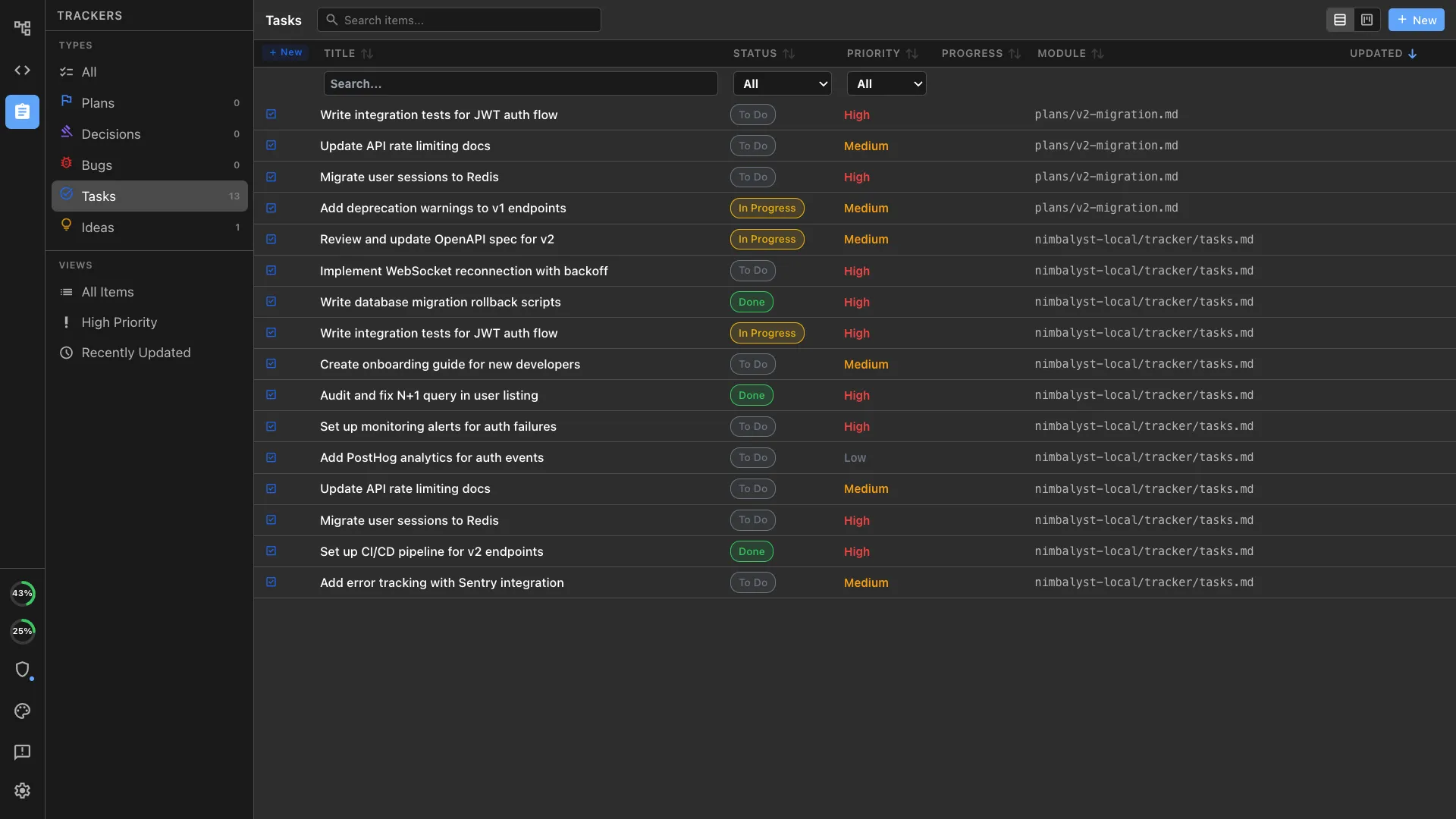
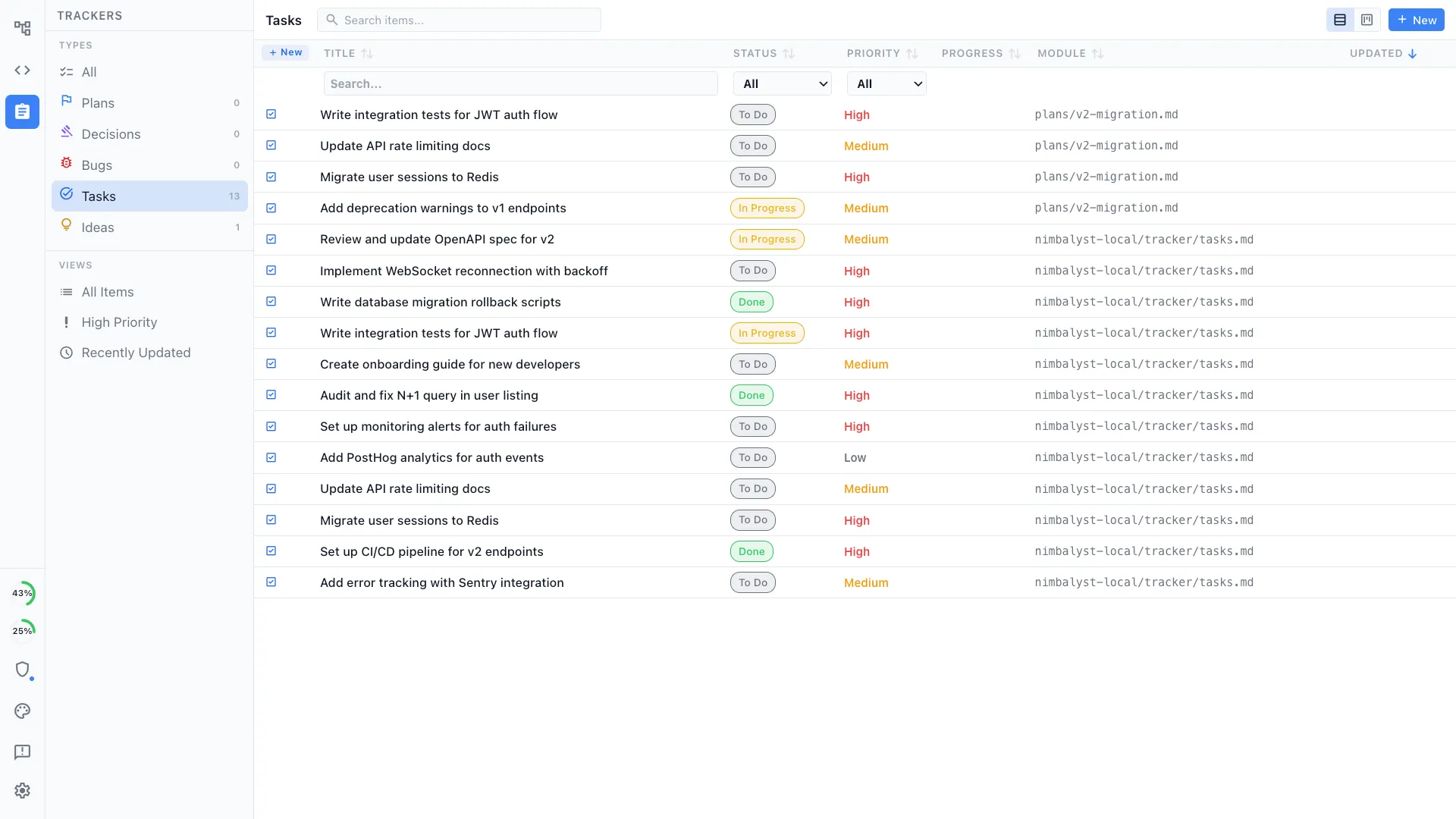
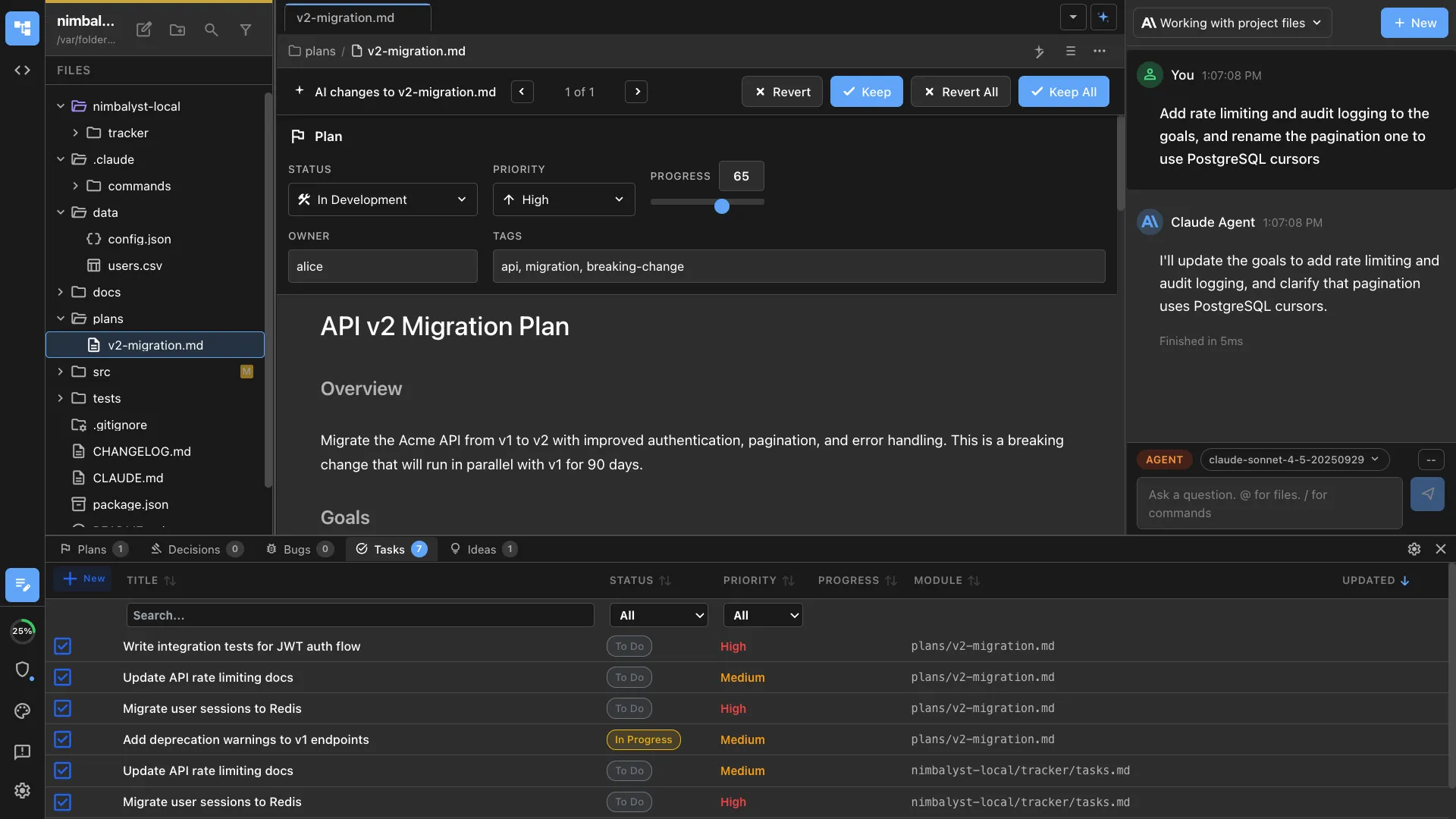
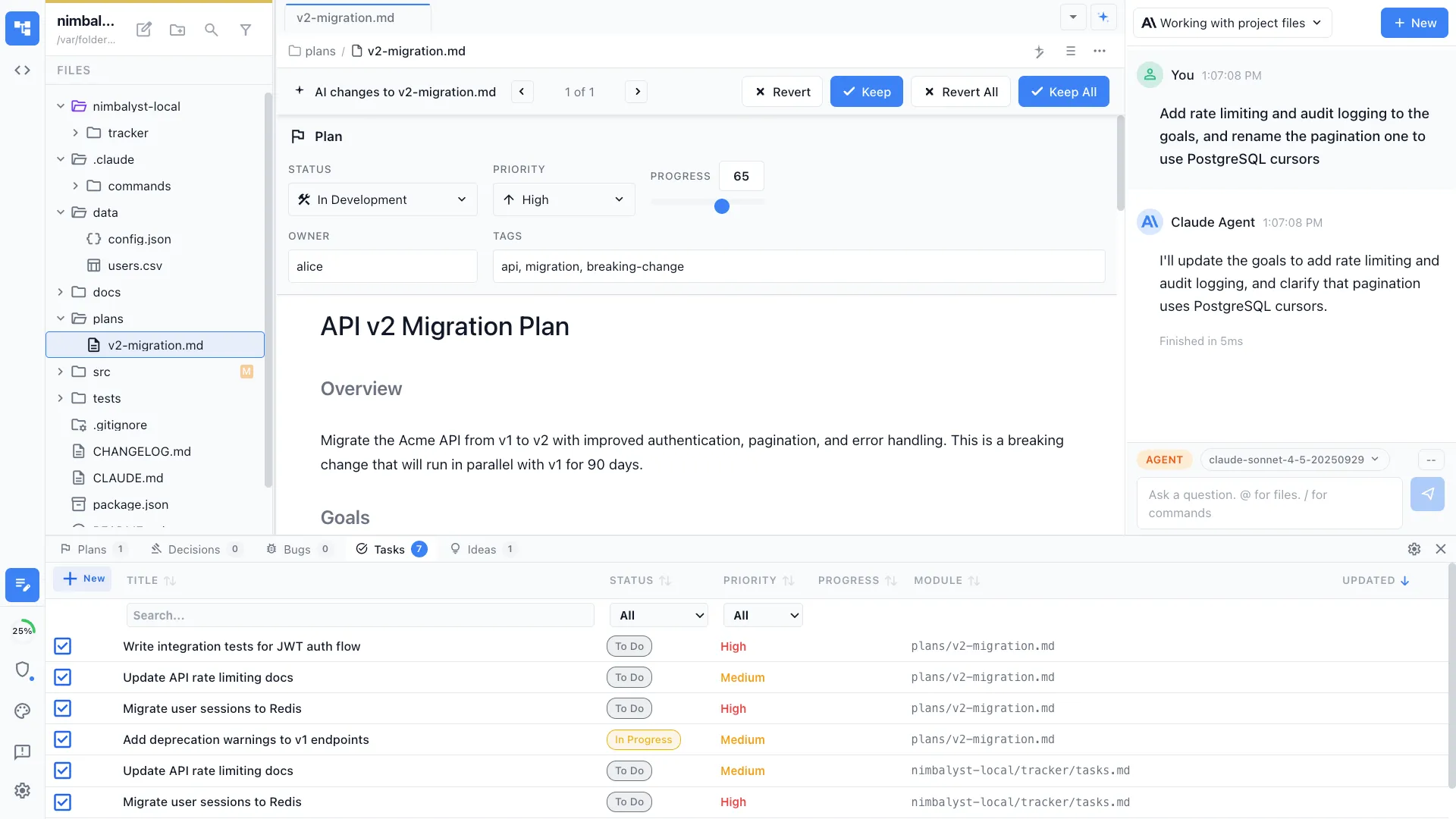
Run /triage-requests to sort through feature requests, identify duplicates, group related items, and prioritize by impact — turning chaos into a ranked backlog.
Triage, deduplicate, and prioritize feature requests. Identifies duplicates, groups related requests, and ranks by impact and effort.
Capabilities
Order from chaos
Deduplication
The agent identifies requests that describe the same thing in different words. Merge duplicates to get an accurate count of demand.
Impact scoring
Each request is scored by estimated impact and effort. See which requests deliver the most value for the least work.
Theme identification
Requests are grouped into themes — performance, UX, integrations, etc. See the big picture across individual asks.
How It Works
How /triage-requests works
Type /triage-requests
Run the command and point it at a list of requests — from a file, tracker, or pasted text.
Agent analyzes and groups
Duplicates are identified, themes emerge, and each unique request gets an impact/effort estimate.
Get the prioritized backlog
Receive a ranked list of requests with themes, duplicates merged, and recommended prioritization.
Try It
Example prompts
/triage-requests from the feedback file /triage-requests these 50 requests from the survey /triage-requests group these by theme and rank by impact Full Skill Source
Use this skill in your project
Copy the full text below or download it as a markdown file. Place it in your project's .claude/commands/ directory to use it as a slash command.
---
name: request-triager
description: Triage, deduplicate, and prioritize feature requests. Use when organizing a backlog of feature requests or customer asks.
---

# triage-requests

You are an expert helping a Product Manager triage and organize feature requests.

## What You'll Do
### 1. Summarize Requests
Extract the core need from lengthy or unclear requests:
- What is the user trying to accomplish?
- What's the underlying problem?
- What solution are they suggesting?

### 2. Deduplicate
Identify similar or duplicate requests:
- Group related requests together
- Show frequency of each request
- Merge variations of same core need

### 3. Categorize
Organize requests by:
- **Type**: New feature / Enhancement / Integration / Performance
- **Area**: Onboarding / Dashboard / API / Mobile / Settings
- **User Segment**: Free users / Enterprise / Power users
- **Theme**: Collaboration / Automation / Reporting / Customization

### 4. Prioritize
Score requests using:
- **Impact**: How many users affected? Revenue impact?
- **Urgency**: Competitive pressure? Churn risk?
- **Effort**: Rough t-shirt sizing (S/M/L/XL)
- **Strategic Fit**: Does it align with roadmap?

### 5. Recommend Action
- **Build Now**: High impact, high urgency
- **Roadmap**: Good idea, plan for later
- **Parking Lot**: Nice to have, low priority
- **Decline**: Doesn't fit strategy or too niche

## Usage Examples
### Process Multiple Requests
```
I received these feature requests [paste list or attach file]:

Please:
1. Summarize each in one sentence
2. Identify any duplicates
3. Group by theme
4. Prioritize by impact × frequency
5. Recommend what to build first
```

### Deduplicate Requests
```
We have 50 feature requests in our backlog.
Find duplicates and similar requests.
Show me the top 10 most requested features.
```

### Categorize Backlog
```
Organize our feature requests by:
- User segment (free vs. paid)
- Product area (core vs. add-on)
- Size (quick win vs. major effort)

Help me see what themes are emerging.
```

### Prioritization Framework
```
Score these feature requests using RICE:
- Reach: How many users affected?
- Impact: How much value per user?
- Confidence: How sure are we?
- Effort: Engineering estimate?

Rank them and recommend top 3 to build next quarter.
```

### Competitive Analysis
```
These features were requested because competitors have them:
[List requests]

For each:
- Is it table stakes or differentiator?
- Are we losing deals because of it?
- Should we build, buy, or ignore?
```

## Triage Framework
### Impact Scoring
**High Impact** (3 points):
- Requested by major customers
- Unblocks revenue/retention
- Large user base affected
- Competitive necessity

**Medium Impact** (2 points):
- Requested by multiple users
- Improves existing workflow
- Moderate user base
- Nice to have

**Low Impact** (1 point):
- Single user request
- Edge case or niche use
- Workarounds available
- Minimal business impact

### Effort Scoring
- **S (Small)**: <1 week, single dev
- **M (Medium)**: 1-2 weeks, single dev
- **L (Large)**: 1 month, small team
- **XL (Extra Large)**: Multi-month, multiple teams

### Priority Calculation
```
Priority Score = (Impact × Frequency) / Effort

High Priority: Score > 5
Medium Priority: Score 2-5
Low Priority: Score < 2
```

## Output Formats
### Request Summary Table
| Request | Summary | Frequency | Impact | Effort | Priority | Action |
| --- | --- | --- | --- | --- | --- | --- |
| REQ-001 | Bulk export to CSV | 12 mentions | High | S | High | Build Q1 |
| REQ-002 | Dark mode | 8 mentions | Medium | M | Medium | Roadmap Q2 |
| REQ-003 | Custom fonts | 2 mentions | Low | M | Low | Parking Lot |
### Grouped by Theme
```markdown
## 🎨 Customization Requests (15 total)
1. **Custom branding** (8 requests) - Impact: High, Effort: M
   - User quotes: "Need to white-label for clients"
   - Recommendation: Build (enterprise revenue impact)

2. **Custom colors** (4 requests) - Impact: Medium, Effort: S
   - User quotes: "Brand colors are important"
   - Recommendation: Quick win, build soon

3. **Custom fonts** (3 requests) - Impact: Low, Effort: M
   - Recommendation: Parking lot

## 📊 Reporting Requests (12 total)
[Similar breakdown...]
```

### Priority Recommendations
```markdown
# Feature Request Triage - Top 10 Priorities

## 🚀 Build Next Sprint (P0)
1. **Bulk CSV Export** [REQ-001]
   - Why: 12 customers requesting, blocking renewals
   - Impact: High (prevent churn)
   - Effort: Small (3 days)
   - ROI: Immediate retention win

2. **API Rate Limit Increase** [REQ-007]
   - Why: Enterprise expansion blocker
   - Impact: High (unlock $100K+ ARR)
   - Effort: Small (config change)
   - ROI: Direct revenue

## 🗓️ Roadmap Next Quarter (P1)
3. **Dark Mode** [REQ-002]
   - Why: Frequently requested, competitive feature
   - Impact: Medium (user satisfaction)
   - Effort: Medium (2 weeks)

## 🅿️ Parking Lot (P2)
8. **Custom Fonts** [REQ-003]
   - Why: Low frequency, niche use case
   - Impact: Low
   - Effort: Medium

## ❌ Decline
10. **Animated Backgrounds** [REQ-099]
   - Why: Off-brand, single request, no business case
   - Response: "Not aligned with our core value prop"
```

### Deduplication Report
```markdown
# Duplicate Feature Requests Found

## Request Group: "Better Export Options"
**Total Mentions**: 15 across multiple tickets

### Variations Found:
- REQ-001: "Need CSV export" (5 mentions)
- REQ-023: "Download data as Excel" (4 mentions)
- REQ-045: "Bulk export feature" (3 mentions)
- REQ-067: "Can't get my data out" (3 mentions)

### Merged Summary:
Users need ability to export their data in various formats (CSV, Excel, PDF) for reporting and analysis.

### Recommendation:
Create single feature request: "Flexible Data Export" covering multiple formats. Close duplicates as consolidated.
```

## Best Practices
1. **Extract Core Need**: Look past the suggested solution to the underlying problem
2. **Use User Language**: Keep their words in quotes for authenticity
3. **Count Frequency**: One request is noise, ten is a signal
4. **Consider Source**: Enterprise customer vs. free user weight differently
5. **Look for Patterns**: Related requests might indicate bigger opportunity
6. **Be Ruthless**: Most requests should be declined or deferred
7. **Explain Decisions**: Document why you prioritized or declined
8. **Track Over Time**: Popular requests grow, fads fade

## Linear Integration
When creating issues in Linear for approved feature requests, use these fields:

**Required Fields**:
- `title`: Clear feature title (action-oriented)
- `team`: The appropriate team (use `mcp__linear__list_teams` to find teams)
- `state`: Use "Backlog" for new requests

**Recommended Fields**:
- `priority`: Map impact to priority (High Impact=2, Medium=3, Low=4)
- `labels`: Use labels like "feature-request", "enhancement", "integration"
- `description`: Include user problem, proposed solution, business value
- `project`: Associate with relevant project if applicable

**Example Linear Issue Creation**:
```
Use mcp__linear__create_issue with:
- title: "Add bulk CSV export functionality"
- team: "Product"
- priority: 2 (High)
- labels: ["feature-request", "export"]
- description: User need, impact analysis, and acceptance criteria
```

## Questions to Ask
If the user hasn't provided enough context:
- Where are these requests from? (support, sales, direct user feedback)
- What format? (spreadsheet, text list, support tickets)
- Do you have any context? (customer size, plan type)
- What's your capacity? (how many can you build this quarter)
- Any strategic priorities? (market segment, product area)
- Should I merge duplicates or keep separate?

## Decline Response Templates

### Out of Scope
"Thank you for the suggestion! This falls outside our core focus on [value prop]. We're prioritizing features that help with [primary use case]."

### Too Niche
"We appreciate the feedback! Based on current requests, this serves a very specific use case. We're focusing on features that benefit our broader user base."

### Better Alternative
"Great idea! Have you tried [existing feature]? It accomplishes [similar goal]. We'd love to hear if it meets your needs."

### Reconsider Later
"Thanks for sharing! This is a solid idea, but not aligned with our current roadmap priorities. We're keeping it in our backlog to revisit in the future."

Now let's triage your feature requests!
Related Skills
Skills that work well together
Explore More