Feature Planning
AI-powered feature planning
Write PRDs, break features into tasks, create implementation plans, and hand them to AI agents for execution -- all in the same workspace.
The Problem
Feature planning is disconnected from implementation
PRDs and feature specs are written in one tool but implemented in another. The translation between planning and coding loses critical context.
- PRDs are written in Notion or Google Docs, separate from the codebase
- Requirements lose nuance as they're translated into tickets
- No way to verify that implementation matches the original spec
- Planning artifacts become stale as implementation reveals new constraints
How It Works
Plan, specify, and implement in one place
Write the spec
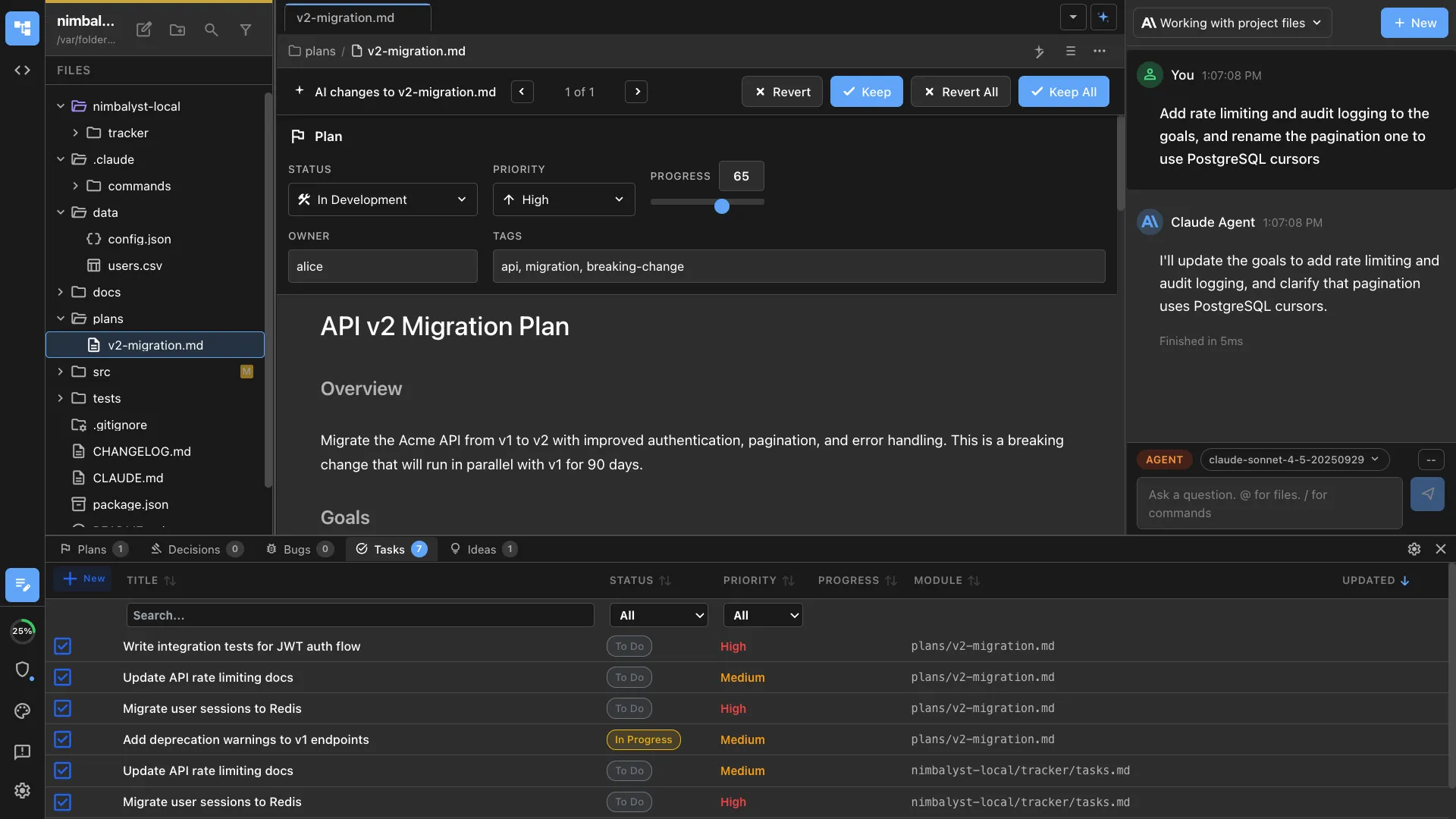
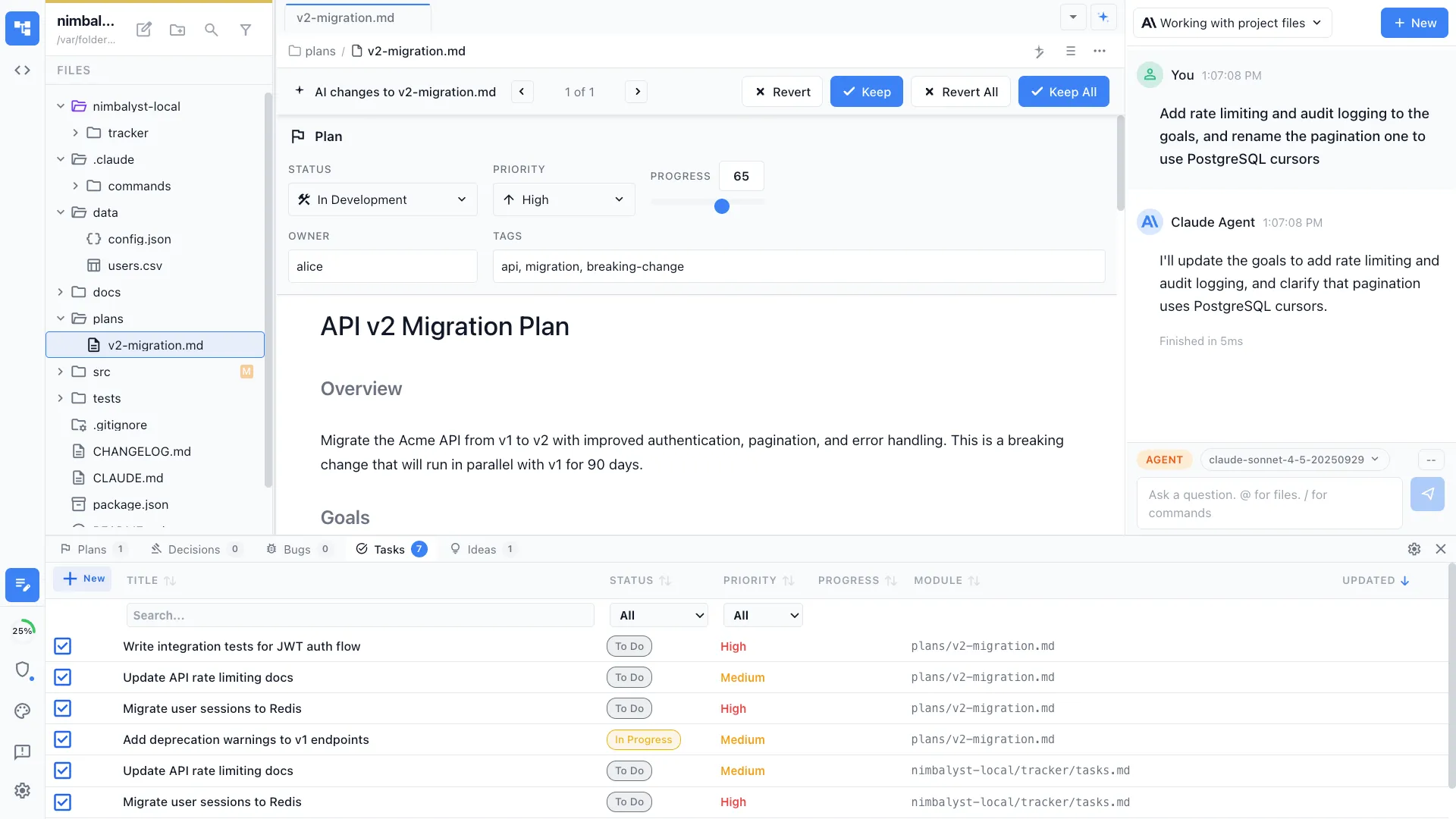
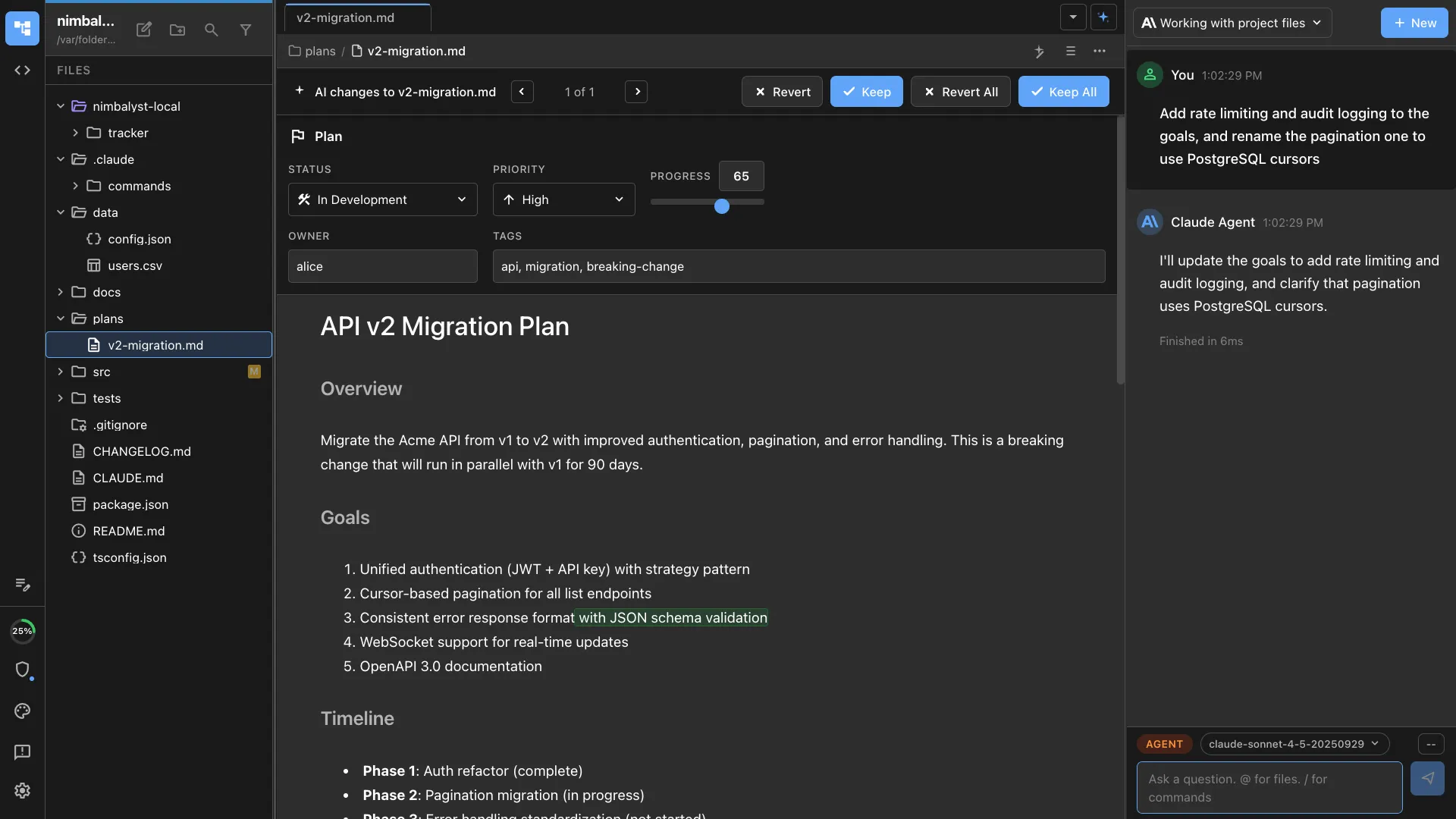
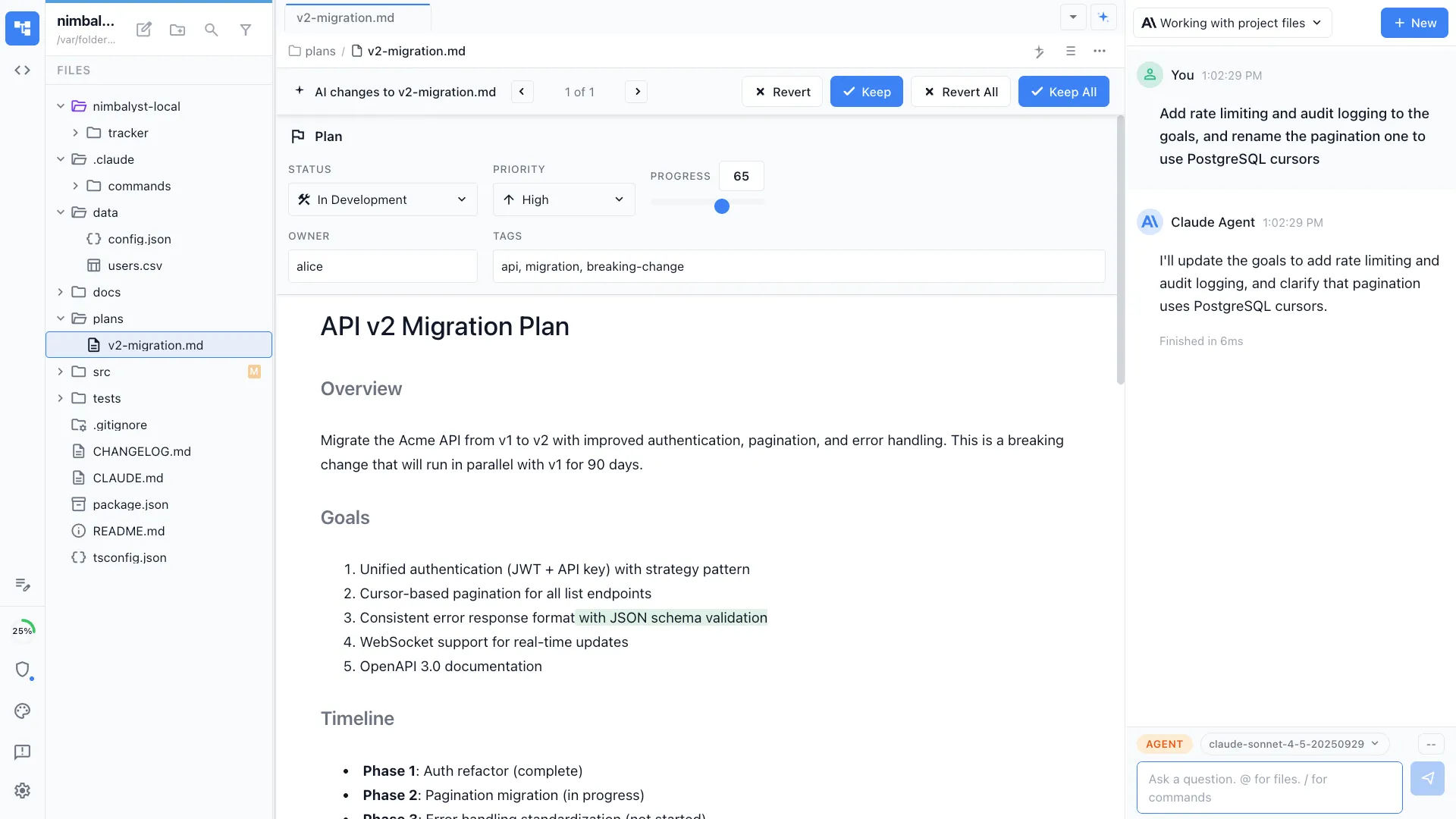
Use plan mode to create structured PRDs with acceptance criteria, edge cases, and architecture decisions. Your agent helps you think through the details.
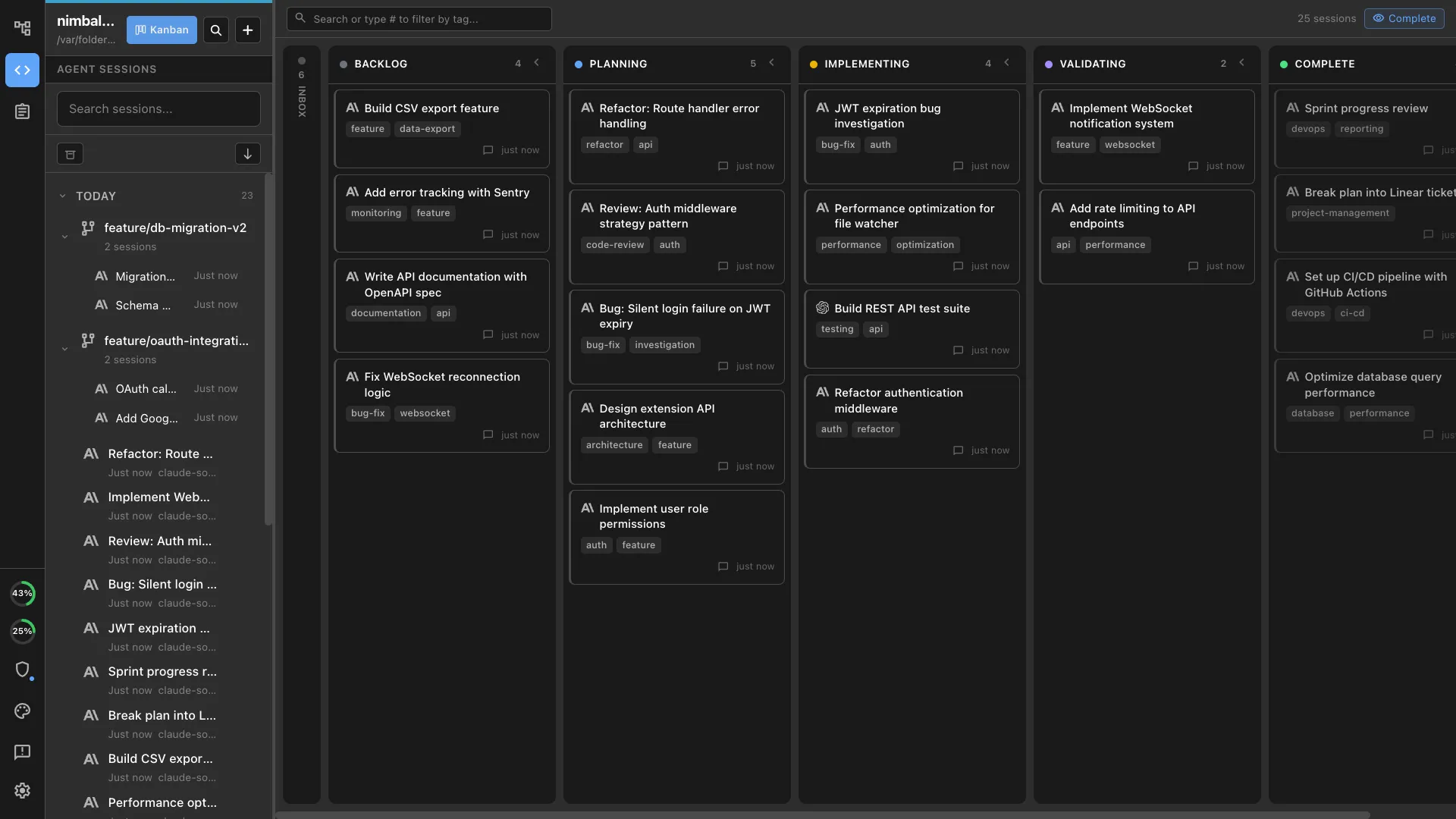
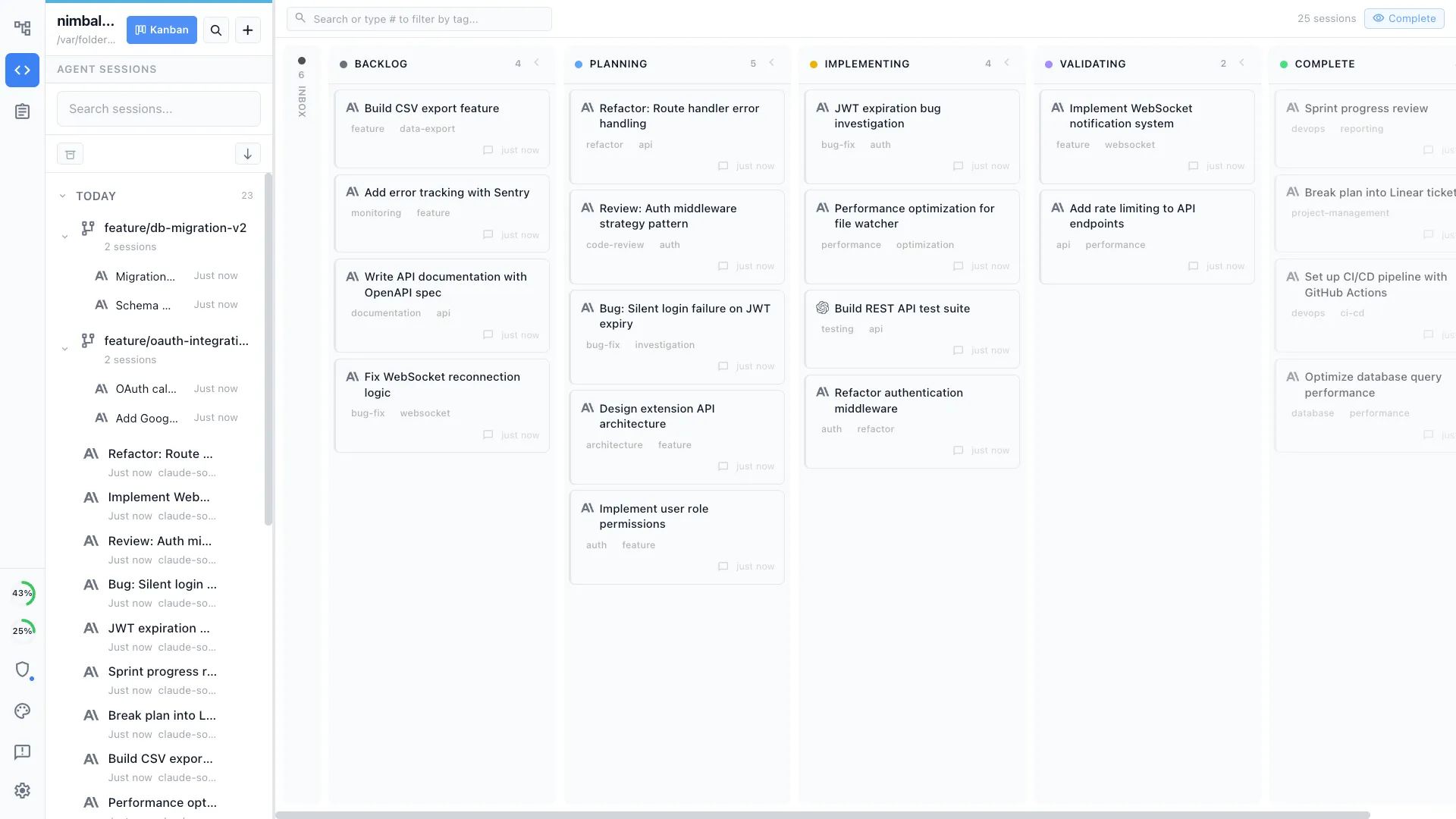
Break into tasks
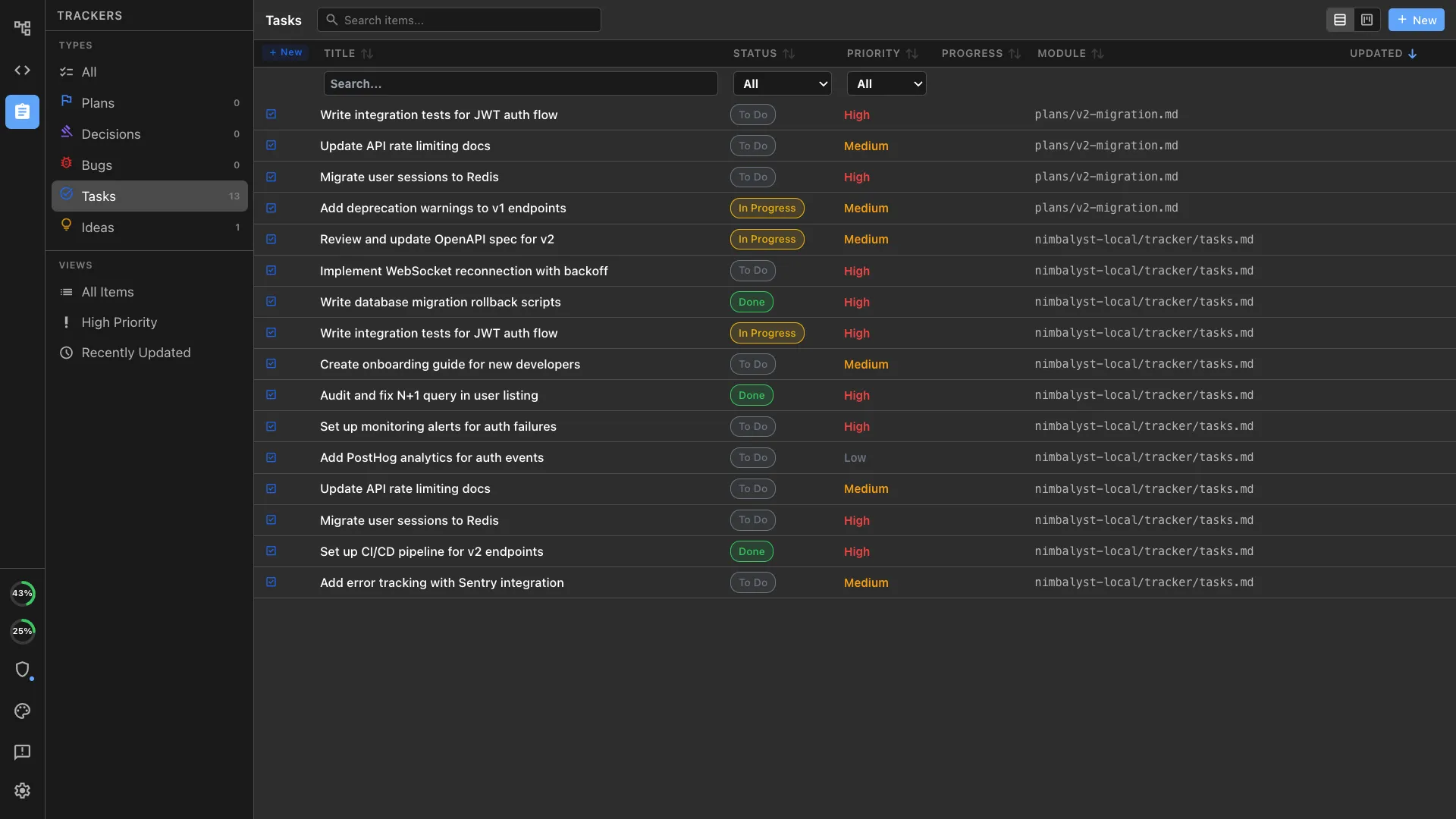
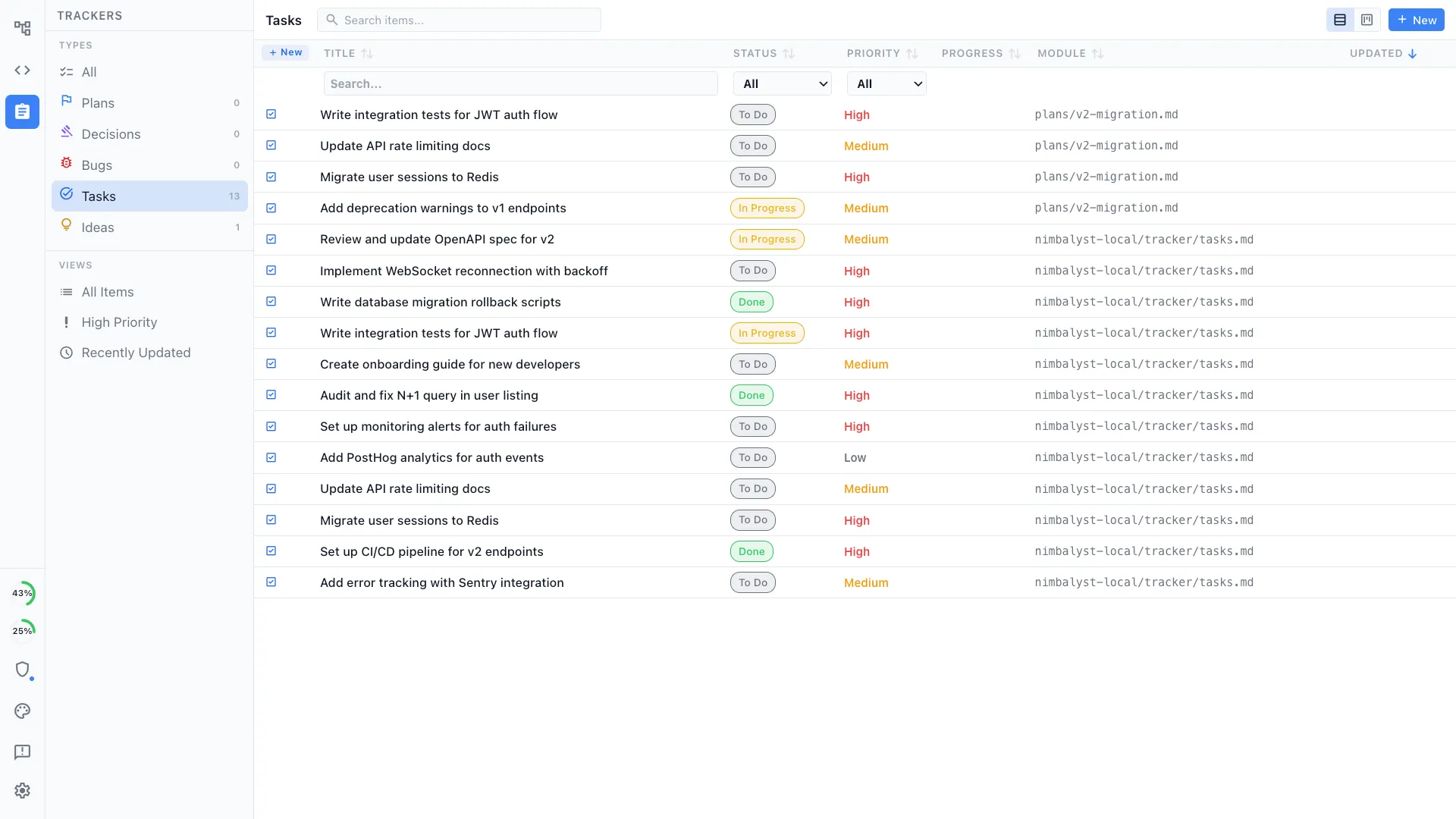
Your agent breaks the spec into implementable tasks with clear scope, linked to specific files and modules that need to change.
Execute with agents
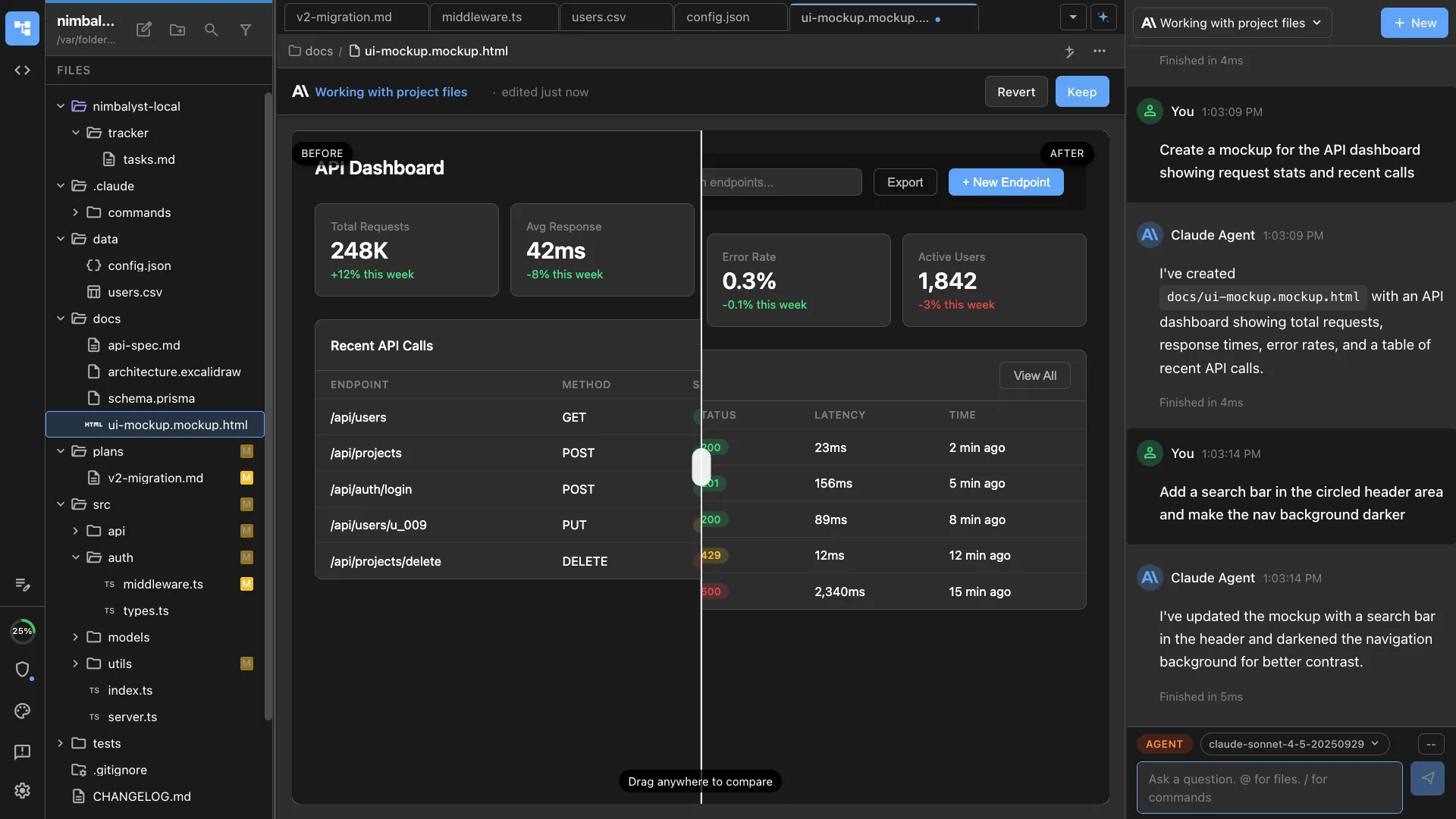
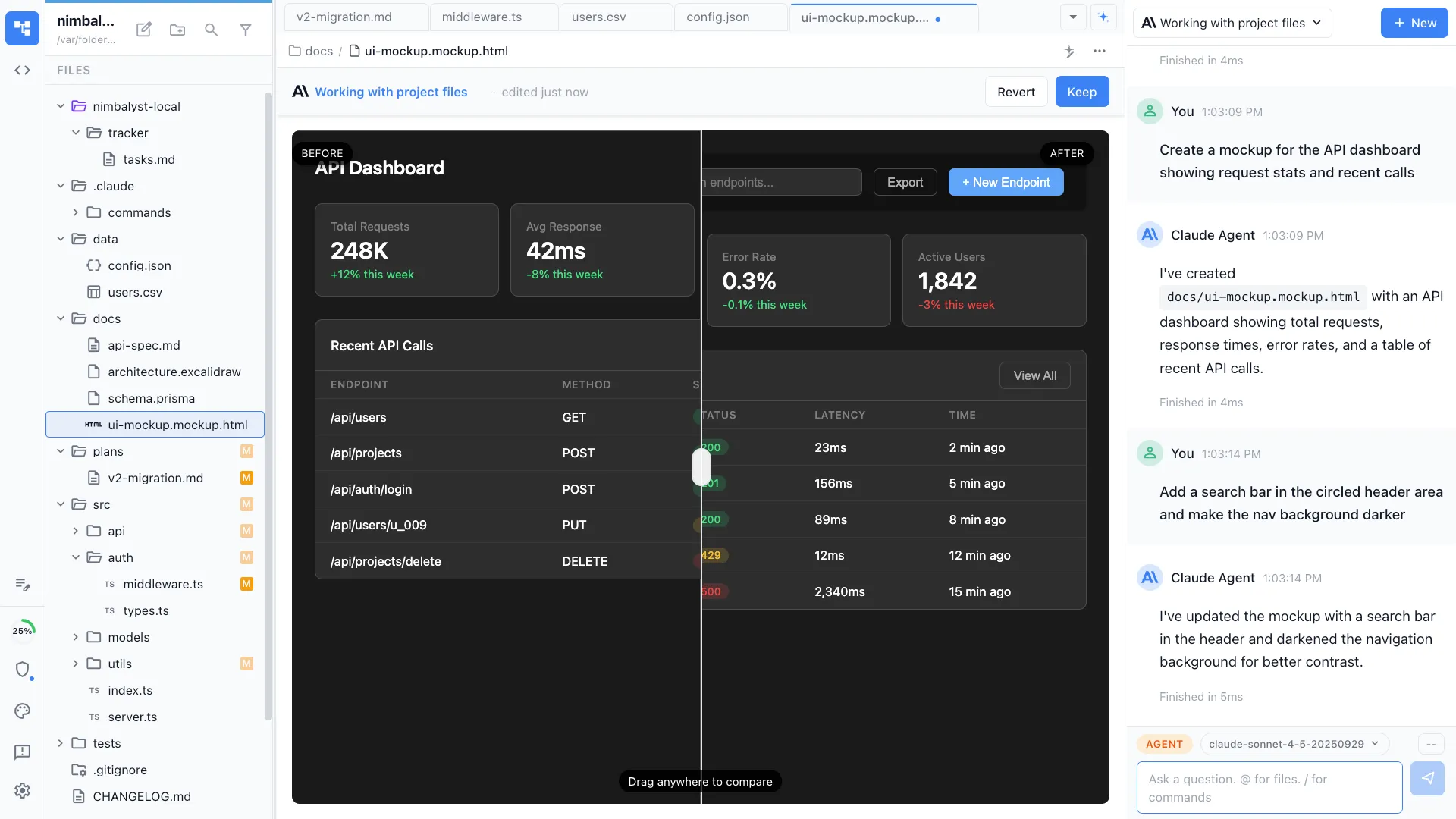
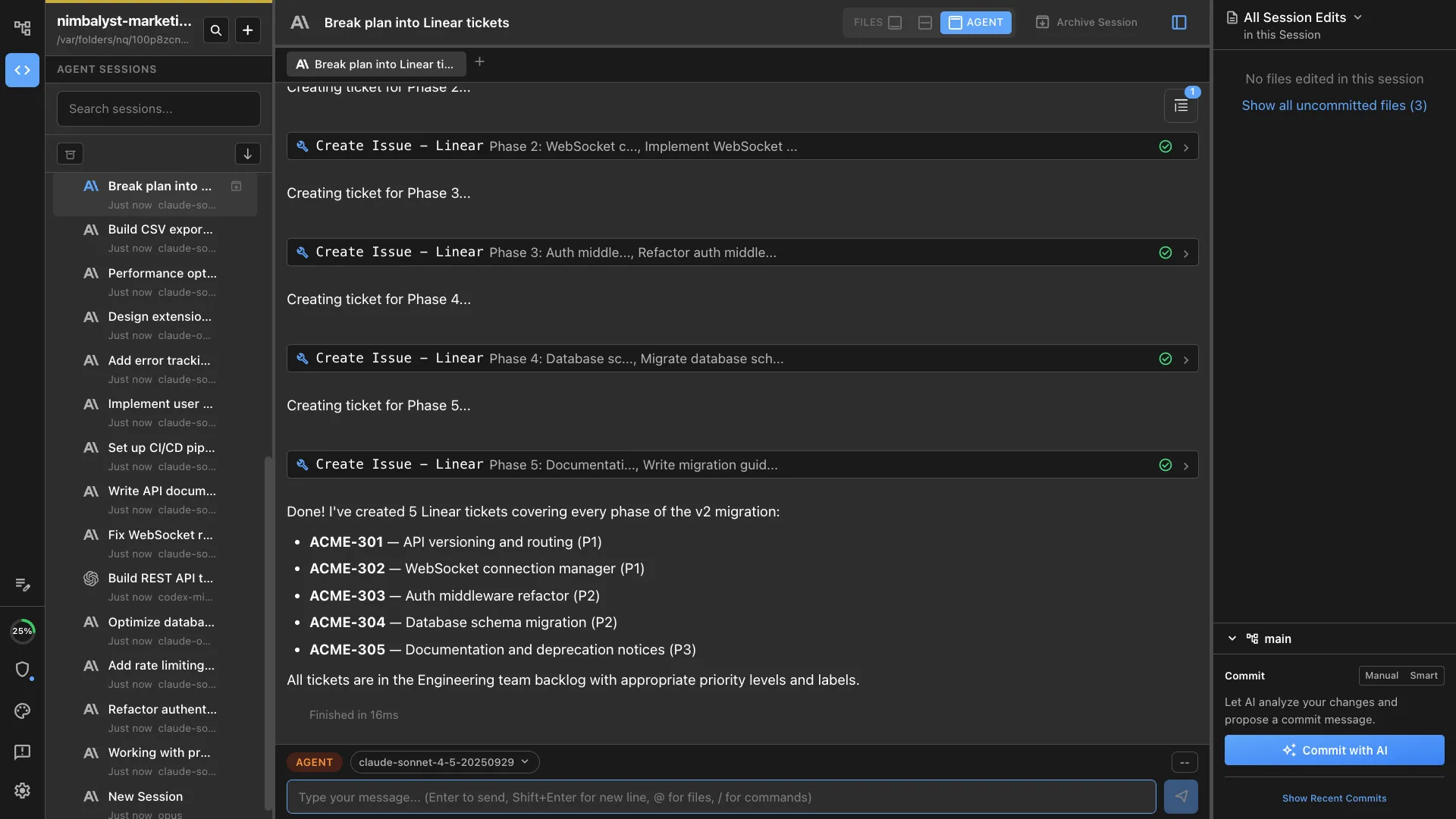
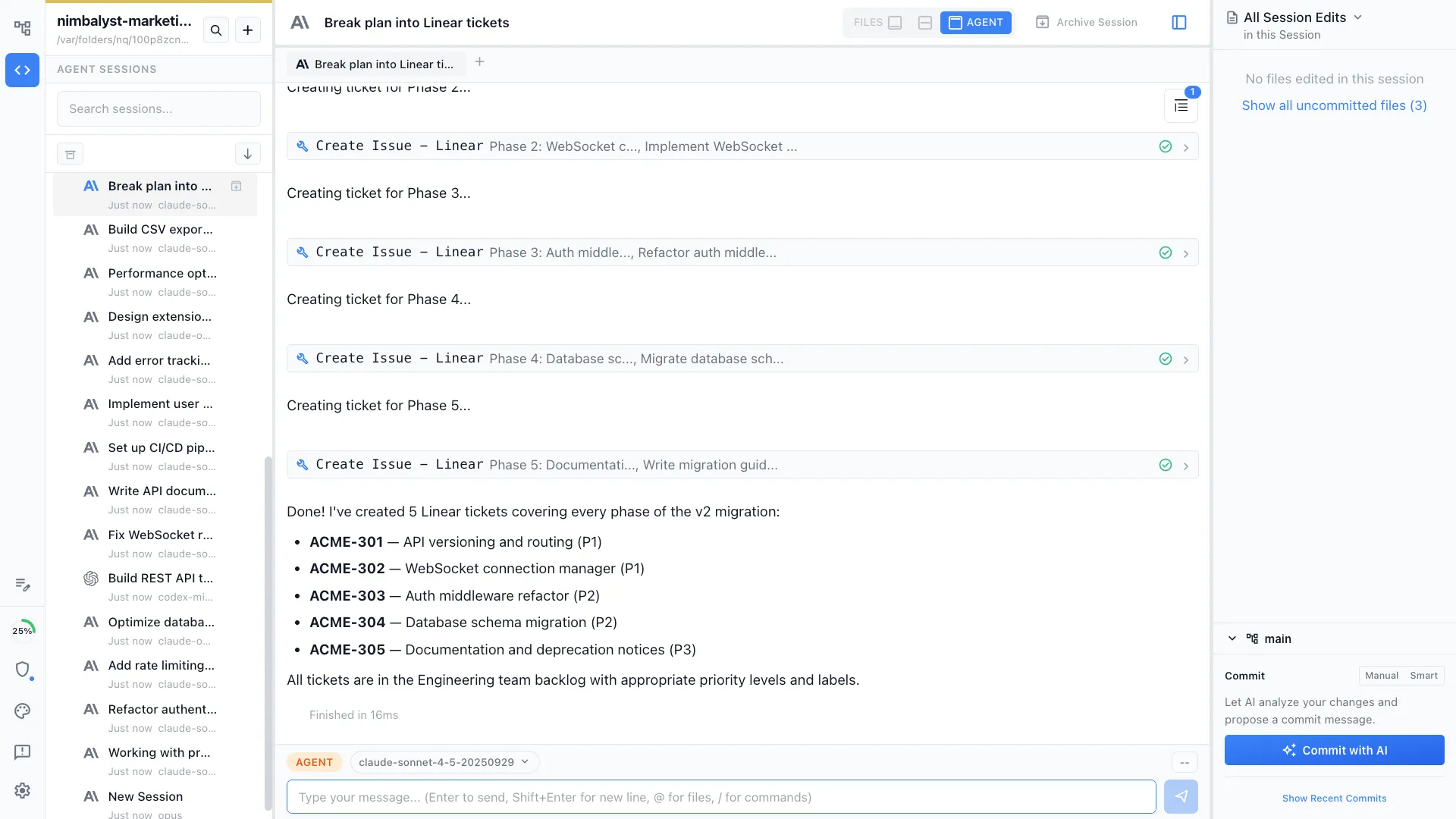
Launch agent sessions for each task. The agents read the original spec and task context, then implement with full awareness of the plan.
The Difference
Plans that agents can execute
Without Nimbalyst
- ✕ Write PRDs in Notion, convert to Jira tickets, lose context at each step
- ✕ Developers reinterpret requirements differently than intended
- ✕ No feedback loop between implementation discoveries and the spec
- ✕ Finished features diverge from original requirements
With Nimbalyst
- ✓ PRDs live alongside code -- agents read the spec and implement directly
- ✓ Tasks link to specific files and modules for precise scope
- ✓ Implementation discoveries update the plan in real time
- ✓ Agents implement exactly what was specified, with full context
Powered By
Nimbalyst features behind this workflow
Planning & Tracking
Structured plans with tasks, acceptance criteria, and progress tracking.
Markdown Editor
WYSIWYG editor for writing PRDs, specs, and feature briefs.
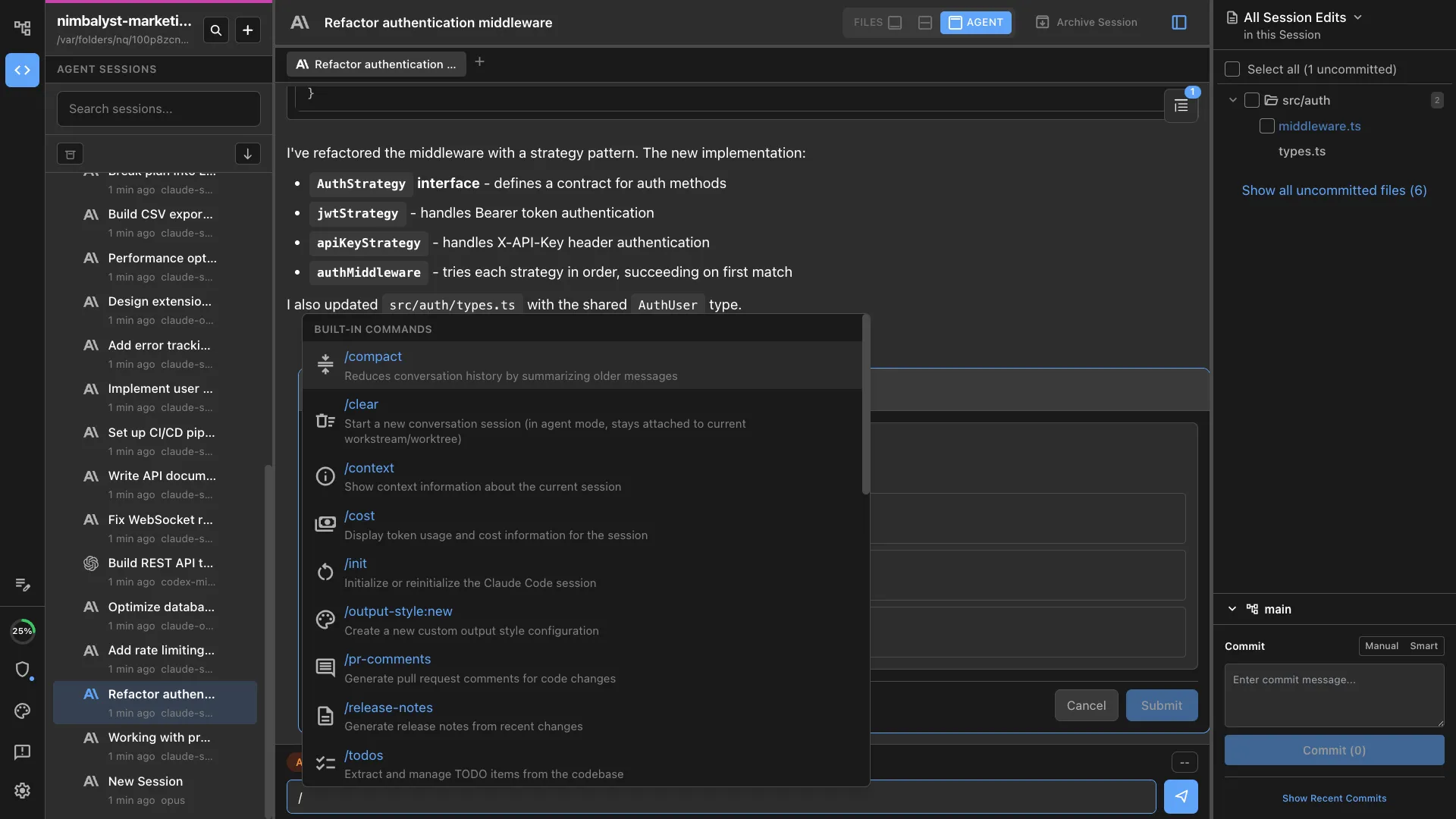
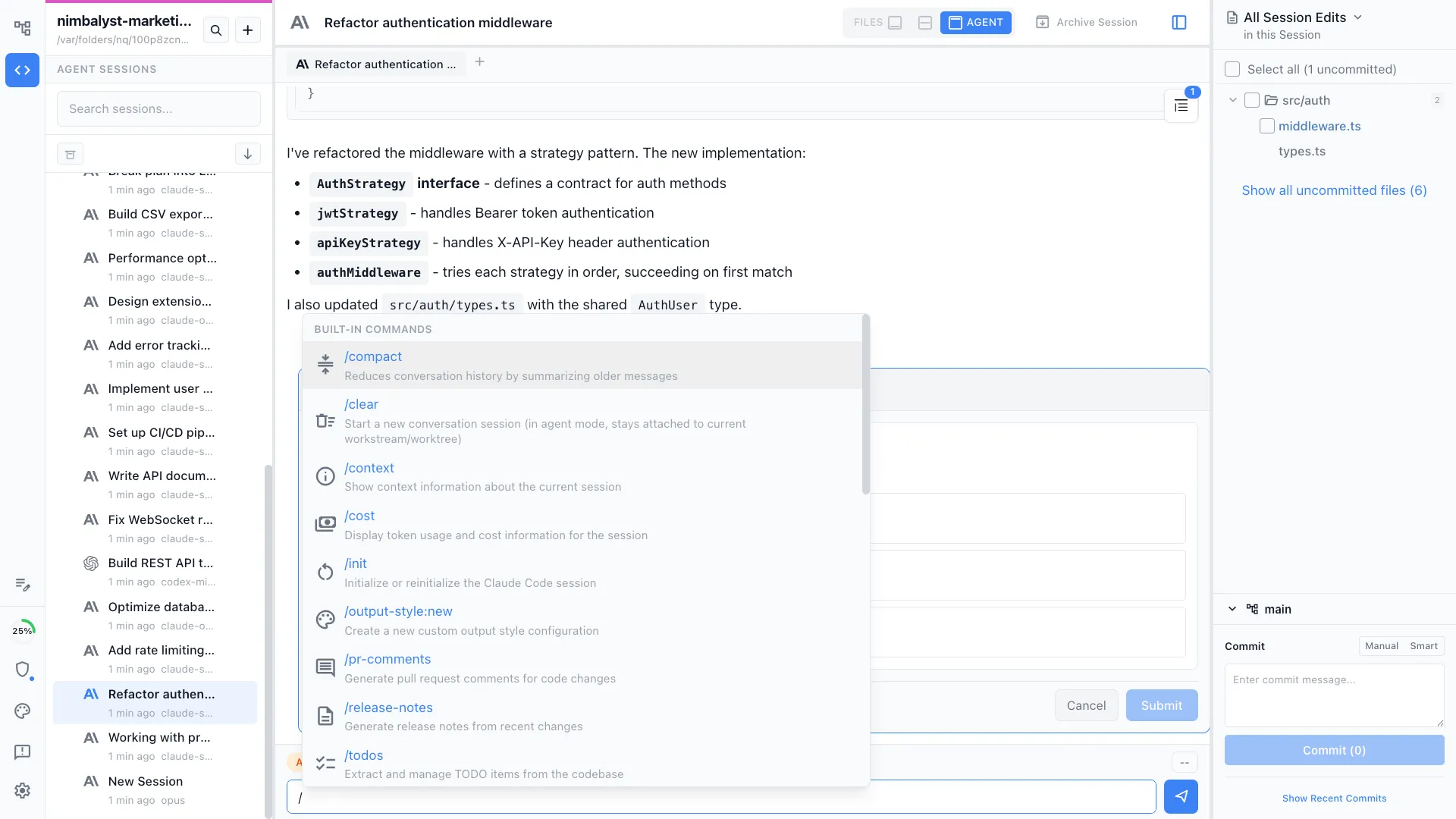
Commands & Skills
Use /prd to generate structured product requirements documents.
Agent Orchestration
Launch multiple agent sessions to implement different parts of a plan.