Design Systems
AI-powered design systems
Your AI agent creates component libraries, token systems, and style guides from existing code or from scratch. Maintain consistency as your codebase grows.
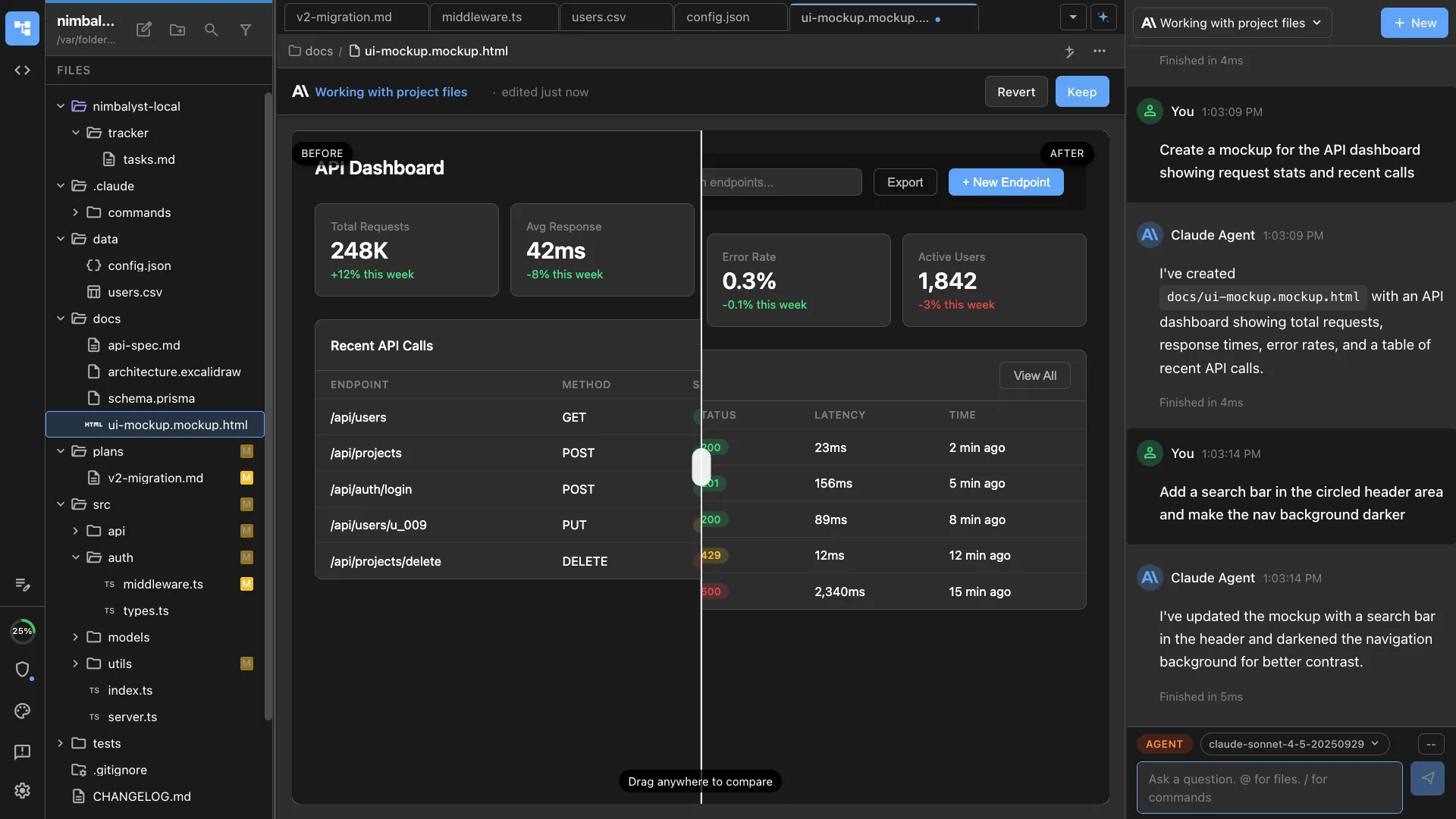
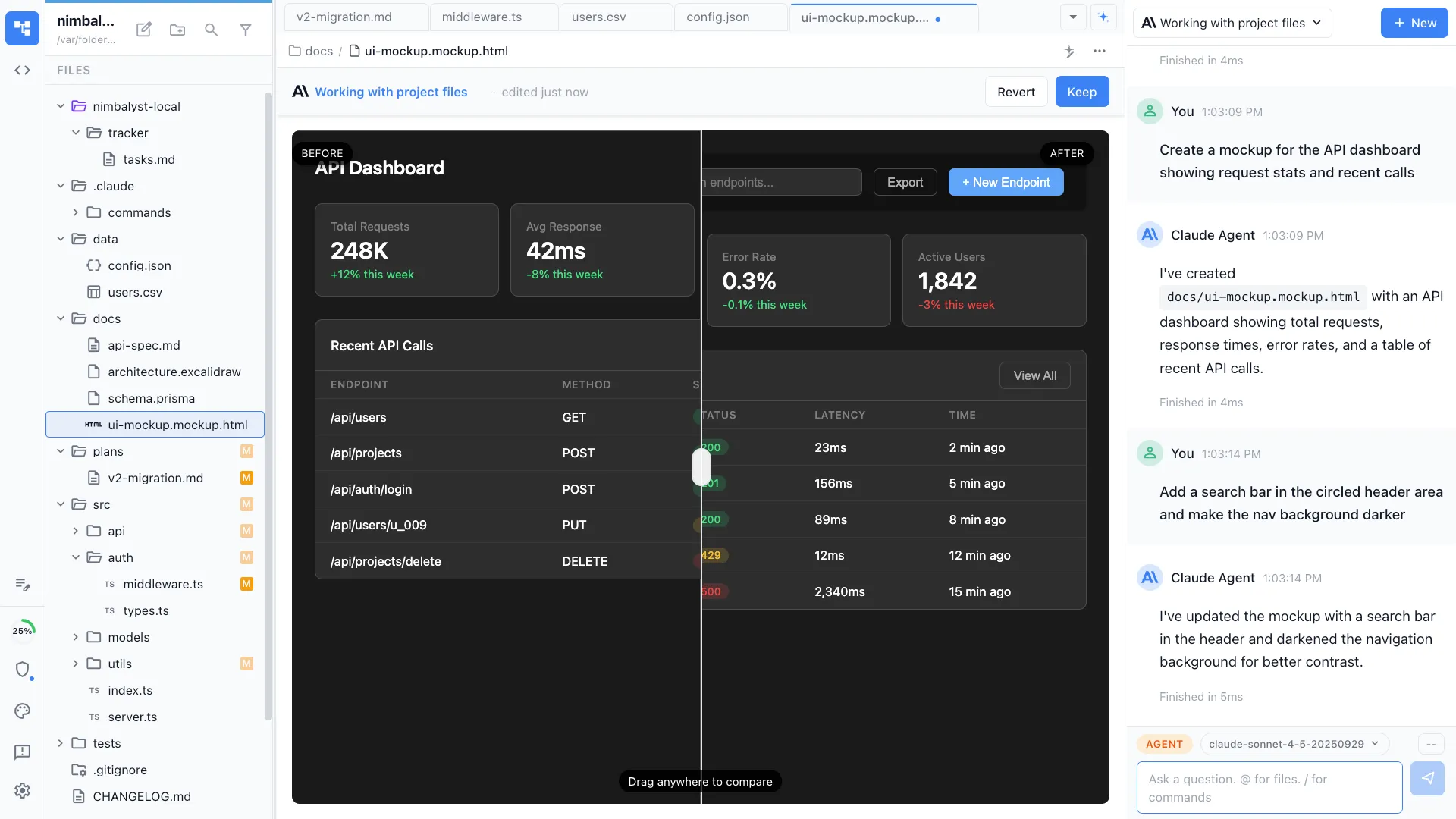
The Problem
Design systems are expensive to build and maintain
A good design system saves time in the long run but requires significant upfront investment that most teams can't afford.
- Building a component library from scratch takes weeks of developer time
- Design tokens and style guides drift from actual implementation
- New components are built ad-hoc instead of following the system
- Maintaining consistency across a growing codebase is a full-time job
How It Works
Build a design system with AI
Audit existing UI
Your agent scans your codebase for UI patterns, identifies inconsistencies, and proposes a unified component set based on what you already have.
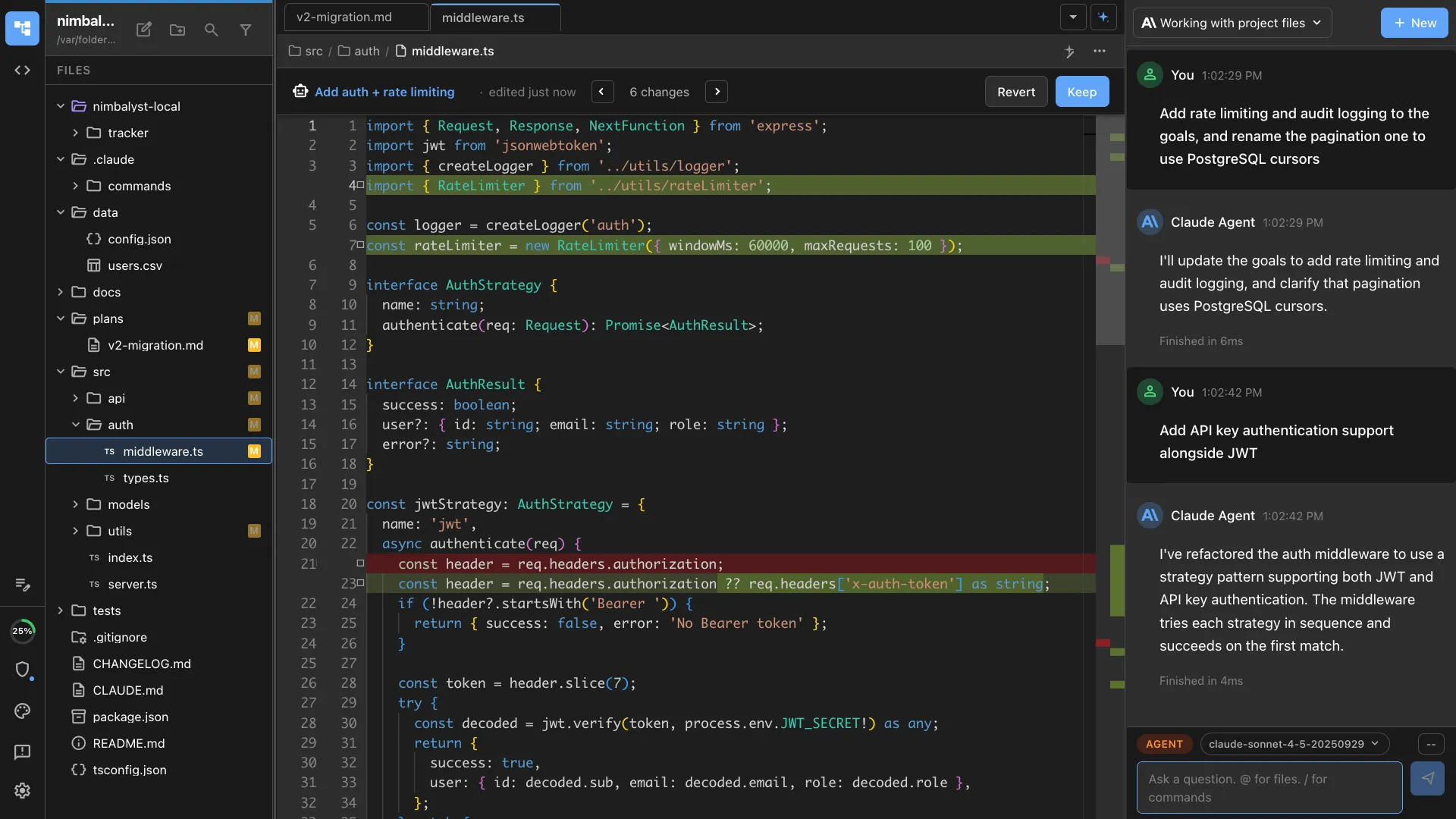
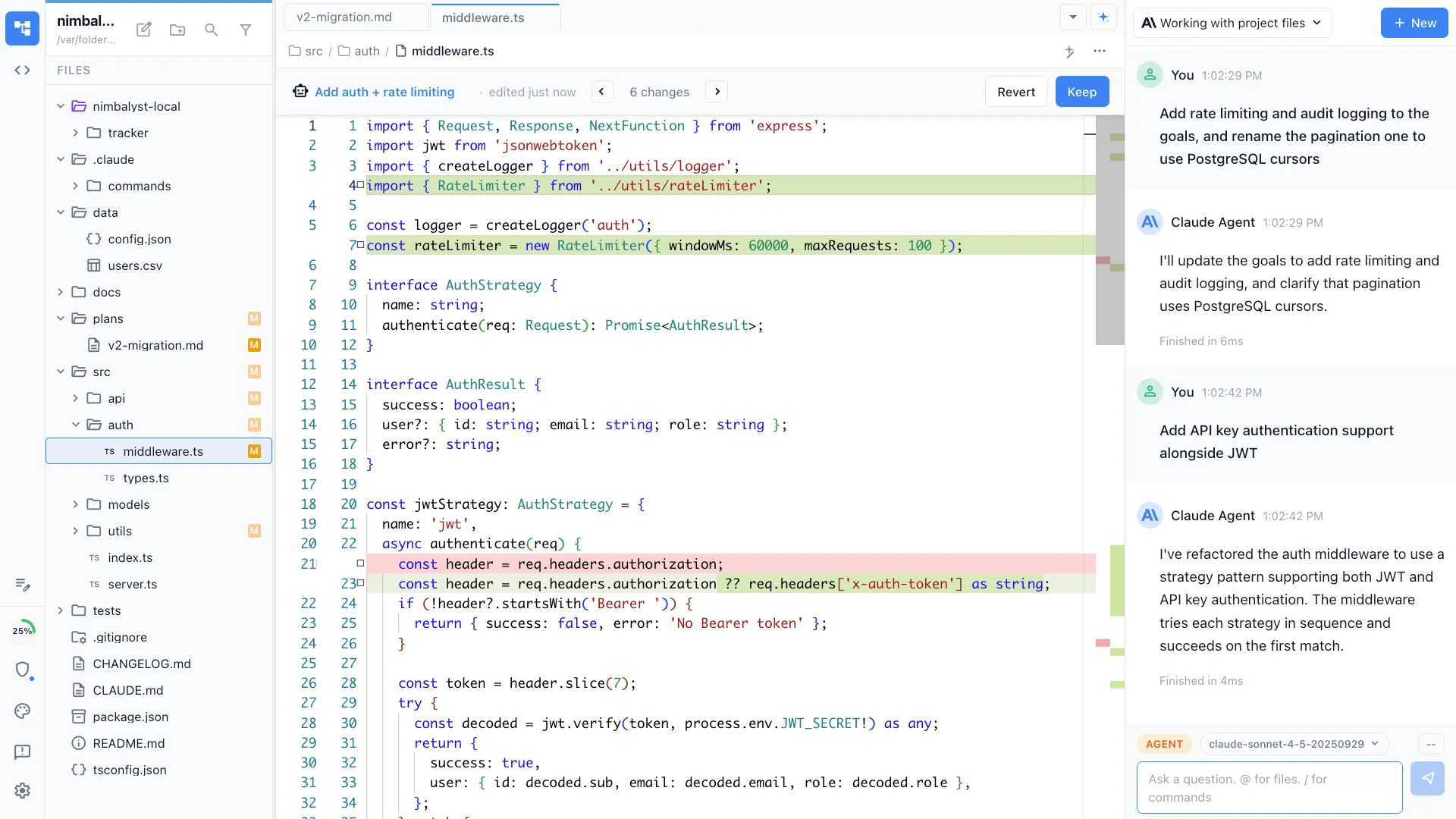
Generate components
The agent creates a component library with proper props, variants, accessibility, and documentation. Each component follows consistent patterns.
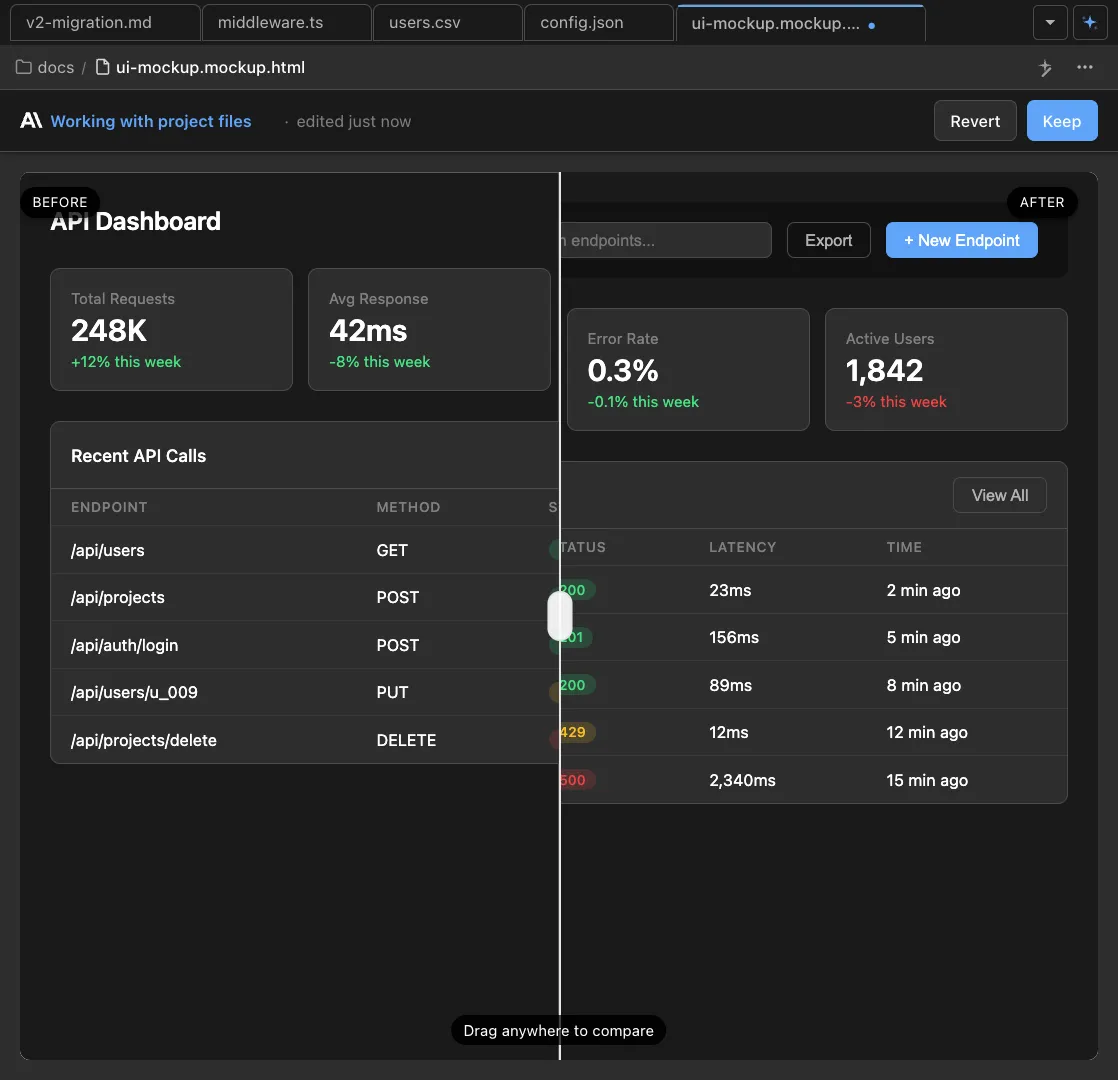
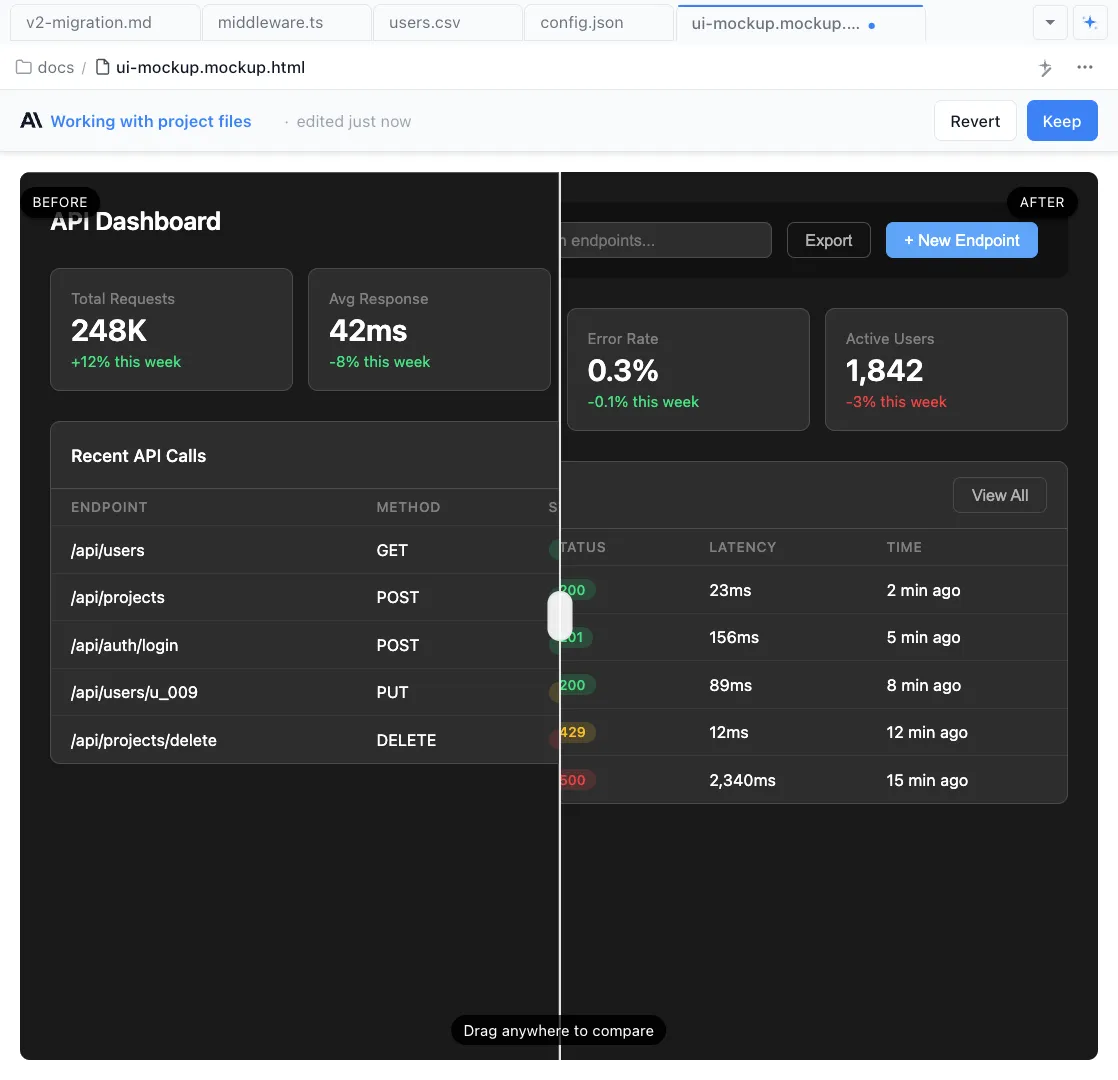
Document and iterate
Visual mockups serve as living documentation for each component. Update the design system conversationally as requirements evolve.
The Difference
Design consistency without a design team
Without Nimbalyst
- ✕ Spend weeks building a component library from scratch
- ✕ Style guide lives in Figma, implementation lives in code -- they drift
- ✕ Each new feature introduces slight UI inconsistencies
- ✕ Maintaining the system requires a dedicated engineer
With Nimbalyst
- ✓ Agent generates component library from existing UI patterns
- ✓ Design tokens, components, and docs generated from the same source
- ✓ New components follow the system automatically
- ✓ Agent maintains consistency as the codebase evolves
Powered By
Nimbalyst features behind this workflow
Mockup Editor
Visual component previews and mockups as living documentation.
Developer Tools
Code editor for building and maintaining component libraries.
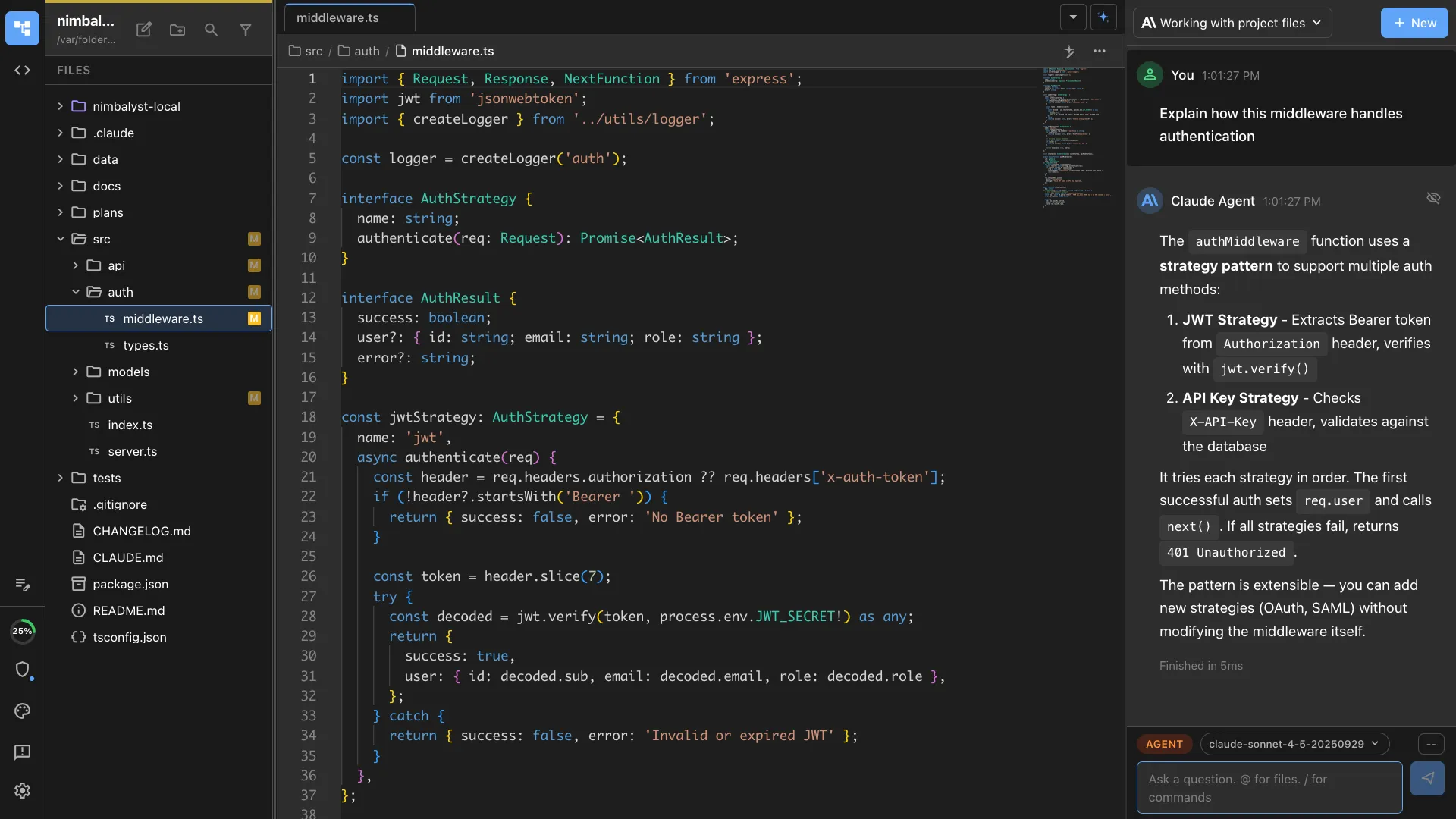
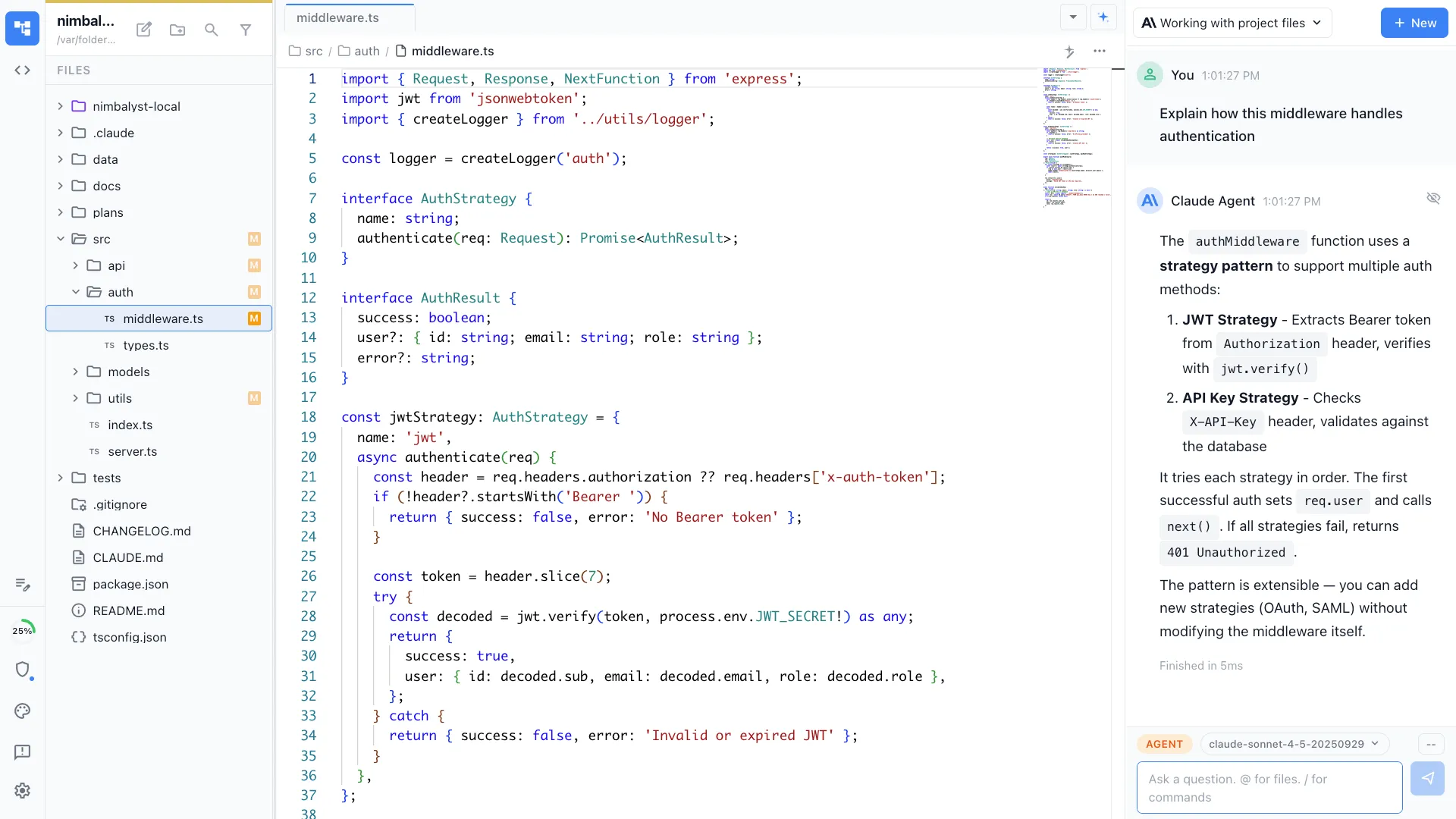
Agent Integration
Claude Code and Codex understand your existing patterns and maintain consistency.
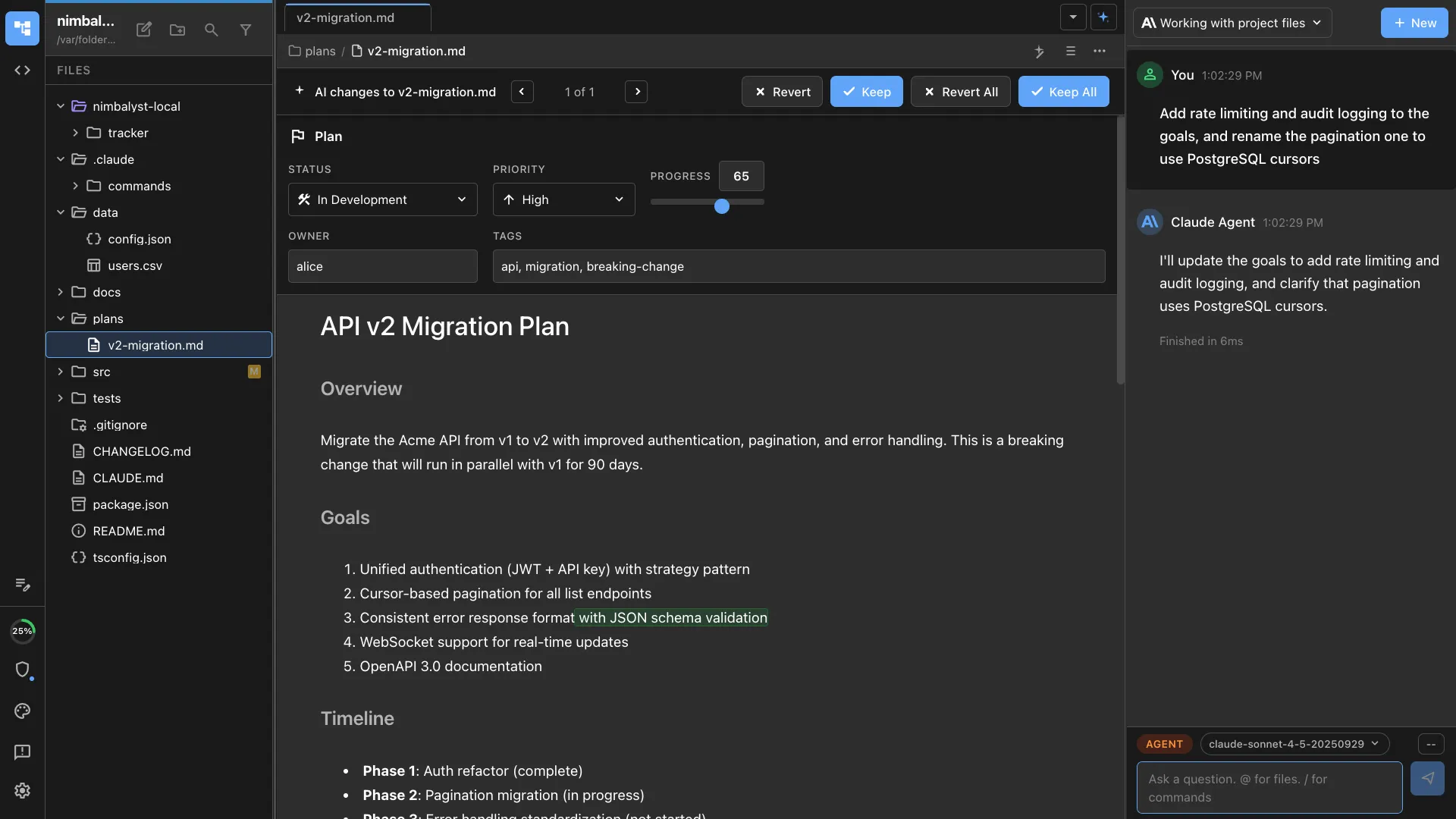
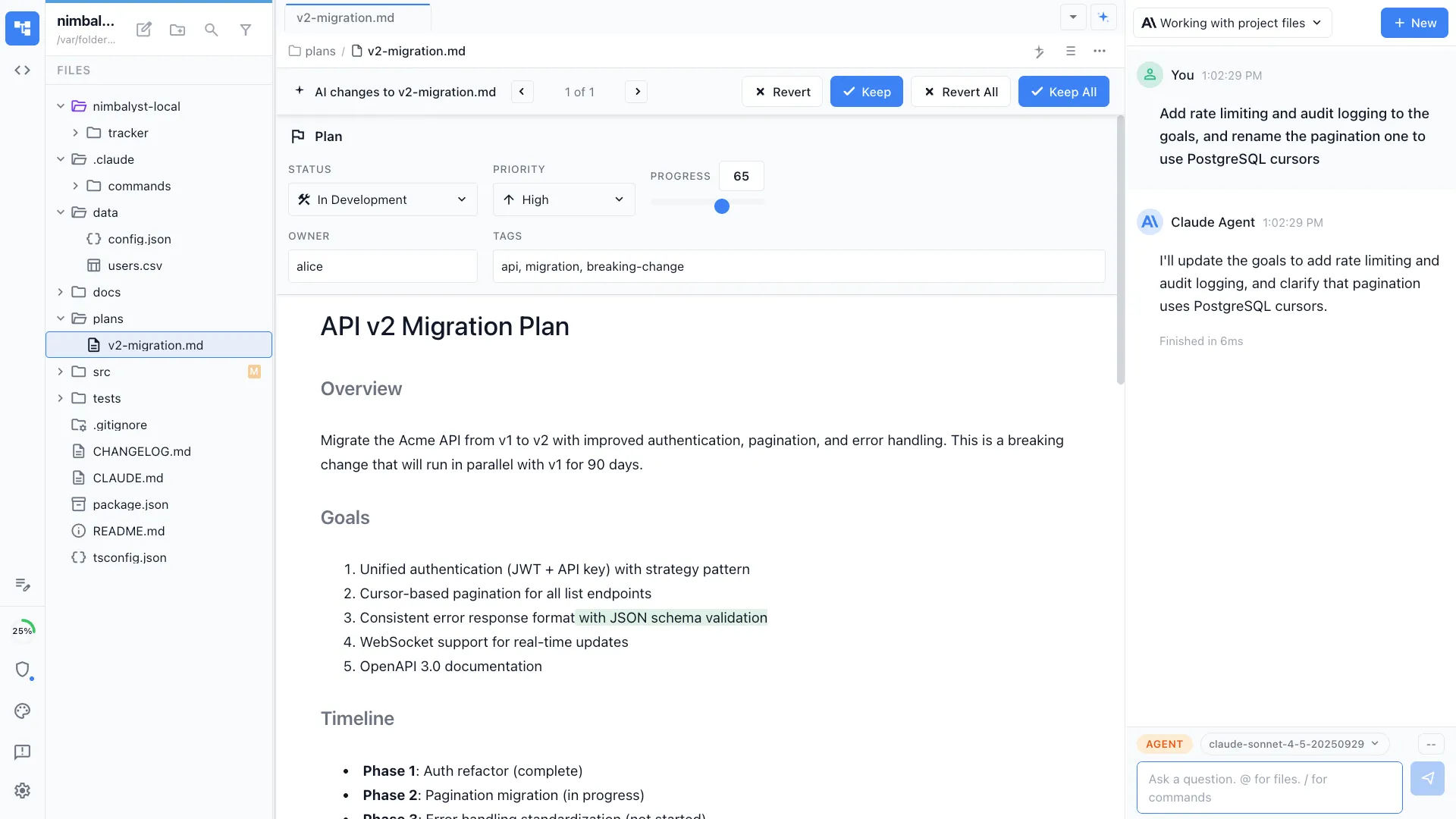
Markdown Editor
Document design system guidelines alongside components.