For teams
Codex for teams
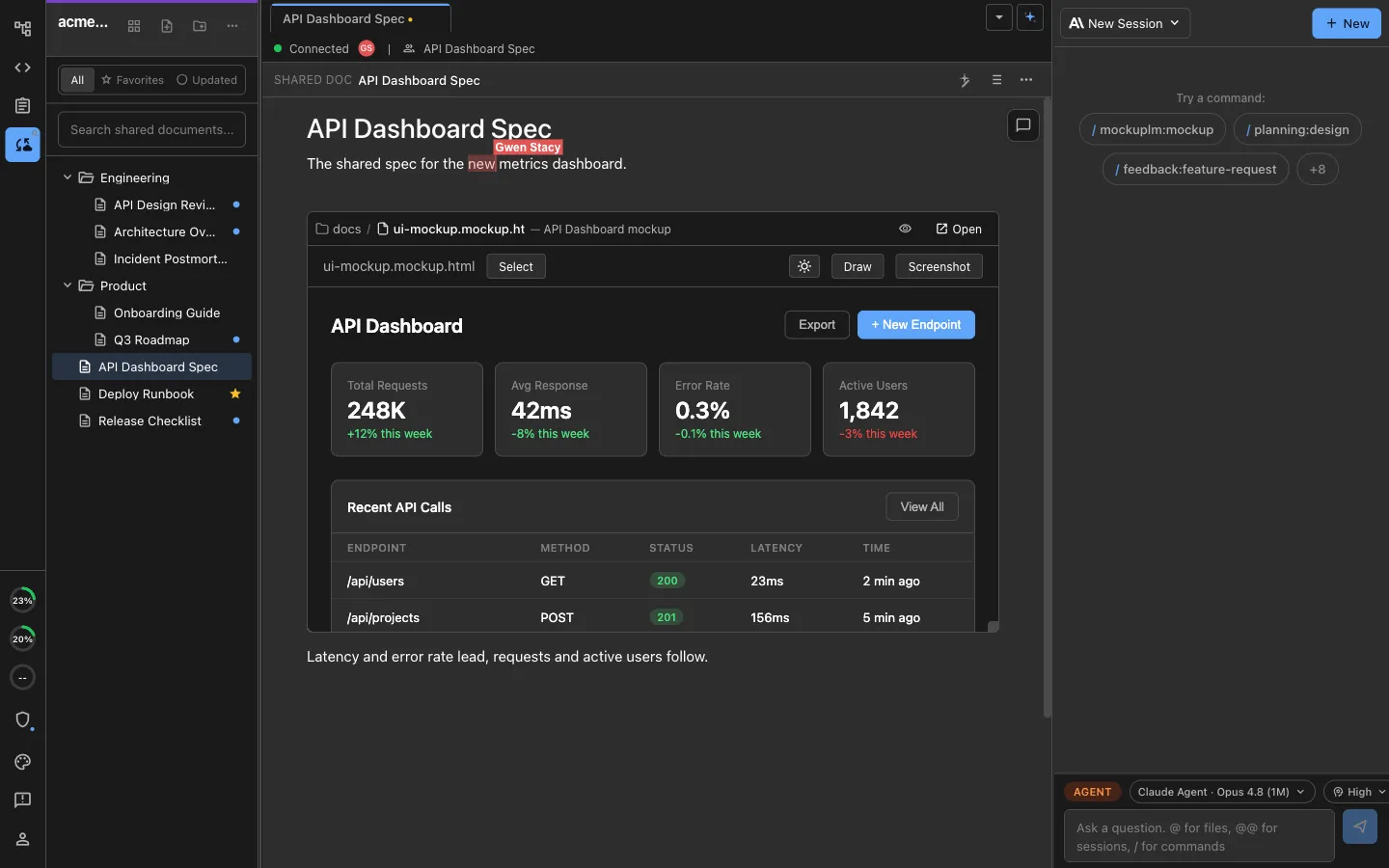
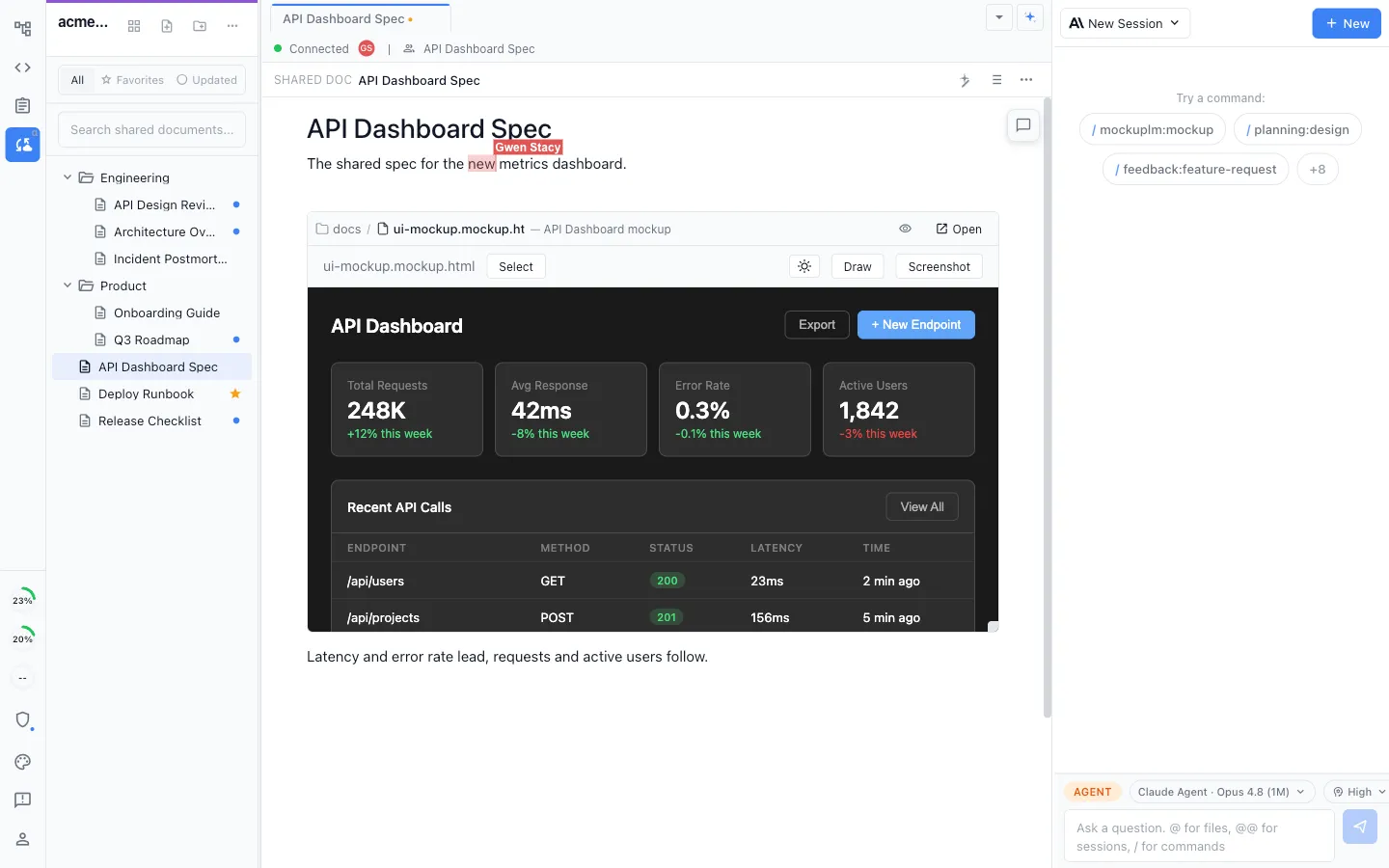
Codex already runs local and cloud agents well and gives organizations shared configuration, plugins, apps, and controls. Nimbalyst adds a different team layer: multiplayer docs, mockups, diagrams, and trackers that each teammate's private local sessions read and write.
Free for individuals. Agents run locally with your existing Claude Code or Codex subscription. Team collaboration is a paid plan.
What a team still needs around Codex
OpenAI's Codex App is a capable command center for one developer. It runs multiple Codex agents with parallel threads, worktrees, diff review, skills, and automations, and it does that well, so orchestration is not where a team runs into trouble.
Business and Enterprise workspaces add centralized access and policy controls, shared environments, team configuration, plugins, apps, and connectors. Those capabilities make organizational context reachable, but they do not turn the specs, trackers, diagrams, and mockups around the code into one real-time visual project workspace. Codex histories also remain private to each user unless a specific resource is explicitly shared.
Nimbalyst puts those artifacts into one shared workspace. Documents, mockups, diagrams, and trackers are multiplayer, so teammates edit them together, and each person's local Codex reads and writes the same shared files. The Nimbalyst agent sessions themselves stay private to the teammate running them.
Why Nimbalyst
One shared workspace around everyone's Codex
Shared docs your agents edit
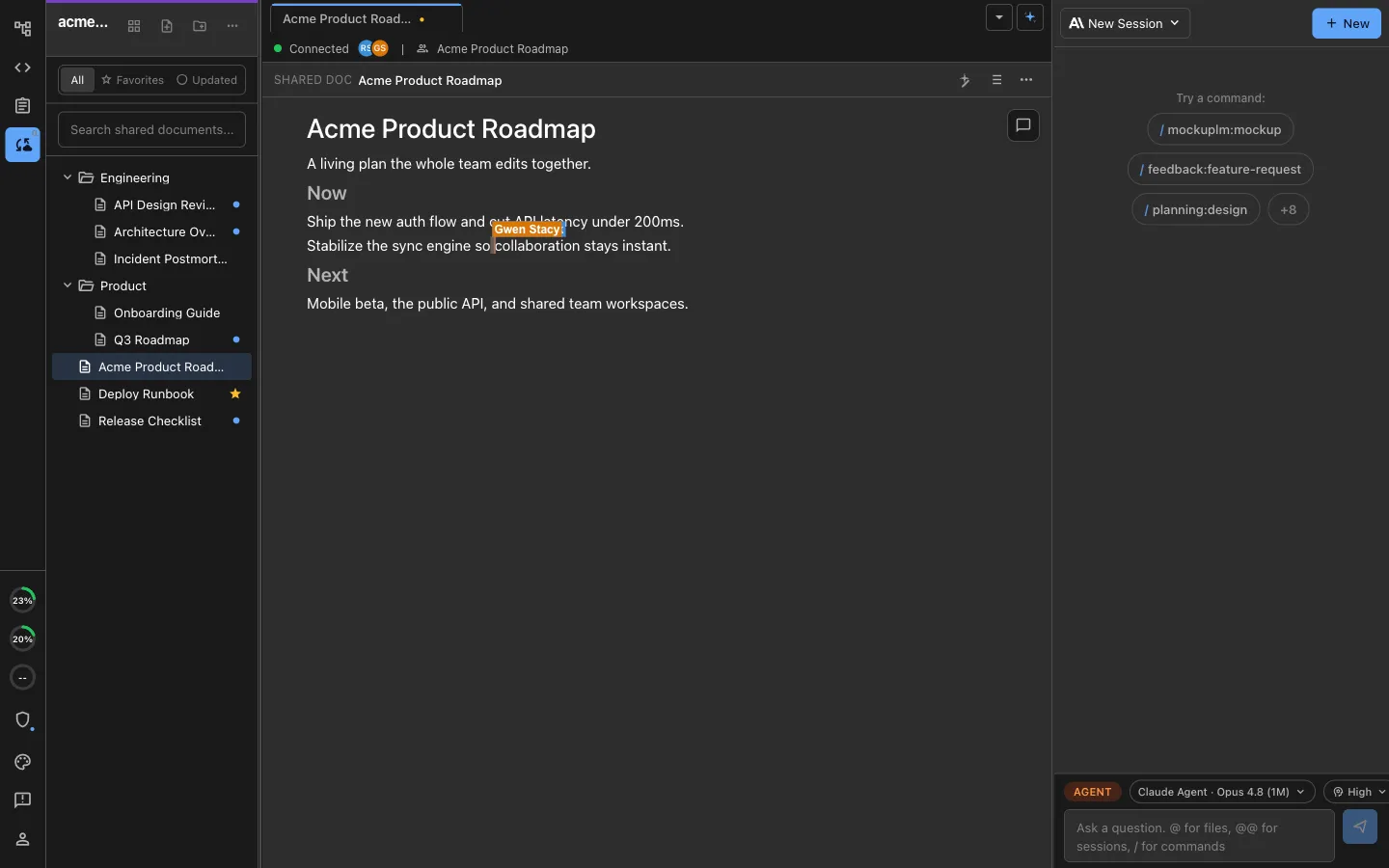
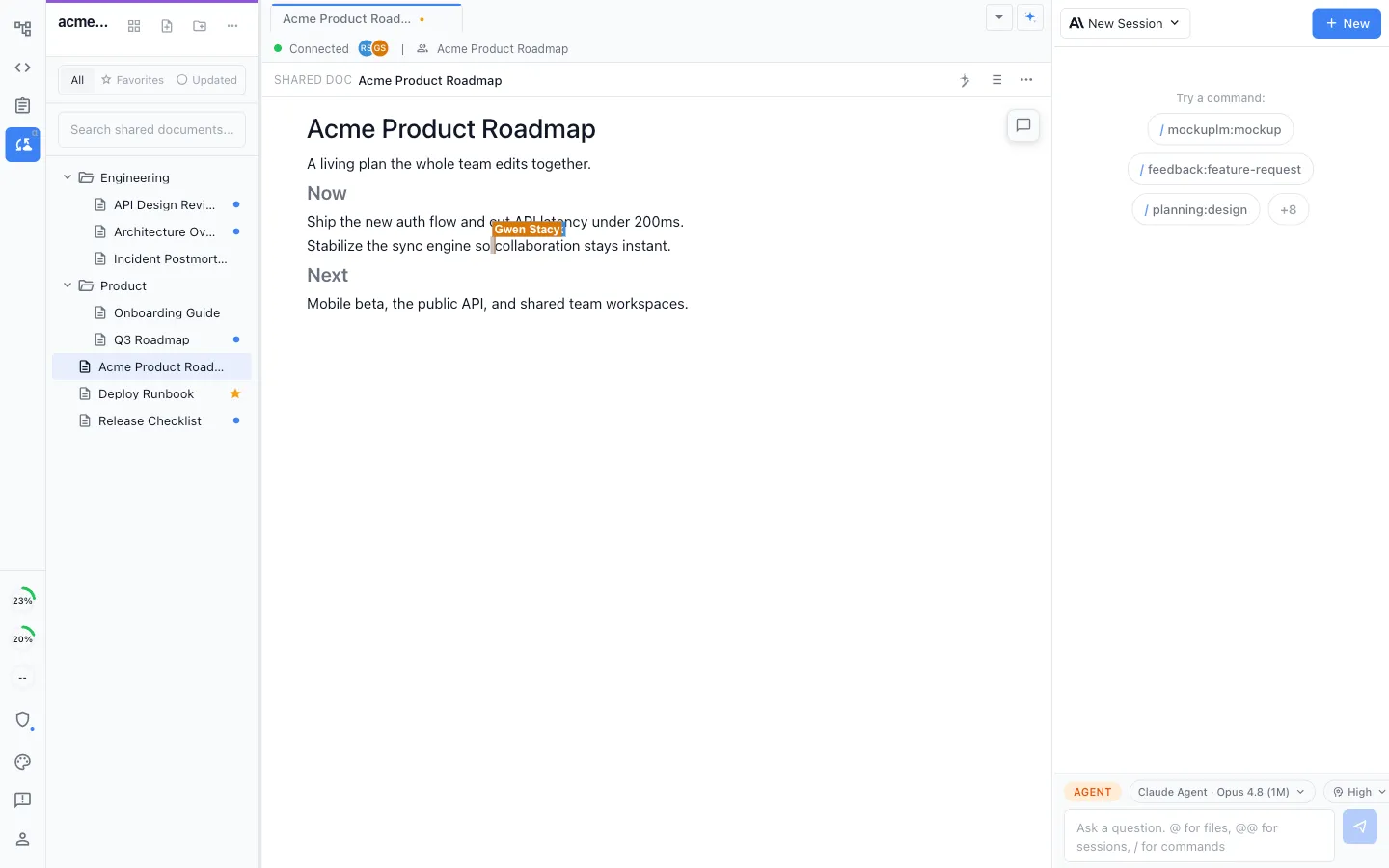
Specs, plans, and decisions in real-time multiplayer markdown. Two teammates edit the same document at once, and each of their local Codex sessions reads and writes it directly, so nobody is pasting context between apps.
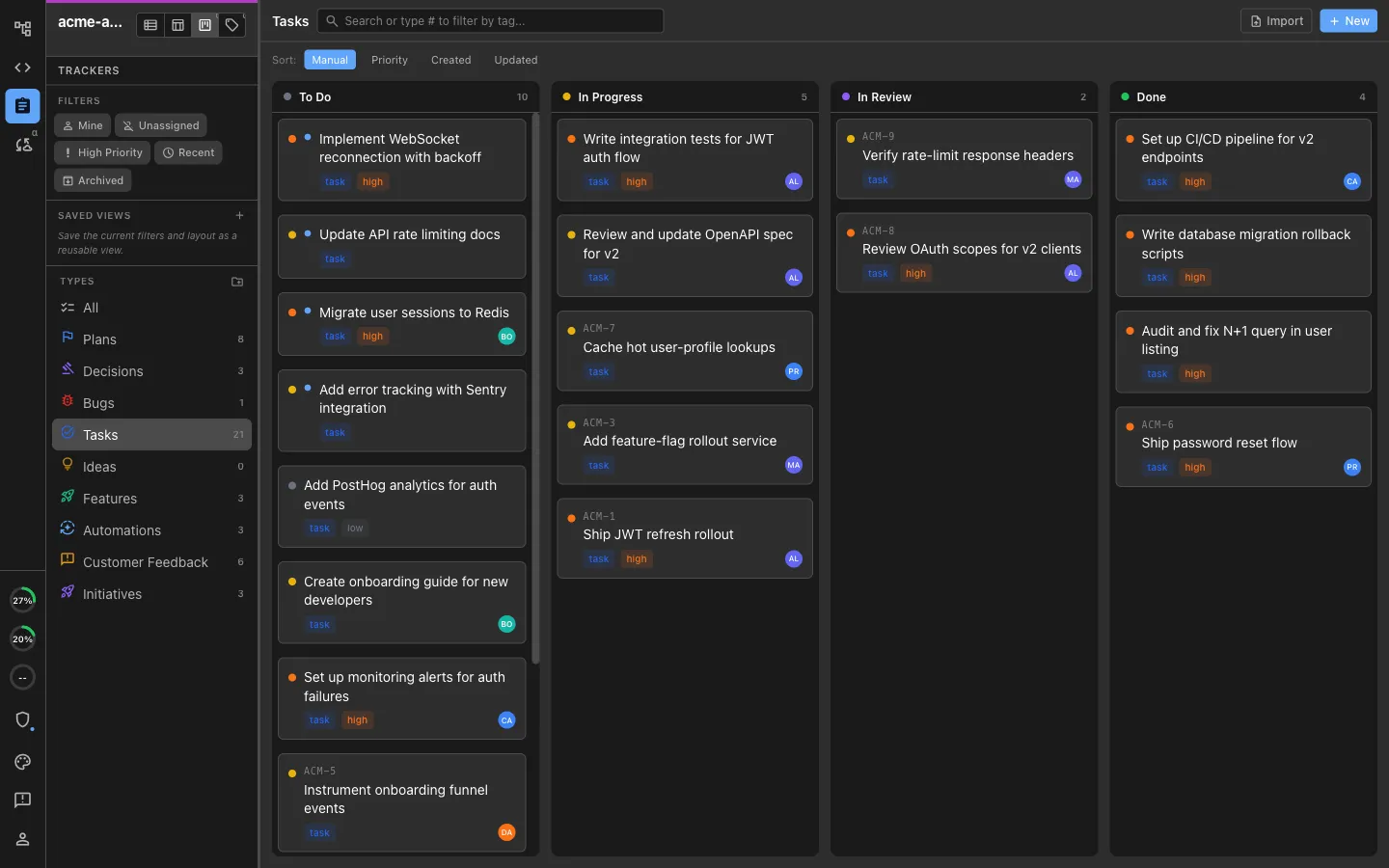
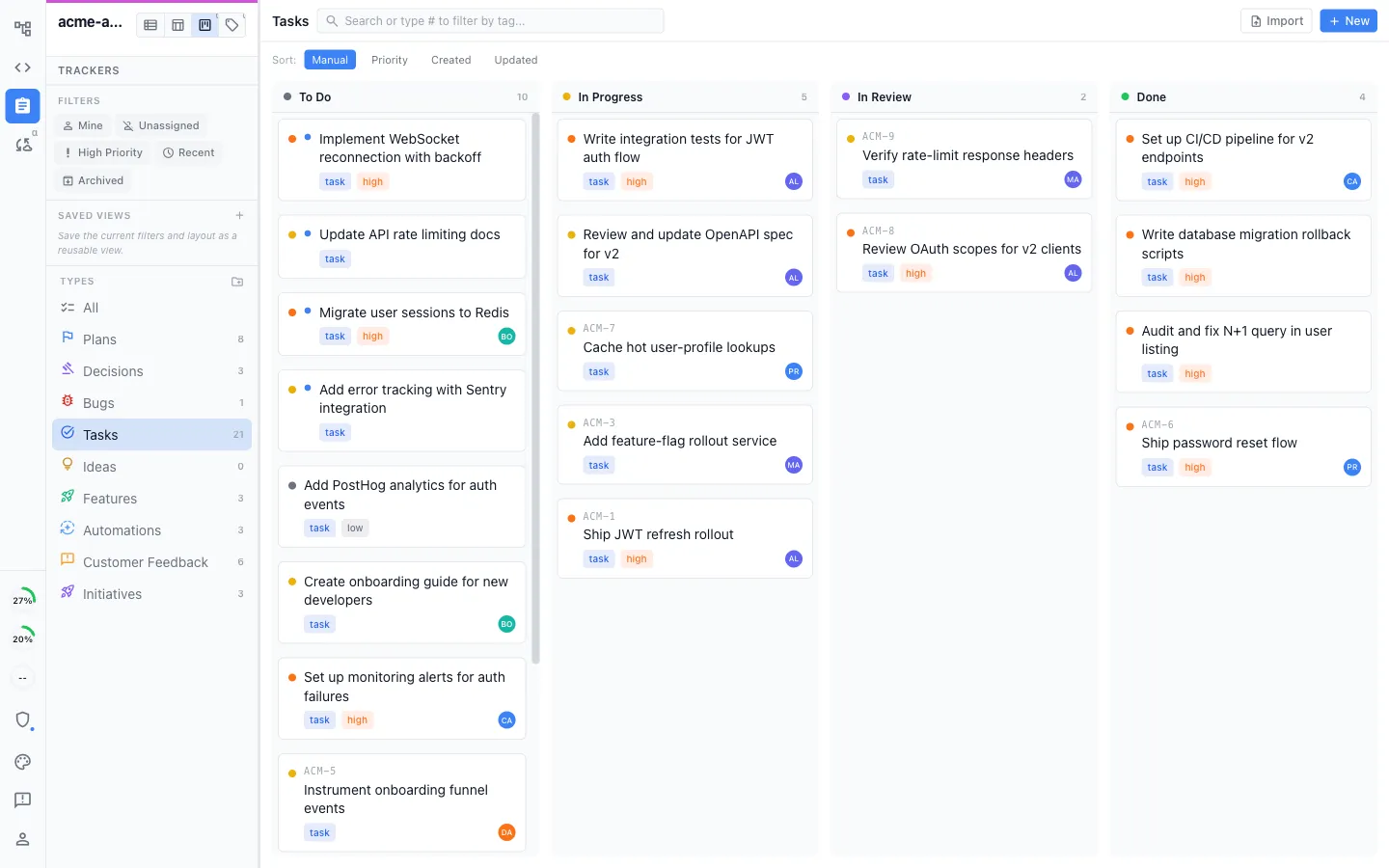
A shared board your agents keep current
Bugs, tasks, plans, and decisions on a shared kanban with your own stages. Teammates update it, and so do their agents, so the board reflects what is actually happening in the code.
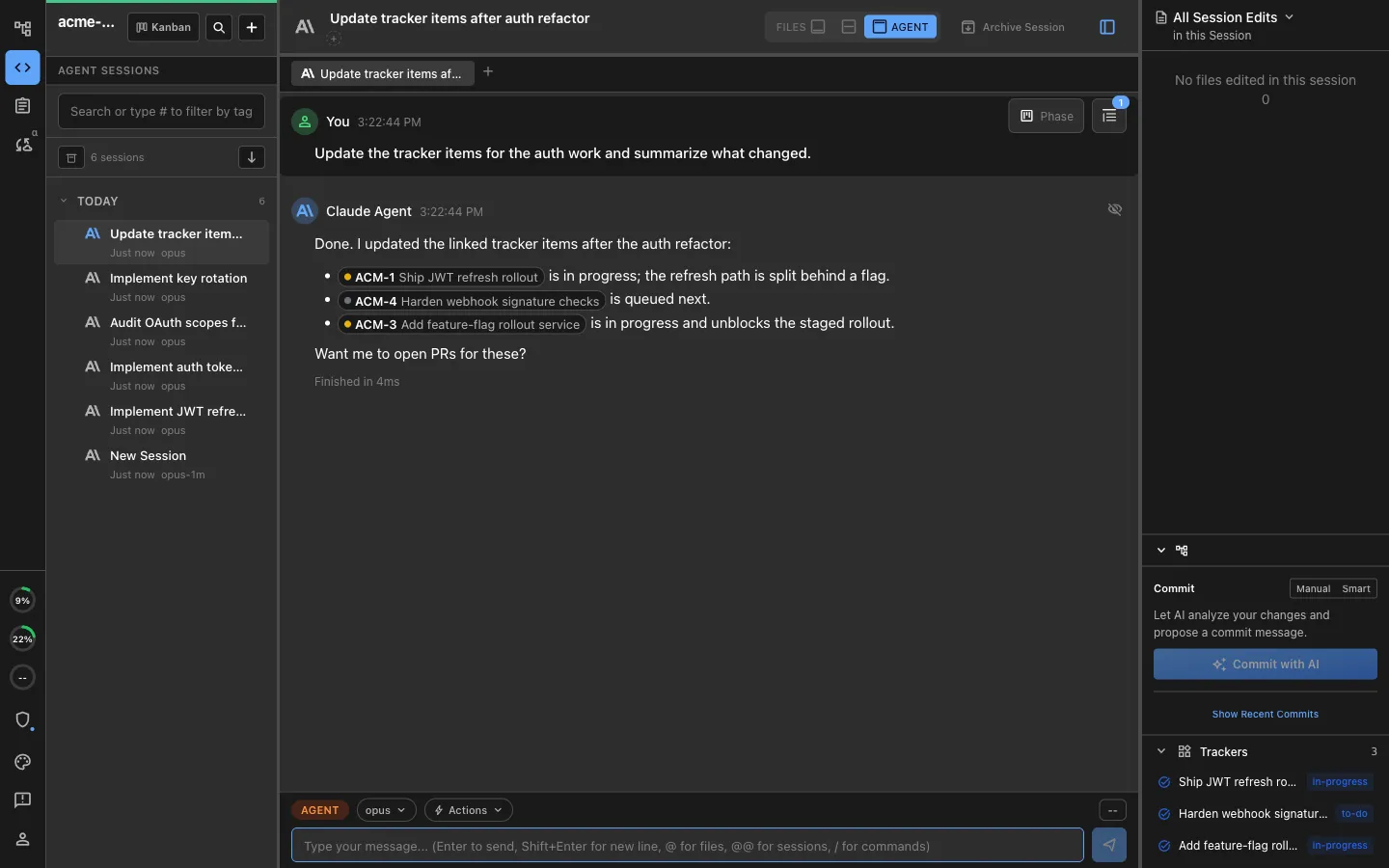
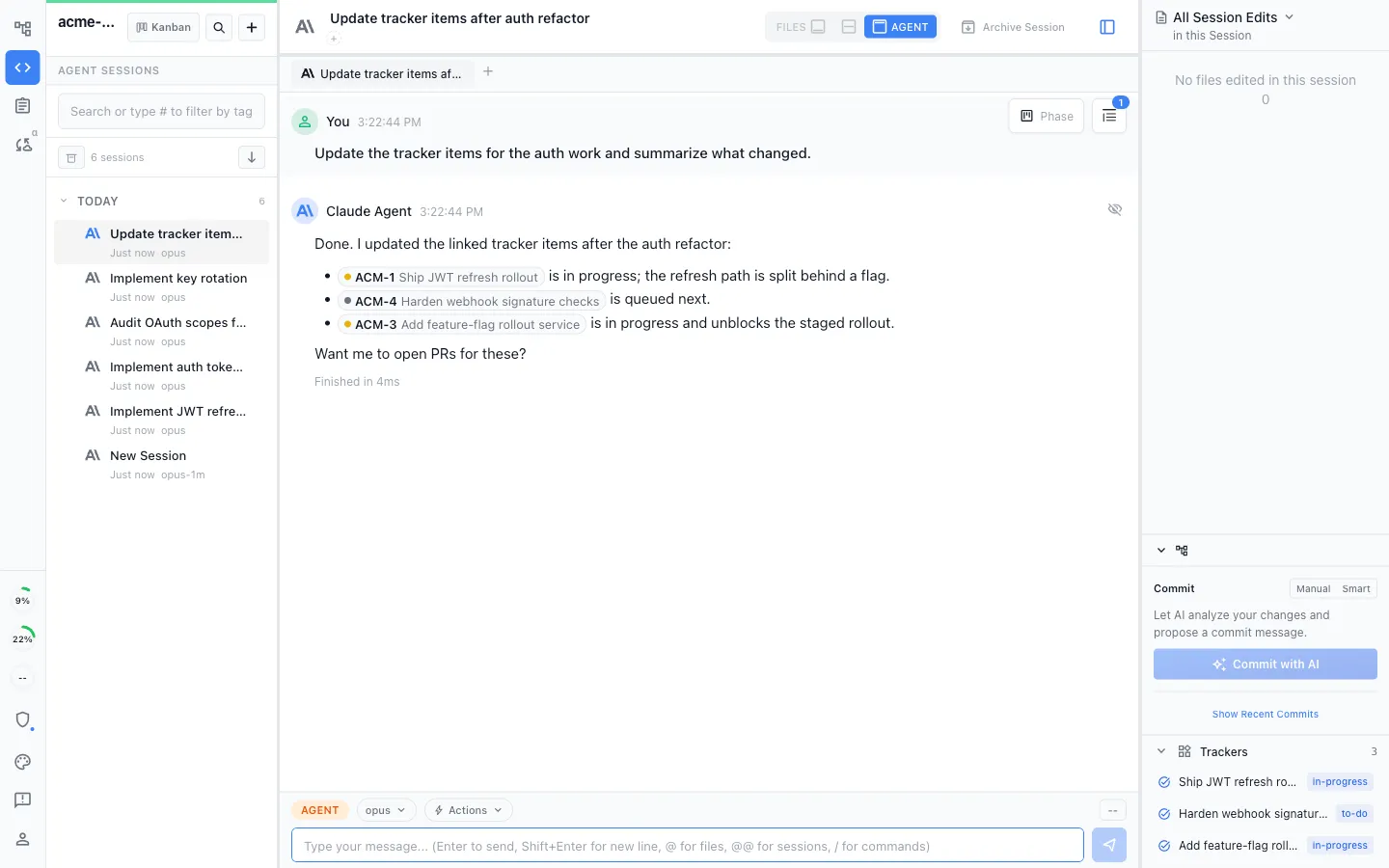
Everything linked, not just co-located
Shared docs, local files, trackers, and agent sessions live together and link to each other. A ticket points at the spec, the spec points at the mockup, and Codex follows the chain instead of guessing.
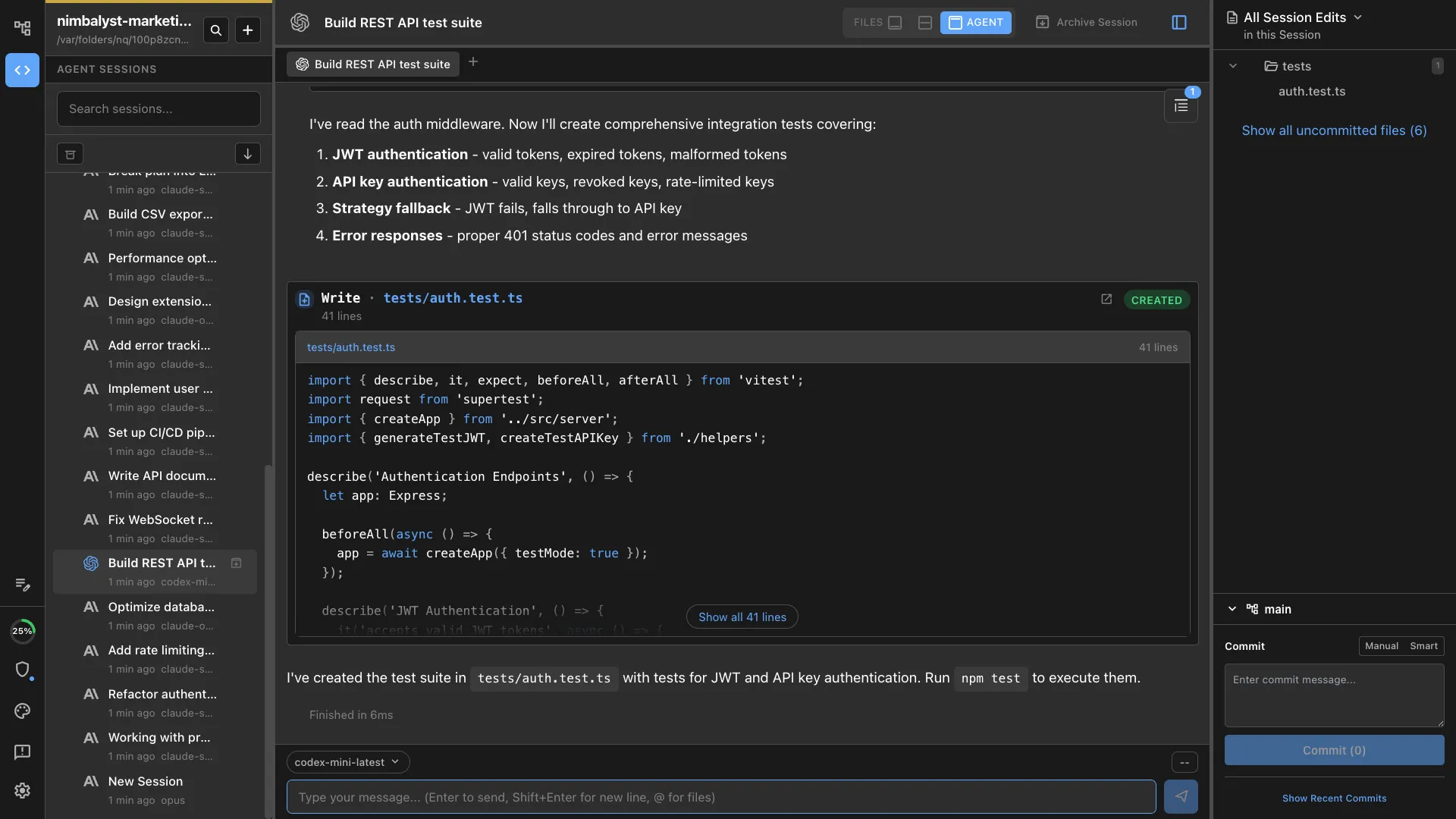
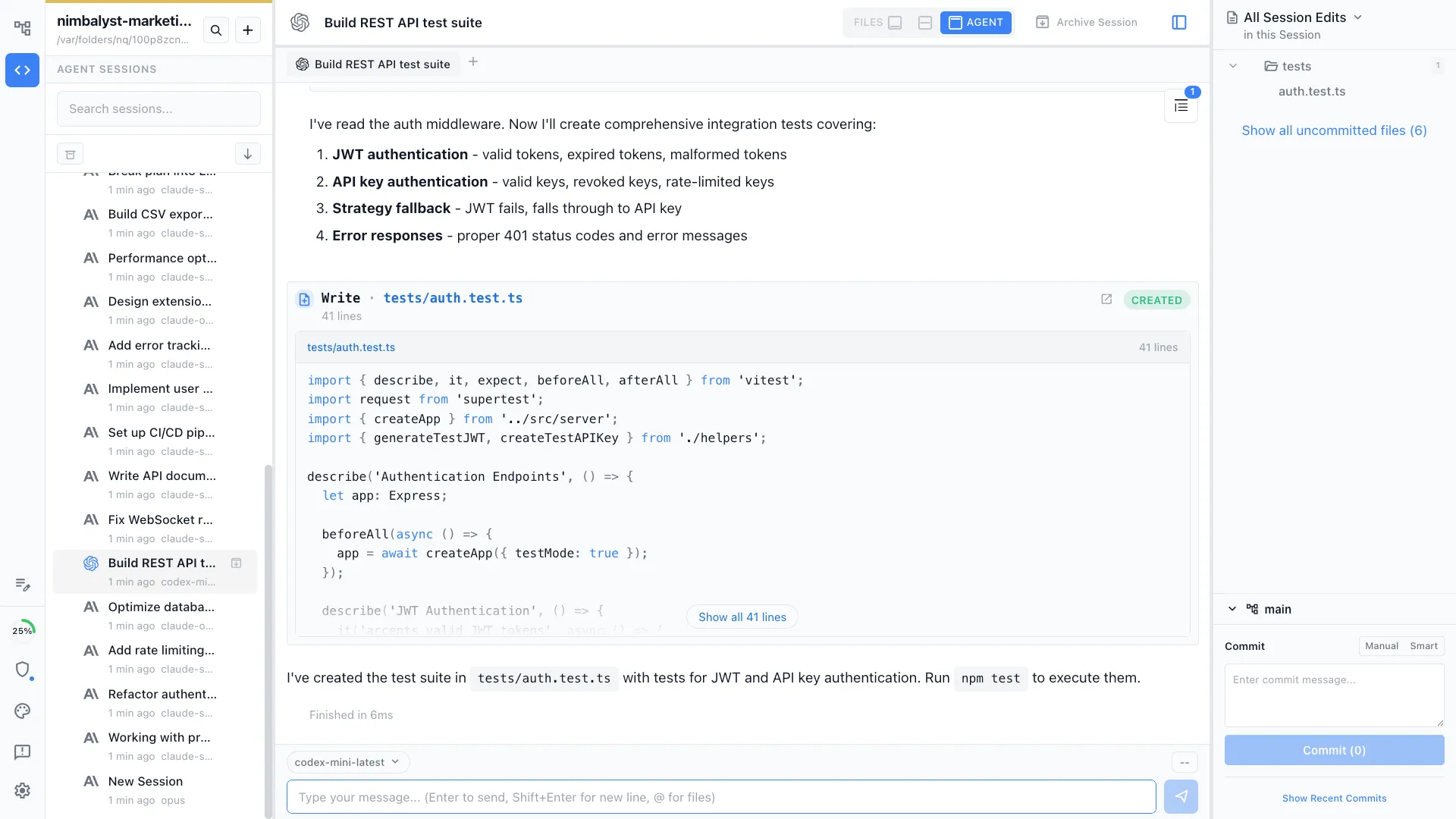
Codex and Claude Code side by side
Run OpenAI Codex and Claude Code in the same workspace, with OpenCode and Copilot available as alpha providers. Teammates who prefer different agents still share the same docs, boards, and files.
Mockups and diagrams in the same shared file
Embed a mockup, an Excalidraw diagram, an image, or an inline tracker directly in a shared document and edit it in place. Design and specification stop being separate tools your agent cannot reach.
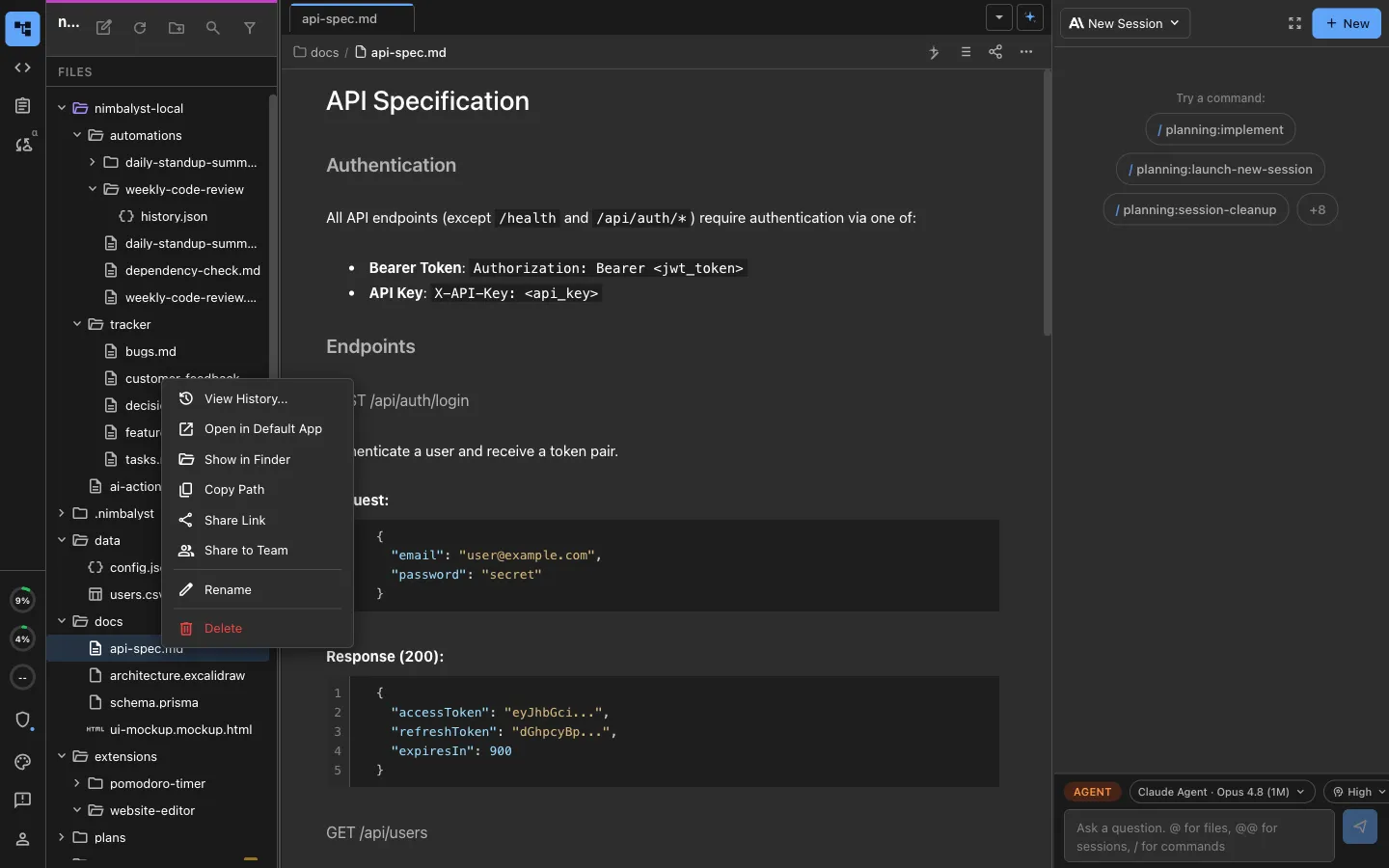
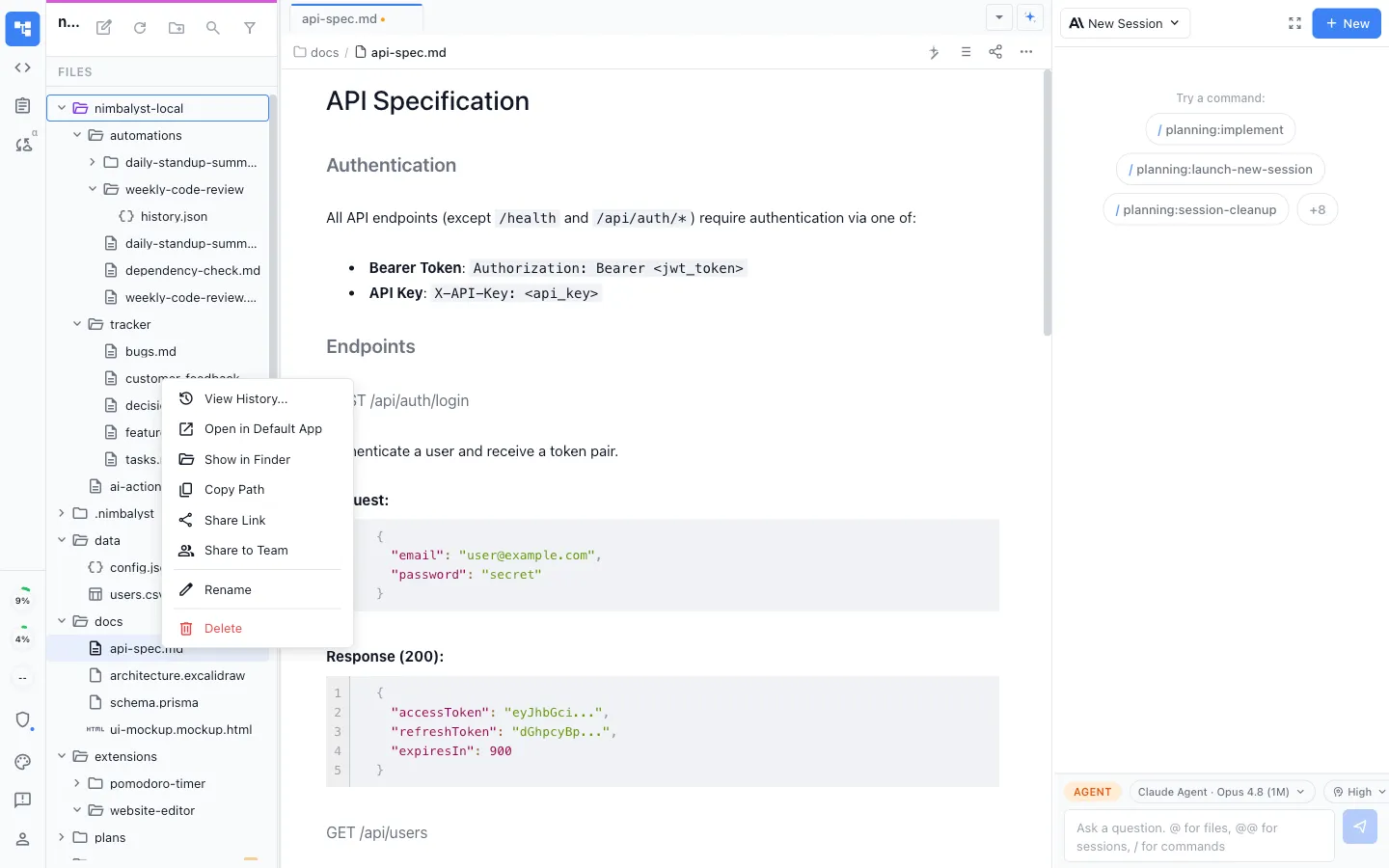
Promote a local file to shared in one click
Start a draft privately, share it when it is ready. Only what you choose enters the team workspace, and everything else stays local on your machine.
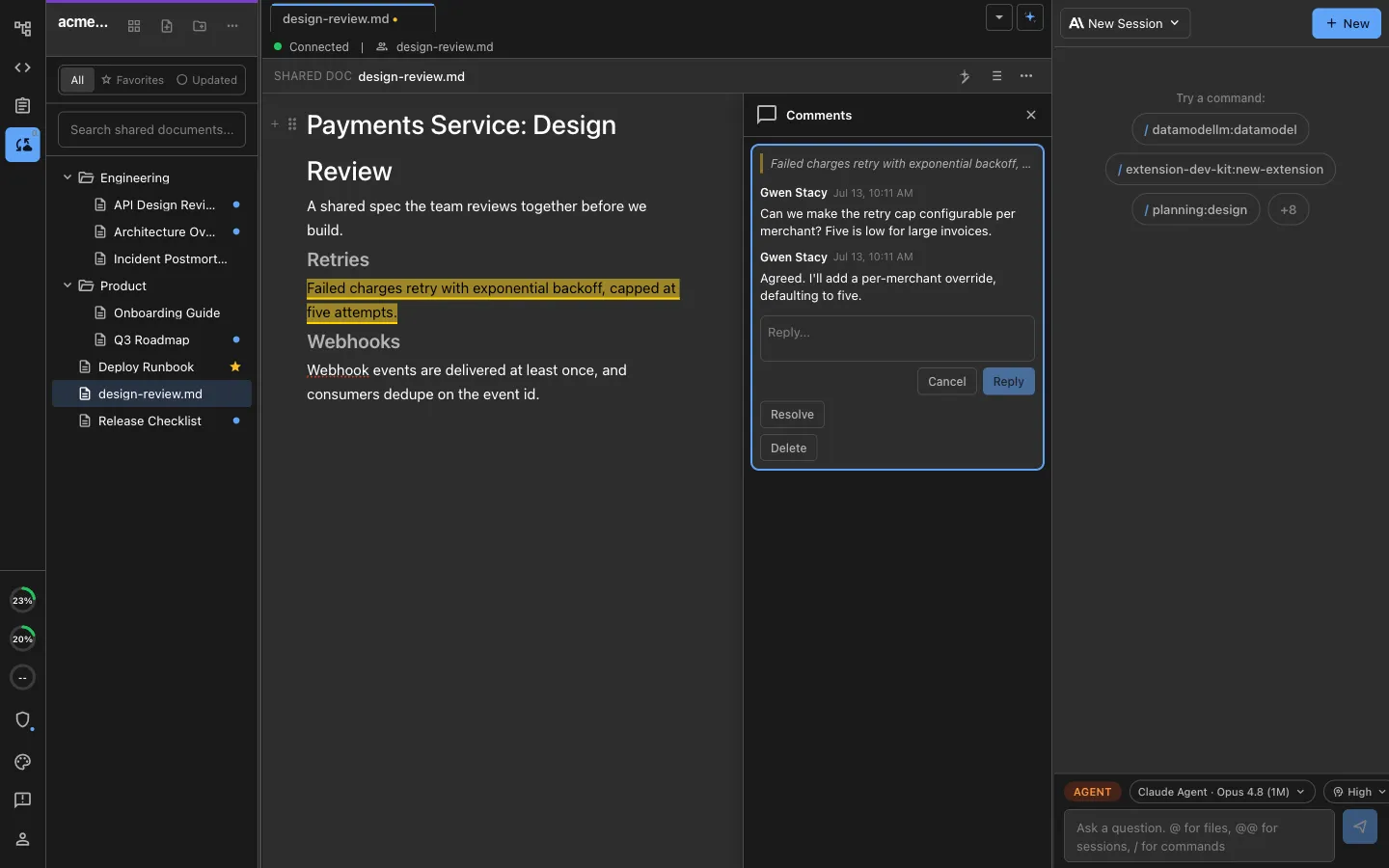
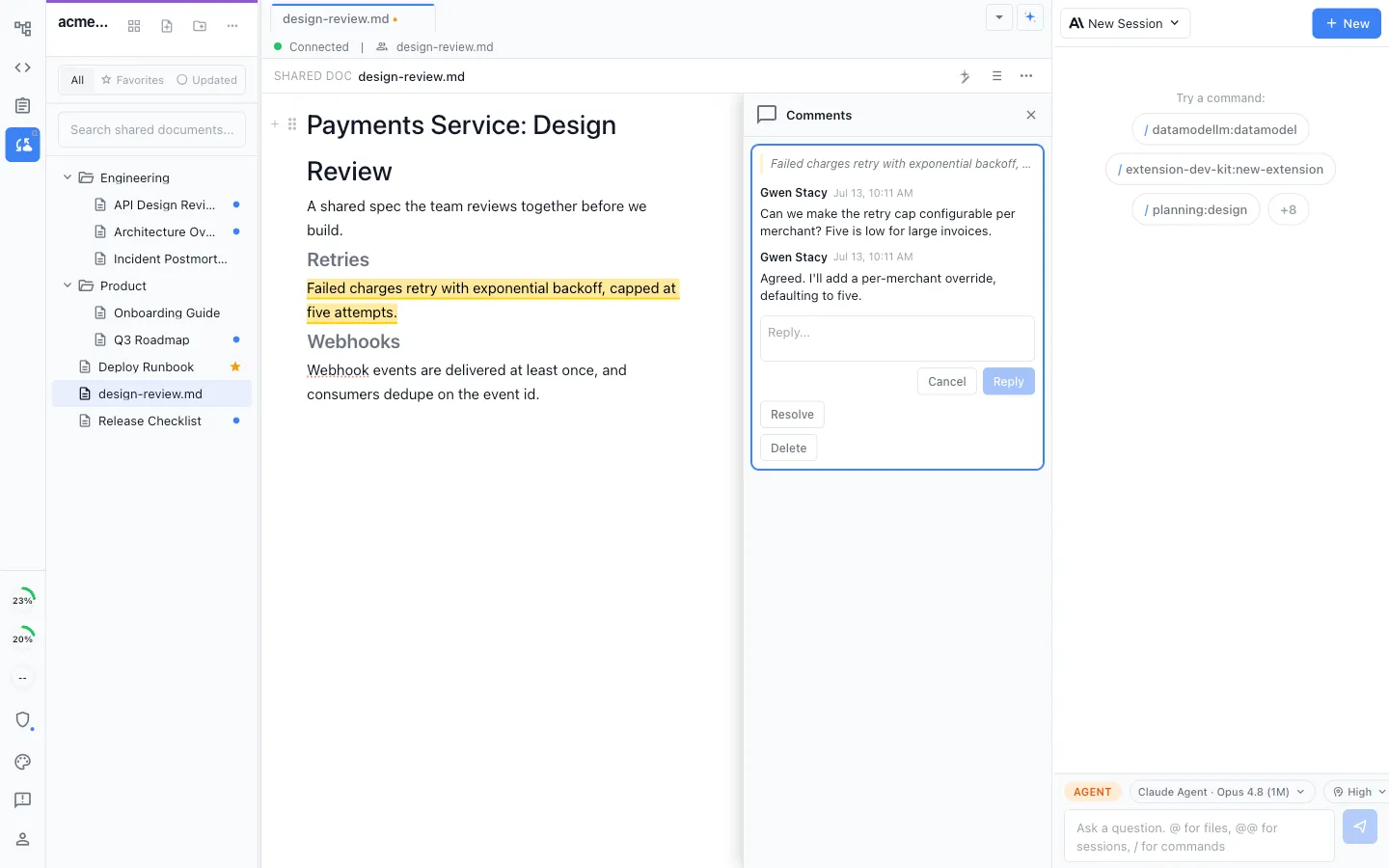
Discussion where the work lives
Comment in context on the document, mockup, or diagram itself, in threads that resolve, instead of a separate chat app where the decision gets lost.
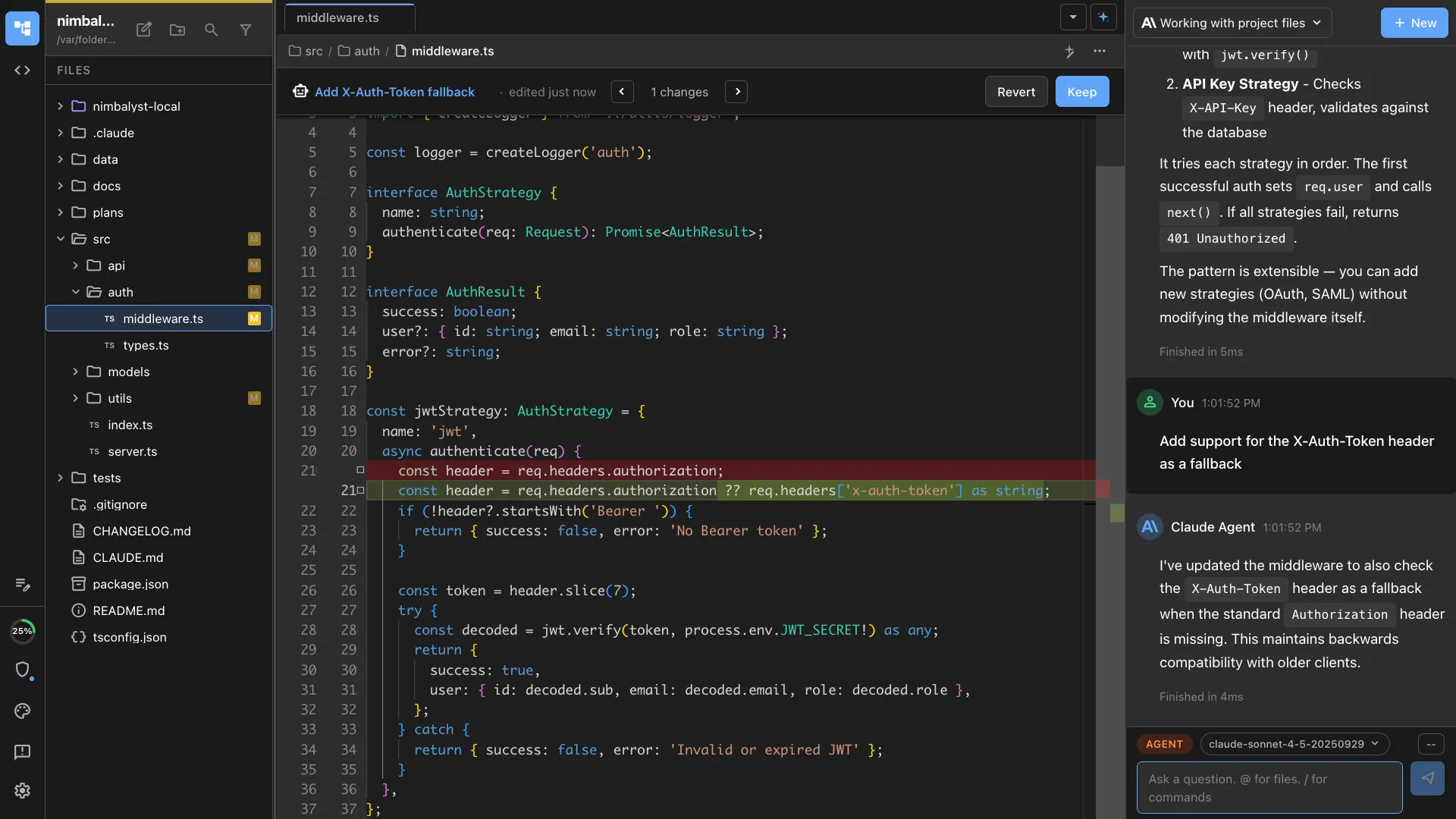
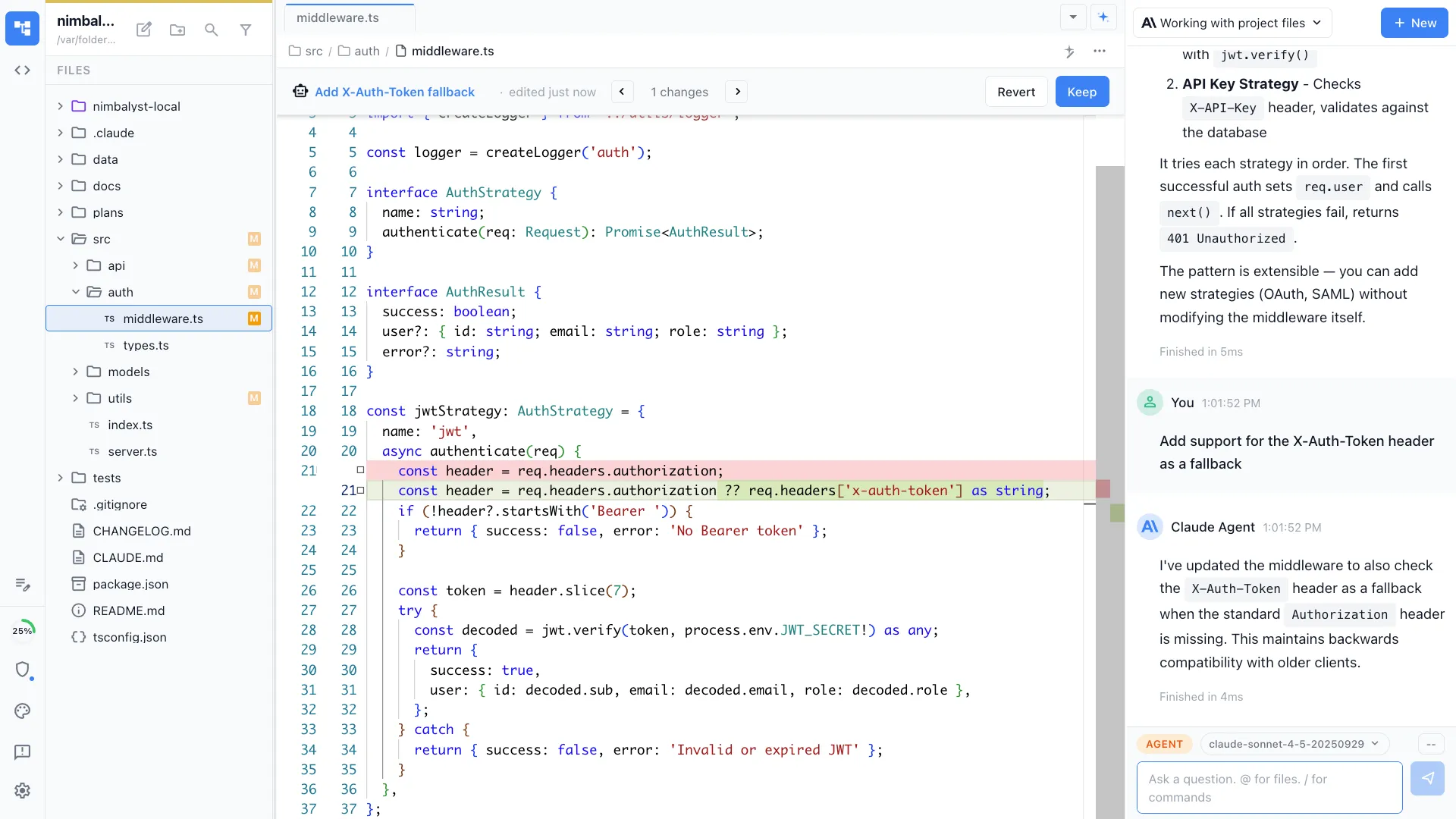
Review across more than code
Inline red and green diff review covering code, markdown, mockups, and diagrams, so the whole change is reviewable in one place.
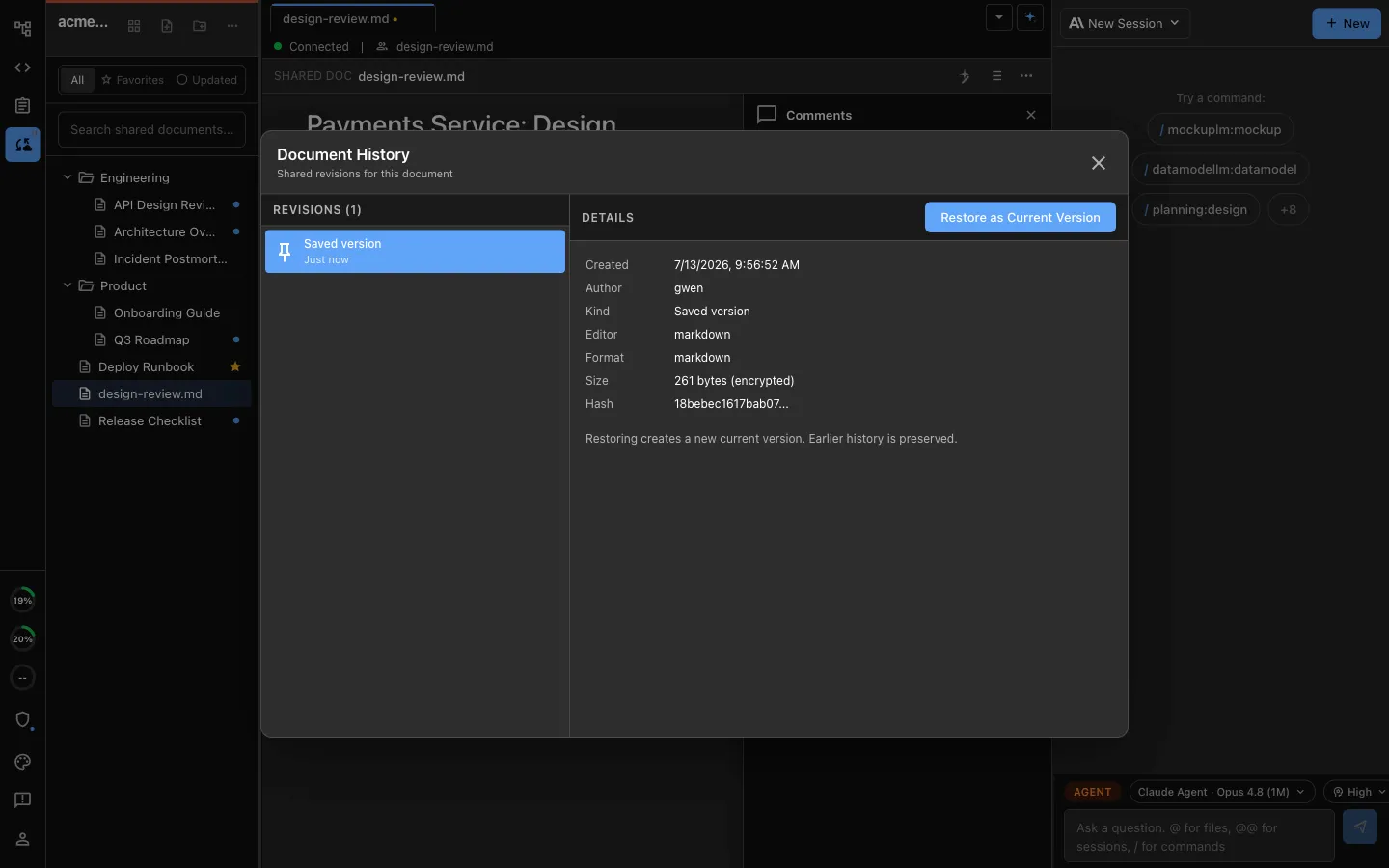
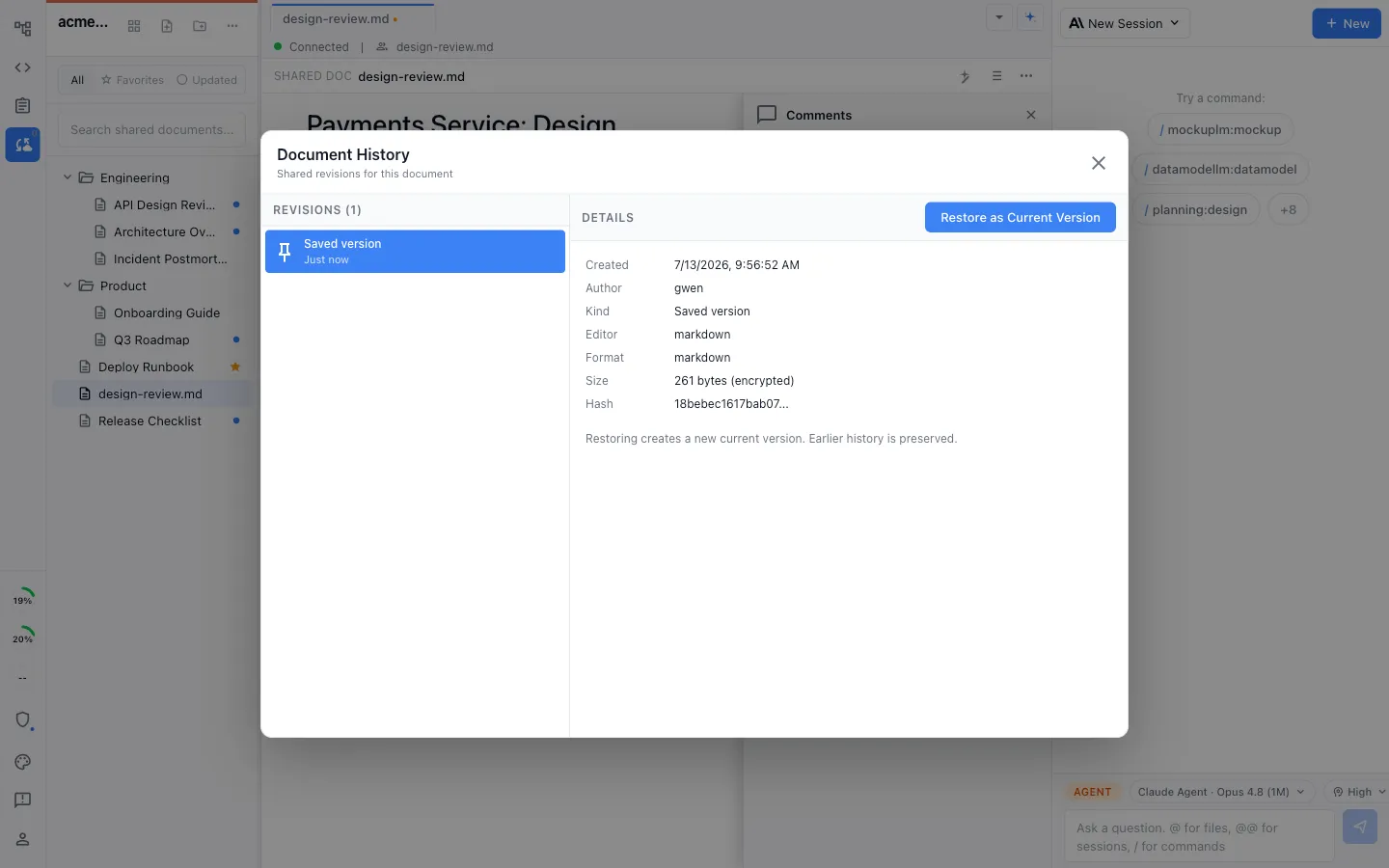
Full history, restorable
Every shared document keeps a complete change history, so you can see what an agent or a teammate changed and restore any version in one click.
Comparison
Codex alone vs Codex in a team workspace
| Feature | Codex App or Codex CLI | Nimbalyst |
|---|---|---|
| Who it serves | Individuals and organizations; each thread has an owner | A whole team, each running their own agent |
| Running parallel agents | Parallel threads and worktrees, per developer | Session kanban with one-click git worktrees, per developer |
| Specs and plans | Repo files, apps, plugins, or connected document systems | Multiplayer markdown every teammate's agent reads and writes |
| Tickets | GitHub, Linear, and other systems through apps, plugins, or MCP | Shared trackers updated by teammates and their agents |
| Mockups and diagrams | Can create artifacts or use apps; no multiplayer visual editor | Built in, embeddable in shared docs, edited by agents |
| Context handoff | Team config, shared plugins, apps, and repository files | Shared files are the common context |
| Other agents | Codex only | Codex and Claude Code side by side, plus pluggable harnesses |
| Review scope | Code diffs | Code, markdown, mockups, and diagrams |
| History | Git and per-user thread history across local and cloud tasks | Full restorable history on shared documents too |
| Licensing | Closed source | Desktop/iOS apps MIT; collaboration server licensed separately |
FAQ
Frequently asked questions
Does Codex work for teams?
How is this different from a ChatGPT Team or Business plan?
The Codex App already runs parallel agents. Why add Nimbalyst?
Does Nimbalyst move our Codex sessions into the cloud?
Can teammates see each other's agent sessions?
What exactly is shared with the team?
Can some of us use Codex and others use Claude Code?
What platforms does it run on?
Learn More
Related guides and comparisons
Nimbalyst for teams
The full team story: shared docs, shared trackers, one connected workspace.
Claude Code for teams
The same shared workspace, for teams running Claude Code.
Coding agents for teams
The agent-neutral version, for teams running a mix.
Codex GUI
A visual workspace for OpenAI Codex on macOS, Windows, and Linux.
Collaborative documents
Multiplayer markdown, mockups, and diagrams your agents edit.
Collaborative trackers
Shared boards that teammates and their agents keep current.
Codex vs Claude Code
How the two agents compare, and running both in one workspace.
Keep each teammate's coding agents local while your team collaborates on shared docs, mockups, diagrams, and trackers
Free for individuals. Agents run locally with your existing Claude Code or Codex subscription. Team collaboration is a paid plan.