Crystal: Multi-Session Claude Code Management
Crystal was an early GUI for running multiple Claude Code sessions in parallel with git worktree isolation. It is no longer developed. Nimbalyst is the successor.
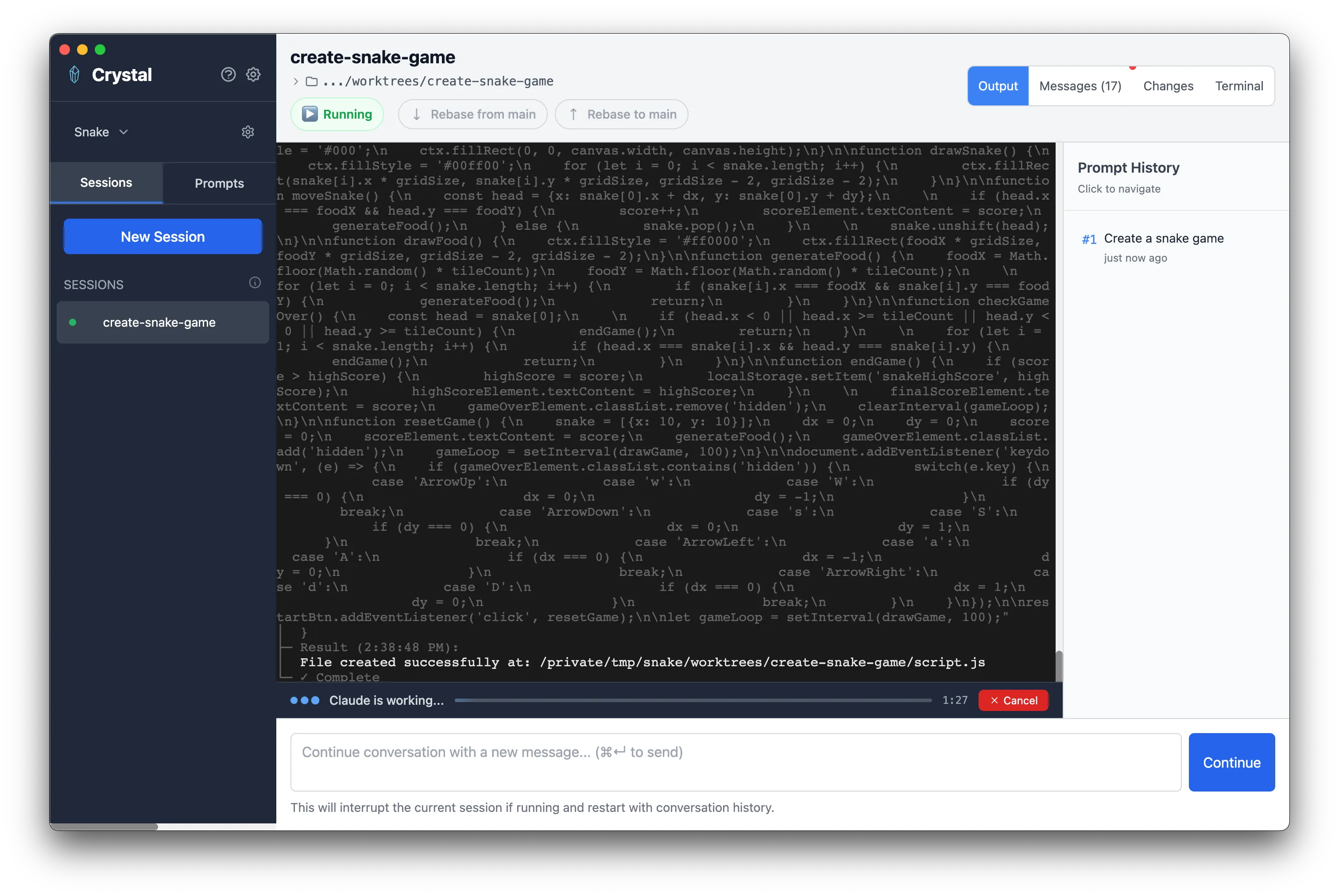
In June 2025 we announced Crystal, a graphical interface for managing Claude Code sessions. We built it internally to speed up our own development, and it was useful enough that we released it publicly. Instead of an IDE, we called it the first IVE (Integrated Vibe Environment).
The rest of this post is that original announcement, describing Crystal as it was.
The Problem Crystal Solved: Downtime
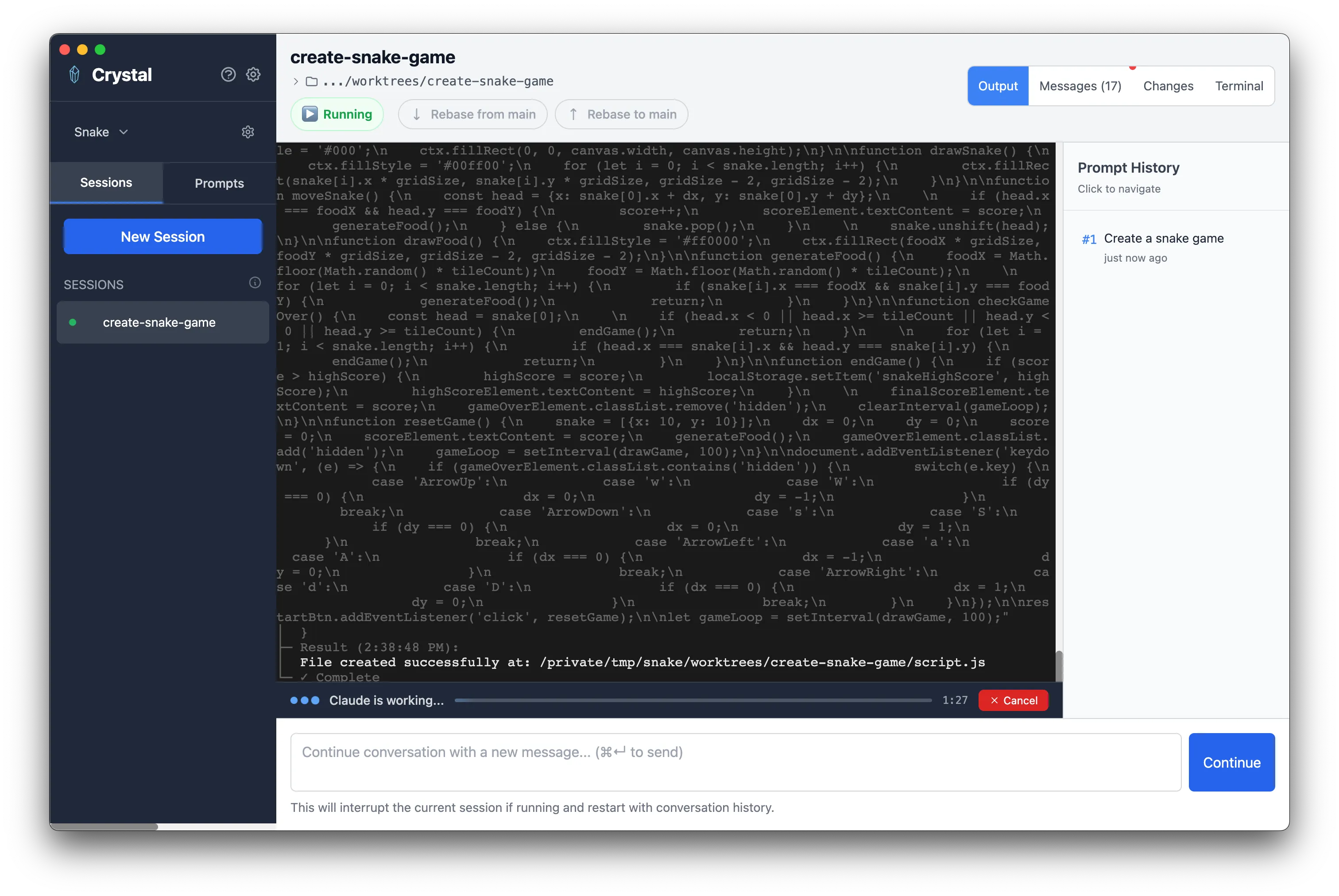
The constant waiting with Claude Code was causing us frustration. You could run multiple sessions from the command line, but it was cumbersome and confusing. You needed several commands to switch between them, and then you forgot what each session was doing and had no easy way to track it. For a current look at how this problem is solved today, see our guide to session managers for Claude Code and Codex. Crystal was born out of the necessity to solve this problem and help our developers be more productive.
How Crystal Worked
Crystal managed the complexity of running multiple Claude Code instances:
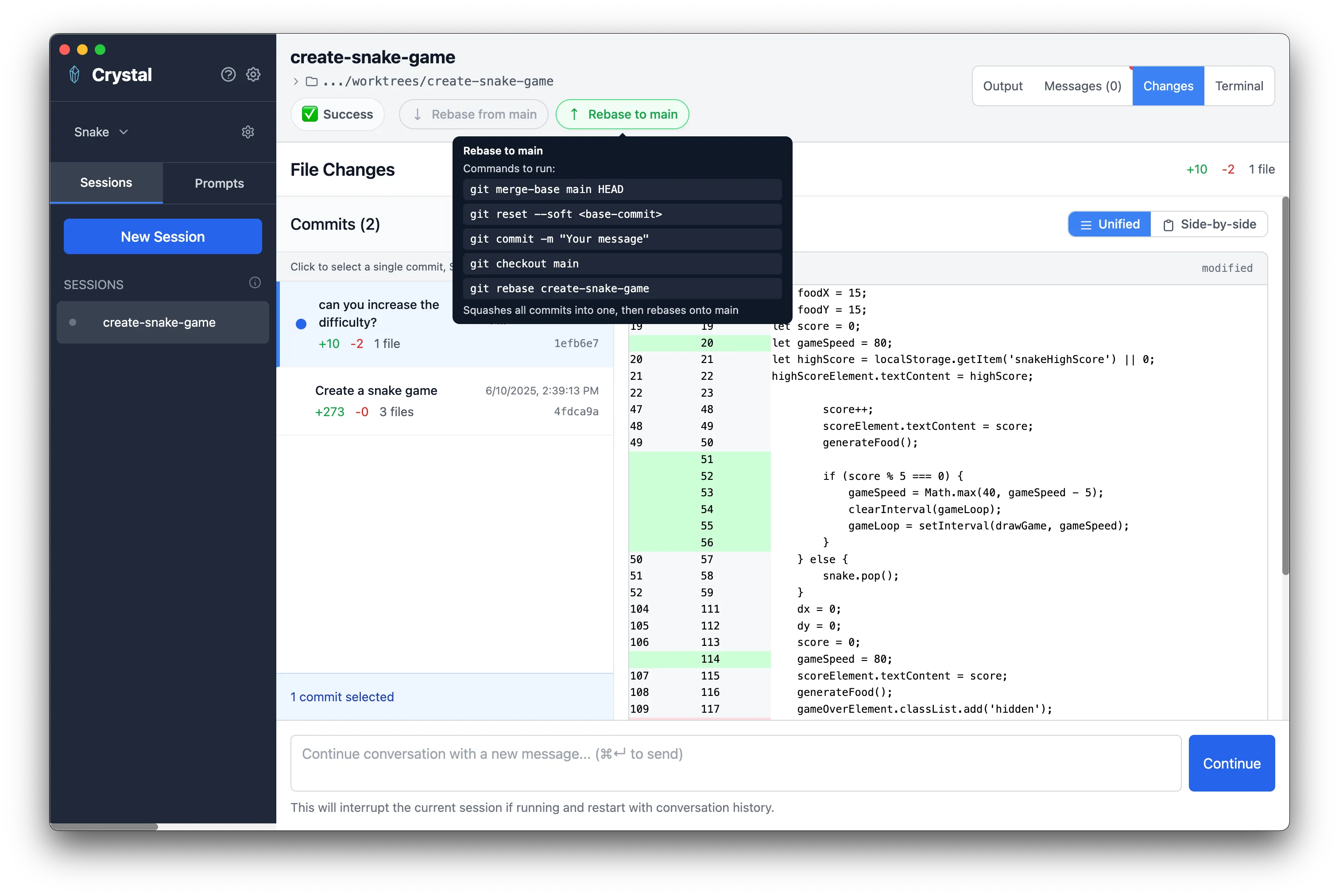
- Git Worktree Isolation: each session operated in its own git worktree, preventing conflicts between parallel development efforts
- Real-time Session Management: monitor all your Claude Code sessions from a unified interface
- Conversation Continuity: resume any session with full conversation history intact
- Integrated Git Operations: rebase, squash commits, and view diffs without leaving the app
- Execute and Test Changes: provide a script to build and run your code, and launch your changes for testing with the push of a button
Use Cases
We started using Claude Code differently once we could manage multiple sessions.
- Make several passes at hard problems: when stuck on a problem the AI struggled with, we ran several instances of the same prompt at once and picked the winner.
- Work on multiple features at once: while feature A was being built, inspect and test feature B, and so on.
- Idea generation: run multiple prompts along the lines of “explore my code base and generate 10 improvement ideas”.
- UX experimentation: run multiple sessions saying “please improve the look of …” and then go through the results.
Multi-session development meant running as many Claude Code sessions as you needed. Each session got its own isolated environment, which let you:
- Compare different implementation approaches side by side
- Work on multiple features simultaneously
- Test various solutions without affecting your main branch
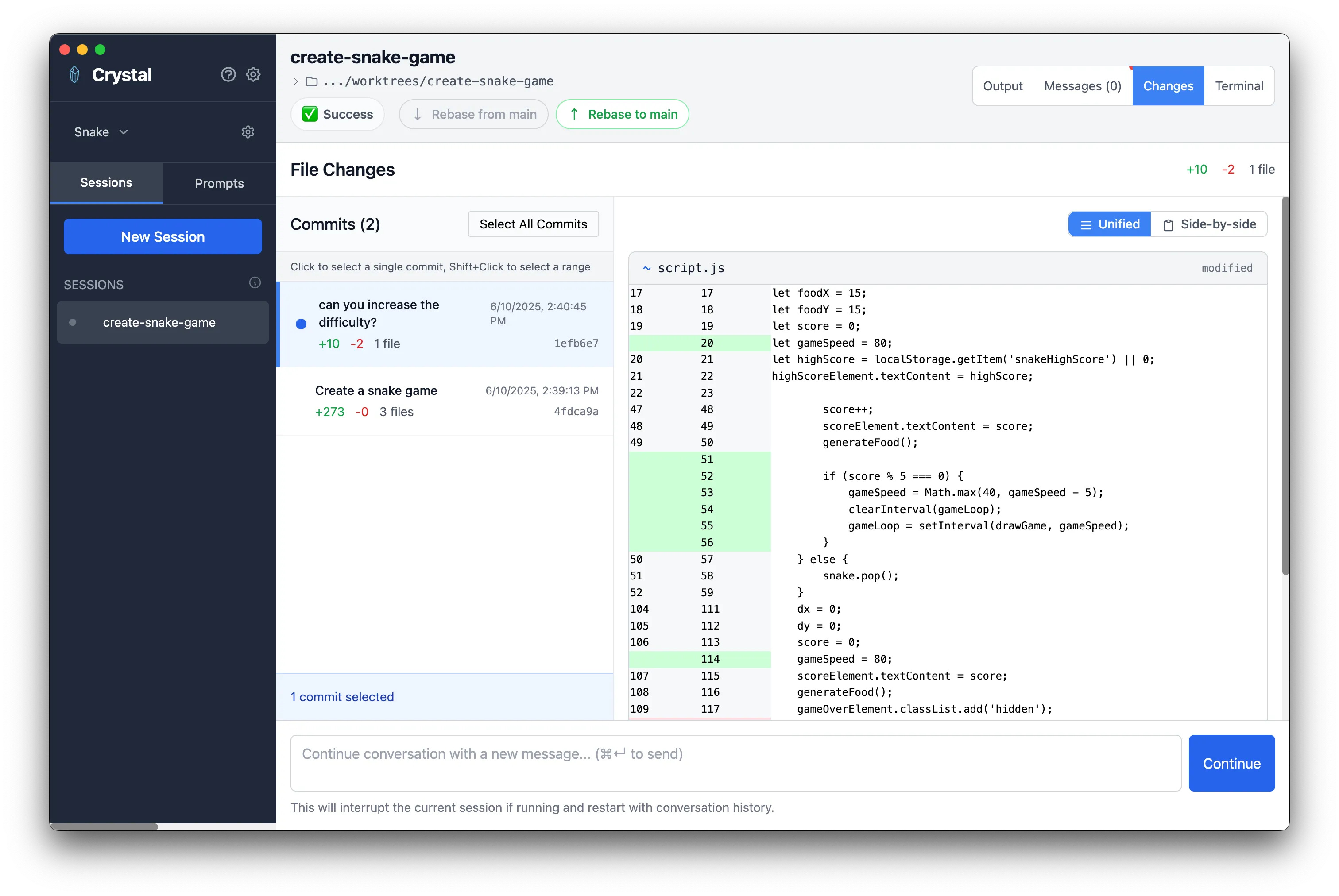
Crystal also handled viewing, testing, and merging changes in one tool:
- Commit changes between each prompt
- View changes and bring them back to main
- Run your application from the worktree to test functionality
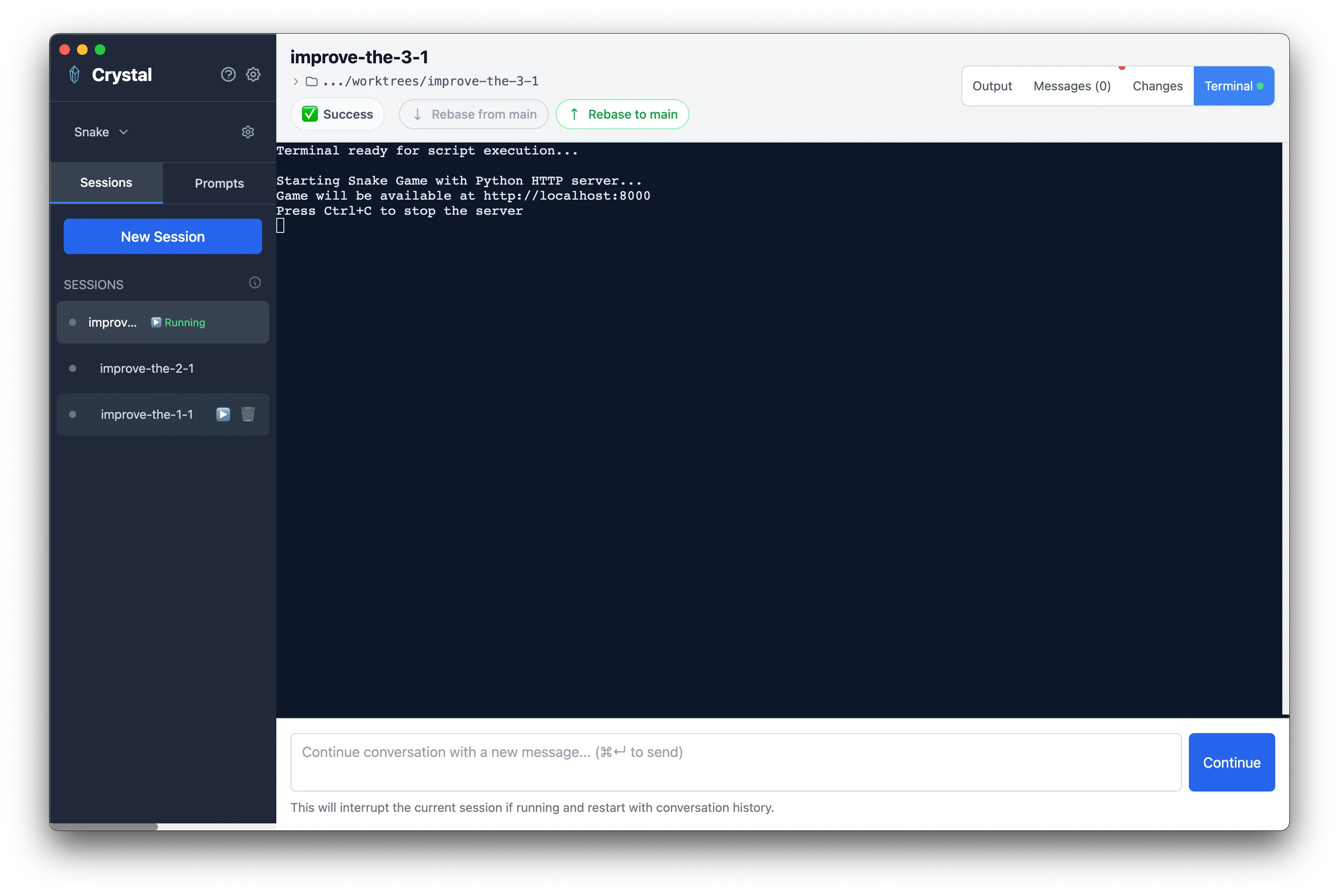
Session management included:
- AI-powered naming: sessions were automatically named based on your prompts
- Status tracking: visual indicators showed whether sessions were initializing, running, waiting for input, or completed
- Prompt history: quickly reuse prompts from previous sessions
- Session templates: create multiple numbered sessions with a single click
Git integration was visual:
- View all changes with syntax-highlighted diffs
- Rebase from main to pull in latest changes
- Squash and rebase to prepare clean commits
- All without leaving the app
Where Crystal Went
Crystal is no longer maintained, and there is nothing to install. Everything above is now part of Nimbalyst, which added a session kanban board, inline diff review of agent changes, visual editors for markdown, mockups, diagrams, and data models, built-in task tracking, and support for Codex alongside Claude Code.
Crystal for Claude Code: the successor is Nimbalyst covers the move feature by feature, including what to expect if you used Crystal daily, and where to download Nimbalyst. Point it at the same project folder and it picks up the repository and any git worktrees already there.
Claude™ is a trademark of Anthropic, PBC. Neither Crystal nor Nimbalyst is affiliated with, endorsed by, or sponsored by Anthropic.
Related posts
-
Open Source Agent Workspaces 2026: 8 Tools Compared
cmux, Superset, Orca, Paseo, Herdr, T3 Code, Goose, and Warp compared in 2026: platforms, licences, worktree isolation, mobile access, and which agent workspace fits which workflow.
-
Vibe Kanban After Bloop: What Happens to Users, and Where to Go
Bloop is shutting down and Vibe Kanban moves to community open source. What users should do this week and how the multi-agent kanban category looks now.
-
Best Conductor Alternatives 2026: Windows, Linux, and Open Source
Conductor is macOS only. The best Conductor alternatives in 2026 compared on platform support, agent coverage, licensing, and worktree isolation.