Comparison
Nimbalyst vs Claude Code
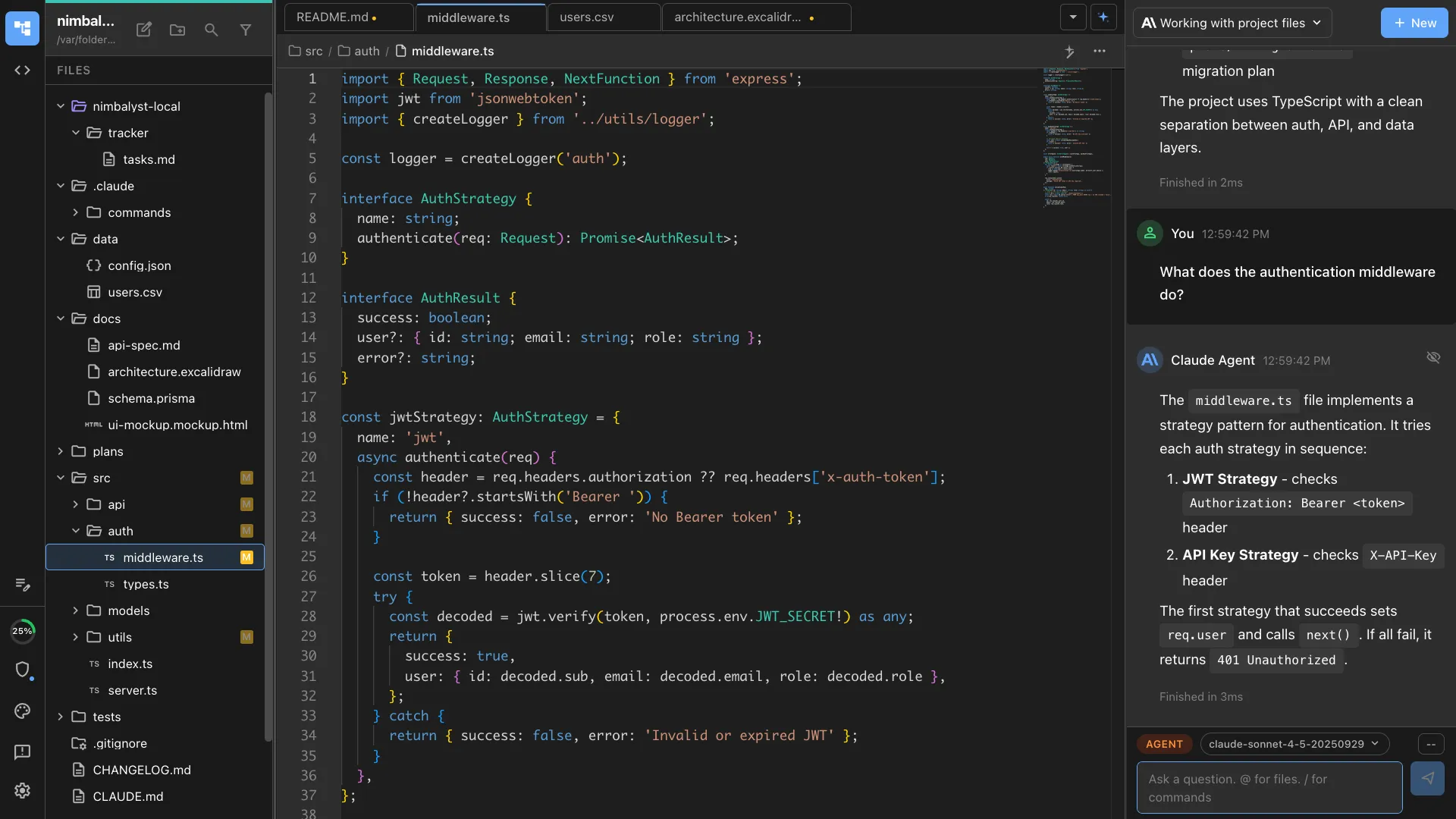
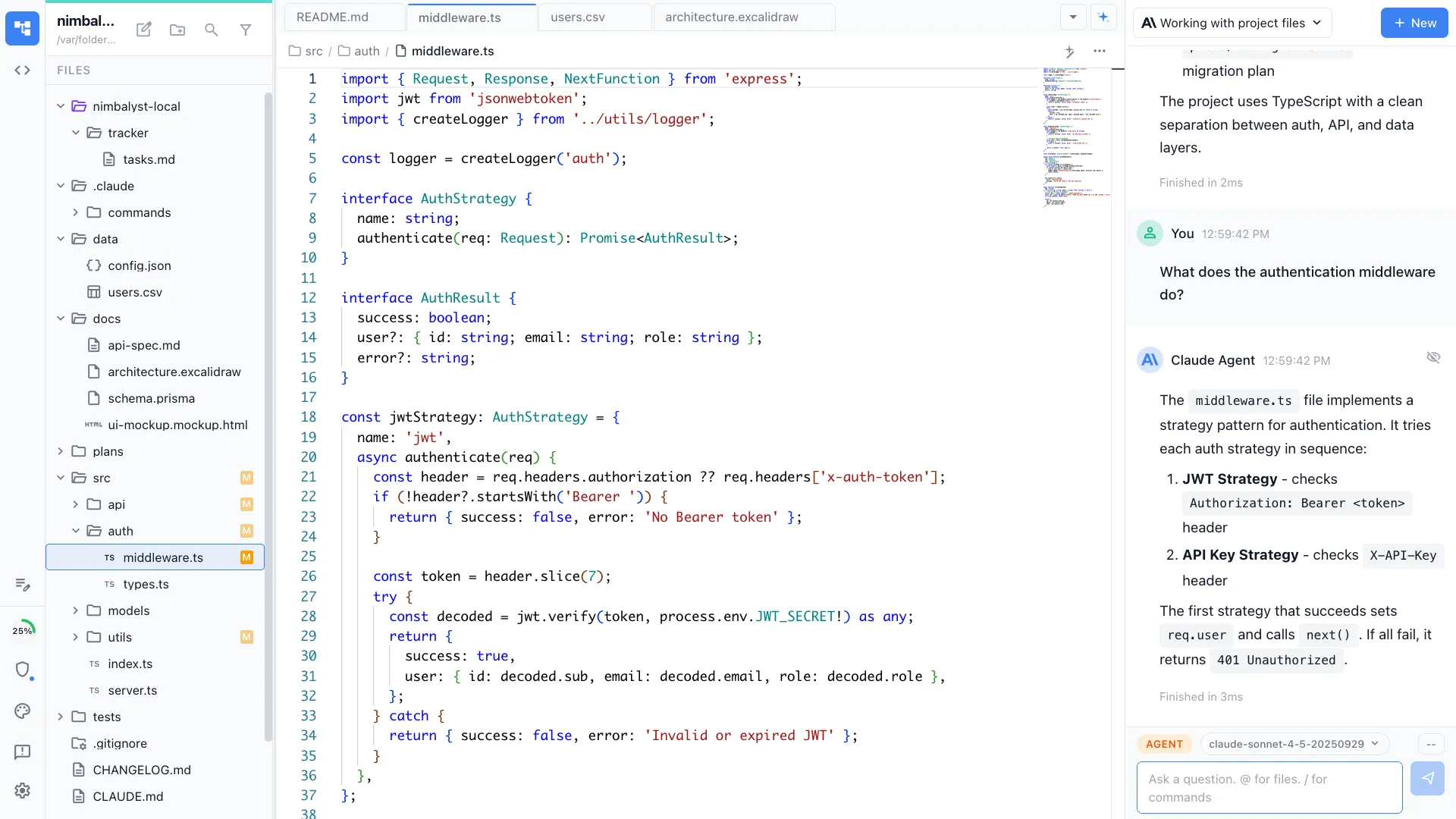
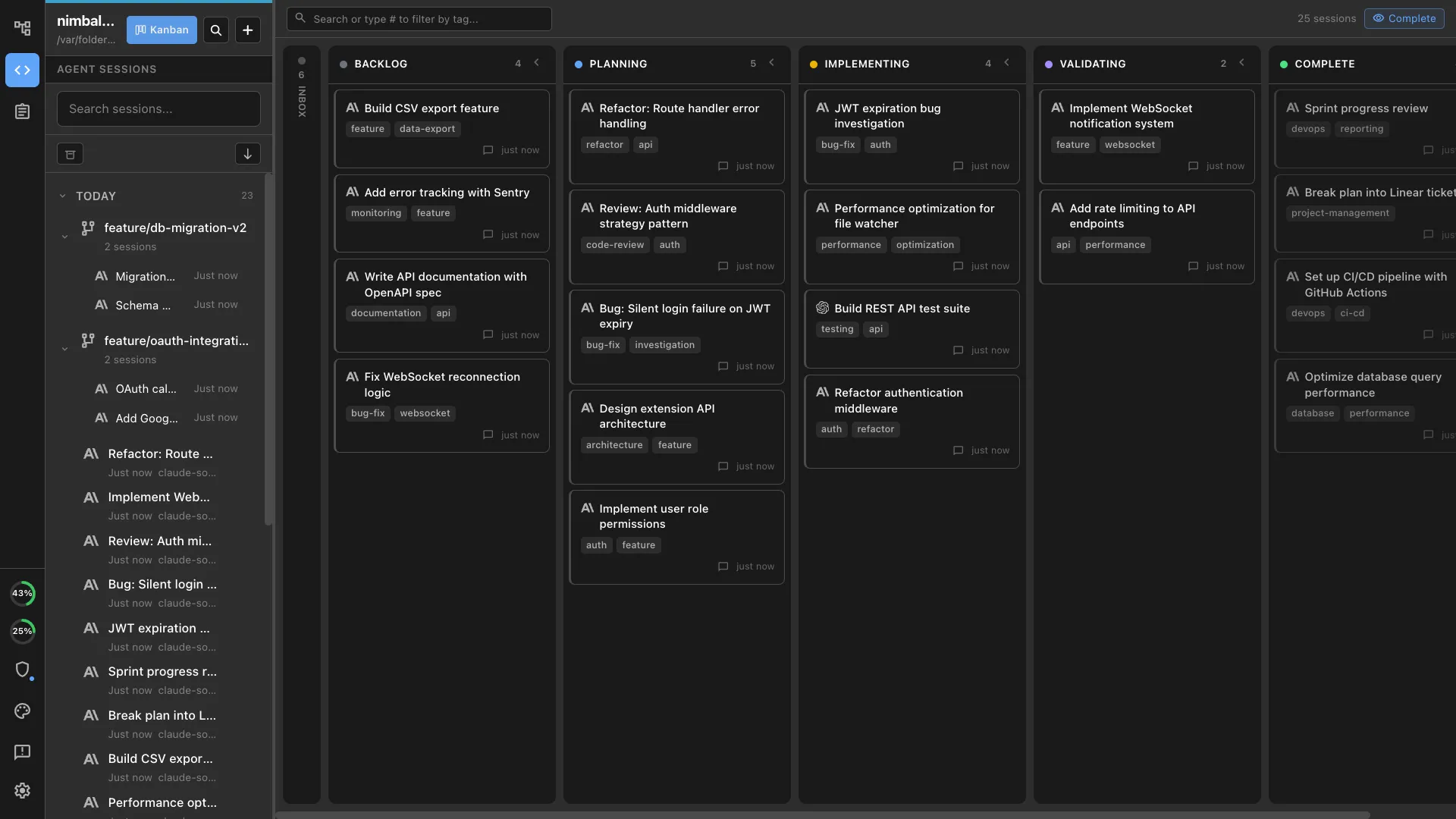
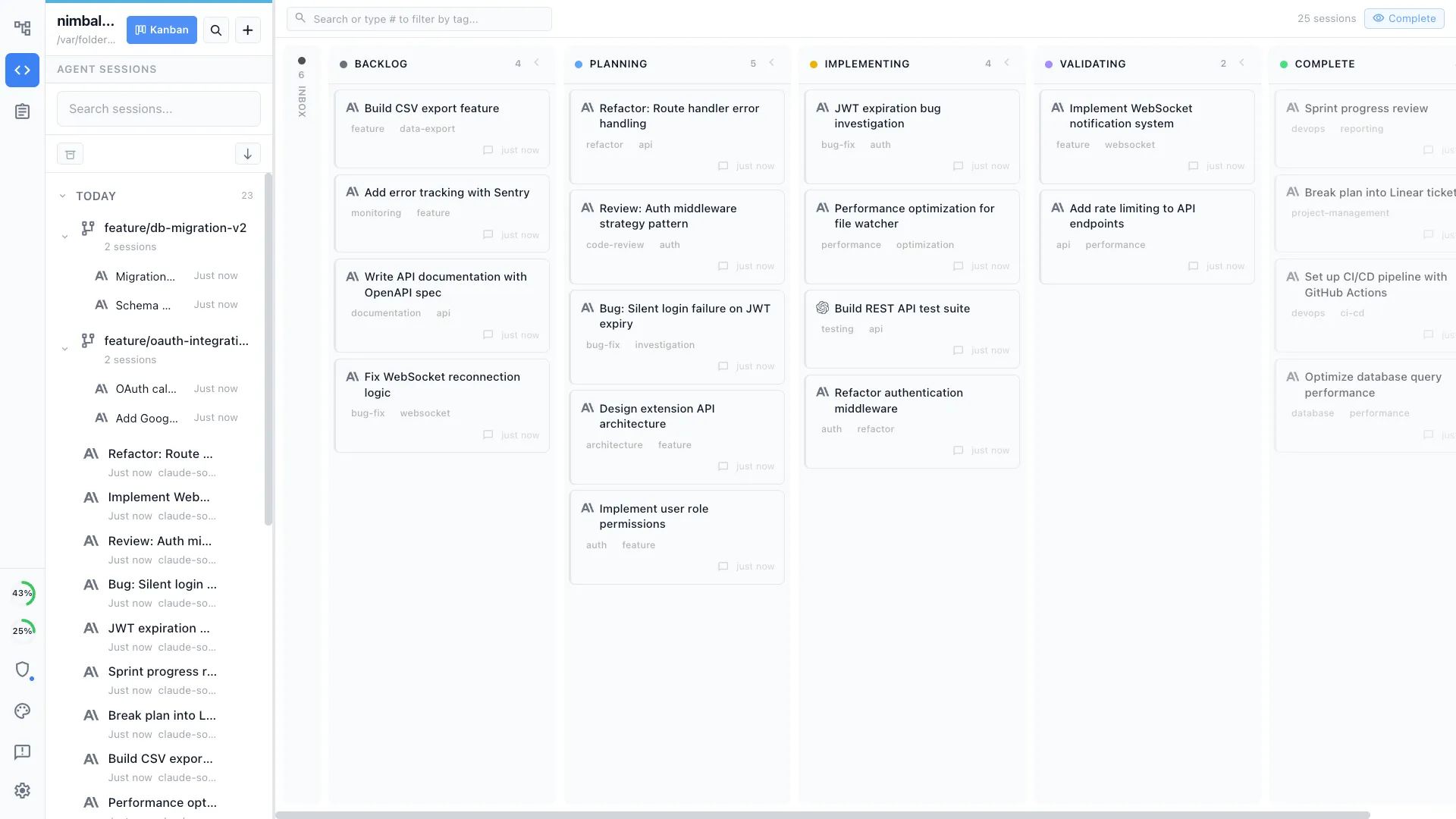
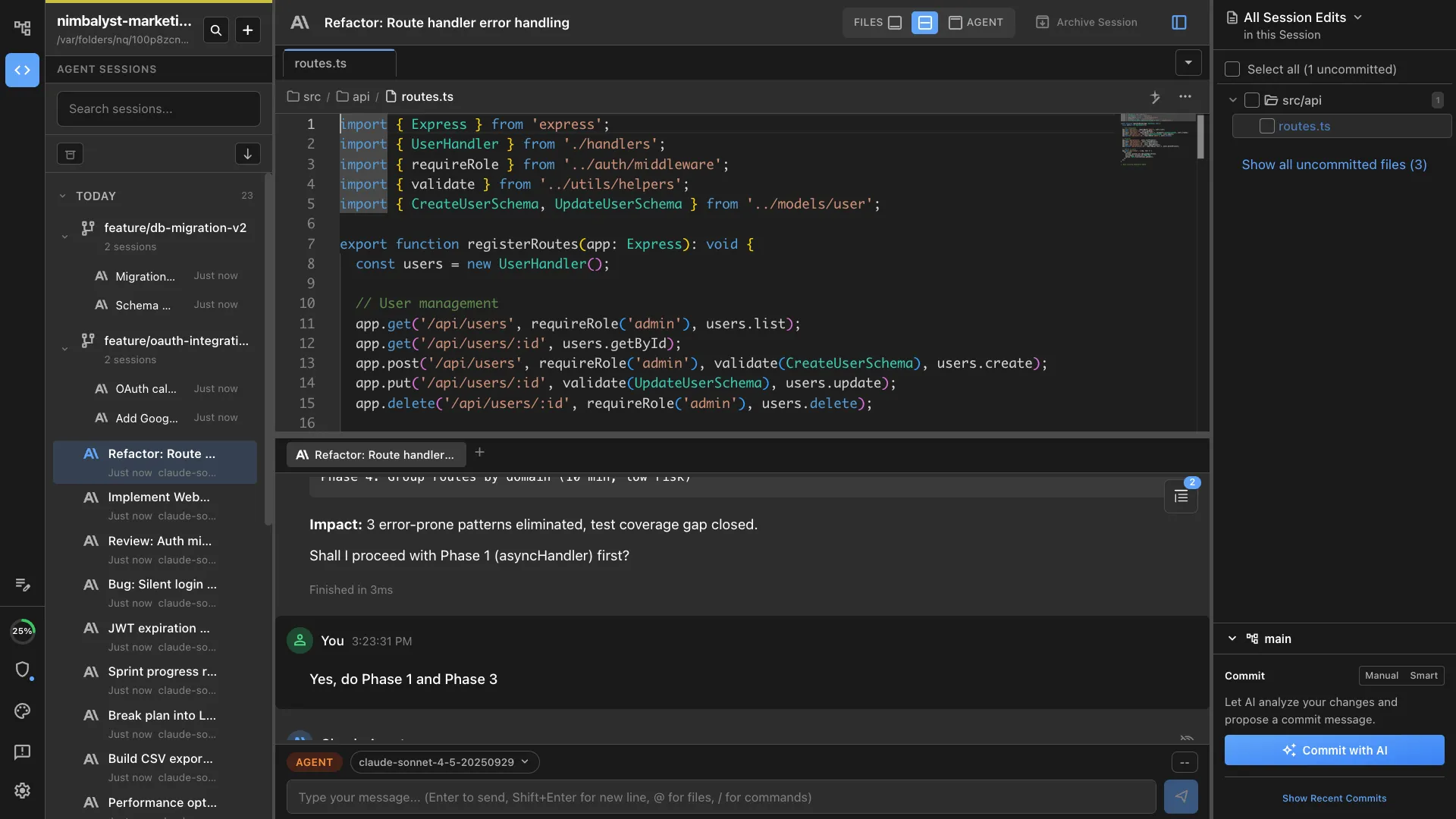
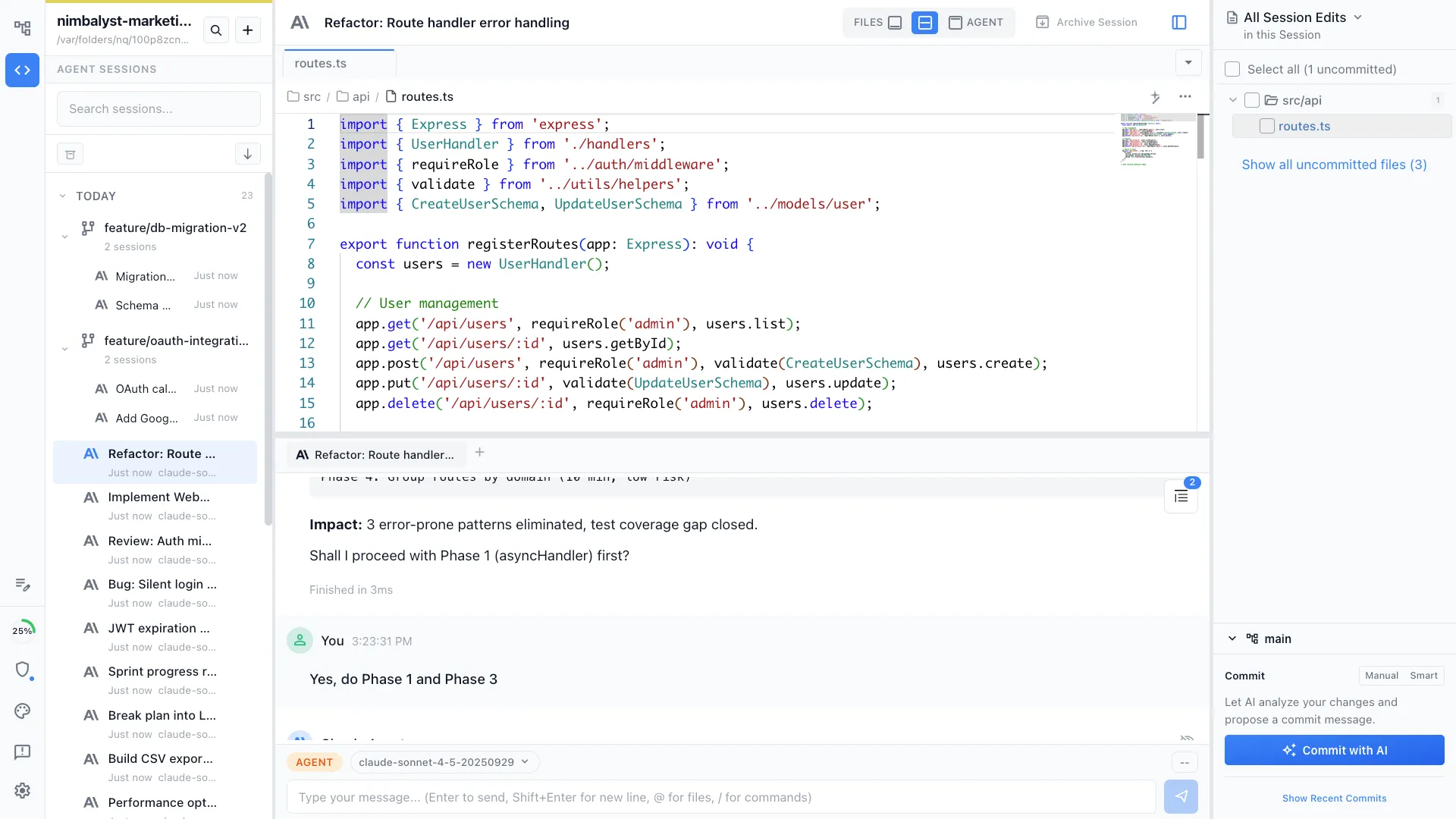
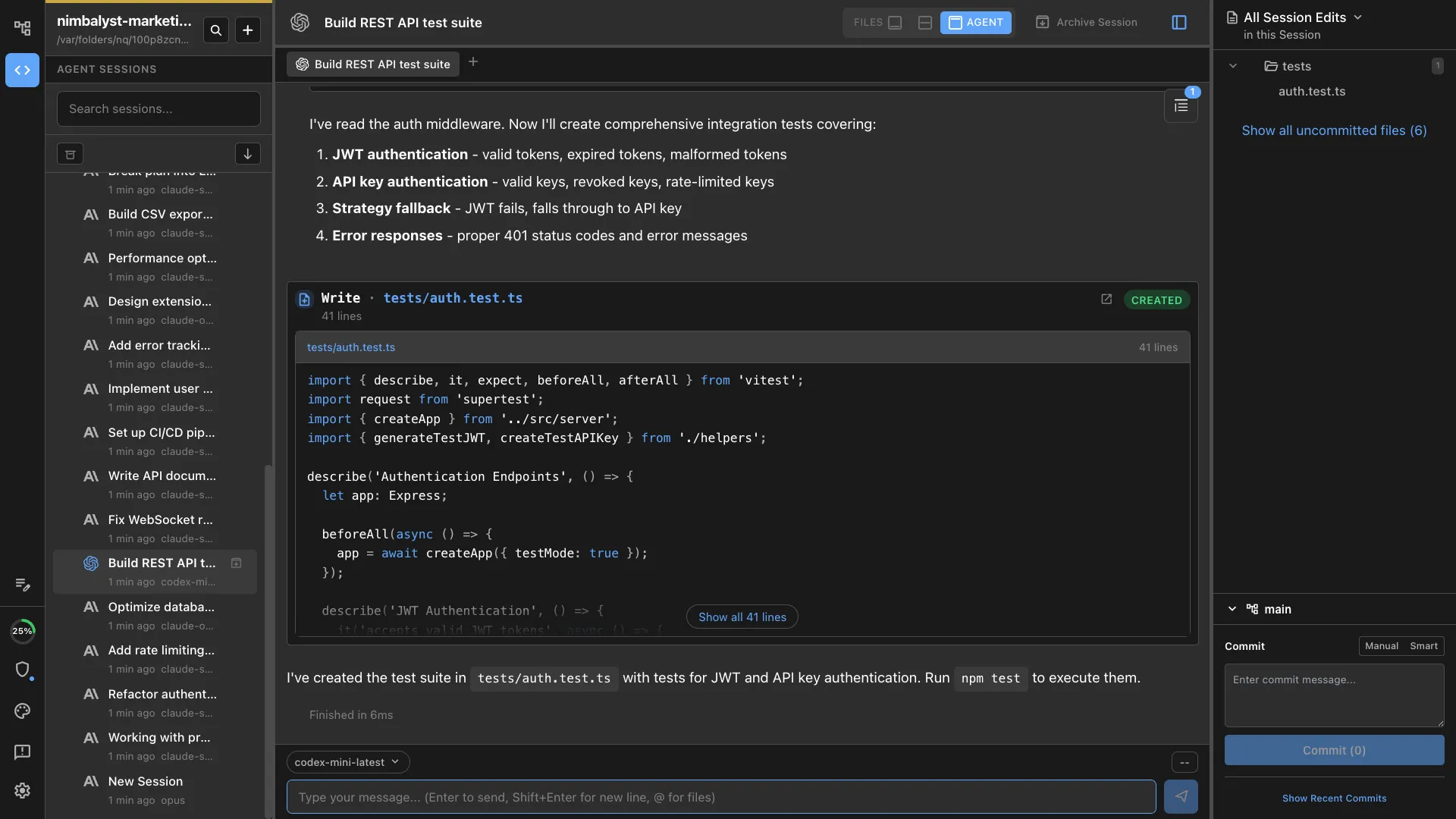
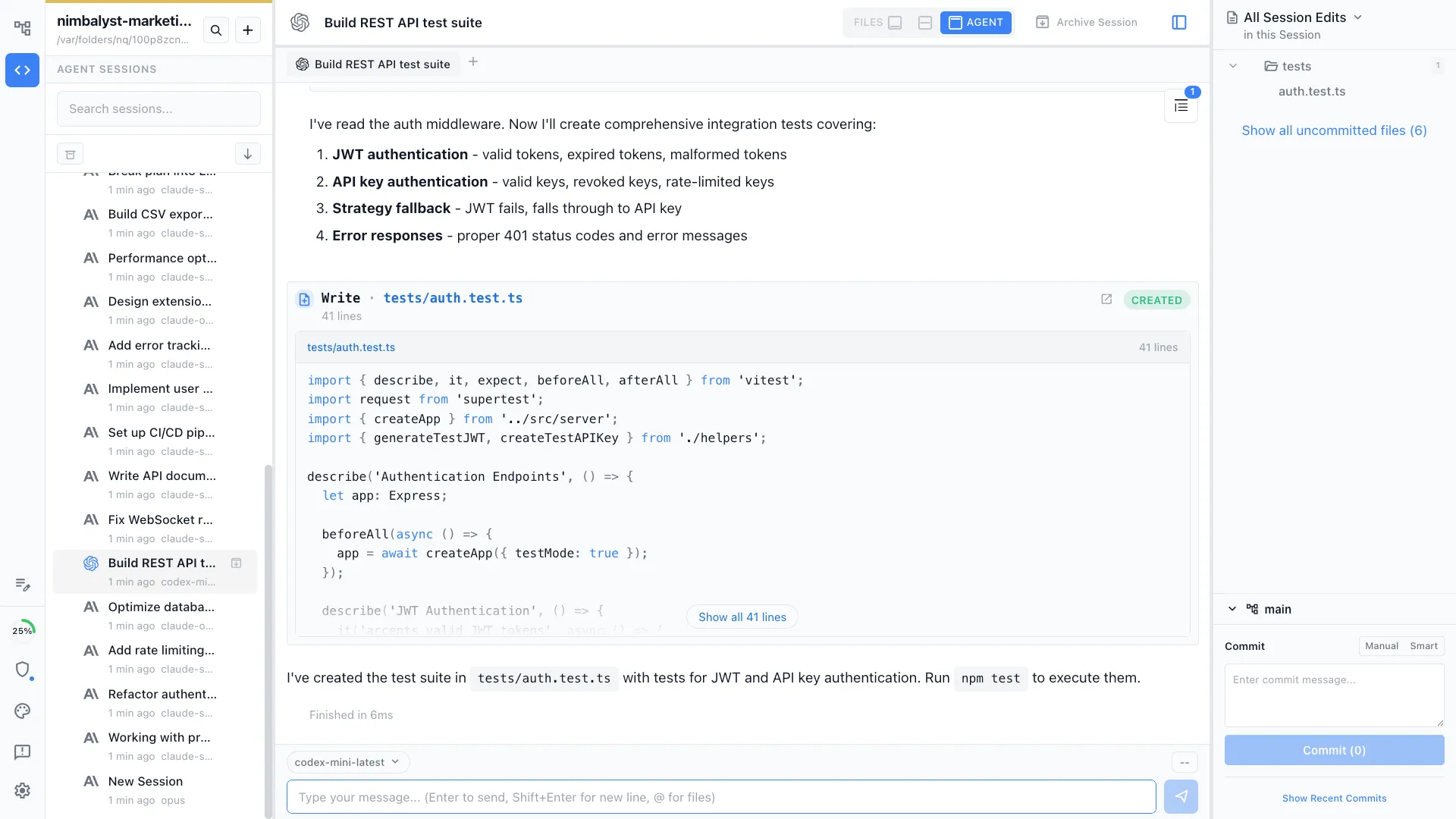
Claude Code is Anthropic's official coding agent for Claude: strongest for long, low-interruption terminal runs and tightly integrated with the Claude product surface, running Opus 4.8 and Sonnet 4.6. Nimbalyst is an open-source visual workspace that runs Claude Code and OpenAI Codex (gpt-5.5) side by side, adding a session kanban, file-by-file visual diff review, planning docs, and a native iOS app. Choose Claude Code for the official single-agent Claude experience. Choose Nimbalyst when you want to run Claude Code and Codex together, with parallel sessions and visual review in one place.
Free for individuals. Works with your existing Claude Code or Codex subscription or API key.
Overview
Two tools, different approaches
Nimbalyst
Nimbalyst is an open-source visual workspace that runs Claude Code and OpenAI Codex side by side, with pluggable agent harnesses. Each session gets its own transcript, git worktree, and place on a kanban board. A planning doc written for a Claude Code session can be picked up by a Codex session later without being rewritten. Mockups, diagrams, markdown, and trackers live in the same project. The desktop and iOS apps are MIT licensed and free for individual use. For a neutral, side-by-side look at the two agents on their own, see our Codex vs Claude Code comparison.
Claude Code
Claude Code is Anthropic's official coding agent for Claude. It runs in the terminal, supports a desktop workflow, and is deeply integrated with the Claude product surface. It tends to feel most natural for long autonomous repo work: sitting with a codebase, reading a lot, planning a lot, then working through a substantial task without turning every step into a checkpoint.
Feature Comparison
Side-by-side breakdown
Nimbalyst Advantages
Where Nimbalyst shines
One workspace for Claude Code and Codex
Run Codex for careful supervised passes and Claude Code for longer delegated loops in the same project. Sessions share planning docs, trackers, and visual artifacts instead of splitting across separate products.
Visual artifacts agents can use
A planning session can produce a spec, a mockup, and a schema sketch. An implementation session reads those files directly. Both Claude Code and Codex see the same workspace.
Review from a phone
Native iOS companion gives transcripts, diffs, and approvals on the go. Long Claude Code runs and Codex runs land in the same review surface instead of two separate products.
Honest Assessment
Where Claude Code is stronger
Built for long autonomous loops
Claude Code feels most native for sustained repo work with subagents, skills, and longer delegated runs. Teams that live in the terminal often prefer its rhythm for refactors, migrations, and exploratory debugging.
Official Anthropic product
Claude Code is built and maintained by the same team that builds Claude. New Claude Code features land here first.
Tight Claude integration
Model switching inside the Claude family, MCP, hooks, plugins, subagents, and Remote Control are documented as one coherent system.
Recommendation
Who should use which
Choose Nimbalyst if…
Your team wants to run Claude Code and Codex side by side, share plans and visual artifacts across both, manage many sessions in parallel, and review everything in one place including from a phone.
Choose Claude Code if…
You want a terminal-first agent that runs longer autonomous loops inside a repo, you are standardized on Claude, and you want the most polished official workflow around it.
More Comparisons
Related comparisons
vs OpenCode and Claude Code
Compare an open-source provider-flexible agent with the official Claude-native CLI.
vs Cursor
Workspace around Claude Code and Codex vs an IDE with agents.
Codex vs Claude Code
How the two coding agents compare, and running both in one workspace.
Agent Harness for Claude Code and Codex
The hub for the workflow layer around Claude Code, Codex, review, and coordination.
vs Claude Code Desktop
Compare Nimbalyst with Anthropic's official Claude Code GUI.
From the Blog
Related guides
Run Claude Code and Codex together
How Nimbalyst treats Claude Code, Codex, OpenCode, and Copilot as engines inside one visual workspace.
Claude Code GUI & Workspace
What a workspace adds beyond a Claude Code GUI — sessions, editors, planning, and mobile.
Best Claude Code GUI Tools in 2026
A broader look at the Claude Code desktop and GUI landscape.
Codex vs Claude Code Workflow Harness
A neutral side-by-side look at the two agents Nimbalyst can run together.
Best AI Coding Tools in 2026
A category-level comparison of the leading harnesses, IDEs, workspaces, and cloud agents.
Best Claude Code Skills in 2026
A practical guide to the skill patterns teams actually keep in rotation.
Agent Harness for Claude Code and Codex
How to think about the workflow layer around Claude Code, Codex, context, review, and coordination.
Claude Routines: A Practical Guide (2026)
What Claude Code Routines do, real examples, run caps, and when to reach for local automations.
Want Claude Code and Codex running side by side in one open-source visual workspace? Download Nimbalyst free.
Free for individuals. Works with your existing Claude Code or Codex subscription or API key.
Nimbalyst Teams is multiplayer. Your whole team, Codex, and Claude Code in one shared workspace.